

All the worst humans, p.1
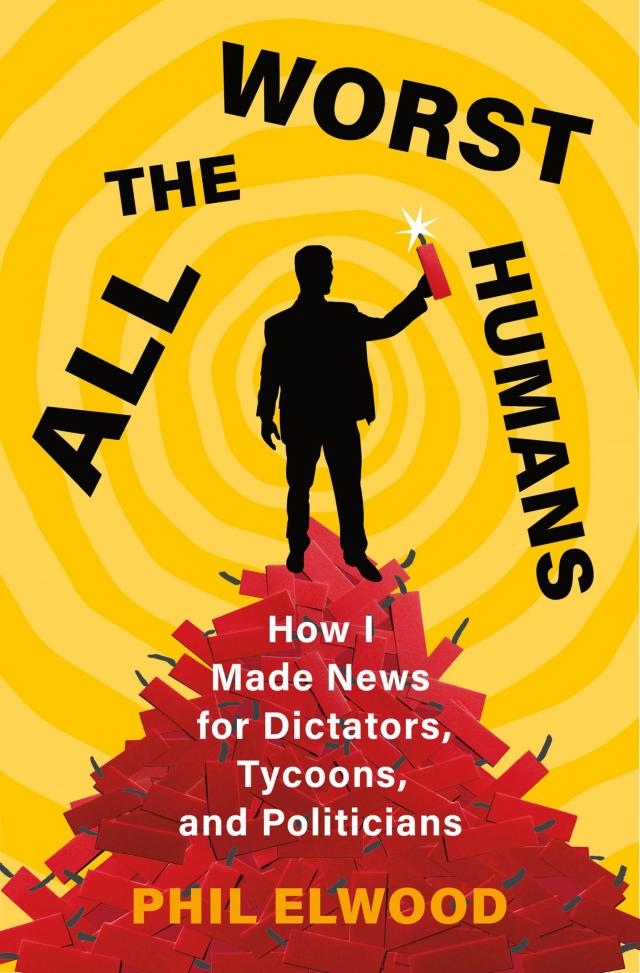
All the Worst Humans,
p.1


Begin Reading
Table of Contents
About the Author
Copyright Page
Thank you for buying this
Henry Holt and Company ebook.
To receive special offers, bonus content,
and info on new releases and other great reads,
sign up for our newsletters.
Or visit us online at
us.macmillan.com/newslettersignup
For email updates on the author, click here.
The author and publisher have provided this e-book to you for your personal use only. You may not make this e-book publicly available in any way. Copyright infringement is against the law. If you believe the copy of this e-book you are reading infringes on the author’s copyright, please notify the publisher at: us.macmillanusa.com/piracy.
For Lindsay, who really took the “for better or worse” thing seriously
The single biggest problem in communication is the illusion that it has taken place.
—GEORGE BERNARD SHAW
AUTHOR’S NOTE
This is my story, as I remember it. Some names and a few details have been changed to protect the many guilty and the few innocents.
PROLOGUE
FEBRUARY 8, 2018
When the FBI knocks, you are going to lose. It’s just a question of what. And how much of it. Money. Love. Freedom. Friends. Jobs. If they knock, you have been gambling. And you do not have the high card in this hand.
At 6:30 a.m., my phone rings. I mute CNN’s Chris Cuomo discussing the latest in Robert Mueller’s election interference inquiry and answer to make the ringing stop.
“Phil Elwood?” a woman’s voice says. “This is Special Agent Logan with the FBI.”
“Good morning?”
“Do you still live at apartment one-zero-zero-eight?”
“Not anymore,” I say, struggling to process. “We’ve moved within the building.”
“What apartment are you in right now?”
I look at my wife, Lindsay. She is still in her pajamas, answering emails from a higher education reporter. Fighting the good fight. “Can you give me an hour?” I ask Agent Logan.
Fight-or-flight kicks in. Protect what matters. “Lindsay, the FBI is downstairs,” I say. “They will be up in one hour. You need to leave.”
My wife speaks with the lyrical precision, and efficiency, of a machine gun. When her adrenaline spikes, the words get really fast. So, I can’t repeat with any accuracy the chain of concern, profanity, and fear that comes out of her. She is out the door in record time.
I have thirty minutes before the agents are due to knock. Normally, the FBI doesn’t call ahead, so I believe I am unique in my ability to describe how one waits for them. How would you spend your time? I read their Wikipedia entry. Thirty-five thousand employees, $9.8 billion annual budget, thirteen thousand Special Agents, many of whom carry the Glock 19 Gen5, a 9mm with a fifteen-round magazine. A top priority of today’s Federal Bureau of Investigation: “Protect the United States against foreign intelligence operations, espionage, and cyber operations.”
At this moment, there is a bag in my closet full of promotional material for an Israel-based organization that advertises that it is a “foreign intelligence operation” that engages in “online operations.” The word espionage is not in the brochure, but it is strongly implied.
Ten minutes to go. I think about the million dollars the Israelis have moved through my bank account. The wire transfers to the Seychelles, Cyprus, Switzerland, the Caribbean, Palestine, and who knows where else. About the laptop whirring away under the desk in my office, which the Israelis told me never to touch. Five minutes. I worry about the reach of the Wire Fraud Act, and of the Espionage Act of 1917. My pajama bottoms peek out from under the legs of my cargo pants.
Then comes the knock.
I open the door to a man and a woman wearing pistols on their hips. The woman steps forward and hands me her business card: “Special Agent Logan, Counterproliferation.” It is my understanding that this division works to stop the proliferation of nuclear weapons. I also understand that my life is about to change. Until this morning, I’ve been a ghost. My name has never even appeared in a Politico “Spotted” blurb. Google “Phil Elwood,” and you’ll find a dead jazz reviewer for the San Francisco Chronicle.
I offer the agents coffee. They decline. I walk them to my dining room table. They sit down across from me. Their body language telegraphs: the government versus you.
“Mr. Elwood,” Agent Logan begins. “Do you know why we’re here?”
Several things come to mind. It could be the Israelis. Or Muammar Gaddafi. Or Bashar al-Assad. Or the Iranians. Or because of what I pulled in Antigua. Or the bank transfers to accounts in tax havens all over the world. Or Project Rome. Probably not the ounce of cannabis in my kitchen drawer.
They could be knocking on my door about so many things I’ve done over the last two decades in public relations.
CHAPTER 1
Of Marble and Giants
EIGHTEEN YEARS EARLIER, JULY 2000
The halls of the Capitol Building are empty this morning. The clinks of the liquor bottles in the hand truck I’m pushing are the only sound. I love being alone here, marveling at marble columns propping up carved ceilings. Under the massive dome of the Rotunda, paintings tell the mythology of early America. In Statuary Hall, I nod to a bronze statue of Huey Long, an assassinated senator who some consider a hero, others a criminal, and then enter a wood-paneled corridor. Spiral staircases of iron and marble materialize out of dark corners.
I maneuver the bottles past unmarked doors that lead to the hideaway offices of Senators Trent Lott, Mitch McConnell, and Ted Kennedy. Senators steal away to these coveted havens to host meetings they’d rather not have eyeballed by reporters or to nap after marathon debates. The booze is heavy, and I’m out of breath when I reach Sen. Daniel Patrick Moynihan’s hideaway. Vodka soda sweat leaks through my cheap, white collared shirt. We interns were out late at Politiki bar last night.
I let myself in and head for the brass bar cart. Fifths of whiskey, gin, scotch, and Tio Pepe sherry, Moynihan’s favorite, get loaded in and lined up. When I’m finished, I sit on a leather couch dyed the same dark mahogany as the regal desk and spark up a Camel. Moynihan is a fellow smoker. His hideaway reeks of tobacco.
The hundred or so hideaways in the Capitol are passed down through handshake deals. Seniority rules, and sitting on the Finance Committee doesn’t hurt. Junior senators fight over windowless basement rooms the size of utility closets and furnished with cots. Moynihan has earned a view of Pennsylvania Avenue and space for ten people to sip cocktails. Standing under an oil painting, I pull back the cream-colored curtains and take it all in. I imagine the senator from New York in here, lighting up, pouring a tumbler of Tio Pepe, and telling stories about the presidents he has advised.
Sitting in the private office of a Senate demigod still doesn’t feel real. I’m a twenty-year-old college dropout whose only credentials are a job at a Mexican restaurant and a cocaine problem. The rest of my intern class are the kids of campaign donors and New York City’s financial glitterati. My dad is a pastor in the other Washington. He preaches to a congregation in Olympia.
Six months ago, I was a sophomore at the University of Pittsburgh on a debate scholarship. Debate is about speed. Being able to talk fast was the prerequisite for entry. On weekends, I traveled to universities around the nation to argue about what policies would lead to nuclear war. Rapid-fire reading of news clippings scored points in a round. So did biting insults lodged at your opponent in an attempt to trap them in a rhetorical mishap. You won by manipulating the news and calling it “evidence” to advance your argument. I won a lot.
My grades were nearly perfect until I started working nights as a cook at Mad Mex. The waiters survived on a diet of wings and cocaine. One night, one of them noticed that I seemed a bit down and he offered me a pick-me-up from his bag. It worked. For fifteen minutes. Three months later, I was failing five out of five courses. I don’t believe I attended one.
The week before finals, I called my older brother in a panic. He jumped on a plane to Pittsburgh. We debated my options. I tried to advance the argument for my brother taking my finals. It was raining when we went to the registrar’s office and filled out the forms. The first Elwood to drop out of college.
My parents collected me at SeaTac airport. I deplaned drunk on whiskey and clutching a plush toy of Opus the Penguin, from Berkeley Breathed’s comic strip. My father shook his head and made me see a shrink. I snowballed my way through the sessions. Left out the cocaine use. The shrink informed me that I was suffering from “situational depression.”
“Since you are removed from the situation,” she explained. “The problem must be resolved.”
“Makes sense,” I said.
It didn’t. And the depression didn’t lift. A childhood friend, who I’ll call Preston, worried that I had no prospects after dropping out of school, threw me a lifeline. His college classmate Eric, a trust fund kid, worked in Washington, DC, as Senator Moynihan’s aide. If he liked me, Eric could get me an internship on the Hill.
I called Eric, and he told me to meet him the next Tuesday, at 10 p.m., at 1823 M Street. “Northwest M Street, the one near the White House,” he said. “Do you have a fake ID?”
“Indeed I do.”
“Bring it. You’ll need it in DC,” Eric said. “Your official interview will be on the Hill the next day. But this one
is more important. I vet the interns for the staff.”
My parents bought me a suit at the mall, and I flew to Washington. Résumé in hand, I cabbed it to a redbrick building with blacked-out windows on M Street. My fake ID fooled the bouncer. Inside, Ice Cube’s “You Can Do It” played as a dancer sprayed Windex on the pole before taking off her underwear. A topless woman asked if I wanted some singles.
Eric wasn’t hard to spot. He was the only other guy wearing a suit in the strip club on a Tuesday night. He chugged a Bud Light at a table with a clear view of the stage. I handed him my résumé. He gave it to a dancer in a neon-yellow G-string.
“Relax,” he said, sliding me a beer. “You met me at Camelot on a Tuesday night. You passed the test.”
* * *
In Moynihan’s hideaway, I kill my cigarette and flush it down the toilet. I lock up, push the empty hand truck past Minority Leader Tom Daschle’s office, and ride an elevator down to the basement. I flash my badge to a guard, cut through the crypt under the Rotunda, and head into the Capitol Hill Tunnels. I love these underground passageways, that feeling of special access.
I walk the pedestrian pathway alongside a miniature subway trolley modeled after the Disney World Monorail. A group of congressional aides are taking the two-minute ride, briefcases on their laps. To my right, I spot Sen. Fred Thompson.
“Good afternoon, Senator,” I say. “Die Hard Two was on TNT last night.”
“Was it really?” he replies in the deep southern drawl that was so out of place when he played a New York district attorney on NBC’s Law & Order. “Walk me back to my office.”
On the twenty-minute trip to the Hart Building, Thompson asks whether I think DC or Hollywood is the more terrifying place. I argue in favor of Hollywood. The Capitol doesn’t frighten me. Just the opposite. From the moment I set foot in DC, I knew I was home. The Hill is a real-world version of debate team. Everyone talks fast, and there are winners, losers, and nukes. Last week, I had a drink with Sen. Russ Feingold, who told me stories of working with John McCain and Carl Levin on trying to pass campaign finance reform. I’ve gone from bussing tables at a Mexican restaurant in Pittsburgh to rubbing elbows with senators. I never want to leave.
I weave through redbrick-walled tunnels back toward Moynihan’s staff office in the Russell Building. Discarded and broken office furniture lines the bowels of the Capitol Hill office buildings. I pass the Senate barbershop, where I recently got a bad haircut sitting next to Majority Leader Lott. A quick elevator ride up from the basement takes me to Russell’s fourth floor, where I drop off the hand truck and head down a flight of stairs to a private parking lot.
Two interns are already out here smoking. The senior senator from Michigan Carl Levin’s beaten-up blue Oldsmobile sticks out among the rows of luxury sedans. I smoke another Camel and watch Kit Bond of Missouri climb out of a black town car. Kay Bailey Hutchison struts by, followed by her “purse boys,” two young, attractive male aides who carry her luxury bags around Capitol Hill. When senators bum a smoke before hustling to their next meeting, I feel like a young Henry Hill parking cars for Paulie’s crew in Goodfellas.
It’s almost four o’clock. In this town, the most important hour is happy hour. I head back out into the muggy city, down First Street, passing the Supreme Court and the Library of Congress, where 3,700 boxes of Moynihan’s personal papers have been kept for posterity. It’s the largest one-man collection in the library, Moynihan’s legislative director recently told me over whiskey and Cokes at the Capitol Lounge.
At Pennsylvania Avenue, a helicopter buzzes across the sky. The pilot shadows a motorcade of black SUVs careening downtown, lights flashing and sirens blaring. When the street clears, I duck into the Hawk ’n’ Dove. I nurse a vodka soda, holding a good table with a view of the TVs, tuned to CNN. Just like the hideaway office system, this place runs on dibs. Soon the bar will be teaming with staffers from both sides of the aisle. They will drink, party, date, and sometimes put together bipartisan legislation. Tables are valuable currency. As an intern, I take it as my sacred duty to make sure the staff doesn’t have to stand at the bar.
At five o’clock, Moynihan’s staff trickles into Hawk ’n’ Dove in ascending order of the food chain. Legislative correspondents arrive first, along with the rest of the interns. An hour later, the legislative assistants claim their seats. Then come the legislative director and, finally, around seven, Moynihan’s chief of staff. His blue suit is rumpled, and he looks exhausted. In his hand is today’s “clip sheet,” a binder compiling daily press filings that mention our boss. The interns create it each morning by cutting apart the Washington Post, the New York Times, and the hyper-local weeklies and meticulously underlining Moynihan’s name.
“Thanks for holding down the fort, Phil,” the chief of staff says. “Look at this. Hillary Clinton is going to walk into Moynihan’s seat. Rick Lazio doesn’t stand a chance.”
I’ve landed in Moynihan’s office just in time. He’s about to retire after twenty-four years in the Senate. The alumni list from his office reads like a who’s who of Washington, DC—and they help each other out. I spent the rest of the summer helping them out by following the legislative director’s instructions: “Do anything we ask. And do it with a smile. Even if it’s not part of your job. Even if it’s weird.” I take his words to heart. Moynihan’s staff takes a shine to me because I volunteer to huff cartloads of Tio Pepe and get menial intern tasks done at my restaurant pace.
There are two ways to go about a career here: get in deeper or get out. I know one thing: I’m never leaving Washington. But a college dropout’s trajectory is limited; I need a degree. Before my internship ends, I apply to George Washington University. I draft my own letter of recommendation, and Moynihan’s chief of staff, for whom I’ve held tables all summer at half the bars in town, signs it. “Motivated and gifted with his words, Phil Elwood will make a valuable addition to your storied university.”
* * *
I wake up in a holding cell. Two cops yank me into an interrogation room and slam me with the accusation that I drunkenly crashed through a window at GWU’s Gelman Library. I can’t remember last night, but my throbbing head and the cuts on my body indicate that the police are telling the truth. I’m frog-marched into a sheriff’s van and handcuffed to the floor.
I stand in front of a judge, who tells me he knows I’m very sorry for what I’ve done and that I will never do it again. He slaps me on the wrist with twenty hours of community service. Later, I hear that Moynihan’s office made a call. A few days after I get home from central booking, a thin letter arrives from George Washington. I am no longer welcome on campus.
I’m certain I’ll be excommunicated from DC. I’ll have to return to Olympia. My parents will once again watch their son emerge at the Arrivals gate holding his plush toy Opus the Penguin, like a deadbeat Sisyphus. Instead, I’m promoted. Moynihan’s office makes one call, and I’m hired as a legislative correspondent for the senior senator from Michigan, Carl Levin. The happy hours continue. It’s amazing I get anything done with all the booze. Toward the end of my first year, the chief of staff hauls me into his office.
“I strongly suggest you get a college degree,” he says. “George Washington is off the table, clearly. What about Georgetown?”
Given my high school C average, Georgetown should be off the table, too. But it turns out Levin has considerable influence with the university. One letter from the senator and I’m accepted as a transfer student. I realize this is how the world works, or at least how this world does. It is not a meritocracy.
* * *
In the basement office of the Permanent Subcommittee on Investigations, staffers drop off crates of documents. “Go through these. Look for anything suspicious,” they instruct. They leave to fetch more boxes. Levin is leading an inquiry into the malfeasance of Enron’s board of directors. Enron’s spectacular implosion has been a lead story on CNN for months. Now Levin is making it his mission to codify the company’s wrongdoing into the national record.


