Hunting the Lions

Hunting the Lions

R. M. Ballantyne

Fiction / Children's / Travel

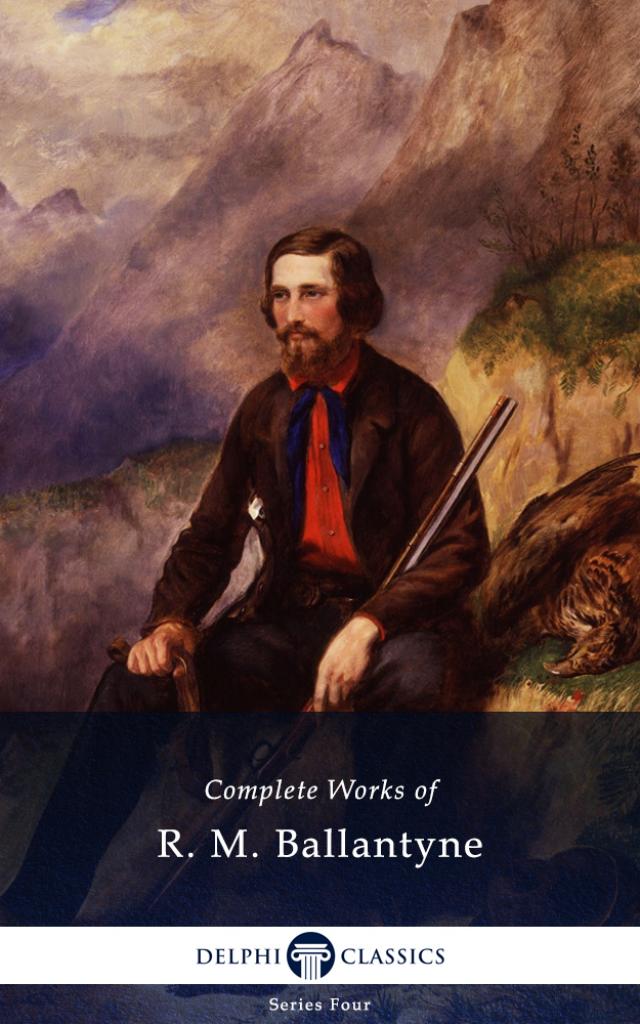
The Scottish juvenile fiction writer R. M. Ballantyne was born into a famous family of publishers. Leaving home at age 16 he went to work for the Hudson\'s Bay Company; after returning home to Scotland R. M. Ballantyne published his first book "Hudson\'s Bay" detailing his experiences in Canada. Later Ballantyne would write about more of his experiences with Native Americans and the Fur trappers he met in the most remote regions of Canada. With his success as a writer he withdrew from the business world to become a full time writer for the rest of his life. With over a hundred different books he has become one of the most cherished juvenile fiction writers today. Along with his other exploits throughout his life he also was tremendously successful with his artwork as his water color paintings were displayed at the Royal Scottish Academy.
Read online
  • 339
Black Ivory

Black Ivory

R. M. Ballantyne

Fiction / Children's / Travel

R.M. Ballantyne, in full Robert Michael Ballantyne (born April 24, 1825, Edinburgh, Scot.—died Feb. 8, 1894, Rome, Italy), Scottish author chiefly famous for his adventure story The Coral Island (1858). This and all of Ballantyne’s stories were written from personal experience. The heroes of his books are models of self-reliance and moral uprightness. Snowflakes and Sunbeams; or, The Young Fur Traders (1856) is a boys’ adventure story based on Ballantyne’s experiences with the Hudson’s Bay Company. Annoyed by a geography-related mistake he had made in The Coral Island, he afterward traveled widely to research the backgrounds of his stories.
Read online
  • 339
Hunted and Harried

Hunted and Harried

R. M. Ballantyne

Fiction / Children's / Travel

In the second half of the seventeenth century, the Scottish Kirk was in direct conflict with the King of England. By 1666, the king s soldiers were given lists of the names of the Scottish Covenanters by the curates, who then hunted them down and persecuted them. This is the story of Will Wallace, a young man in the service of the King who is tasked with searching for Andrew Black, a defiant Protestant. But Will soon joins Black as a follower of Christ and becomes one of the hunted and harried himself. Robert Michael Ballantyne was part of a famous family of printers and publishers. At the age of 16 he went to Canada and was six years in the service of the Hudson’s Bay Company. He returned to Scotland in 1847, and published his first book the following year, Hudson’s Bay. For some time he was employed by Messrs Constable, the publishers, but in 1856 he gave up business for the profession of literature, and began the series of adventure stories for the young with which his name is popularly associated.
Read online
  • 306
Dusty Diamonds Cut and Polished: A Tale of City Arab Life and Adventure

Dusty Diamonds Cut and Polished: A Tale of City Arab Life and Adventure

R. M. Ballantyne

Fiction / Children's / Travel

Dusty Diamonds Cut and Polished - A Tale of City Arab Life and Adventure is presented here in a high quality paperback edition. This popular classic work by R. M. (Robert Michael) Ballantyne is in the English language, and may not include graphics or images from the original edition. If you enjoy the works of R. M. (Robert Michael) Ballantyne then we highly recommend this publication for your book collection.
Read online
  • 300
The Dog Crusoe and his Master

The Dog Crusoe and his Master

R. M. Ballantyne

Fiction / Children's / Travel

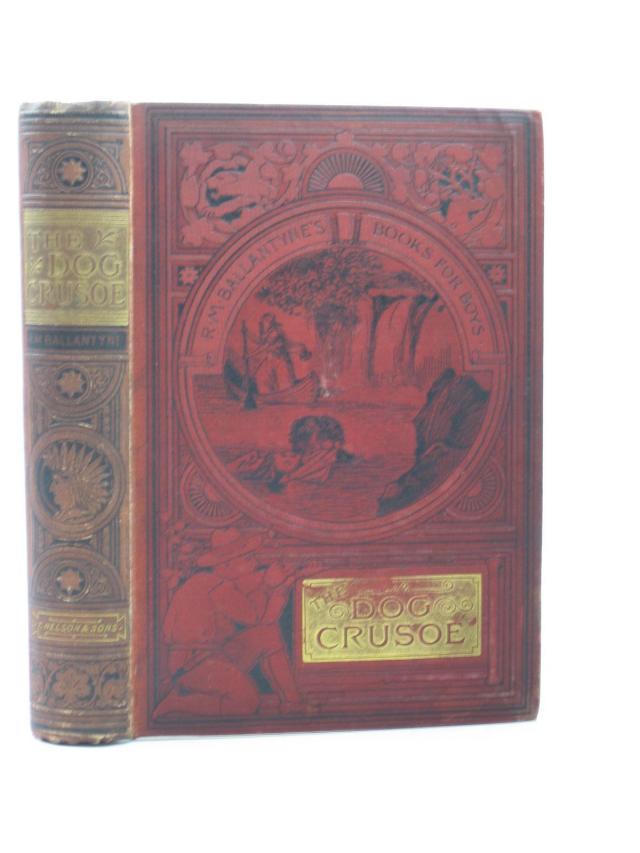
The Backwoods Settlement—Crusoe’s Parentage and Early History—The agonising pains and sorrows of his puppyhood, and other interesting matters. The dog Crusoe was once a pup. Now do not, courteous reader, toss your head contemptuously, and exclaim, “Of course he was; I could have told you that.” You know very well that you have often seen a man above six feet high, broad and powerful as a lion, with a bronzed shaggy visage and the stern glance of an eagle, of whom you have said, or thought, or heard others say, “It is scarcely possible to believe that such a man was once a squalling baby.” If you had seen our hero in all the strength and majesty of full-grown doghood, you would have experienced a vague sort of surprise had we told you—as we now repeat—that the dog Crusoe was once a pup—a soft, round, sprawling, squeaking pup, as fat as a tallow candle, and as blind as a bat. But we draw particular attention to the fact of Crusoe’s having once been a pup, because in connection with the days of his puppyhood there hangs a tale. This peculiar dog may thus be said to have had two tails—one in connection with his body, the other with his career. This tale, though short, is very harrowing, and, as it is intimately connected with Crusoe’s subsequent history, we will relate it here. But before doing so we must beg our reader to accompany us beyond the civilised portions of the United States of America—beyond the frontier settlements of the “far west,” into those wild prairies which are watered by the great Missouri river—the Father of Waters—and his numerous tributaries. Here dwell the Pawnees, the Sioux, the Delawares, the Crows, the Blackfeet, and many other tribes of Red Indians, who are gradually retreating step by step towards the Rocky Mountains as the advancing white man cuts down their trees and ploughs up their prairies. Here, too, dwell the wild horse and the wild ass, the deer, the buffalo, and the badger; all, men and brutes alike, wild as the power of untamed and ungovernable passion can make them, and free as the wind that sweeps over their mighty plains. There is a romantic and exquisitely beautiful spot on the banks of one of the tributaries above referred to—a long stretch of mingled woodland and meadow, with a magnificent lake lying like a gem in its green bosom—which goes by the name of the Mustang Valley. This remote vale, even at the present day, is but thinly peopled by white men, and is still a frontier settlement round which the wolf and the bear prowl curiously, and from which the startled deer bounds terrified away. At the period of which we write the valley had just been taken possession of by several families of squatters, who, tired of the turmoil and the squabbles of the then frontier settlements, had pushed boldly into the far west to seek a new home for themselves, where they could have “elbow room,” regardless alike of the dangers they might encounter in unknown lands and of the Red-skins who dwelt there. The squatters were well armed with axes, rifles, and ammunition. Most of the women were used to dangers and alarms, and placed implicit reliance in the power of their fathers, husbands, and brothers to protect them—and well they might, for a bolder set of stalwart men than these backwoodsmen never trod the wilderness....
Read online
  • 297


The Wild Man of the West: A Tale of the Rocky Mountains

The Wild Man of the West: A Tale of the Rocky Mountains

R. M. Ballantyne

Fiction / Children's / Travel

The Wild Man of the West - A Tale of the Rocky Mountains is presented here in a high quality paperback edition. This popular classic work by R. M. (Robert Michael) Ballantyne is in the English language, and may not include graphics or images from the original edition. If you enjoy the works of R. M. (Robert Michael) Ballantyne then we highly recommend this publication for your book collection.
Read online
  • 291
The Lighthouse

The Lighthouse

R. M. Ballantyne

Fiction / Children's / Travel

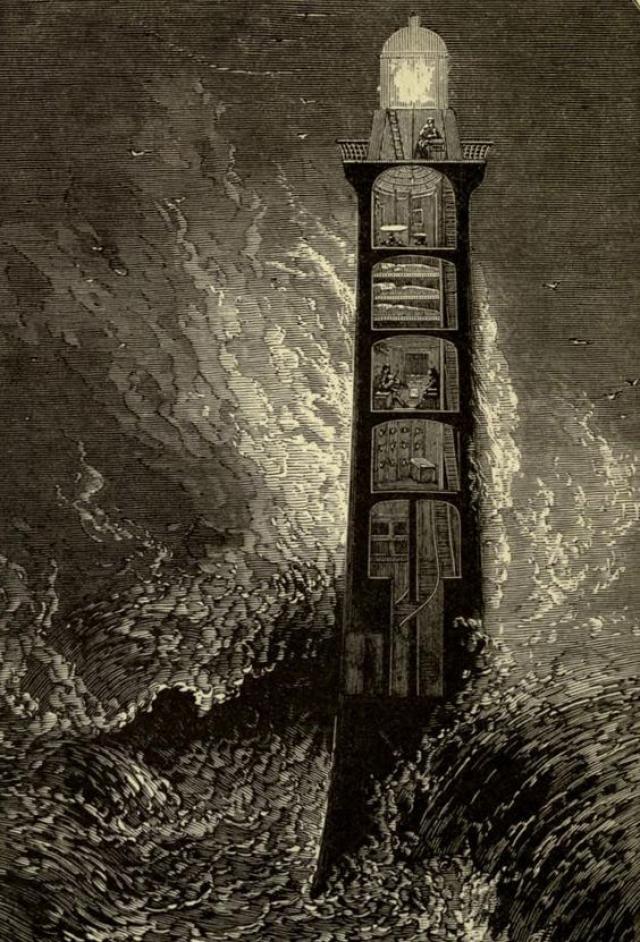
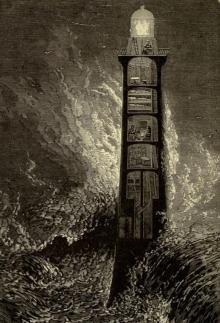
CHAPTER I THE ROCK Early on a summer morning, about the beginning of the nineteenth century, two fishermen of Forfarshire wended their way to the shore, launched their boat, and put off to sea. One of the men was tall and ill-favoured, the other, short and well-favoured. Both were square-built, powerful fellows, like most men of the class to which they belonged. It was about that calm hour of the morning which precedes sunrise, when most living creatures are still asleep, and inanimate nature wears, more than at other times, the semblance of repose. The sea was like a sheet of undulating glass. A breeze had been expected, but, in defiance of expectation, it had not come, so the boatmen were obliged to use their oars. They used them well, however, insomuch that the land ere long appeared like a blue line on the horizon, then became tremulous and indistinct, and finally vanished in the mists of morning. The men pulled "with a will,"—as seamen pithily express in silence. Only once during the first hour did the ill-favoured man venture a remark. Referring to the absence of wind, he said, that "it would be a\' the better for landin\' on the rock." This was said in the broadest vernacular dialect, as, indeed, was everything that dropped from the fishermen\'s lips. We take the liberty of modifying it a little, believing that strict fidelity here would entail inevitable loss of sense to many of our readers. The remark, such as it was, called forth a rejoinder from the short comrade, who stated his belief that "they would be likely to find somethin\' there that day." They then relapsed into silence. Under the regular stroke of the oars the boat advanced steadily, straight out to sea. At first the mirror over which they skimmed was grey, and the foam at the cutwater leaden-coloured. By degrees they rowed, as it were, into a brighter region. The sea ahead lightened up, became pale yellow, then warmed into saffron, and, when the sun rose, blazed into liquid gold. The words spoken by the boatmen, though few, were significant. The "rock" alluded to was the celebrated and much dreaded Inch Cape—more familiarly known as the Bell Rock—which being at that time unmarked by lighthouse or beacon of any kind, was the terror of mariners who were making for the firths of Forth and Tay. The "something" that was expected to be found there may be guessed at, when we say that one of the fiercest storms that ever swept our eastern shores had just exhausted itself after strewing the coast with wrecks. The breast of ocean, though calm on the surface, as has been said, was still heaving with a mighty swell, from the effects of the recent elemental conflict. "D\'ye see the breakers noo, Davy?" enquired the ill-favoured man, who pulled the aft oar. "Ay, and hear them, too," said Davy Spink, ceasing to row, and looking over his shoulder towards the seaward horizon. "Yer een and lugs are better than mine, then," returned the ill-favoured comrade, who answered, when among his friends, to the name of Big Swankie, otherwise, and more correctly, Jock Swankie....
Read online
  • 291
The Giant of the North: Pokings Round the Pole

The Giant of the North: Pokings Round the Pole

R. M. Ballantyne

Fiction / Children's / Travel

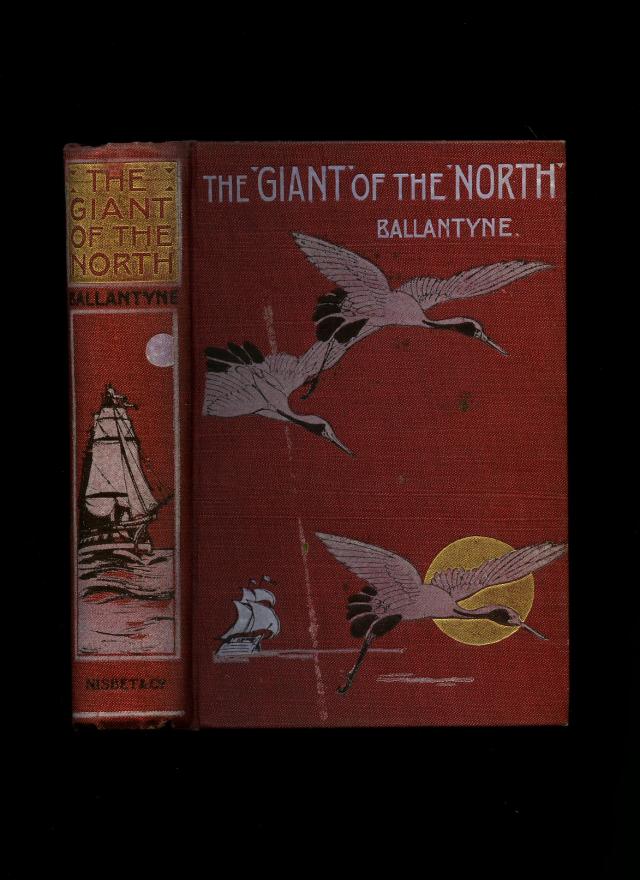
Introduces our Hero and his Kindred. The Giant was an Eskimo of the Arctic regions. At the beginning of his career he was known among his kindred by the name of Skreekinbroot, or the howler, because he howled oftener and more furiously than any infant that had ever been born in Arctic land. His proper name, however, was Chingatok, though his familiars still ventured occasionally to style him Skreekinbroot. Now it must not be supposed that our giant was one of those ridiculous myths of the nursery, with monstrous heads and savage hearts, who live on human flesh, and finally receive their deserts at the hands of famous giant-killing Jacks. No! Chingatok was a real man of moderate size—not more than seven feet two in his sealskin boots—with a lithe, handsome figure, immense chest and shoulders, a gentle disposition, and a fine, though flattish countenance, which was sometimes grave with thought, at other times rippling with fun. We mention the howling characteristic of his babyhood because it was, in early life, the only indication of the grand spirit that dwelt within him—the solitary evidence of the tremendous energy with which he was endowed. At first he was no bigger than an ordinary infant. He was, perhaps, a little fatter, but not larger, and there was not an oily man or woman of the tribe to which he belonged who would have noticed anything peculiar about him if he had only kept moderately quiet; but this he would not or could not do. His mouth was his safety-valve. His spirit seemed to have been born big at once. It was far too large for his infant body, and could only find relief from the little plump dwelling in which it was at first enshrined by rushing out at the mouth. The shrieks of pigs were trifles to the yelling of that Eskimo child’s impatience. The caterwauling of cats was as nothing to the growls of his disgust. The angry voice of the Polar bear was a mere chirp compared with the furious howling of his disappointment, and the barking of a mad walrus was music to the roaring of his wrath. Every one, except his mother, wished him dead and buried in the centre of an iceberg or at the bottom of the Polar Sea. His mother—squat, solid, pleasant-faced, and mild—alone put up with his ways with that long-suffering endurance which is characteristic of mothers. Nothing could disturb the serenity of Toolooha. When the young giant, (that was to be), roared, she fondled him; if that was ineffectual, she gave him a walrus tusk or a seal’s flipper to play with; if that did not suffice, she handed him a lump of blubber to suck; if that failed, as was sometimes the case, she gambolled with him on the floor of her snow-hut, and rubbed his oily visage lovingly over her not less oleaginous countenance. Need we enlarge on this point? Have not all mothers acted thus, or similarly, in all times and climes? From pole to pole a mother’s soulIs tender, strong, and true;Whether the loved be good or bad—White, yellow, black, or blue. But Toolooha’s love was wise as well as strong....
Read online
  • 290
Under the Waves: Diving in Deep Waters

Under the Waves: Diving in Deep Waters

R. M. Ballantyne

Fiction / Children's / Travel

Robert Michael Ballantyne (24 April 1825 – 8 February 1894) was a Scottish author of juvenile fiction who wrote more than 100 books. He was also an accomplished artist, and exhibited some of his water-colours at the Royal Scottish Academy Ballantyne was born in Edinburgh on 24 April 1825, the ninth of ten children and the youngest son, to Alexander Thomson Ballantyne (1776–1847) and his wife Anne (1786–1855). Alexander was a newspaper editor and printer in the family firm of "Ballantyne & Co" based at Paul\'s Works on the Canongate,[2] and Robert\'s uncle James Ballantyne (1772–1833) was the printer for Scottish author Sir Walter Scott.[3] In 1832-33 the family is known to have been living at 20 Fettes Row, in the northern New Town of Edinburgh.[2] A UK-wide banking crisis in 1825 resulted in the collapse of the Ballantyne printing business the following year with debts of £130,000, which led to a decline in the family\'s fortunes. Ballantyne went to Canada aged 16, and spent five years working for the Hudson\'s Bay Company. He traded with the local Native Americans for furs, which required him to travel by canoe and sleigh to the areas occupied by the modern-day provinces of Manitoba, Ontario, and Quebec, experiences that formed the basis of his novel Snowflakes and Sunbeams (1856).[3] His longing for family and home during that period impressed him to start writing letters to his mother. Ballantyne recalled in his autobiographical Personal Reminiscences in Book Making (1893) that "To this long-letter writing I attribute whatever small amount of facility in composition I may have acquired
Read online
  • 282
Erling the Bold

Erling the Bold

R. M. Ballantyne

Fiction / Children's / Travel

                                                                               A CLASH OF AXES, A SLASH OF SWORDSIt was a memorable duel. For hours, King Haldor of Horlingdal and King Ulf of Romsdal battled. But the axe of Haldor the Fierce split Ulf's shield, and slammed into his head, putting him into his bed for a full week. Thus did King Haldor win the contest prize of this Viking contest. Herfrida the Soft Eyed became his bride. Herfrida bore King Haldor a son named Erling. Ulf sired a daughter named Hilda. The Viking kings became friends and their progeny grew. Erling became a handsome young man and Hilda a beautiful young woman. But Erling the Bold's Viking destiny was not peace. For Erling the Bold and Hilda the Sunbeam met a hermit with a strange new faith. His name was Christian. He changed their fate forever.
Read online
  • 281
The Norsemen in the West

The Norsemen in the West

R. M. Ballantyne

Fiction / Children's / Travel

The Norsemen in the West; Or America before Columbus. The Curtain Rises and the Play Begins. One fine autumn evening, between eight and nine hundred years ago, two large hairy creatures, bearing some resemblance to polar bears, might have been seen creeping slowly, and with much caution, toward the summit of a ridge that formed a spur to one of the ice-clad mountains of Greenland. The creatures went on all-fours. They had long bodies, short legs, shorter tails, and large round heads. Having gained the top of the ridge they peeped over and beheld a hamlet nestled at the foot of a frowning cliff; and at the head of a smiling inlet. We use these terms advisedly, because the cliff, being in deep shadow, looked unusually black and forbidding, while the inlet, besides being under the influence of a profound calm, was lit up on all its dimples by the rays of the setting sun. The hamlet consisted of one large cottage and half a dozen small cots, besides several sheds and enclosures wherein were a few sleepy-looking sheep, some lean cattle, and several half-starved horses. There was active life there also. Smoke issued from the chimneys; fresh-looking women busied themselves about household work; rosy children tumbled in and out at the doors, while men in rough garments and with ruddy countenances mended nets or repaired boats on the shore. On a bench in front of the principal cottage sat a sturdy man, scarcely middle-aged, with shaggy fair and flowing locks. His right foot served as a horse to a rapturous little boy, whose locks and looks were so like to those of the man that their kinship was obvious—only the man was rugged and rough in exterior; the boy was round and smooth. Tow typified the hair of the man; floss silk that of the boy. Everything in and around the hamlet bore evidence of peace and thrift. It was a settlement of Norsemen—the first Greenland settlement, established by Eric the Red of Iceland about the year 986—nearly twenty years before the date of the opening of our tale—and the hairy creatures above referred to had gone there to look at it. Having gazed very intently over the ridge for a considerable time, they crept backwards with extreme caution, and, on getting sufficiently far down the hill-side to be safe from observation, rose on their hind-legs and began to talk; from which circumstance it may be concluded that they were human beings. After talking, grinning, and glaring at each other for a few minutes, with gestures to correspond, as though on the point of engaging in mortal combat, they suddenly wheeled about and walked off at a rapid pace in the direction of a gorge in the mountains, the head of which was shut in by and filled up with cliffs and masses and fields of ice that overtopped the everlasting hills, and rested like a white crest on the blue sky. Vast though it seemed, this was merely a tongue of those great glaciers of the mysterious North which have done, and are still doing, so much to modify the earth’s economy and puzzle antiquarian philosophy; which form the fountain-head of influences that promote the circulation of the great deep, and constitute the cradle of those ponderous icebergs that cover the arctic seas....
Read online
  • 279