Ungava

Ungava

R. M. Ballantyne

Fiction / Children's / Travel

The Scottish juvenile fiction writer R. M. Ballantyne was born into a famous family of publishers. Leaving home at age 16 he went to work for the Hudson\'s Bay Company; after returning home to Scotland R. M. Ballantyne published his first book "Hudson\'s Bay" detailing his experiences in Canada. Later Ballantyne would write about more of his experiences with Native Americans and the Fur trappers he met in the most remote regions of Canada. With his success as a writer he withdrew from the business world to become a full time writer for the rest of his life. With over a hundred different books he has become one of the most cherished juvenile fiction writers today. Along with his other exploits throughout his life he also was tremendously successful with his artwork as his water color paintings were displayed at the Royal Scottish Academy.
Read online
  • 276
The Lifeboat

The Lifeboat

R. M. Ballantyne

Fiction / Children's / Travel

The Scottish juvenile fiction writer R. M. Ballantyne was born into a famous family of publishers. Leaving home at age 16 he went to work for the Hudson\'s Bay Company; after returning home to Scotland R. M. Ballantyne published his first book "Hudson\'s Bay" detailing his experiences in Canada. Later Ballantyne would write about more of his experiences with Native Americans and the Fur trappers he met in the most remote regions of Canada. With his success as a writer he withdrew from the business world to become a full time writer for the rest of his life. With over a hundred different books he has become one of the most cherished juvenile fiction writers today. Along with his other exploits throughout his life he also was tremendously successful with his artwork as his water color paintings were displayed at the Royal Scottish Academy.
Read online
  • 271
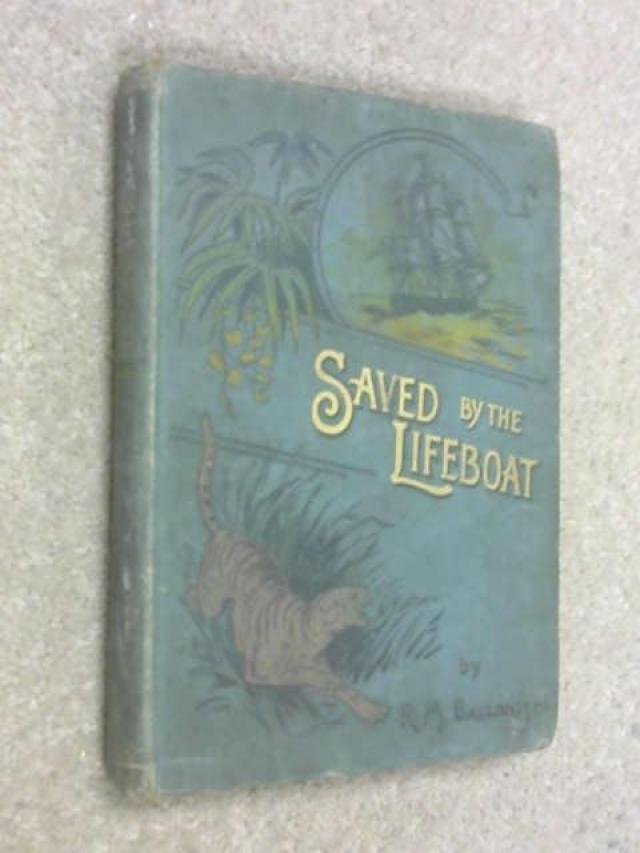
Saved by the Lifeboat

Saved by the Lifeboat

R. M. Ballantyne

Fiction / Children's / Travel

The Scottish juvenile fiction writer R. M. Ballantyne was born into a famous family of publishers. Leaving home at age 16 he went to work for the Hudson\'s Bay Company; after returning home to Scotland R. M. Ballantyne published his first book "Hudson\'s Bay" detailing his experiences in Canada. Later Ballantyne would write about more of his experiences with Native Americans and the Fur trappers he met in the most remote regions of Canada. With his success as a writer he withdrew from the business world to become a full time writer for the rest of his life. With over a hundred different books he has become one of the most cherished juvenile fiction writers today. Along with his other exploits throughout his life he also was tremendously successful with his artwork as his water color paintings were displayed at the Royal Scottish Academy.
Read online
  • 259
Deep Down, a Tale of the Cornish Mines

Deep Down, a Tale of the Cornish Mines

R. M. Ballantyne

Fiction / Children's / Travel

In this heart-warming tale of love, life, laughter, and tragedy (with some smuggling thrown in for good measure), travel back in time to explore life set amongst the people living near the tin and copper mines of St. Just, Cornwall, in the mid-nineteenth century. During the mid-1860s, R.M. Ballantyne spent more than three months living amongst the Cornish mineworkers of St. Just. There, amidst the dangers of the deep mines, he sets a story of courage, contentment, and adversity, encouraging young readers to be grateful for the many blessings we all enjoy of home and faith. Ballantyne incorporates into his novel many historical facts, producing an exciting and very accurate portrayal of Victorian tin and copper mining and everyday Cornish life.
Read online
  • 249
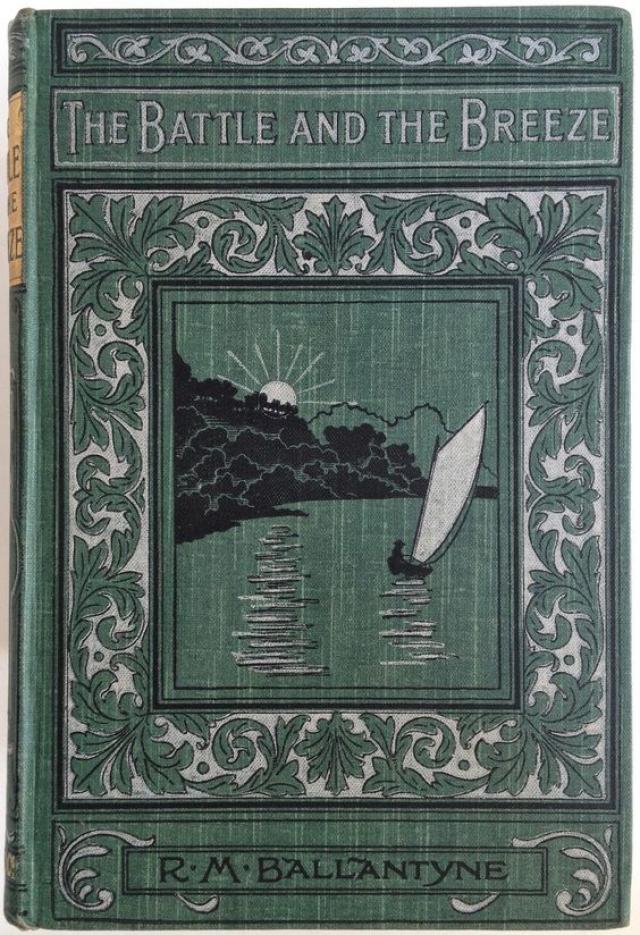
The Battle and the Breeze

The Battle and the Breeze

R. M. Ballantyne

Fiction / Children's / Travel

Illustrated with 10 unique illustrations.Away in the WildernessThe Battery and the BoilerThe Battle and the BreezeBattles with the SeaThe Big OtterBlack IvoryBlown to BitsBlue LightsThe Buffalo RunnersThe Cannibal IslandsCharlie to the RescueChasing the SunThe Coral IslandThe Coxswain\'s BrideThe Crew of the Water WagtailDeep Down, a Tale of the Cornish MinesDigging for GoldThe Dog Crusoe and his MasterDusty Diamonds Cut and PolishedThe Eagle CliffErling the BoldFast in the IceFighting the FlamesFighting the WhalesThe Floating Light of the Goodwin SandsFort DesolationFreaks on the FellsThe FugitivesThe Garret and the GardenGascoyne, the Sandal-Wood TraderThe Giant of the NorthThe Golden DreamThe Gorilla HuntersHandbook to the new Gold-fieldsThe Hot SwampHudson BayHunted and HarriedHunting the LionsThe Island QueenThe LifeboatLife in the Red BrigadeThe LighthouseThe Lonely IslandThe Madman and the PirateMartin RattlerThe Norsemen in the WestOver the Rocky MountainsPhilosopher JackThe PioneersThe Pirate CityThe Red Man\'s RevengeRivers of IceSunk at SeaThe Young Fur Traders
Read online
  • 245
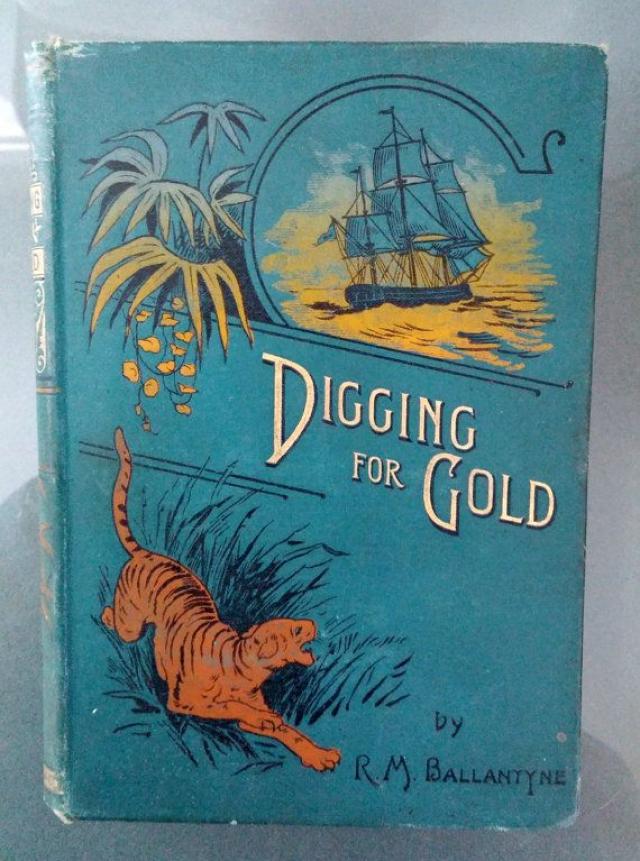
Digging for Gold: Adventures in California

Digging for Gold: Adventures in California

R. M. Ballantyne

Fiction / Children's / Travel

Digging for Gold - Adventures in California is presented here in a high quality paperback edition. This popular classic work by R. M. (Robert Michael) Ballantyne is in the English language, and may not include graphics or images from the original edition. If you enjoy the works of R. M. (Robert Michael) Ballantyne then we highly recommend this publication for your book collection.
Read online
  • 245


The Story of the Rock

The Story of the Rock

R. M. Ballantyne

Fiction / Children's / Travel

Wreck of Winstanley’s Lighthouse. “At mischief again, of course: always at it.” Mrs Potter said this angrily, and with much emphasis, as she seized her son by the arm and dragged him out of a pool of dirty water, into which he had tumbled. “Always at mischief of one sort or another, he is,” continued Mrs Potter, with increasing wrath, “morning, noon, and night—he is; tumblin’ about an’ smashin’ things for ever he does; he’ll break my heart at last—he will. There: take that!” “That,” which poor little Tommy was desired to take, was a sounding box on the ear, accompanied by a violent shake of the arm which would have drawn that limb out of its socket if the child’s bones and muscles had not been very tightly strung together. Mrs Potter was a woman of large body and small brain. In respect of reasoning power, she was little better than the wooden cuckoo which came out periodically from the interior of the clock that stood over her own fireplace and announced the hours. She entertained settled convictions on a few subjects, in regard to which she resembled a musical box. If you set her going on any of these, she would harp away until she had played the tune out, and then begin over again; but she never varied. Reasons, however good, or facts, however weighty, were utterly powerless to penetrate her skull: her “settled convictions” were not to be unsettled by any such means. Men might change their minds; philosophers might see fit to alter their opinions; weaklings of both sexes and all ages might trim their sails in accordance with the gales of advancing knowledge, but Mrs Potter—no: never! her colours were nailed to the mast. Like most people who unite a strong will with an empty head, she was “wiser in her own conceit than eleven men that can render a reason:” in brief, she was obstinate. One of her settled convictions was that her little son Tommy was “as full of mischief as a hegg is full of meat.” Another of these convictions was that children of all ages are tough; that it does them good to pull them about in a violent manner, at the risk even of dislocating their joints. It mattered nothing to Mrs Potter that many of her female friends and acquaintances held a different opinion. Some of these friends suggested to her that the hearts of the poor little things were tender, as well as their muscles and bones and sinews; that children were delicate flowers, or rather buds, which required careful tending and gentle nursing. Mrs Potter’s reply was invariably, “Fiddlesticks!” she knew better. They were obstinate and self-willed little brats that required constant banging. She knew how to train ’em up, she did; and it was of no manner of use, it wasn’t, to talk to her upon that point. She was right. It was of no use. As well might one have talked to the wooden cuckoo, already referred to, in Mrs Potter’s timepiece. “Come, Martha,” said a tall, broad-shouldered, deep-voiced man at her elbow, “don’t wop the poor cheeld like that....
Read online
  • 244
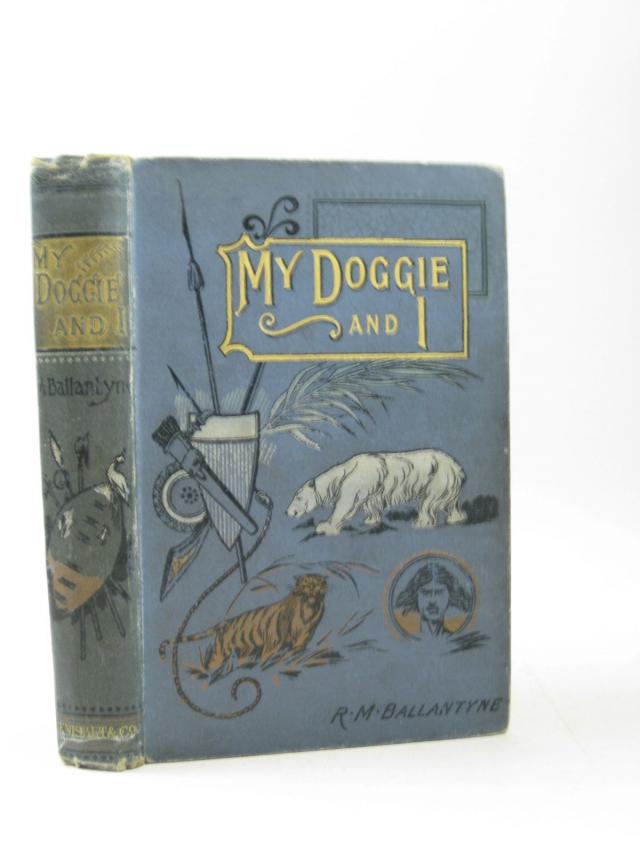
My Doggie and I

My Doggie and I

R. M. Ballantyne

Fiction / Children's / Travel

This work has been selected by scholars as being culturally important, and is part of the knowledge base of civilization as we know it. This work was reproduced from the original artifact, and remains as true to the original work as possible. Therefore, you will see the original copyright references, library stamps (as most of these works have been housed in our most important libraries around the world), and other notations in the work. This work is in the public domain in the United States of America, and possibly other nations. Within the United States, you may freely copy and distribute this work, as no entity (individual or corporate) has a copyright on the body of the work.As a reproduction of a historical artifact, this work may contain missing or blurred pages, poor pictures, errant marks, etc. Scholars believe, and we concur, that this work is important enough to be preserved, reproduced, and made generally available to the public. We appreciate your support of the preservation process, and thank you for being an important part of keeping this knowledge alive and relevant. --This text refers to an alternate Paperback edition. --This text refers to an alternate Paperback edition.
Read online
  • 241
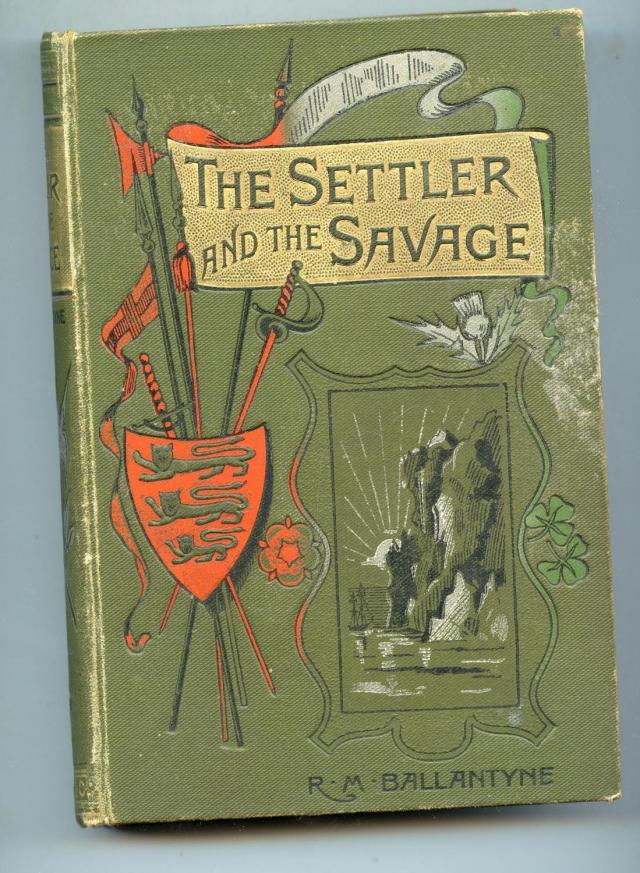
The Settler and the Savage

The Settler and the Savage

R. M. Ballantyne

Fiction / Children's / Travel

The Wild Karroo. A solitary horseman—a youth in early manhood—riding at a snail’s pace over the great plains, or karroo, of South Africa. His chin on his breast; his hands in the pockets of an old shooting-coat; his legs in ragged trousers, and his feet in worn-out boots. Regardless of stirrups, the last are dangling. The reins hang on the neck of his steed, whose head may be said to dangle from its shoulders, so nearly does its nose approach the ground. A felt hat covers the youth’s curly black head, and a double-barrelled gun is slung across his broad shoulders. We present this picture to the reader as a subject of contemplation. It was in the first quarter of the present century that the youth referred to—Charlie Considine by name—rode thus meditatively over that South African karroo. His depression was evidently not due to lack of spirit, for, when he suddenly awoke from his reverie, drew himself up and shook back his hair, his dark eyes opened with something like a flash. They lost some of their fire, however, as he gazed round on the hot plain which undulated like the great ocean to the horizon, where a line of blue indicated mountains. The truth is that Charlie Considine was lost—utterly lost on the karroo! That his horse was in the same lost condition became apparent from its stopping without orders and looking round languidly with a sigh. “Come, Rob Roy,” said the youth, gathering up the reins and patting the steed’s neck, “this will never do. You and I must not give in to our first misfortune. No doubt the want of water for two days is hard to bear, but we are strong and young both of us. Come, let’s try at least for a sheltering bush to sleep under, before the sun goes down.” Animated by the cheering voice, if not by the words, of its rider, the horse responded to the exhortation by breaking into a shuffling canter. After a short time the youth came in sight of what appeared to be a herd of cattle in the far distance. In eager expectation he galloped towards them and found that his conjectures were correct. They were cattle in charge of one of that lowest of the human race, a Bushman. The diminutive, black-skinned, and monkey-faced creature was nearly naked. He carried a sheepskin kaross, or blanket, on his left shoulder, and a knobbed stick, or “kerrie,” in his right hand. “Can you speak English?” asked Considine as he rode up. The Bushman looked vacant and made no reply. “Where is your master’s house?” asked the youth. A stare was the only answer. “Can’t you speak, you dried-up essence of stupidity!” exclaimed Charlie with impatience. At this the Bushman uttered something with so many klicks, klucks, and gurgles in it that his interrogator at once relinquished the use of the tongue, and took to signs, but with no better success, his efforts having only the effect of causing the mouth of the Bushman to expand from ear to ear. Uttering a few more klicks and gurgles, he pointed in the direction of the setting sun....
Read online
  • 239
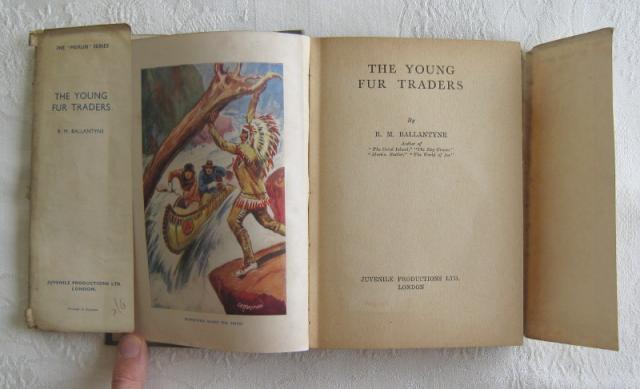
The Young Fur Traders

The Young Fur Traders

R. M. Ballantyne

Fiction / Children's / Travel

The Scottish juvenile fiction writer R. M. Ballantyne was born into a famous family of publishers. Leaving home at age 16 he went to work for the Hudson\'s Bay Company; after returning home to Scotland R. M. Ballantyne published his first book "Hudson\'s Bay" detailing his experiences in Canada. Later Ballantyne would write about more of his experiences with Native Americans and the Fur trappers he met in the most remote regions of Canada. With his success as a writer he withdrew from the business world to become a full time writer for the rest of his life. With over a hundred different books he has become one of the most cherished juvenile fiction writers today. Along with his other exploits throughout his life he also was tremendously successful with his artwork as his water color paintings were displayed at the Royal Scottish Academy.
Read online
  • 237
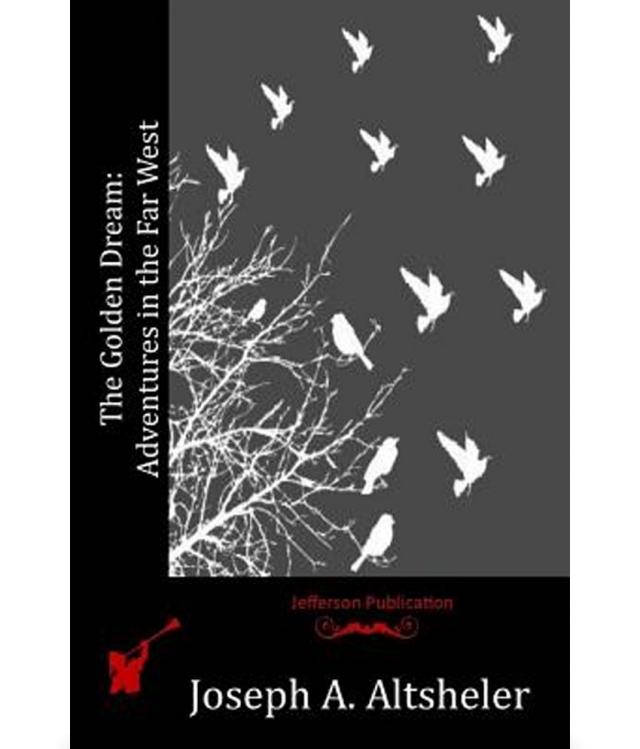
The Golden Dream: Adventures in the Far West

The Golden Dream: Adventures in the Far West

R. M. Ballantyne

Fiction / Children's / Travel

The Cause of the Whole Affair. Ned Sinton gazed at the scene before him with indescribable amazement! He had often witnessed strange things in the course of his short though chequered life, but he had never seen anything like this. Many a dream of the most extravagant nature had surrounded his pillow with creatures of curious form and scenes of magic beauty, but never before, either by actual observation or in nightly vision, had Ned Sinton beheld a scene so wonderful as that which now lay spread out before him. Ned stood in the centre of a cavern of vast dimensions—so vast, and so full of intense light, that instead of looking on it as a huge cave, he felt disposed to regard it as a small world. The sides of this cavern were made of pure gold, and the roof—far above his head—was spangled all over with glittering points, like a starry sky. The ground, too, and, in short, everything within the cave, was made of the same precious metal. Thousands of stalactites hung from the roof like golden icicles. Millions of delicate threads of the same material also depended from the star-spangled vault, each thread having a golden ball at the end of it, which, strange to say, was transparent, and permitted a bright flame within to shine through, and shed a yellow lustre over surrounding objects. All the edges, and angles, and points of the irregularly-formed walls were of burnished gold, which reflected the rays of these pendant lamps with dazzling brilliancy, while the broad masses of the frosted walls shone with a subdued light. Magnificent curtains of golden filigree fell in rich voluminous folds on the pavement, half concealing several archways which led into smaller caverns, similar to the large one. Altogether it was a scene of luxurious richness and splendour that is utterly indescribable. But the thing that amazed Ned Sinton most was, that the company of well-dressed ladies and gentlemen who moved about in these splendid halls, and ate golden ices, or listened to the exquisite strains of music that floated on the atmosphere, were all as yellow as guineas! Ned could by no means understand this. In order to convince himself that there was no deception in the matter, he shook hands with several of the people nearest to him, and found that they were cold and hard as iron; although, to all appearance, they were soft and pliable, and could evidently move about with perfect freedom. Ned was very much puzzled indeed. One would have thought he must have believed himself to be dreaming. Not a bit of it. He knew perfectly well that he was wide-awake. In fact, a doubt upon that point never crossed his mind for a moment. At length he resolved to ask the meaning of it all, and, observing a stout old gentleman, with a bland smile on his yellow countenance, in the act of taking a pinch of golden snuff from a gold snuff-box, he advanced and accosted him. “Pray, sir,” began Ned, modestly, “may I take the liberty of asking you what is the meaning of all this?” “All what, sir?” inquired the old gentleman, in a deep metallic voice....
Read online
  • 237
The Life of a Ship

The Life of a Ship

R. M. Ballantyne

Fiction / Children's / Travel

Song of the Sailor Boy. Oh! I love the great blue ocean, I love the whistling breeze,When the gallant ship sweeps lightly Across the surging seas.I watched my first ship building; I saw her timbers rise,Until her masts were towering Up in the bright blue skies. I heard the cheers ascending, I saw her kiss the foam,When first her hull went plunging Into her ocean home.Her flags were gaily streaming, And her sails were full and round,When the shout from shore came ringing, “Hurrah! for the Outward-bound!” But, alas! ere long a tempest Came down with awful roarAnd dashed our ship in pieces Upon a foreign shore.But He who holds the waters In His almighty hand,Brought all the sailors safely Back to their native land. Davy was a fisher boy; and Davy was a very active little boy; and Davy wanted to go to sea. His father was a fisherman, his grandfather had been a fisherman, and his great-grandfather had been a fisherman: so we need not wonder much that little Davy took to the salt water like a fish. When he was very little he used to wade in it, and catch crabs in it, and gather shells on the shore, or build castles on the sands. Sometimes, too, he fell into the water neck and heels, and ran home to his mother, who used to whip him and set him to dry before the fire; but, as he grew older, he went with his father in the boat to fish, and from that time forward he began to wish to go to sea in one of the large ships that were constantly sailing away from the harbour near his father’s cottage. One day Davy sat on a rock beside the sea, leaning on his father’s boathook, and gazing with longing eyes out upon the clear calm ocean, on which several ships and boats were floating idly, for there was not a breath of wind to fill their sails. “Oh, how I wish my father would let me go to sea!” said Davy, with a deep sigh. “I wonder if I shall ever sail away beyond that line yonder, far, far away, where the sky seems to sink into the sea!” The line that he spoke of was the horizon. Davy heaved another sigh, and smiled; for, just at that moment, his eyes fell on a small crab that stood before him with its claws up as if it were listening to what he said. “Oh, crab, crab,” cried the little boy, “you’re a happy beast!” At that moment he moved the boathook, and the crab ran away in such a desperate hurry that Davy opened his eyes wide and said, “Humph! maybe ye’re not a happy beast after all!” While he sat thus, a stout fisherman came up and asked him what he was thinking about. On being told, he said, “Will you come with me, boy, to the building-yard, and I’ll show you a ship on the ‘stocks.’ I’m goin’ as one of her crew when she’s ready for sea, and perhaps by that time your father will let you go too.” You may be sure that Davy did not refuse such a good offer; so the man and the boy went hand in hand to the yard where ships were built....
Read online
  • 236
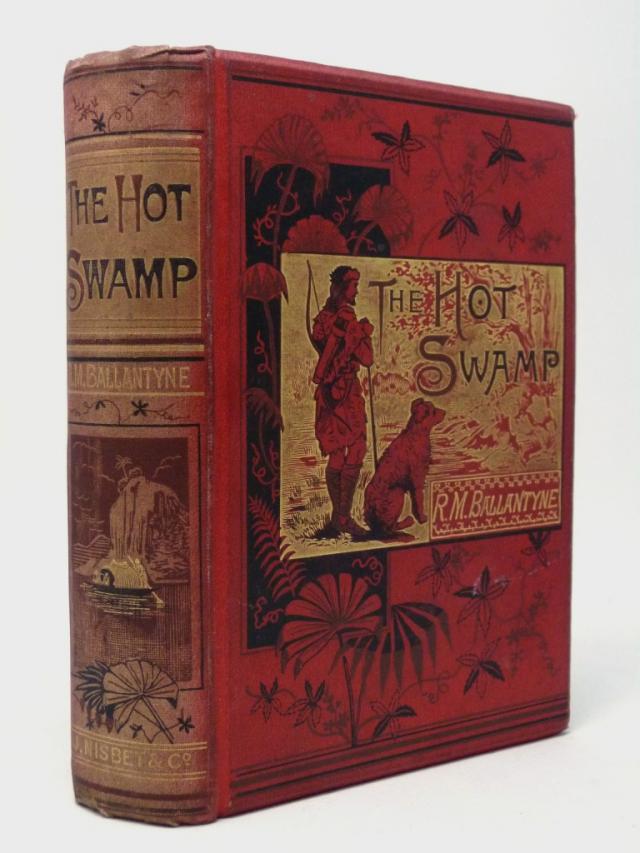
The Hot Swamp

The Hot Swamp

R. M. Ballantyne

Fiction / Children's / Travel

This work has been selected by scholars as being culturally important and is part of the knowledge base of civilization as we know it.This work is in the public domain in the United States of America, and possibly other nations. Within the United States, you may freely copy and distribute this work, as no entity (individual or corporate) has a copyright on the body of the work.Scholars believe, and we concur, that this work is important enough to be preserved, reproduced, and made generally available to the public. To ensure a quality reading experience, this work has been proofread and republished using a format that seamlessly blends the original graphical elements with text in an easy-to-read typeface.We appreciate your support of the preservation process, and thank you for being an important part of keeping this knowledge alive and relevant. --This text refers to an alternate Paperback edition. --This text refers to an alternate Paperback edition.
Read online
  • 230
The Battery and the Boiler: Adventures in Laying of Submarine Electric Cables

The Battery and the Boiler: Adventures in Laying of Submarine Electric Cables

R. M. Ballantyne

Fiction / Children's / Travel

In which the Hero makes his First Flash and Explosion. Somewhere about the middle of this nineteenth century, a baby boy was born on the raging sea in the midst of a howling tempest. That boy was the hero of this tale. He was cradled in squalls, and nourished in squalor—a week of dirty weather having converted the fore-cabin of the emigrant ship into something like a pig-sty. Appreciating the situation, no doubt, the baby boy began his career with a squall that harmonised with the weather, and, as the steward remarked to the ship’s cook, “continued for to squall straight on end all that day and night without so much as ever takin’ breath!” It is but right to add that the steward was prone to exaggeration. “Stooard,” said the ship’s cook in reply, as he raised his eyes from the contemplation of his bubbling coppers, “take my word for it, that there babby what has just bin launched ain’t agoin’ to shovel off his mortal coil—as the play-actor said—without makin’ his mark some’ow an’ somew’eres.” “What makes you think so, Johnson?” asked the steward. “What makes me think so, stooard?” replied the cook, who was a huge good-natured young man. “Well, I’ll tell ’ee. I was standin’ close to the fore hatch at the time, a-talkin’ to Jim Brag, an’ the father o’ the babby, poor feller, he was standin’ by the foretops’l halyards holdin’ on to a belayin’-pin, an’ lookin’ as white as a sheet—for I got a glance at ’im two or three times doorin’ the flashes o’ lightnin’. Well, stooard, there was lightnin’ playin’ round the mizzen truck, an’ the main truck, an’ the fore truck, an’ at the end o’ the flyin’ jib-boom, an’ the spanker boom; then there came a flash that seemed to set afire the entire univarse; then a burst o’ thunder like fifty great guns gone off all at once in a hurry. At that identical moment, stooard, there came up from the fore-cabin a yell that beat—well, I can’t rightly say what it beat, but it minded me o’ that unfortnit pig as got his tail jammed in the capstan off Cape Horn. The father gave a gasp. ‘It’s born,’ says he. ‘More like’s if it’s basted,’ growled Jim Brag. ‘You’re a unfeelin’ monster, Brag,’ says I; ‘an’ though you are the ship’s carpenter, I will say it, you ’aven’t got no more sympathy than the fluke of an anchor!’ Hows’ever the poor father didn’t hear the remark, for he went down below all of a heap—head, legs, and arms—anyhow. Then there came another yell, an’ another, an’ half a dozen more, which was followed by another flash o’ lightnin’ an’ drownded in another roar o’ thunder; but the yells from below kep’ on, an’ came out strong between times, makin’ no account whatever o’ the whistlin’ wind an’ rattlin’ ropes, which they riz above—easy.—Now, stooard, do you mean for to tell me that all that signifies nothink? Do you suppose that that babby could go through life like an or’nary babby? No, it couldn’t—not even if it was to try—w’ich it won’t!” Having uttered this prophecy the cook resumed the contemplation of his bubbling coppers....
Read online
  • 229