

Arabella, p.20
Arabella,
p.20
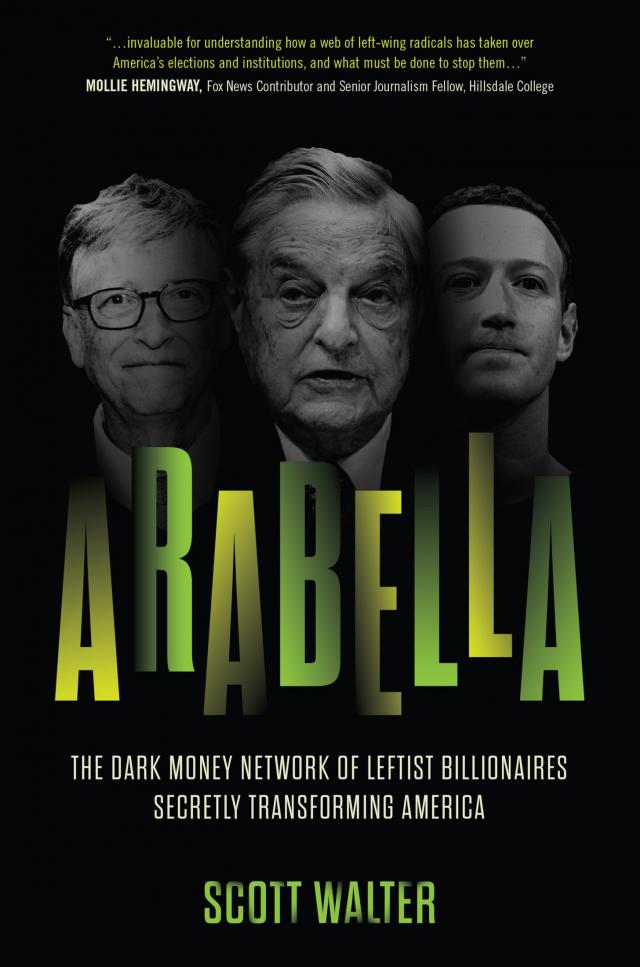


Legal experts reviewing the evidence were particularly concerned about what Arabella did once Sarah Walker blew the whistle on the supposedly independent 501(c)(4) group being controlled by an Arabella 501(c)(3) project. In response, Arabella allegedly directed one of its internal (c)(4) groups, the North Fund, to have employees alter their past timesheets to make it appear North Fund had subsidized the “independent” nonprofit’s work the previous year. “The attempt to retroactively involve a c4 in the spending is an indication that someone realized how risky the political activity is for the charity,” one nonprofit attorney told the Free Beacon. “While nonprofits regularly file amendments, going back and changing time sheets after the books are closed and nearly 18 months prior is unusual to say the least.”18
Further efforts to clean up this mess have resulted in the internal Arabella (c)(3) project, the Voting Rights Lab, leaving the New Venture Fund to become part of the independent Secure Democracy group of nonprofits, as the same Free Beacon article explains.
Sarah Walker’s lawsuit has not been scheduled for a hearing at this writing. The judge in Weaks’s lawsuit denied New Venture Fund’s motion to dismiss, though New Venture has filed for reconsideration, claiming it did not breach a statement of work or a master service agreement. At press time, parties are scheduled to enter into mediation in January 2024.
Further Troubles for Arabella
In addition to the problems swirling around Arabella’s two lawsuits, it saw its 2021 revenues dip from the historic highs of 2020. In the aftermath, it laid off 10 percent of its staff, about thirty employees, in 2023, and it once again saw its top leader step down precipitously, with no successor in sight. The board let CEO Rick Cruz go with “decidedly mixed emotions” less than two weeks after the Free Beacon’s embarrassing reports on alleged improprieties at the network.19
Another threat to Arabella’s finances appeared in 2023 when the chairman of the House Administration Committee, Rep. Bryan Steil (R-WI), introduced legislation that would affect Arabella because of the empire’s receipt of hundreds of millions of dollars from foreign donor Hansjörg Wyss over the years. The proposed law forbids “dark money” groups like Arabella’s Sixteen Thirty Fund from giving to political action committees if they accept foreign donations.
Still more embarrassments struck Arabella in 2023. The conservative-leaning watchdog group Americans for Public Trust filed an IRS complaint alleging, among other things, that the New Venture and Sixteen Thirty Funds misled the IRS in their applications for tax-exemption. In identical language, when filing their applications for tax-exempt status, both New Venture Fund and Sixteen Thirty informed the IRS “that their administrative support arrangements with Arabella would be of limited duration,” ending as soon as they had sufficient revenues to provide for themselves in house the administrative services they originally were purchasing from the for-profit Arabella. Of course, two decades have now elapsed, and the two funds have seen spectacular growth in revenues, yet they continue to pay millions to Eric Kessler’s Arabella consultancy.20
Arabella suffered yet another embarrassment as Sam Bankman-Fried, Democratic mega-donor and disgraced cryptocurrency entrepreneur, went to trial in 2023. Bankman-Fried’s father, who is also accused of wrongdoing in the multibillion-dollar collapse of his son’s businesses, was revealed in court filings to serve on an advisory board at New Venture Fund. That’s not surprising, given that court filings also claim Bankman-Fried’s FTX corporation gave New Venture at least $8 million. New Venture isn’t saying how much of the donation it still retains, nor which groups received FTX’s money, but it suggests it’s willing to return remaining funds once the bankruptcy court figures out where they should go.21
An Epilogue on Demand Justice
After being a part of the Sixteen Thirty Fund since its inception at a Democracy Alliance meeting in 2018, Demand Justice received its own independent tax-exempt status from the IRS in December 2021. It’s hard not to think this move occurred at least in part because of Capital Research Center’s exposure of Demand Justice and the Arabella network. The independent designation came just in time for another Supreme Court nomination debate. This time, Demand Justice almost single-handedly lobbied to promote Ketanji Brown Jackson from a lower court to the nation’s highest court in a scant few years—something Arabella Advisors itself is quick to say it had no hand in.22 An updated version of Arabella’s web page trying to brush off reporting by Capital Research claims, “In fact, Arabella Advisors does not work for Demand Justice in any capacity.”23
That may be true of Arabella the company, but not of its nonprofit network, for several reasons. First, Arabella’s Sixteen Thirty Fund pumped $110,000 into Demand Justice’s PAC, providing roughly one-third of its contributions in the 2022 cycle and making it the PAC’s second-largest contributor after Demand Justice itself.24 Much of that money was paid to consultancies like Mothership Strategies and Scasey Communications—the latter active in Wisconsin elections—for independent expenditures and digital consulting.25 Another $50,000 went to the Big Labor– aligned Working Families Party in New York.26
The other reasons to laugh at Arabella’s attempts to distance itself from Demand Justice include the $2 million that Arabella’s Sixteen Thirty Fund gave to Demand Justice in 2021 (the most recent year data are available), and the $2.8 million that Arabella’s New Venture Fund gave to Demand Justice Initiative, Demand Justice’s (c)(3) affiliate that began as a pop-up group at New Venture. These dollars provide millions of reasons to recognize that Demand Justice remains enmeshed in the Arabella web, even as it has become, technically, legally separate.
My Capital Research Center colleagues and I thank Arabella for adding excitement to our work of tracking its tentacles as it makes ever more embarrassed efforts to camouflage its network. Embarrassing though their efforts at mass deception should be, a group like Arabella is beyond embarrassment. Exposing their hypocrisy and their long reach into Americans’ lives, though important and valuable work, will not suffice to solve the problem Arabella presents. What can we do once we are aware of Arabella’s attempts to manipulate the public by misleading the public? That is the subject of our concluding chapter.
12
Can the Arabella Problem Be Solved?
THIS BOOK is a sobering wake-up call to Americans, few of whom have known about Arabella or its multibillion-dollar operation that is so deeply involved in their lives and their elections. Arabella’s successes reveal the Left’s stunning advantage in money and sophisticated political machinery. Still, the Left faces a major problem: where its ideas become entrenched—from big cities like San Francisco to prestigious colleges—they produce ugly realities that become a hindrance to the Left’s utopian dreams of control. Those dreams, when brought into real life, become nightmares, which helps explain why most Americans of all ethnicities and party registration don’t hold left-wing views on so many issues, from crime to race relations to voter ID laws. In fact, as I write, the black mayor of Dallas, a longtime Democrat, has switched parties, explaining that his constituents want the city to be hostile to crime but friendly to families and businesses. The best proof that he’s telling the truth: a few months before his switch, he received 93 percent support for reelection.1
I understand readers may become depressed after learning just how much money from numerous billionaires is pouring into all of these fake Arabella groups aligned against ordinary citizens. But it’s wrong to despair: people who support America’s founding principles of liberty and equality have been overcoming richer and more powerful foes since some backwoods colonials in the 1700s defeated the grandest empire the world had ever seen.
Countering Arabella through Education
That is not to say Arabella can easily be countered just because we are the righteous underdog, but the first steps are obvious and involve educating the public and government officials. We’ll consider other means of countering the Left’s project shortly, but the first priority must be to achieve a clear picture of the situation. No one can win a battle without first understanding the forces on the other side—their size, their capacities, their preferred ways of fighting, their foreign allies, how they’re configured. This book, and the continuing work of my colleagues at Capital Research Center, provide invaluable intelligence into the many ways that Arabella transforms mega-donors’ wishes into victories for a vision of America in which elites control the rest of us through propaganda and an ever-more-powerful centralized government.
So far this educational effort to respond to Arabella has gained some ground. As more than one earlier chapter has explained, in just a few years Arabella has gone from something never mentioned in the media to a recognized colossus of “dark money,” not just among conservative news outlets but even among elite left-leaning media like the Atlantic and the New York Times. Arabella has felt the need to spin out some of its more notorious projects into supposedly “independent” status, even if mega-donor money still often passes through Arabella’s branches into entities like Demand Justice.
Worse, from Arabella’s perspective, as this book is written, the powerful House Ways and Means Committee—which oversees all tax law including the treatment of tax-exempt nonprofits—has begun to raise the alarm over both “the Arabella Advisors network of organizations” and that network’s close relations with Hansjörg Wyss, the Swiss billionaire who admits to past illegal meddling in American politics. The chairman of the full Ways and Means Committee, Rep. Jason Smith (R-MO), as well as the chairman of its Subcommittee on Oversight, Rep. David Schweikert (R-AZ), declare that “Public reporting has raised questions about whether tax-exempt sectors are operating in a manner consistent with the laws and regulations that govern such organizations.” As they begin their investigations, citing research from Capital Research Center and other watchdogs, the congressmen do not doubt that “significant amounts of foreign money is flowing through 501(c)(3) and 501(c)(4) organizations to influence elections.” In its letter launching these inquiries, the committee explicitly names Wyss and notes that he personally controls both types of nonprofits, which in turn have given millions to Arabella’s New Venture and Sixteen Thirty Funds.2 One hopes the committee will hold hearings in which all these groups’ leaders are forced to defend these money flows. Let them try to justify what this tsunami of cash has done to Americans and how it has influenced our elections.
Such hearings, conducted rigorously, would deter at least some bad behavior by Arabella and others, and similar hearings could be held in state legislatures. State attorneys general, who in nearly all states are the main enforcers of laws governing nonprofits, could likewise investigate these kinds of problematic behavior.
Another valuable educational response to Arabella consists of highlighting the astounding hypocrisy that its empire and the rest of the Left display when it comes to so-called campaign finance “reform.” In its public pieties, the Left claims to love campaign finance reform, insisting laws are needed to end “dark money” by reducing billionaires’ influence and forcing the disclosure of all donors. Arabella sometimes joins in mouthing these pieties and, as we saw in chapters 2 and 8, the Sixteen Thirty Fund and the North Fund have taken fat checks in recent years to lobby for passage of H.R. 1, a Democratic-sponsored bill that would make such changes, and much more, federal law.
Yet when the Atlantic interviewed Arabella’s then-president Sampriti Ganguli and pointed out that its empire is a “dark money” behemoth, powered by billionaires, Ganguli was almost reduced to stuttering about the contradiction. Similarly, when the North Fund—which has taken tens of thousands of dollars to lobby for H.R. 1—was pressed by Montana’s attorney general to disclose its donors, the Arabella group fought hard not to disclose those donors.3
As we saw in the last chapter, even friends of Arabella like Inside Philanthropy concede the empire is “channeling unaccountable funds to politically sensitive causes.”4 Ganguli has been even more frank, admitting, as we quoted her in chapter 2, that “platforms” like Arabella “are really solving for an end—I don’t want to say an end run—but they’re a workaround to the tax regime.”5
Of course, just because Arabella is a world-class hypocrite in its resistance to disclosing donors, that doesn’t make government-coerced donor disclosure a good way to counter Arabella, as I’ll explain shortly when we consider possible legislative fixes to these problems. But first, let’s return to the question I’m so often asked: What do I think are the motivations that lie behind the billions of dollars of work Arabella carries out for its billionaire patrons?
Of course, I can’t know with certainty, and I’m speaking here only for myself, not the Capital Research Center, but sometimes the motivation may be garden-variety greed, as when the rich push policies on, say, environmental issues that will lead to governmental subsidies for manufacturers of batteries and electric vehicles in which they’ve invested. For example, George Soros has been a major investor in Rivian, an upstart electric vehicle manufacturer that benefits from the enormous government subsidies provided to such vehicles.6 Other left-wing billionaires, including Bill Gates and Laurene Powell Jobs, are heavily invested in two electric battery companies, Redwood Materials and Ioneer, which have received nearly $3 billion in loans from the Biden administration which those billionaires helped to elect, the Washington Free Beacon reports.7
But greed alone can’t explain the relentless drive to interfere in other people’s lives that one sees in that early Arabella fight to harass people riding trails in rural Montana (chapter 1). That seems to require a powerful urge to control others, one that doesn’t flow in the opposite direction—that is to say, no one can imagine a backwoods motorcyclist in Montana creating a group that, say, harasses left-wing donors in New York’s Upper East Side as they listen to author Jane Mayer bewail right-wing “dark money” at a New Yorker cocktail party.
If a yearning to control others helps explain the Left’s behavior, it must be connected to some puritanical impulse to force others to stop being impure, but in a secularized way that would baffle the original Puritans. I think approaching the question of motivation in this theological way makes sense. After all, the radical environmentalism that first inspired Arabella founder Eric Kessler as an undergraduate is a kind of religion. As the historian Michael Barone observes, environmentalism has “all the trappings of religion” as it warns of a climate apocalypse:
Original sin: Mankind is responsible for these prophesied disasters, especially those slobs who live in suburbs and drive their SUVs to strip malls and tacky chain restaurants. The need for atonement and repentance: We must impose a carbon tax or cap-and-trade system, which will raise the cost of everything and stunt economic growth. Ritual, from the annual Earth Day to weekly recycling. Indulgences, like those Martin Luther railed against: private jet-fliers like Al Gore and sitcom heiress Laurie David can buy carbon offsets to compensate for their carbon-emitting sins.
The lust to control others may also be associated with narcissism. One scholarly work on narcissism reports that a classic type of the disorder has a “power orientation” that involves “striving for control and coerciveness.”8 A more popular discussion of narcissism in Psychology Today sometimes reads like an analysis of Arabella. For example, it reports that narcissists “use a range of covert and overt tactics to manipulate others,” and typically project onto others their own behaviors—something that fits the empire’s willingness to support, with lip service, efforts to suppress “dark money.” Then there’s Arabella’s use of fake groups pretending to be grassroots efforts, which resembles the way narcissists “value appearance more than substance” and strive to “convince others rather than be honest.” But the strongest correlation between Arabella’s operations and its donors, on the one hand, and the typical behavior of narcissists on the other, is the way they all “treat others as possessing lesser intelligence or having fewer rights.”9 When others—from trail riders in Montana to an at-home mom selling kitchen products for a Warren Buffett company (chapter 5)—are demeaned, mega-donors and their minions can feel the glow of superiority.
Although the temptation to narcissism is no doubt present to donors across the political spectrum, let me repeat that the libertarian Koch brothers and their nonprofit network are not exactly equivalent to Arabella’s network, though they are the largest such network on the opposite end of American politics. As explained in the introduction, the groups led by Charles and the late David Koch are not as politically engaged as Arabella, nor does Arabella have anything like the Kochs’ across-the-aisle project of a think tank co-funded with George Soros. Above all, the Koch operations don’t dominate the political Right the way Arabella dominates the Left.
While the Biden administration treats Arabella founder Eric Kessler as if he’s the deputy secretary of agriculture, looping him into the actual secretary’s emails on major policy decisions (chapter 1), neither Koch brother has enjoyed such treatment under a Republican administration. Nor has any Koch organization ever exercised anything like the power over the federal government’s regulatory machinery that Arabella’s secret Governing for Impact project—funded entirely by Soros philanthropies—has achieved in the Biden administration (chapter 10).
Above all, the Koch network is not aligned with major factions of the Republican Party and the conservative movement, but rather has disputes with them over Donald Trump’s leadership, criminal justice issues, and trade policy. Whatever one’s views on those issues, the Koch network contrasts sharply with Arabella, which not only works intimately with the leader of the Democratic Party, and with the party’s most famous lawyer, Marc Elias, but is also relied on by mega-donors throughout the Left for fights on nearly every policy battlefield.


