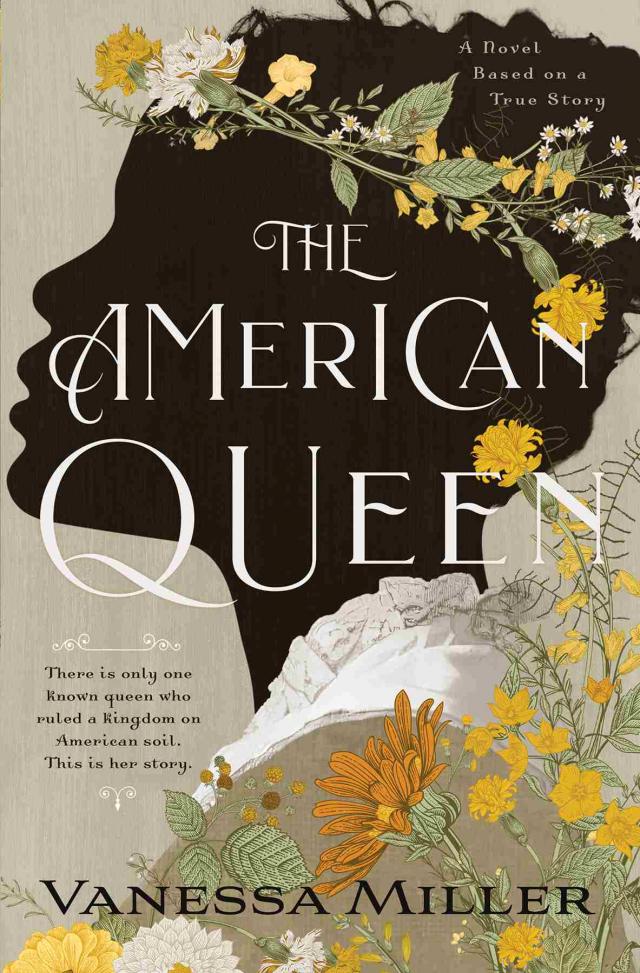
The american queen, p.1
The American Queen,
p.1


Information about External Hyperlinks in this ebook
Please note that the endnotes in this ebook may contain hyperlinks to external websites as part of bibliographic citations. These hyperlinks have not been activated by the publisher, who cannot verify the accuracy of these links beyond the date of publication
Dedication
This book is dedicated to my American Queen, my granddaughter, Amarrea Harris. Long may she reign in my heart. I love you dearly. My prayer is that you never forget to let the love of God reign supreme in your heart.
And to Louella Montgomery and the real-life people who built the Kingdom of the Happy Land. Researching this story was such a pleasure. It took grit and determination to do what they did. I pray I’ve done justice to their story.
Contents
Cover
Title Page
Dedication
Map
A Note from the Author
Part 1: The Hard Knocks of Emancipation Chapter 1
Chapter 2
Chapter 3
Chapter 4
Chapter 5
Chapter 6
Chapter 7
Chapter 8
Chapter 9
Part 2: The Journey Chapter 10
Chapter 11
Chapter 12
Chapter 13
Chapter 14
Part 3: A New Beginning—Building the Kingdom Chapter 15
Chapter 16
Chapter 17
Chapter 18
Part 4: A Kingdom Rises in the South Chapter 19
Chapter 20
Chapter 21
Chapter 22
Chapter 23
Chapter 24
Chapter 25
Chapter 26
Chapter 27
Chapter 28
Chapter 29
Chapter 30
Chapter 31
Chapter 32
Chapter 33
Part 5: Cracks in the Kingdom Chapter 34
Chapter 35
Chapter 36
Chapter 37
Chapter 38
Chapter 39
Chapter 40
Chapter 41
Chapter 42
Chapter 43
Chapter 44
A Closing Note from the Author
Discussion Questions
Acknowledgments
References
About the Author
Praise for Vanessa Miller
Also by Vanessa Miller
Copyright
Map
This is a fictional account of actual events that occurred between 1865 and 1889.
A Note from the Author
Dear Reader,
Thank you so much for picking up The American Queen. I hope it speaks to your heart in the way it spoke to mine. The hardest part of writing this historical novel was the hours, days, and weeks I spent researching information about the people in the Happy Land and the time period.
But one of the most difficult things to write in this novel was the N-word. I cringed when I had to reread the story during the editing process because African Americans have been subjected to that word and other hurtful words that degrade for far too long.
My editor and I debated about whether to use the hateful word at all. And believe me, if I were writing a contemporary novel, I wouldn’t. Even though racism still runs rampant, we don’t run into people who are willing to call Black people the N-word or other awful, debasing words to our face with no repercussions these days.
But I still vividly remember when I was a young girl in the seventies, walking to the bread store with my sister to get a cherry pie. (I can’t even look at a cherry pie these days without gaining weight, but back then, I loved those little pies.)
We had just crossed the street and were happily making our way to the Wonder Bread Store when a pickup truck drove past us. A white guy in the back of the truck had a cup in his hand. He threw the contents of that cup on me and my sister and then called us the N-word. It was the first and only time a white person had ever disrespected me in such a manner, but I never forgot the tears I shed over that hateful act.
Now imagine how many times African Americans heard that word while they were enslaved or even right after emancipation. Imagine the hurt and the damage that being constantly called the N-word, and not being able to do anything about it, might do to a person. I use the word (and other words such as mulatto) sparingly in this novel. Hurtful as they are, they must be used in order to be true to the nineteenth-century time period. I believe it was necessary to viscerally show the treatment of African Americans during this ugly period in American history.
Some may think the word was used to shock or anger, but believe me, that was not my purpose. If I could have been true to the time period and the people who lived during those times without using those awful words, I would have. That might have been the easier route, but it wouldn’t have been authentic.
In writing this novel, I also didn’t want to insinuate that all white people treat African Americans in such a reckless and harmful manner. This is the reason I was only too happy to write about the relationship between Louella and Serepta Davis and her daughter Sarah.
I also developed characters like Dr. Morris and his mother in order to show that there is kindness in this world, and that color should not dictate kindness.
I hope you enjoy the journey. And I pray that The American Queen sticks with you long after you close the book. I hope the goodness of many of the people in this novel shines through and blesses you in some way.
Blessings,
Vanessa Miller
Part 1
The Hard Knocks of Emancipation
Mississippi
October 1, 1864
Chapter 1
With hands planted in the dust of the earth, Louella Bobo’s lungs filled with the smothering air of bondage while she listened to her daddy wax eloquent about freedom.
“Now listen to me and listen good.” Samuel Bobo stood a few feet away from the cotton field addressing the enslaved men and women on the Montgomery Plantation in Mississippi. “Y’all heard what them Yankee soldiers said as well as I did.” Samuel shook a fist. “Freedom is coming, but we got to be ready.”
Louella’s eyes lit up. She’d been on this plantation for all her twenty-four years, and the happiest day of her life was when those soldiers trotted onto Massa Montgomery’s property like they wasn’t a bit worried about being shot dead for trespassing. But the news they brung was the same thing Reverend William been telling them for months. Enslaved people just too full of fright to fathom the notion that freedom was in reach . . . as close as their feet were to the ground.
Louella wasn’t shaking from fear but wonderment. Would the air of freedom be different, or would it be as stale and unrelenting as slavery air?
“I hear tell that Lincoln emancipated us back in 1863, but we still sitting here like we belong to these devils who stole us from our homeland. I say it’s time to rise up and fight our way out of here.”
“That sounds good, Samuel.” Ruby, the housekeeper at the big house, wiped her hands on her apron. “But I’m not trying to be no runaway slave.”
“Don’t y’all see?” Samuel waved his arms around, then pointed toward his head. “You only enslaved in here. Once we free our minds, we can plan our way to freedom.”
Later, after her father’s speech, Louella found him. “Freedom has to come soon, Daddy. I’m nearly bursting with anticipation.”
He patted her on the back as they walked home. “It’s coming. We have to wait a little while longer.” Rubbing his belly, Samuel said, “My stomach’s grumbling. I hope your grandma cooked something good.”
After the long workday ended, they were allowed to fill their bellies, then get some rest before heading back to that dreaded field and picking cotton with raw and bleeding fingers. The nighttime brought peace. It was usually so quiet in the slave quarters she could hear mice peeing on the cotton.
Louella wasn’t thinking about peace or quiet tonight. She went to bed with revolution on her mind. Ready to fight for a new way of life. Ready to loose the chains that bound her to a place she wanted nothing to do with. But she woke to the creak-creak of the rickety old porch and the sad reality that she was still on the Montgomery Plantation. Still enslaved.
Most mornings, Louella woke with a sore back from picking cotton ten hours a day and then sleeping on a makeshift bed of straw and old rags.
The sun wasn’t ready to brighten the new day yet. But no matter how early in the morning it was, Mama Sue had to do the washing. Louella’s grandmother moved quiet like a house cat as she got out of bed. Louella normally didn’t wake until she heard Mama Sue on the porch. Massa Montgomery’s clothes had to be washed every other morning, rain or shine.
Only he wasn’t their master no more. That’s what them Yankee soldiers said last night.
Bang. Bang. Bang. “Gal, if you don’t get out of bed and make your way to the field. That cotton ain’t gon’ pick itself.”
Louella’s makeshift bed was against the wall, next to the porch. Her grandma’s bangs against the wall not only shook the small cabin but sent waves of pain up her spine. She got out of bed, stretched, rolled her neck, then opened the door and stepped onto the porch.
Mama Sue sat on the stump between the rotted-out boards with the washboard in front of her and a soapy water tub beneath the washboard. The tub with clear water for rinsing was right next to the soapy one.
Mama Su
e hummed the words to “Amazing Grace” as she worked. Louella had been blessed with a beautiful singing voice. Mama Sue said she got it from her. But Louella never sang or hummed while she worked . . . just seemed like Mama Sue was trying to find something enjoyable about scrubbing Massa Montgomery’s britches.
Her grandmother had a rag tied around her head, with the same four braids she always wore. The hump in her back was pronounced as she slumped closer to the washboard. Mama Sue carried her grief in the slump of her back. With each endured loss, the slump became more pronounced and the hump grew.
Louella kept her hair in four braids as well. She had thick and wavy black hair. Silky and soft to the touch. But enslaved people didn’t have much time for combing and brushing hair. It was easier to keep it braided.
Rubbing the sleep from her eyes, Louella said, “Mama, you heard what them soldiers said the other night. We free. I don’t have to scar up my fingers in that ol’ cotton field no more.”
Mama Sue laid the shirt she’d been scrubbing on the washboard, leaned her head back, and cackled so hard her belly shook like jelly. “These white folks don’t care nothing ’bout Lincoln’s proclamation for some enslaved people. If we wanna keep this roof over our heads, then we gotta work and thank the good Lord for what we have.”
Louella glanced up at the moldy, leaky thatched roof no one had the time to clean or repair. She and her grandmother put pots on the floor when it rained. Louella had been coughing up phlegm for almost a year now. So she wasn’t thanking the good Lord and nobody else for this shack. “We need to be making plans to get out of here. Daddy said a bunch of folks setting out on their own.”
Mama Sue’s head swiveled, eyes bucking as she looked over her shoulder. “Keep your voice down,” she whispered. “And don’t go talking behind your daddy. That man’s the reason your mama got sold off, and we haven’t seen hide nor hair of her since.”
Louella’s eyes rolled heavenward. “Why you keep blaming Daddy for what Massa Montgomery did of his own volition?”
“Fix your face. Don’t roll them eyes at me. Get dressed and do as I tell ya.”
“I said we free.” Louella stomped her foot. “Don’t want to stay here no more. I can’t take being on this plantation. Wanna be free, like them Yankees said.”
“What you know about freedom? You was born a slave. The Confederate army still out there fighting to keep us in chains. You think they gon’ let us pack up and go on about our way?” Mama Sue kept scrubbing Massa Montgomery’s shirt. “I done seen too many just-wanna-be-free Negroes drug back to this plantation in chains. You think I want you stuck on this plantation for the rest of your life?” Mama Sue shook her head. “But I don’t want you dead neither.”
Louella wanted to argue her point, but as a child, Mama Sue had watched as her father was beaten to death for refusing to lower his head as a white man passed him on the street. Mama Sue’s husband, a free man who was half black, half Indian, had been run off the plantation for refusing to pick Massa Montgomery’s cotton.
“And what Reverend William gon’ say about you wanting to be free more than you want to be betrothed to him?”
“‘Loving a Black man is like asking for a hole in your heart.’” Louella placed a hand on her hip. “Ain’t that what you told me?”
“And now I’m telling you to marry the reverend. He a good man, and he can give you a better life.”
Long, deep sigh. What was the use in talking to her grandmother about better days when she was stuck in what had always been? Louella went back into the house, poured some water in the basin, washed herself, and then threw on a dress that had been patched so many times it was more quilt than dress.
Louella then stood in the doorway, listening to Mama Sue humming again. Rolling her eyes, she opened her mouth to tell her it was too early in the morning for singing when her grandmother started rubbing her knuckles. Every time she got to the washing, without fail her knuckles would ache something terrible . . . terrible enough to bring tears to her eyes. “Have you been putting the liniment I made for you on your hands?”
“Mirabel got the rheumatism worse than me, so I let her have mine.”
Louella walked over to her bed, got on the floor, and lifted up the hay and the rags to locate the last tin of liniment she’d been holding for Mama Sue. Once she found it, she got off her knees, went outside, and handed the liniment to her grandmother. “Don’t give this one away. This is the only one I have left until I can rustle up more herbs.”
“Thank you, dearest.” Mama Sue put the shirt she was about to scrub against the washboard and rubbed some liniment on her hands. She flexed her fingers. “Girl, I’m so thankful you studied all them concoctions your mama was always putting together. Lord knows I could never figure any of it out. This liniment is a wonder.”
Louella’s granddaddy had taught her mother all about using herbs for healing. Louella learned as much as she could for as long as she could. Many on the plantation suffered from sickness and joint pains. The doctor only came around if one of the field hands was on his deathbed, so many relied on Louella’s knowledge of herbs.
“We have to help ourselves ’round here. That no-count in the big house sure don’t care how much pain we suffer. We still got to pick the cotton, wash the clothes, and whatever else need doing.” Louella was tired of her lot in life. Needed God to show her that suffering don’t last always. Then maybe she would hum like a bird too.
She left their small cabin. Headed up the dusty road on her way to go pick cotton, same as she’d done every day. Only she normally walked to the cotton field with her daddy.
She hadn’t seen him since last night. Sometimes her daddy snuck over to the Bailey Plantation to keep company with some gal he had asked the master’s permission to marry.
She had been standing next to her daddy when Massa Montgomery said, “You can find someone to belly up to right here on this plantation.”
Daddy’s eyes sparked with fire that day. He told Massa, “I had somebody, but you sold her away from me and my kids.”
Louella had been seven years old when Massa Montgomery took over the plantation. Since he had brought twenty of his own enslaved people from South Carolina with him, he didn’t need all the enslaved people the former master had. The journey from South Carolina to Mississippi had been long and costly, so he was in need of money.
He lined his pockets by selling off her mother, a cousin, and three others to a plantation back where Massa Montgomery come from. She hadn’t heard from any of them since. Her daddy had said, “Either the master gon’ set us free, or we gon’ fight our way out of this godforsaken place, where a Black man has to lower his head to white folk, thinking they better’n us.” That was when Louella had learned to hate . . . and her grandmother took up humming.
Louella’s skin was dark like coffee with a little mix of cow’s milk. But her skin color didn’t make her any less than the lily-white women in the big house. That’s why she lifted her voice and shouted, “Hallelujah!” after them soldiers left the plantation. Then she and a few of the other enslaved people danced in the red Mississippi dirt, praising the Lord for finally coming to see about them.
As she rounded the trail that led to the cotton field, the light of day pushed its way through the darkness, and the big oak tree stood tall with its canopy of leaves, which were supposed to provide shade. But that was white folks’ shade. So Louella was surprised to see about a dozen or so colored folks standing around that big oak tree. Their eyes were lifted and focused.
Louella never stared at that tree. Whenever she was near it, the scar on her left wrist throbbed, causing her to stop picking cotton so she could rub the sting out of her wrist.
But this morning enslaved people was standing under that tree staring up . . . at a man who hung limp with a noose around his neck. The man was wearing the clothes her daddy had on when he gave his eloquent speech last night—dark brown slacks and a white shirt with tan suspenders. From the distance, she could see the dark skin . . . like her daddy’s skin.