

To clutch a razor, p.1
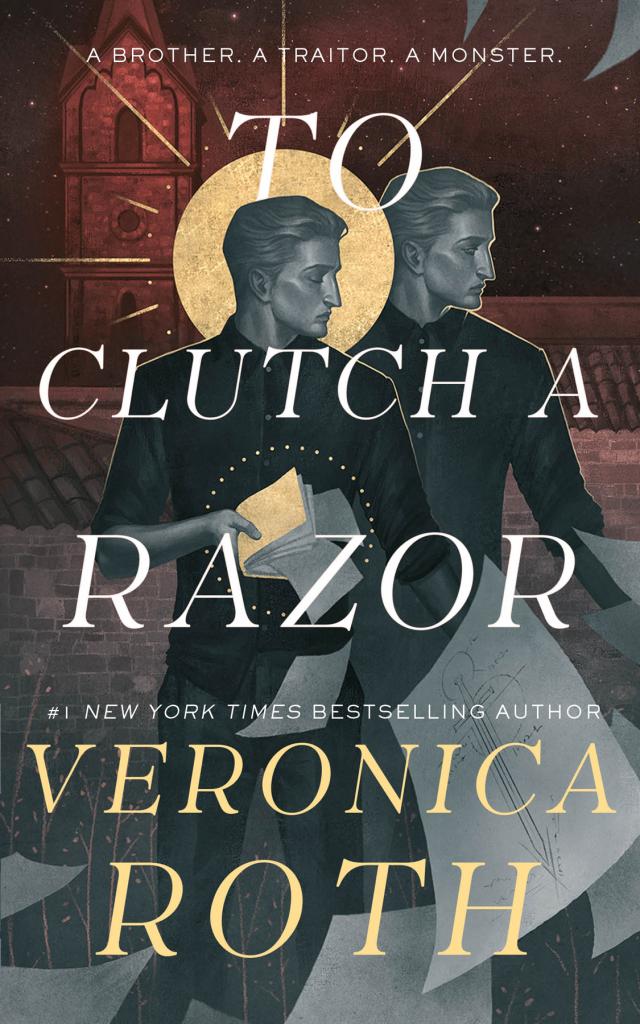
To Clutch a Razor,
p.1


Begin Reading
Table of Contents
About the Author
Copyright Page
Thank you for buying this
Tor Publishing Group ebook.
To receive special offers, bonus content,
and info on new releases and other great reads,
sign up for our newsletters.
Or visit us online at
us.macmillan.com/newslettersignup
For email updates on the author, click here.
The author and publisher have provided this e-book to you without Digital Rights Management software (DRM) applied so that you can enjoy reading it on your personal devices. This e-book is for your personal use only. You may not print or post this e-book, or make this e-book publicly available in any way. You may not copy, reproduce, or upload this e-book, other than to read it on one of your personal devices.
Copyright infringement is against the law. If you believe the copy of this e-book you are reading infringes on the author’s copyright, please notify the publisher at: us.macmillanusa.com/piracy.
For Alice, who untangles the knots with me
Tonący brzytwy się chwyta.1
—a Polish saying
1
A PRELUDE
Baba Jaga tugs the curtain back from the window with a gnarled hand. The reflection of the sun on the river is sharp as a knife. It cuts at her and she lets the curtain fall again.
Centuries of life have taught her there are certain patterns. Not just in other people’s behavior, but in her own. She falls into them without meaning to, and her body knows before she does, remembering its old shapes. When she turns back to the Knight, she’s young and sturdy, a warrior, with an as-yet-untested womb and a muscled arm.
If he’s startled by the change in her, from old woman to young, he doesn’t show it. But then, that’s what she expects from this particular Knight. And though she reacts to him as if he was truly a Knight—a zealot with a holy mission to execute so-called monsters, such as herself—she knows that pattern doesn’t actually apply to him. He chose a new path, one she’s never seen walked before.
He asked her for destruction, and then, when that didn’t suit … for transformation.
“And how are you settling into the new skin I gave you?” she says.
The last time she saw him, he had the look of someone who was creeping toward the edge of a cliff. Now he’s unchanged in all the ways that would matter to a mortal—still tall, still strong, still with that dusty brown hair and eyes to match it—but in the ways that matter to an immortal, he’s fundamentally altered. He looks shifty to her, like he might become something else entirely if she doesn’t keep an eye on him.
“Ala is teaching me,” he answers, and it’s that accent, too, that carries her back to another time. He’s fresh from the mother country, still on a guest visa, his consonants going still in his throat, his vowels too short.
“Ala,” Baba Jaga repeats.
The experience of time is relative to age, with the minutes stretching long and lazy for a child and imperceptible for an adult, and so it might as well have been a second ago that she turned this Knight into a fear-eating nightmare creature. She amplified the few drops of zmora’s blood that had crept into his veins until they drowned out the rest of him. That makes him a zmora, too, but perhaps … not all the way.
“Ah yes,” Baba Jaga says, because it was only a second ago, after all, that Aleksja Dryja knelt on the rug not two feet from where the Knight currently stands. “Aleksja Dryja. A capable illusionist, I hear. But unimportant.”
“Unimportant.” He looks offended.
“A young Dryja who, up until you brought me the fern flower to cure her, was a ticking clock.” Baba Jaga drums her fingers on her sternum, a habit she’s passed along to some of her wraiths. The sound it makes is louder and higher than it should be, like her chest is hollow.
“The other Dryjas will not be so welcoming,” she predicts.
“I don’t expect to be welcomed.”
“No, you don’t, do you?” Baba Jaga laughs a little. “You expected death, and pain, and a life of suffering. You came to me for those things, thinking they would be your penance.” She moves closer, her feet bare on the hardwood floor. As she walks toward him, the Knight’s head bows further. “But soon you will get used to this new life, and you’ll begin to want things you don’t deserve. Acceptance, and trust, and yes—welcome.”
She reaches out, and flicks beneath the Knight’s chin to get him to raise it, to look at her.
“Already you want something you don’t deserve: your sword. That’s why you’re here, isn’t it? To inquire about your sword?”
In truth, she’s the one who summoned him here. But not everyone comes when she calls—the wise know it’s better to flee. Only the desperate turn up at her door, and she knows the source of this Knight’s desperation.
It hums behind her, fixed to her wall. A longsword made of bone, bright white with a gilded hilt. It was made by magic, but not a magic Baba Jaga understands or respects—a magic that uses pain as currency, the magic of monster-hunting Knights of the Holy Order. She can feel the agony that brought it into being every time she walks past it, like a sour taste in her mouth, like an echo of a scream. It used to be buried in the Knight’s back, formed by splitting his soul in half. And now it’s hers—and by extension, he is hers, until he manages to earn it back.
He seems to know it, given how he stands before her like a soldier reporting to his commanding officer. Shoulders back, body still, eyes forward. She would enjoy it more if he didn’t seem so damn sad about it. She can’t tease someone who’s yielded so completely.
“Yes, I…” The Knight looks down again. “You said I could get it back, for the right price. So I am here to ask what that price is.”
“And what is the cost to you, exactly, if I keep it in my possession? Do you even know?”
He hesitates. She isn’t sure how a Knight reacts when parted from their soul sword. She knows they can feel where it is, and they can use that feeling to track it. She knows it’s not pleasant. But that’s the extent of her knowledge.
“So far, the cost is … pain,” he admits, after a moment.
“But you don’t really care about pain, do you?” She tilts her head. “You believe it’s no more than you deserve. Perhaps you even crave the punishment. So what do you care if the sword lives in my apartment?”
“I…” He frowns. Looks away. “It’s more than that. The Holy Order believes that if your sword can’t be integrated with your body after you die, you will … wander the earth forever, neither alive nor dead.”
“The Holy Order believes,” she repeats. “And what do you believe?”
The Knight hesitates again. “I don’t know.”
“You should maybe find someone who does,” Baba Jaga says. “It may give you some urgency that you currently lack.”
“Do you know what will happen to me if I don’t get it back?”
He should have asked from the start. Foolish boy.
“I have suspicions,” she replies. “But whatever the truth is, I know it’s not good to walk around with only half a soul.”
The Knight swallows hard. He nods.
“You’re in a terrible bargaining position,” she says. “You come here with nothing but that tragic face, appealing to my merciful nature—Oh, this Knight who would rather suffer and die than kill another monster, take pity on him, Babcia—well, let me see how deep my well of mercy is today, shall I?”
She closes her eyes, and she feels herself shifting, hunching beneath the weight of time, her hair shivering as it turns dry as a corn husk and her skin softening over her bones. She has seen so many things, and death is one of them. And where there has been death, there have also been Knights.
Knights, their palms stained red, their eyes glinting red, their swords dripping red blood onto the hard ground.
Knights, chasing her brothers and sisters, daughters and sons, into the ancient woods of her old home.
Knights carving wounds into their own flesh to curse her kind with bloodthirsty crows or flesh-hungry wolves.
Knights who take every powerful symbol they find to twist it and warp it into their own.
Knights who crave death, and seek it, and cling to it like an oath.
“You were named for the harvest,” she says to him, and she hears it, the way her voice deepens as she allows time to rush into her body again. It’s so heavy, time. Easier, really, to keep it at bay, like a dog she has to keep nudging away from the front door with her foot every time she opens it.
“You were named for the harvest, and harvest you will.” She looks at him. He doesn’t look well. The skin under his eyes is almost purple. “Thirty-three bones made the sword that you used to slay the innocent, and to earn them back, you will bring me thirty-three swords drawn from the spines of the dead.”
“You…” He almost whispers it. “You want me to kill thirty-three Knights?”
“Not just thirty-three Knights. You will begin with the one you call Babcia.”
He stares at her, his eyes wide.
“Whatever one sows, that he will also reap,” Baba Jaga says. “Your grandmother sowed you. And you, my Knight, have sowed nothing but death.”
She almost expects it, the way he goes to his knees. The posture of a supplicant comes to him too easily; he knows, too well, that he has nothing to offer but himself. A meager thing indeed.
He bows his head, and says, “Please.”
r />
Baba Jaga’s bones ache. The light of the setting sun is orange, and acrid as the fruit that shares its color. She prefers night.
“I know…” His voice cracks. “I know they’re…”
“You know they’re what? Murderous? Violent?”
“Monsters,” he supplies. “I know they’re monsters. But a man can love a monster.”
Kościej, something inside her whispers.
She remembers. She has loved a great many monsters, and Kościej was the greatest of them. In some ways he reminds her of the man kneeling in front of her. His soul displaced. His nature still undecided. Crooked and shrouded in darkness. But unlike this creature who begs her for mercy, Kościej knelt for no one.
“A man can love a monster, yes,” she says. “And a man can also kill the things he loves.”
“It would destroy me, to do what you ask.”
“And you think I should care?” Something fierce rises up inside her, a memory self she hasn’t encountered in some time. She grits her teeth so hard her jaw aches, and says, “Destruction is what you came to me for, Knight!”
A strong wind blows through the herbs that hang in dried bundles from her ceiling, blows through the pages of the books she’s left open on tables and desks, here and there and everywhere, and it whips through the Knight’s hair and clothes like it’s fighting to tear him apart.
“Killing is all you’re good for!” she shouts over the tumult.
The wind blows the Knight back, so he’s cowering on the floor at her feet, an arm curled over his head. Bones sail through the air and tapestries flap against the walls and jars tumble from their shelves and crash, spilling eyeballs and dried tongues and rare powders across the hardwood.
“So kill the guilty instead of the innocent, for once,” she says. “Or suffer the consequences of missing half your soul, whatever they are. Those are your choices, and don’t you dare think them unfair.”
She nudges time back with the toe of her shoe. The weight disappears from her shoulders, from her bones. Her skin tightens over muscle. She’s young again, and a warrior again, and the air is calm.
The Knight is still cowering on the floor, windblown and terrified.
“Get out of my sight,” she says.
She turns away from him, and tugs the curtain back to look at the river. The sun is still too bright on the water, but she lets it burn dark spots into her vision for a few seconds.
When she turns again, the Knight is gone.
2
A FAMILY MEAL
When Dymitr was a child, he often waited in the weapons room for his uncle to come back from a hunt.
Always his uncle, not his parents—because his mother, Marzena, liked to greet with admonishments, and his father, Łukasz, was unpredictable, at turns either kind or vicious. Uncle Filip, though, was ruddy-cheeked and sly; he took coins out of Elza’s ears and taught Dymitr how to whistle with a piece of grass between his thumbs, and when Dymitr’s older brother teased him for being too sensitive, too soft, Filip called him off.
So Dymitr would sit on the stone bench at the edge of the weapons room, his legs swinging, and wait for Filip to return. When he did, Filip’s hands were always bloody, and his face was always smeared with dirt. He would offer Dymitr things piece by piece to be returned to their places: spare knives that hadn’t been used in the hunt, and the armored vest, and his heavy boots, which always needed to be cleaned. He didn’t talk much, after, but Dymitr didn’t mind the quiet. And he didn’t mind scrubbing Filip’s boots, either.
Most of the time, the bone sword was sheathed by the time a Knight came home, so Dymitr’s first glimpse of one came when he was ten years old, and Filip turned away from him to change his shirt. Filip went out on missions often, which meant he drew his sword often, so it was close to the surface of his skin. So close that Dymitr could see every ridge of the golden hilt, and every centimeter of the bone blade, standing out from Filip’s back.
It was an honor to become a Knight. Not everyone in the family did. Not everyone had the constitution for it, as his grandmother liked to say. And the people of the village—the ones who were in the know—treated Knights like royalty. Knights always got to go to the front of the line at the butcher shop, always got extra cakes at the bakery. Even the unruly teenagers who played soccer in the field behind the old factory went silent and still at the sight of them. Knights were like old heroes of legend come to life.
So the sword, such an integral part of becoming a Knight, should have left Dymitr awestruck. Instead, he shuddered at the sight of it bulging from Filip’s shoulders like a tumor. He wanted to look away from it, but he couldn’t stop staring until Filip put a clean shirt on to cover it. Then Filip turned around and looked at Dymitr standing there with bloody boots in hand.
“You haven’t seen one before?” he asked.
Dymitr swallowed. He felt nauseated. “Not up close.”
Filip clicked his tongue, disapproving. “Your parents have been neglecting your education.” He sat on the stone bench next to the door. “Come. Ask your questions.”
Curiosity wasn’t always rewarded in Dymitr’s family, so the invitation to ask whatever questions he liked was a rare one. He stood in front of his uncle, his fingers twisted together in front of him.
“Does it hurt to draw it?”
“Yes,” Filip said steadily.
He had a thick beard, gray in places, and neatly trimmed. There was a scar through his left eyebrow—a big, crooked one that made his skin pucker and ripple.
“Does it hurt to sheathe it?”
“Yes.”
“Then why…” Dymitr furrowed his brow. “Why not just leave it here in the weapons room, then collect it next time you go out on a mission?”
“Well, for one thing, it tugs at you when you’re separated from it, so you can always find it. Annoying. And for another…” He shrugs. “It’s good to always have a weapon with you. Monsters don’t only attack when we hunt them. They can creep into our houses, slip into our bedrooms while we sleep. Infest our bodies and minds, feed on our blood. The sword is with me always, so I’m never defenseless against them.”
No one ever softened things for Dymitr, or any of the children in the family. Monsters were everywhere, pain was inevitable, and only the strong could survive both.
“The sword is a tool,” Filip said. “But it’s also a treasure—because it’s hard won, understand?”
Dymitr never had much. Not because his family couldn’t afford it, but because they didn’t believe in certain indulgences. Nothing without purpose: a child’s bow-and-arrow set, for learning archery; a chessboard, for learning strategy; a survival kit, for learning to be resourceful. He and his brother and Elza had a fort in the woods, built from fallen logs, where they went to start small fires and set traps and identify mushrooms. They had tournaments with the rest of the cousins that were half playful, half serious. They quizzed each other with questions that sounded like the first parts of jokes, but weren’t. What is most commonly misidentified as a strzyga? What do you call a banshee in Germany? In what country can you find an oni?
He was used to his most valuable possessions having purpose. And that purpose was always related to monsters.
“How…” Dymitr was almost afraid of the question, but he asked it anyway. “How are they made?”
“We do it in here,” Filip said, gesturing to the weapons room before them. “You’ll lie on a table, face down. There will be four Knights with you. One will be your mentor, when you get one. One will speak the words of the ritual. And the other two…” He looked at Dymitr, assessing. “The other two will hold you down.”
Dymitr’s mouth went dry.
“Your mentor will take their own blade and cut into your back. Right down the center.”
Dymitr imagined it like carving a chicken: his skin crispy beneath the blade, clear juices bubbling up from that first cut. He shuddered.
Filip continued, “Then they’ll cut into themselves, and let their blood spill into the wound. The words of the ritual are spoken, and then…” He swallowed hard. “It will hurt. It will feel like every bone in your body is breaking. It will feel like a thousand deaths. You’ll pass out. But then, when you wake … you’ll be twice as powerful as before.”


