Storm tide, p.28
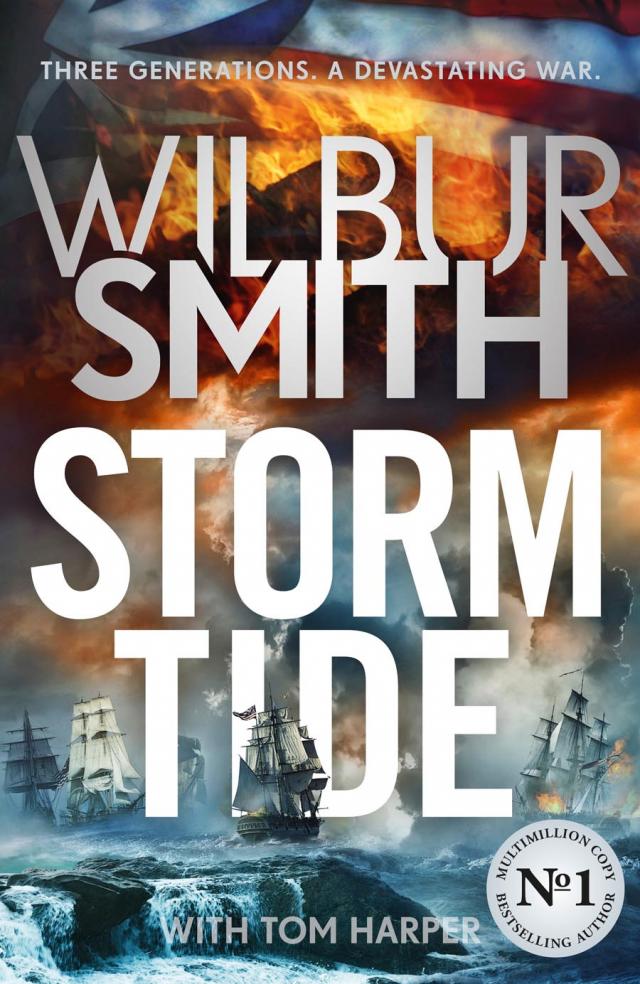
Storm Tide,
p.28


‘Was he the man who led your men to the plantation?’ Cal put in. He remembered the man he had wrestled with outside the house, the strange feeling of familiarity as he had looked in his eyes.
‘That was Lieutenant Courtney,’ said Rudston. ‘Between him and Captain Tew, you’ll not find two braver men in the navy.’
‘Courtney?’
At the sound of the name, an electric shock went down Cal’s spine. He felt, with a certainty beyond reason, that there must be a connection. He knew his father had had a sister, and he never spoke of her. What if this was her son, or some other branch of the family tree?
Of course it was fanciful. What were the chances of him encountering such a person here? And yet . . . there had been something so familiar in that face it had gone to the core of his being.
Étienne laughed. ‘It is a coincidence, non?’
‘Probably,’ said Cal doubtfully.
He wanted to know more, to ask Rudston everything he knew about his mysterious namesake until he could be sure there was no connection. But Étienne had other ideas.
‘These impudent British are as slippery as eels. It is time we make an example.’
A smile spread across his pale face. He barked an order to the boatswain in French. The boatswain blanched. He stammered a reply, but a curt word from Étienne cut him short. With a salute, he disappeared towards the rope locker at the bow.
‘What are you doing?’ said Cal. ‘This man is a prisoner of war. We should confine him until we can arrange an exchange.’
Étienne ignored him. ‘Do you know what the Dutch do to punish a man? They call it kielhalen. In English I think you say “keelhauling”.’
Cal had heard tales of such punishments from his father. As strong as his stomach was, he had squirmed every time, while his mother tried to cover Aidan’s ears.
‘I thought that was outlawed long ago.’
‘The old ways have their place.’
‘Please, sirs.’ Rudston had gone pale with fear. He dropped to his knees on the deck. ‘That’s a death sentence.’
Étienne pretended to consider that seriously.
‘I think a man can survive. It will be interesting to find out.’
His men seized Rudston. The Englishman writhed and squirmed in desperation; he tried to bite the men who held him, but there were too many. They manacled his feet together, attaching a length of chain shot to the fetters to weigh him down. Meanwhile, other men passed a rope through blocks on the ends of the mainsail yardarms. With some difficulty, they looped it under the ship’s bow and worked it back amidships so that it passed under the keel, from one side to the other.
They tied one end of the rope to Rudston’s hands, and the other to his chained feet. Now he was part of the loop. He screamed and struggled, but he was tied fast. There was no escape.
Cal watched with growing disgust. In his father’s stories, it was never the heroes who keelhauled their victims. As much as he longed to fight the British, this was sheer cruelty.
‘What do we gain by this?’
Étienne shot him a dismissive look. ‘We strike terror into our enemies.’
‘Please,’ Rudston begged, almost frothing at the mouth with fear. ‘I’ll tell you anything you want.’
‘Such as?’
‘The Perseus is bound for Jamaica,’ Rudston babbled. ‘There’s a man aboard, very important. Planter, name of Bracewell. We was taking him to his plantation.’
‘I know this already,’ said Étienne. ‘There is nothing you can tell us that is of interest.’ He turned to the crew. ‘Lift him up.’
Étienne’s men hauled on the rope tied to Rudston’s feet. They lifted him off the deck, so that he dangled upside down like a piece of meat. Rudston’s terror redoubled.
‘Let me down,’ he pleaded. ‘I can tell you more.’
Étienne put his mouth close to Rudston’s ear. ‘You have nothing to give me except the pleasure of watching you die.’
The sailors laughed. They swung Rudston over the side, then lowered him towards the water. On the other side of the ship, another team hauled on the rope that was tied to his hands. Rudston bucked and jerked, but he was stretched between the two ropes like a prisoner on the rack. Cal felt sick. He desperately wanted to cut him free, but in front of Étienne and his crew he was powerless.
Rudston’s screams rose to a fever pitch, then choked off as his head went underwater. Cal peered over the side and saw a pair of pale white feet disappear into the depths.
‘How long will it take?’
Étienne shrugged. ‘We will see.’
A strange silence gripped the deck. Now that the prisoner was submerged, all the crew could do was imagine what he was suffering beneath their feet. The Rapace did not have copper sheathing to smooth her bottom like the Perseus. Every mile she sailed, barnacles and other shellfish would have fastened themselves to her hull, forming a crust like a thousand razors. Rudston was being dragged over it, while simultaneously drowning.
‘Keep it tight,’ Étienne ordered.
If the rope went slack, the man would sink away from the hull and be spared the ordeal. Cal thought of him down in the depths, his mouth open in soundless screams that would flood his lungs with water. Drowning would be a mercy.
The men hauled on the rope. Pieces of weed started appearing on it. The rest of the crew crossed to the far side and looked down, waiting for the prisoner to emerge. They took bets on how long it would be before his body broke the surface, and whether he would have survived.
There was a cry as he broke the water. Cal heard the body slithering up the side of the ship, a thud as it bumped against an open gunport. There were no screams now.
The bound hands came up over the gunwale, clasped together as if in prayer. Rudston’s body followed. The seawater ran red off his skin with the blood of a thousand cuts. His nose had been torn away, and one eye dangled from its socket.
There was a reason he wasn’t screaming. His neck had been sliced open, so deep his head hung on a thin flap of flesh, lolling back.
Étienne looked at the dangling figure, like a surgeon studying a cadaver. He seemed disappointed.
‘Are you not satisfied with the punishment?’ asked Cal.
‘I wanted to make him do it again.’ Étienne pouted, then shook his head. ‘Cut the rope,’ he ordered, ‘and let the sharks have him. We have delayed long enough.’
‘Indeed,’ said Cal.
It was a relief to see the body drop into the water and vanish. The horror of what he had seen disgusted him. This was not why he had joined the patriotic cause. His ears roared with his father’s voice saying, ‘See what kind of men you have thrown in your lot with?’ He gritted his teeth and tried to ignore it. This was war.
‘We should not let the English frigate get too far ahead of us,’ he said.
Better to concentrate on the task at hand.
Étienne nodded. ‘As soon as we have repaired the ship, we will set our heading for Jamaica.’
And perhaps when they caught the Perseus, Cal thought, he would find out the truth about the mysterious Lieutenant Courtney.
A
s an officer, Tew should have been buried on land. Coyningham refused.
‘There is nowhere we could sail within a thousand miles that the rebels do not hold,’ he told Rob. ‘And by the time we reach Jamaica, the body will be nothing but a hive of flies.’
He smiled, enjoying Rob’s distress.
‘My orders are to take Mr Bracewell and his niece to Jamaica with all despatch. We cannot afford to waste any more time.’
Tew was buried at sea, like a common sailor. They wrapped his body in a sheet of canvas, his sword on his chest and two cannonballs at his feet to weigh him down. The ship’s ensign flag was stretched over him, and the bundle laid on a grating propped up on trestles at the side of the ship. The quartermaster rang the ship’s bell to summon the crew. The officers lined up at the front of the quarterdeck, while the crew stood in solemn lines on deck.
There was no chaplain aboard the Perseus. Coyningham conducted the service.
‘I am the resurrection and the life, saith the Lord . . .’ he intoned.
Rob thought of the book he had seen in Tew’s cabin, the childish inscription on the flyleaf: ‘To Daddy, Come back safely, Love Edward’. Tew had rarely spoken of his family but Rob knew he had left a wife and a young son at home in Hampshire. It would be months before they knew what had happened. They would not even have a grave to visit. The best they could hope for were the rough coordinates Rob had scribbled down, a position to be plotted in the midst of the ocean.
‘We therefore commit his body to the deep, to be turned into corruption, looking for the resurrection of the body, when the sea shall give up her dead.’
The flag was raised off the shroud. Two gunner’s mates lifted the grating and tipped it up. The body slid forwards.
Perhaps this was right, Rob told himself. Tew had been a man without pretensions, a true sailor. He had loved the sea and the Royal Navy.
‘Amen.’
The body dropped into the water with a splash and disappeared beneath the grey waves.
R
ob was now the second lieutenant. Fawcett became first lieutenant. Rob should have been given command of the sloop they had captured, but Coyningham claimed he could not spare him. When they met with a seventy-four sailing north, they handed over the prize to be taken to New York and sold.
‘Another prize you couldn’ae keep,’ said Angus dolefully.
Coyningham did not appoint a new third lieutenant at once. He told the midshipmen he would promote one of them when they reached Jamaica, prompting a furious competition among them to win his favour. Rob knew they would report every word of gossip to the captain in an effort to gain the advantage. In a day, Coyningham had turned a collegiate gunroom into a den of snakes.
It didn’t take long for the mood to spread to every corner of the ship. From the cabin boys to the officers’ table, the division was plain. Many men accepted Coyningham’s command as the natural order of things. The captain possessed the authority, for better or worse; they would try to keep out of trouble, and earn his favour as they could. But there were others who cherished the memory of Captain Tew and feared for their futures. They looked to Rob as their leader, though he did not encourage them.
‘There’s a fair few of ’em sayin’ you should be captain instead of the Bloodhound,’ said Angus.
It was two bells of the middle watch – one o’clock in the morning – and they were up on deck, one of the few times they could speak openly without fear of Coyningham overhearing.
Even then, there were some things that were too dangerous to say aloud. Rob silenced him with a glare and glanced over his shoulder.
‘Coyningham is in command,’ he said neutrally.
Angus would not be silenced. Rob could smell the rum on his breath.
‘The way he runs this ship, he’ll have a mutiny on his hands afore we reach Jamaica. He’s turned us from the finest ship in the navy, to nothing more than a damned slaver.’
It was true. The temperature was rising as they sailed south. With fifty slaves locked in the hold, a stench had arisen from the ship’s bowels: human sweat, blood and excrement. The howls and wails that emanated from within made the Perseus sound like a ghost ship. Every cry of pain was like a needle in Rob’s heart. He had promised them they would be free. He had brought them aboard. And now they were worse off than if they’d stayed at the plantation.
‘And the way he fawns on Mr Bracewell,’ Angus went on. ‘Like it’s Mr Bracewell’s ship, and not the King’s.’
‘He has designs on Bracewell’s fortune.’
‘Designs on his niece, you mean.’ Angus saw the look on Rob’s face. ‘Don’t say you didn’ae see it. I know you’re sweet on her, but Coyningham follows her like a lost dog. And he has the captain’s stripes on his sleeve.’
Rob had barely looked at Sophie since he returned from the plantation. His body still burned with desire for her. But his mind recoiled from the barbaric conditions he had seen at her uncle’s house, and the way Bracewell had betrayed the freed slaves.
‘Be careful,’ Angus warned him. ‘She may look like a lamb, but underneath she is a tiger.’
Rob thought of the stripes she had left down his back and nodded ruefully.
‘That she is.’
A light appeared on deck as the cabin door swung open. A figure wrapped in a yellow shawl stepped onto the deck in her bare feet. She looked around, then crossed to Rob and Angus.
It was Phoebe. She was Sophie’s maid, so – alone of the slaves – she was given the run of the ship. The lamplight gleamed off her golden brown skin.
‘Lieutenant Courtney.’ She curtsied. ‘Miss Sophie said she was expecting to see you.’
Her voice was soft. Working as a maid, she had learned to speak good English, though modulated by the warm vowels and sensuous rhythms of her native language. It reminded Rob of the family servants and farm workers at Nativity Bay.
Angus gave Rob a hard stare. ‘I didn’t know you had other plans for this evening.’
‘I didn’t.’
Rob looked away. He did not mind Angus knowing about his affair with Sophie – his friend knew too much of what had gone on already. But he was embarrassed that Phoebe had become Sophie’s go-between. He didn’t want her to know.
Phoebe waited for his response, hands folded in front of her. But as Rob looked up, he saw her eyes quickly turn away, averting her gaze. Had she been looking at him? What could she think? Surely she must blame him for what had happened to Scipio and the others.
‘Tell your mistress I am needed on deck this evening. Captain Coyningham is particular about keeping the watch.’
She nodded and made to leave. But Rob suddenly found he wanted her to stay.
‘Where are you from?’ he asked.
She stopped in surprise. She wasn’t used to people speaking to her except to give orders or scold her.
‘Me?’
‘You,’ said Rob.
‘It is many thousands of miles away, across the ocean.’ Her voice was tight with longing and sadness. ‘You would not know it.’
‘Tell me.’
‘I am of the Qwabe.’
‘On the east coast of Africa? Where the mountains meet the sea?’
She stared at him as if he had performed an act of magic.
‘How can you know that?’
‘I was born on the banks of the Umgeni river.’
‘But . . .’ Her face was a mask of astonishment. ‘You are mzungu. A white man.’
‘I am a wanderer,’ said Rob, using the literal meaning of mzungu. ‘My ancestors wandered to Africa. And now I have wandered here.’
She looked sad. ‘You are teasing me.’
‘Never. Do you remember the smell of the thorn trees after the rains?’
Even saying it took Rob back there . . . the vanilla-sweet scent in the air. He could see in her eyes she remembered it, too.
‘The red dust . . .’ she murmured.
‘The air so clear you can see to the end of the world . . .’
‘The thunder of the rivers after the rains . . .’
‘How did you come to be here?’ he asked.
Her eyes clouded with sorrow. ‘You do not want to hear my story.’
‘There is nothing I would want more,’ Rob insisted.
And it was true. He wanted to listen to her voice, to keep looking into those eyes which seemed to reflect everything in the world he longed for.
Angus rose. ‘I ought to check on the forestays.’
He retreated towards the bow of the ship.
Rob gestured to Phoebe to be seated.
‘You will have to sit on a cannon,’ he said. ‘I’m afraid we have no more comfortable seating on deck.’
He thought he had frightened her, that she would fly away back to her cabin. But after a moment, she smoothed her skirts and perched on the twelve-pounder.
‘My story is like all the others,’ she said. ‘I was taken.’
He could see the memory pained her. ‘You do not have to tell me if it saddens you.’
But she wanted to tell him. ‘We were in the fields with my mother, my sister and I, when we saw a great ship anchored off the coast. We had never seen one so close before, so we went down to the beach.
‘There were white men. We had never seen them, either. They had come for water. They gave us shiny beads, and a mirror. We showed them a spring to fill their barrels.’
She paused, trembling with the memory. ‘One of them had a beard. I remember how it roughed my cheek when he picked me up. His breath smelled of aniseed. His name was Don Pedro. He was Portuguese, though of course I did not know that then. He asked if I wanted to see aboard the ship. My mother said no, but I begged her. The white men, they were all so friendly. They laughed and smiled and gave my mother brandy from a bottle. So she said yes.
‘I was excited. Even the little rowing boat that took us out astonished me. We were not a seagoing people – I had never been in a boat before. The waves sparkled like glass. When I put my hand in the water, I shrieked because I thought it would bite me.’
She bowed her head. Without thinking, Rob reached out and took her hands in his.
‘The moment we went aboard, they grabbed us. They put us in chains, and threw us in the hold. The man with the beard was the captain. He took my mother to his cabin, and even in the bottom of the ship we could hear her screams. I was young, but old enough to know what he did to her.’
A tear escaped her eye. She looked surprised. Rob guessed she had long since wept herself dry over this story.
‘The hold was full – they did not need more slaves. Slavers had never come to our country before. They only came because they needed water, and they took us because we were there.’ She shuddered. ‘They stacked us like firewood, on top of each other, chained together in our own filth.’
Rob remembered the conditions in the press room aboard the hulk in London. He tried to imagine living in those conditions for months, crossing the oceans, with not dozens but hundreds of other bodies crammed in together.