Warrior king, p.29
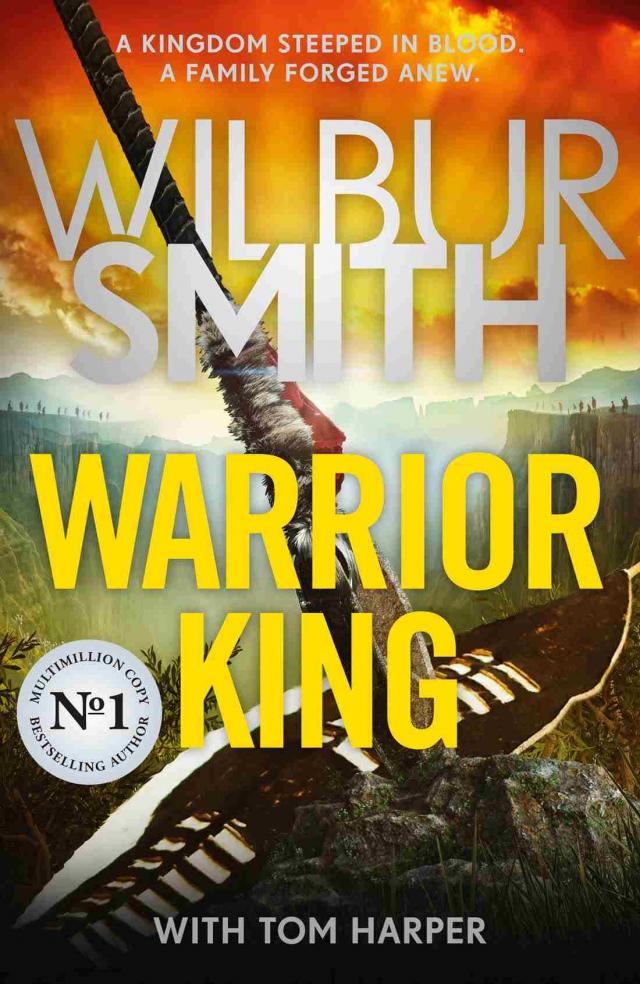
Warrior King,
p.29


‘This will have to do.’
Ann had stared at it doubtfully. It seemed to her more than likely it would shatter under the force of the powder charge. Even if it did not: ‘Will that do any good against a ship?’
‘It does not have to sink the ship,’ Ralph told her. ‘It only needs to make them think we can sink her.’
Now Ralph stood in front of Marius, Ratray and their men. Would they believe that he had a cannon on the hill that could sink the Nanticoke? Ralph had to make them believe it. Even though there was a good chance that the gun had broken in half with that second shot. And there was certainly no chance they could heat a rock hot enough to set the Nanticoke alight, even if they hit her. The fire was a ruse.
Did Marius guess that?
The shots had brought men spilling out from the stockade. They surrounded Ralph, pointing their guns at him, as a man in a crimson coat with bright brass buttons strode towards him. Even if Ann had not described him, Ralph would have guessed who he was by his air of command, and the dangerous look in his eyes.
‘Captain Sterling, I presume.’
The two men studied each other: Sterling immaculate in his frock coat and tricorn hat, Ralph in a vagabond’s rags. But beneath their clothes, there was a certain resonance between them, like two notes of the same chord. The same strength in bearing; the same sure confidence; the same sense of danger.
Except he has a dozen modern cannon, thought Ralph, and I have an antique that shoots rocks.
The captain evaluated the situation at a glance.
‘I assume you are the notorious Ralph Courtney.’
‘I prefer infamous.’
‘What are your demands?’
‘Free the prisoners,’ said Ralph. ‘Sail away, and do not bring your vile trade to Nativity Bay again.’
Marius began to speak, but Sterling waved him to be quiet. ‘Why are you doing this?’ He nodded to Ralph’s ragged clothing and wild beard. ‘You do not seem to be a man who can afford to turn down a piece of good fortune.’
Ralph shrugged. ‘What I choose is my own business. I do not have to justify myself to you simply because you have a finely cut coat.’
‘And how about to me, hey?’ The muscles in Marius’s chest rippled. ‘We had a partnership.’
‘Jobe was a partner, too,’ Ralph reminded him. ‘He does not seem to have profited from it.’
‘A bargain with a Kaffir is no bargain at all,’ said Marius. ‘But you and me . . .’
‘We have no bargain,’ said Ralph. ‘I am dissolving our partnership. We came here for freedom. We will not buy it with other men’s bondage.’
Ratray’s face twitched with hatred, but he did not dare move. Marius was unbowed.
‘You think this land is yours? You think you will make yourself a king, hey, when you have driven off every other rival?’
‘The land belongs to King Shaka,’ said Ralph.
‘To hear a white man say such things,’ spat Marius. ‘You think you can threaten me? You walk in here, no guns and no friends, and think you can tell me what to do?’ He snatched a rifle from one of the men and aimed it at Ralph’s heart. ‘I say we will kill you now, and take our chances.’
Ralph did not move. ‘If you kill me, that ship will burn to the waterline.’
‘I don’t care,’ Marius bellowed. ‘I am not going anywhere.’
‘But I have no intention of staying here.’ Sterling’s voice, cool and commanding, broke in. ‘And I cannot leave without my ship.’
Marius turned on him. ‘You bloody coward,’ he raged. ‘Stand and fight like a white man.’
Sterling’s composure did not crack – but two points of crimson flushed on his cheeks.
‘It is easy to talk of fighting, when you want to do it with another man’s crew.’ He turned to the surrounding men. A few of them were survivors of the Farewell, but the majority were from the Nanticoke. ‘Disarm him.’
Ralph’s gamble had paid off. Sterling had been convinced that Ralph’s cannon could use heated shot to set the Nanticoke on fire and cut off any chance of escape. Maybe Sterling fully believed it, maybe he had doubts: but he would not risk his future, and the profits from his voyage, to test a theory.
The guns that had been pointing at Ralph were turned on Marius. A solidly built boatswain stepped forward and pulled the rifle out of his hands. The stockade gates were opened, and the Africans began to emerge to have their shackles knocked off. As soon as they were free, Ralph sent the fittest to the blockhouse to fetch the rifles and powder and shot. Marius watched on helplessly. Without Sterling and his crew, he did not have the numbers to oppose Ralph.
‘This is not finished,’ Marius warned. ‘We still have business, you and me.’
Ralph nodded. ‘After Captain Sterling is safely departed.’
The Nanticoke sailed that same afternoon. Sterling had made his choice, and he was not a man to second-guess himself. His stay in Nativity Bay had not proved profitable – it had cost him twenty rifles and a good quantity of powder and shot – better to cut his losses and move on. The brutal truth was that he would find another cargo easily enough.
Ralph stood on the whale-backed promontory and watched as the ship manoeuvred her way out of the lagoon. He wanted to be sure she was gone, and did not plan on returning to ambush them.
As the Nanticoke navigated towards the channel, he considered how the bay had been when they arrived, and how it had changed in the months since. The bush had retreated where trees had been felled for timber, or burned to make fields for crops. Hippos no longer wallowed at the river mouth, and the monkeys kept hidden. Even the birdsong seemed quieter. This had been a place of sanctuary, an Eden, and now its soil grew only human jealousy and greed.
We brought nothing that was not already present, he told himself. War, plunder, suffering: the Zulus and their neighbours lived those miseries as well as the incomers. The sole difference was the colour of their skin – and that was no difference at all. But the thought gave him little solace.
A rumbling drew his attention back to the bay. It sounded like distant thunder, except the sky was a perfect blue. The Nanticoke had turned so she was beam-on to the shore – and from her side, the snub noses of nine-pound cannons now protruded.
You did not cross a man like Sterling without retribution. High on the promontory, Ralph watched as a line of flame rippled down the Nanticoke’s side like the sparks of a quickmatch. A fraction of a second later, he heard the deep boom of the guns, felt the sound wave like a succession of punches to his chest as each fired in turn.
Sterling’s gunners knew their business. The first two shots hit the blockhouse, and turned it into a cloud of splinters and falling logs. Ralph thanked his stars that he had removed the powder and shot from it. After that, the gunners went for the half-rebuilt hull of the Farewell, propped up on the beach. Ball after ball smashed into it, dismantling the weeks of work that had gone into making her seaworthy until there was barely a single one of her timbers intact.
The noise echoed around the bay and rang in Ralph’s ears long after the guns had finished. With a sharply executed move, the Nanticoke came about and headed for the channel. From the steep-sided promontory, Ralph could look straight down on to her decks, see the gun crews sponging out the cannons; and Sterling standing on his quarterdeck, barking orders.
The captain glanced up, saw Ralph and gave an ironic salute. Ralph hoped he would ground his ship on the bar, rip out her bottom and drown his whole crew. But she passed safely over it, and slipped past the point into the open ocean.
By the time Ralph made it back to the wreckage on the beach, the Nanticoke was a speck on the horizon. Everyone had gathered around the ruins of the blockhouse, coalescing into three groups that kept a wary distance from one another. Ann and Harry stood with Hamu, Thabisa and the Zulus; the freed Chunus clustered around Jobe; while Marius stood apart with the three sailors from the Farewell who had chosen to stay, and now looked as if they regretted their choice.
‘What now, hey?’ Marius’s shoulders twitched with the effort of holding in his fury. He had found his sjambok, and kept methodically coiling it, letting it unravel, and coiling it again. ‘Your Kaffir-loving madness has signed all our death warrants.’
Ralph remained silent. He had a knife tucked in his waistband, and he could feel the hilt pressing against his hip. A voice in his mind whispered he should put the blade through Marius’s heart now and be rid of him forever.
Across the sand, Jobe could see what was in his mind. The violence in his eyes willed Ralph to do it.
You would be a fool to leave an enemy like that alive.
From the corner of his eye, Ralph saw Harry watching him with horrid fascination. His hand paused, fingers touching the hilt of the knife. Could he commit cold-blooded murder in front of the boy?
His mind hung suspended between the two choices, like a ship in a storm suddenly held still on the crest of a great wave, a churning abyss on either side.
He let go of the knife.
I have enough blood on my hands already.
‘Leave this place,’ he told Marius.
Marius pointed to what remained of the Farewell, the wreckage spread across the beach, some of it still smouldering. ‘No one is going anywhere. We will all die here – thanks to you.’
‘You can go overland.’
But that, too, would be a death sentence. A lone white man, crossing hundreds of miles of unmapped country populated by fierce local people, would not survive a week.
‘You have no authority over me.’ Marius’s voice was low as he swung his gaze across Hamu’s men, his eyes hot with contempt. ‘Even if you bring Shaka’s whole army, I will fight you.’
Ralph knew that if he left Marius alive, it would not be the end of the matter. If Marius remained in Nativity Bay, sooner or later they would confront each other again. Next time, Ralph might not have the upper hand.
‘We had a bargain,’ Marius reminded him.
‘You broke it.’
‘You broke it when you decided to stay with that Kaffir king and sent the rest of us away.’
Ralph turned to Jobe. ‘You had an equal share in our bargain. What do you say?’
Jobe was standing near the Chunus, though a little distance from them. Anger twisted his face.
‘I say, if you make a bargain with the Devil, you will regret it.’ He pointed to the burned circle on his shoulder. The flesh was raw and ragged; a black crust had formed around the edges. ‘He has marked me for life, a white man’s property. And you let him.’
Ralph touched his own cheek. ‘We all carry scars.’
‘You promised you would save me,’ shouted Jobe.
‘And I kept the promise. I came back.’
‘Not soon enough.’
Ralph had risked his life to rescue Jobe; he had not expected to be treated like a criminal for it.
‘In any event, you are free now.’
‘Freedom.’ Jobe made the word sound like a curse. ‘Our Republic of Libertalia. See where that has got us. I am no better than the Chunus – no home, no people, and nowhere to go.’
‘Come with me to Shaka’s court.’
‘To be laughed at? To be amaLala?’
‘Shaka respects me. He will respect you, too, if you prove your worth.’
‘At Shaka’s court, they respect only Zulus, unless you have guns and white skin. I would be nothing more than your dog.’
A great sadness swept through Ralph’s heart. Looking at Marius and Jobe, it seemed the bonds that had once united the three men had frayed away and they had nothing left in common, save hatred.
A lazy gust of wind blew across the lagoon. It stirred the pennant at the top of the flagpole, the flag of Libertalia that Jobe had drawn and Ann had sewn. The flagpole had survived the bombardment that destroyed the blockhouse. It stood untouched above the ruins, taunting them.
‘Our partnership is dissolved,’ Ralph said. ‘Let us make a final accounting of the bargain we made.’
‘A reckoning where you take everything, hey?’ said Marius.
‘The weapons, powder and shot we will divide equally. For the rest . . .’ He turned to Jobe. ‘What will you do?’
Jobe squared his shoulders, and touched the little cross tattoo just below his breastbone.
‘I will go with the Chunus. I will teach them the truth of God, and to beware the lies of white men.’
‘Then Marius can remain here,’ said Ralph. ‘But you will stay south of the river, the Thukela. You will have no trade or dealings with the Zulus. You will not hunt on their lands or steal their livestock. Above all, there will be no slaving.’
‘And you?’ said Marius. ‘I suppose you will make yourself a slave to that Kaffir king.’
Waves lapped on the shore. A rattle sounded from the blockhouse as another part of it collapsed. A heron flapped low across the lagoon.
I have chosen my side, Ralph thought. Even if he’d had any way of leaving, he had nowhere else to go.
‘I will serve King Shaka.’
‘And what about us?’ said Ann.
She had listened in silence to the three men arguing, simmering with her own anger that they appeared to have forgotten her as they carved up their world.
‘You are free to choose.’ There was more Ralph wanted to say, but not in front of Marius and Jobe. ‘Speak with me afterwards.’
He turned to go. But Marius would not let Ralph have the final word.
‘What will Shaka do when he gets bored with his new pet? Will his men remain content when they realise that the guns you gave them will kill a white man as easily as a black?’
Ralph ignored the taunt. ‘If I see you again, I will shoot without warning.’
‘If you see me again, it will be because I am cutting out your heart.’
And looking into Marius’s eyes, Ralph could not doubt that if he had the chance, he would make good on the promise.
Again, Ralph’s hand drifted to the knife. Again, he wondered if he had made the right decision. If he had known when the day he next saw Marius would come, or what would happen when it did, he might have chosen differently. He might have pulled out his knife and run Marius through at that moment.
But Ralph, like all mankind, was blind to the future.
There was no reason to linger at Nativity Bay. Ralph and the Zulus left that afternoon, with a dozen Chunu porters to carry the rifles and powder, and put several miles behind them before nightfall.
Ann and Harry came, too. Ann had needed little time to make up her mind. Staying at Nativity Bay with Marius and the three desperate sailors would have felt like a death sentence. Marius had revealed his true character, and it terrified her. She could imagine how he would take out his anger on anyone weaker than he was, anyone he could dominate. A woman – or a child.
Midway through the march, she came upon Ralph sitting on a fallen log by the side of the path, pulling a thorn from his bare foot. The Zulus had gone on ahead, pursued by Harry, who was fascinated by them.
Ralph glanced up quickly, saw it was Ann, and looked down again.
‘How do you feel?’ she asked.
He showed her the splinter. ‘It did not go deep.’
‘That is not what I meant.’
She kept her gaze on him until he had no choice but to meet it. He held his head at an awkward angle, so that the scars on his cheek were hidden.
‘I wish Jobe had come with us,’ he said. ‘We should have kept together.’
‘Would he trust you? After what he suffered?’
‘I saved him,’ Ralph protested.
‘Would you be grateful to someone simply for restoring what was rightfully yours?’
‘I might have the grace to say thank you.’
Ann’s face softened. ‘I did not mean you were wrong. It was a good thing, you did.’
Ralph looked surprised. ‘That is the first time I have ever heard you approve of me.’
‘I didn’t think you cared what I thought.’
Ralph stood, and began walking along the track, treading gingerly on the foot that had been pierced by the thorn. Ann kept pace with him.
‘I have not treated you badly,’ he said.
‘I did not say you have. But you do not put great efforts into making yourself agreeable. Harry, for example. You are always so mean to him, when you know he adores you.’
‘He is a child,’ Ralph growled. ‘When he is older, he will learn better judgement.’
‘You should not be so hard on yourself. I think, perhaps, it is because you do not love yourself that you cannot love him.’
Ralph was not sure what she meant, but he had the feeling she was rebuking him.
‘Is that what you think of me? That I am unlovable?’
‘What am I supposed to think?’ The words splattered out, suddenly hot, fired by frustration. ‘You have not said a word about yourself. You arrived on the beach like an apparition out of the fog, with a dead woman and a baby – and three years later you walked into that winkel with a price on your head. So, you tell me what I should think of you.’
‘What do you want to know?’
The bush had gone still. The noises from the Zulus ahead sounded distant and unreal. Ann’s mind raced.
‘Tell me about Harry. Where did you find him?’
Why had she never asked that before? Partly, it was because she was frightened of Ralph, and anything related to Harry seemed to make him angry. But also, she admitted, a part of her did not want to know the answer. So long as Harry’s past was a mystery, she could pretend it did not exist; that he was her own son. Knowing his past meant sharing him.
But she could not hide from the truth forever.
The silence lengthened. Ann decided that Ralph had chosen to ignore her question – maybe the answer was too painful – when he suddenly said: ‘We were on a ship. It caught fire. The boy, his mother and I found ourselves in the longboat together.’
Ann stepped carefully over a fallen log. ‘What was her name – Harry’s mother?’
‘Lizzie.’
‘You knew her?’
‘We met aboard the ship.’
‘You are impossible,’ she said. ‘You hide yourself behind half-truths and silences, and then you wonder why I do not know what to think of you. Why do you not tell me your whole story?’