Philip roth, p.98
Philip Roth,
p.98
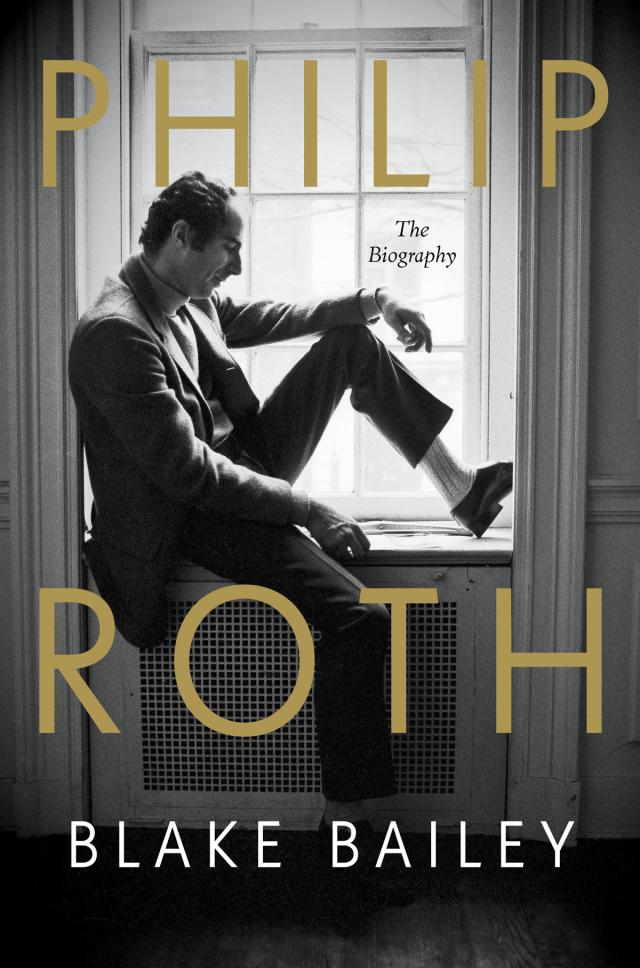


ROTH CONCLUDED HIS 2013 apologia thus: “High-powered people have a tendency to get carried away, to be sure, but twice in life, catastrophically, at the beginning and nearly approaching the end—as though I had learned NOTHING—I put the high-poweredness to the worst possible use. I didn’t flee to Bora-Bora—not me! But then, 31 times I put it to a proper use, to the only use that was of any use to me and I (me?) to it, if that or anything here makes sense.”
It makes sense. Roth’s thirty-one books, his fifty-five years of intensity, leave an achievement that, as Jonathan Lethem put it, “encompasses and transcends modes of historical fiction, metafiction, memoir, the maximalist (or putters-in), the minimalist (or takers-out), the picaresque and counterfactual, etcetera and so forth—being the sort of writer who in his generosity half blots out the sky of possibility for those who come along after—to generate in his ambitious followers a sort of army of Counter-Roths.” Indeed, how does one trace the influence of such a protean writer? Roth saw the problem. One day he told Plante he could parody the latter’s writing, and instantly gave an example: “He sat on a train. The train started. His ankle was itchy. The train slowed down. He scratched his ankle. The train stopped.” Then he challenged Plante to return the favor, but Plante was at a loss; Roth tried, but he couldn’t do it either. “That may be a bad sign,” he said.
And what about the protean man himself? In Deception, “Philip” imagines the predicament of Zuckerman’s hapless biographer: “He’s found a tremendous lack of objectivity in people’s responses to Zuckerman. Everybody gives him a different story. . . . What interests him is the terrible ambiguity of the ‘I,’ the way a writer makes a myth of himself and particularly, why.” Roth (the real one) thought a key phrase here would serve as a good title for his own biography—“THE TERRIBLE AMBIGUITY OF THE ‘I,’ ” he typed it out for me, “The Life and Work of Philip Roth”—“given its applicability,” he explained, “to the writer as imaginer and the characters whose being he imagines, men like Swede Levov, Ira Ringold, Coleman Silk, Mickey Sabbath, David Kepesh, Peter Tarnopol, even benighted Portnoy.”
What Roth’s farrago of alter egos (especially the ones who write) have in common is a nature divided along somewhat predictable lines: the isolato who lives to pursue his art; the impious libertine who endeavors to squeeze the Nice Jewish Boy out of himself “drop by drop”; and of course the Nice Jewish Boy per se, wishing mostly to be good and pining for le vrai: “There was nothing that could ever equal coming home through the snow in late afternoon from Chancellor Avenue School. That was the best life had to offer. Snow was childhood, protected, carefree, loved, obedient.” Given the vastly different needs of his different selves, Roth’s engagement with the world was bound to be incomplete, when it wasn’t positively disastrous.
“Love!” he said, when an interviewer asked him about it; he pondered a moment, then burst into song à la Chaplin in Limelight:
. . . It’s love, love, love, love, love, love, love, love, love, love, love, love, love. It’s love, love, love, love, love, love, love, love, love, love, love, love, love. It’s love, love, love, love, love, love, love, love, love, love, love, love, love. It’s love, love, love, love, love, love, love, love, love. Love, love.
“You didn’t figure on getting that, did you?” he said, and laughed.
* Subsequent speakers have included Robert Caro, Salman Rushdie, and Sean Wilentz.
† Ronald’s speculation about his possible sociopathy reminds me of his mother’s diary entry from April 7, 1958, quoted on page 145: “I really feel like one born without one of the senses but it’s really that I have no conscience. I have the mind to reason what is right and wrong but I have no moral repugnance to keep me from anything but I have [a] huge amount of self pity where my wickedness keeps me from having the good things that life gives to good girls.”
ILLUSTRATIONS INSERT
Philip Roth’s paternal grandfather, Sender, a rabbinical student in Galicia and a hat steamer in America.
(COURTESY OF PHILIP ROTH ESTATE)
Philip Finkel, Roth’s maternal grandfather and namesake.
(COURTESY OF PHILIP ROTH ESTATE)
Philip Roth’s father, Herman (“Little Hymie”)—the first among nine siblings to be born in America—with his older brother Ed.
(COURTESY OF PHILIP ROTH ESTATE)
Philip Roth’s mother, Bess, on her wedding day—February 20, 1927—a photograph Roth discovered late in life, after his mother’s death. The lace-train wedding gown and impressive staircase gave him an inflated idea of the Finkels’pre-Depression prosperity.
(COURTESY OF PHILIP ROTH ESTATE)
Another of Philip’s namesakes, his uncle Milton, who was a senior at the Newark College of Engineering (the first Roth to go to college) when he died of peritonitis at age nineteen.
(COURTESY OF PHILIP ROTH ESTATE)
Bess Roth’s beloved brother, Mickey, a struggling artist.
(COURTESY OF PHILIP ROTH ESTATE)
The Roth men—Herman, Sandy, and Philip—at Bradley Beach on the Jersey Shore, circa 1937.
(COURTESY OF PHILIP ROTH ESTATE)
From left: Bess, Philip, Herman, and Sandy.
(COURTESY OF PHILIP ROTH ESTATE)
Philip and Sandy at Bradley Beach, circa 1941.
(COURTESY OF PHILIP ROTH ESTATE)
“Philip was an all-American boy who loved baseball,” Herman Roth would say, accurately enough, when asked what his famous son had been like as a kid.
(COURTESY OF PHILIP ROTH ESTATE)
Philip Roth, about to enter high school at age twelve.
(COURTESY OF PHILIP ROTH ESTATE)
Roth (back row, fourth from right) with his eighth-grade graduating class at Chancellor Avenue School.
(COURTESY OF PHILIP ROTH ESTATE)
Roth and friends at Billy Rose’s Diamond Horseshoe after the Weequahic High School prom. Everybody ordered “Canasta Collinses.” Men, left to right: Roth, Marty Weich, two unidentified friends, Bob Heyman.
(COURTESY OF PHILIP ROTH ESTATE)
Roth on the beach with Bob Heyman (left) and another friend.
(COURTESY OF ROBERT HEYMAN)
For two summers during college, Roth worked as a counselor at Pocono Highland Camp in East Stroudsburg, Pennsylvania.
(COURTESY OF PHILIP ROTH ESTATE)
Roth as the Ragpicker and Jane Brown as the Madwoman in the fall 1952 Bucknell production of The Madwoman of Chaillot.
(COURTESY OF PHILIP ROTH ESTATE)
Roth’s senior portrait at Bucknell, 1954.
(COURTESY OF PHILIP ROTH ESTATE)
Roth (right) with his friends and fellow graduate students at the University of Chicago, Barry Targan (center) and Herb Haber (left).
(COURTESY OF PHILIP ROTH ESTATE)
Private Roth at Fort Dix, New Jersey, 1955. An injury on the last day of basic training led to a lifetime of back pain.
(COURTESY OF PHILIP ROTH ESTATE)
Maxine Groffsky—the model for Brenda Patimkin in Goodbye, Columbus—during a visit to Roth’s parents’ home in Moorestown, New Jersey.
(COURTESY OF PHILIP ROTH ESTATE)
The young author with Allegra the cat, Manhattan, 1959.
(COURTESY OF PHILIP ROTH ESTATE)
Maggie Martinson and Roth during a special day in Yonkers, 1959.
(GIBBERD FAMILY COLLECTION)
Roth with the eight-year-old Helen.
(COPYRIGHT © Y. G.)
Winners of the 1960 National Book Award: Robert Lowell (poetry), Richard Ellmann (nonfiction), and Roth, the youngest-ever winner at age twenty-six.
(COPYRIGHT © ASSOCIATED PRESS)
Maggie, circa 1960.
(COURTESY OF PHILIP ROTH ESTATE)
Left to right, facing camera: David Ben-Gurion, Roth, and Margaret and Leslie Fiedler, during a June 1963 symposium on Jewish cultural issues in Israel. “Remember, this isn’t yours,” Ben-Gurion whispers to a young Nathan Zuckerman in The Counterlife, when the two shake hands for a photographer, “—it’s for your parents, to give them a reason to be proud of you.” Roth’s parents kept a framed photo of their much maligned son with the founder of Israel on a side table for the rest of their days.
(COURTESY OF PHILIP ROTH ESTATE)
Lucy Warner, model for Karen Oakes in My Life as a Man, who (à la Karen) said to Roth when she broke off their affair: “I can’t save you, Philip. I’m only twenty-two.”
(COURTESY OF LUCY WARNER KUEMMERLE)
Roth with the painter Julius Goldstein during his first visit to Yaddo, in 1964.
(COURTESY OF PHILIP ROTH ESTATE)
Ann Mudge, Roth’s main companion for much of the sixties.
(COURTESY OF PHILIP ROTH ESTATE)
Roth and Mudge dining at the Waldorf-Astoria with Joe Fox, his editor at Random House, and Fox’s wife.
(COURTESY OF PHILIP ROTH ESTATE)
Roth and Mudge, traveling in the summer of 1968 as “Mr. and Mrs. Philip Roth,” aboard the luxury liner France, a few weeks after Roth completed Portnoy’s Complaint.
(COURTESY OF PHILIP ROTH ESTATE)
Roth in his Kips Bay apartment.
(COPYRIGHT © BOB PETERSON)
Roth was photographed beside a portrait of Kafka for Life magazine. The accompanying feature, by Albert Goldman, was titled “ ‘Portnoy’s Complaint’ by Philip Roth Looms as a Wild Blue Shocker and the American Novel of the Sixties.”
(COPYRIGHT © BOB PETERSON)
The theater critic Robert Brustein (left) said Roth was like a “loony” little brother to him and his wife, Norma. “To Bob and Norma,” Roth inscribed their copy of Portnoy, “who encourage me in this madness.”
(COURTESY OF BARBARA C. SPROUL)
Alan Lelchuk (left) was Roth’s best friend for a time. The younger man’s first novel, American Mischief—for which Roth served as a rigorous midwife—led to a dicey confrontation between the two friends and Norman Mailer.
(COURTESY OF BARBARA C. SPROUL)
Roth and Barbara Sproul in Woodstock, New York.
(COURTESY OF BARBARA C. SPROUL)
Roth withdrew from the public eye after Portnoy, though he and Sproul liked to host friends at Broadview, their rented house in remote Woodstock. From left: Martin Garbus, Alan Lelchuk, Roth, Frances FitzGerald, Ruth Garbus.
(COURTESY OF BARBARA C. SPROUL)
Roth and his friend Mel Tumin. “Mine became another life that Mel took it upon himself to assist and oversee as secretary of health, education, and welfare,” Roth said in his eulogy.
(COURTESY OF BARBARA C. SPROUL)
Sandy Roth (right), sweetly bemused by his zany little brother.
(COURTESY OF BARBARA C. SPROUL)
Roth in his Ruppert Mundys jersey, deeply into the spirit of The Great American Novel.
(COURTESY OF BARBARA C. SPROUL)
Herman, Bess, and their famous son enjoy a round of croquet.
(COURTESY OF BARBARA C. SPROUL)
The artist Philip Guston and Roth, in Woodstock, “hiding themselves away from almost everything but their work and each other,” as Roth put it.
(COURTESY OF BARBARA C. SPROUL)
Guston’s phallic caricature of his friend.
(COURTESY OF THE GUSTON FOUNDATION)
Roth’s beloved eighteenth-century farmhouse in Warren, Connecticut, where he moved in 1972.
(COURTESY OF PHILIP ROTH ESTATE)
Roth in the Stone Room of his Connecticut house.
(COURTESY OF PHILIP ROTH ESTATE)
Roth and Francine du Plessix Gray, his neighbor and fellow writer, in happier days.
(COURTESY OF BARBARA C. SPROUL)
Roth in Prague, 1973.
(COURTESY OF BARBARA C. SPROUL).
With Czechoslovak dissidents in Prague. From left: Stanislav Budín, Rita Klímová, Ludvík Vaculík, Roth.
(COURTESY OF BARBARA C. SPROUL)
Roth and Sproul at his big fortieth birthday party in New York, 1973. “It was a little bit of This Is Your Life,” said Sproul, who’d invited everyone from Roth’s family to his college mentors, fellow writers, and Czech friends.
(COPYRIGHT © NANCY CRAMPTON)
Roth with his parents and Bess Roth’s “other son,” Joel Conarroe, in Warren, 1975.
(COPYRIGHT © NANCY CRAMPTON)
Mildred Martin with her famous former student and lifelong friend, who received an honorary degree (his first of many) from Bucknell in June 1979.
(COURTESY OF PHILIP ROTH ESTATE)
Roth’s minimalist but remarkably accurate self-portrait.
(COURTESY OF PHILIP ROTH ESTATE)
Roth with Veronica Geng, his friend and favorite editor.
(COURTESY OF VERA KUNDERA)
Roth and Milan Kundera. The Kunderas visited Connecticut—along with Geng—in the fall of 1980, while Roth was renovating his studio, hence the bulldozer.
(COURTESY OF VERA KUNDERA)
When Roth decided that England was rife with anti-Semitism, he grew a beard to augment his already conspicuously Semitic features.
(COURTESY OF PHILIP ROTH ESTATE)
In 1986, Roth traveled to Turin to interview Primo Levi, the author of Survival at Auschwitz, for The New York Times Book Review. The two felt an immediate bond. “I don’t know which of us is the younger brother and which is the older brother,” said Levi on parting.
(COURTESY OF LA STAMPA)
Also for the Times, Roth went to Jerusalem to interview the writer Aharon Appelfeld, whose harrowing childhood amid the Holocaust was in stark contrast to Roth’s sheltered idyll in Weequahic.
(COURTESY OF PHILIP ROTH ESTATE)
Sandy and Philip with their father, in Connecticut, 1983.
(COURTESY OF PHILIP ROTH ESTATE)
Philip with Herman and his companion, Lillian Beloff, in 1987, shortly after a massive cartilaginous brain tumor had caused one side of Herman’s face to collapse.
(COURTESY OF PHILIP ROTH ESTATE)
Roth and Julia Golier, whose sweet reasonableness (and drollery) got him through the fiasco of Leaving a Doll’s House. Golier remained a dear friend even after their breakup, and eventually Roth named her co-executor of his estate.
(COURTESY OF JULIA GOLIER)
Roth was a jolly (if wistful) guest at Golier’s wedding to Bill Bornmann on March 9, 2002.
(COURTESY OF JULIA GOLIER)
A reunion, in Connecticut, with “the boys” from Weequahic High’s class of 1950. From left: Stuart Lehman, Bernie Swerdlow, Howie Silver, Marty Weich, Roth, and Bob Heyman.
(COURTESY OF PHILIP ROTH ESTATE)
Roth with the Clintons, in 1998, after receiving the National Medal of the Arts at the White House.
(COURTESY OF PHILIP ROTH ESTATE)
Roth strolls the Bard campus with his friends Emmanuel Dongala (left) and Norman Manea (right).
(COURTESY OF PHILIP ROTH ESTATE)
Lisa Halliday, whose romance with Roth would be evoked in Asymmetry, her 2018 novel.
(COURTESY OF THEO COLLIER)
81 Summit Avenue, in Weequahic, as it appears today (a half block away from Philip Roth Plaza). “This was the first childhood home of Philip Roth, one of America’s greatest writers of the 20th and 21st centuries,” reads the historical plaque.
Roth receives the National Humanities Medal from President Obama, 2011. “You’re not slowing down, are you?” Obama asked him. “Oh, Mr. President,” Roth replied, “I’m slowing down, all right.”
(COURTESY OF PHILIP ROTH ESTATE)
Roth chats with Zadie Smith and Nathan Englander at the Center for Fiction in New York, 2011.
(COURTESY OF THE CENTER FOR FICTION)
Roth doted on Julia Golier’s twins, Amelia and William Bornmann, who became de facto grandchildren. Roth is shown here with Amelia in 2013.
(COURTESY OF JULIA GOLIER)