Empire at war, p.20
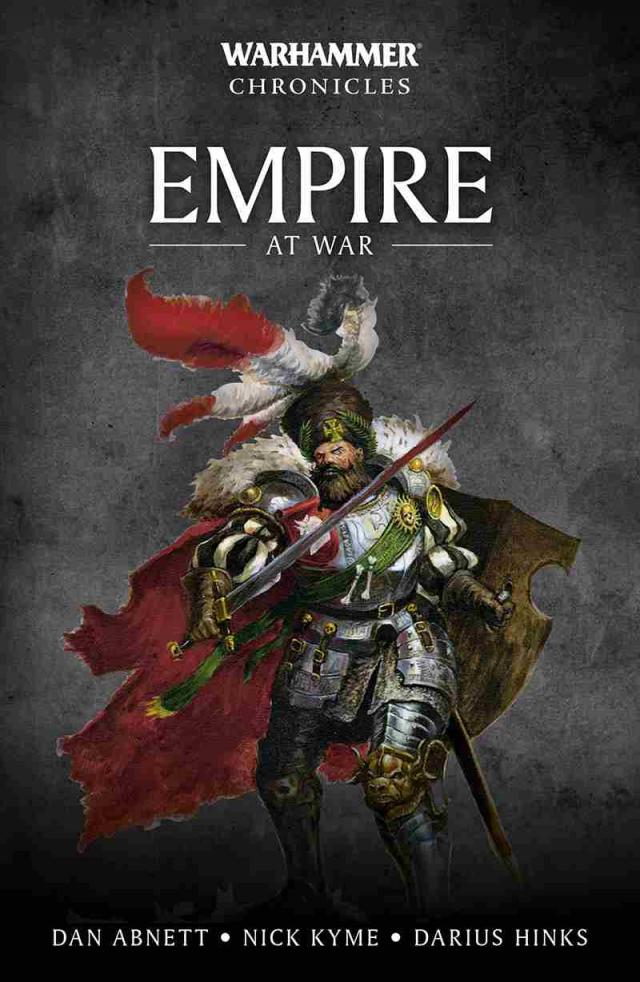
Empire at War,
p.20


Antal’s horsemen, along with the company led by his brother Dmirov, had assembled with the pulk at Zhedevka, and been caught up in that great military disaster. They had braved a number of desperate escapades and managed to flee at last into the open country, first west and then north-east. Antal had come away with only forty of the seventy men he had started with. He had not seen Dmirov, nor any of his warband, since Zhedevka.
Noticing the strange rider and even stranger horse that carried the rota banner, Antal walked across to meet Gerlach. He yanked off his dusty gloves and clasped Gerlach’s hands as Beledni made introductions.
‘Vebla,’ Beledni said, and Antal chuckled.
‘Is your name?’ the young commander asked.
‘My name is Gerlach Heileman.’
‘Good!’ laughed Antal, as if the name ‘vebla’ was something better avoided.
‘How long have you been here, at Leblya?’ Gerlach wanted to know.
‘Thirteen days,’ Antal answered. His company had ridden there with all speed, hoping to congregate with other survivors of the battle. ‘For eight days, no one come. Then lancers, Novgo’s rota.’
Gerlach had to struggle to keep up with the exchange. ‘Novgo?’
‘Comrade rotamaster,’ Beledni said. ‘Of Dagnyper krug. Many good men raise wings with him.’
‘Not so many,’ said Antal sadly. ‘Only five times five lancers of Novgo’s rota live after Zhedevka.’
There was some quiet muttering and oaths of dismay from the lancers.
‘Where are they now?’ asked Gerlach.
‘Kyazak come, same day Novgo’s rota arrive. Great host, more than was here under today’s sun.’
The Kul raiders had arrived from the south in huge numbers, either following the straggling survivors of Zhedevka, or happening on Leblya by pure unlucky chance. There were so many of them – ‘covering steppe like flies on corpse’ Antal said – that it was clear even as they approached that Leblya would not withstand the attack. Novgo, with what Beledni seemed to think was typically rash courage, had ridden all he had left of his rota out of Leblya and made a dash south, partly to warn any approaching companies that Leblya was no longer a safe haven, and partly to try to draw the kyazak away from the town.
A great proportion of the Kul had turned and chased Novgo’s rota away across the grasslands. Neither rota nor enemy had been seen again.
The remaining Kul had laid siege to the town, and Antal’s warriors had done their level best to defend the place. It was hard. Their supplies, especially of arrows, were limited, and the horse archers could not use their own strengths and face the raiders because they were woefully outnumbered. When Beledni’s more sizeable rota appeared that morning and engaged the Kul, Antal had seized his chance, and led his archers out in a make or break raid to finish the siege.
It had paid off. Through strength and speed of horse, and the bonus of skilled archery, Beledni and Antal’s companies had defeated a kyazak warband of much greater size.
In fact they had virtually annihilated them.
The Kislevites were all flushed with relief and victory. The thrill of battle still boiled excitedly inside them. But Gerlach couldn’t help feel a little disappointment. He’d been dreaming of an allied host at Leblya, waiting to surge south and exact a bloody war-price on the Kurgan advance.
Instead, just one band, forty strong, of tired and ill-supplied horse archers, and word of a diminished lance company that had since disappeared.
He kept his thoughts to himself. The Kislevites were celebrating.
‘I thought you would come today,’ Antal told Beledni. ‘I saw a shape in the sky that reminded me of you.’
‘Yha! So I come, Antal Gasparitch! So I come!’
‘I was not sure. Cloud look like you, but it came riding on strange white horse, which I know not your horse.’ He smiled at Gerlach and pointed to Saksen. ‘Now I understand.’
VI
The rota had not come through unscathed. Two lancers – Ptor and Chagin – were dead, and Sorca, one of Beledni’s veteran seniors, had an axe wound in his hip that was obviously mortal. But almost everyone had taken a nick, graze or cut of some kind. Mostly it was bruises and scrapes they didn’t even remember getting. The worst of the minor wounds was a sword-cut along the side of young Kvetlai’s hand and forearm. He showed the bloody gash off proudly.
The Kislevites retired into the town, where the inhabitants sent up a great roar and clangour with pots and pans and voices, hailing the victory and their deliverance. Antal’s riders gathered up all the spent arrows they could find – even broken ones and kyazak shafts, for wood was so scarce – and rode in ahead of the lancers through the gatehouse. Ptor and Chagin were draped over their horses, and Beledni himself led Sorca, lolling in his saddle.
Many of the lancers raised their hands to acknowledge the cacophony. But Beledni did not seem to notice it. His entire concern was taken up with the dying friend and comrade riding slowly beside him.
VII
The victory feast that night was not grand, but generous considering the extent to which the siege had depleted Leblya’s larders. Sad songs were sung to the memory of the fallen comrades, and the mood was sombre.
More miserable still was the talk. Gerlach heard a good many of the lancers, and the archers too, saying that the ‘journey’ was over, for this year at least. Though it was only early summer on the high steppes, and the war-season barely begun, the men seemed to agree that there was nothing left to be achieved this year. They would be better off returning to their stanitsa homes in time to help with the harvest and the winter slaughter.
Gerlach took himself apart from the others and sat alone. They had come into the ancient zal on the top of the great earthwork for the feast. It was immensely old. The roof had been replaced many times, and the body of the hall extended, but the basic inner frame and beam-work was original. It was hundreds of years old, perhaps thousands. In places, it was black from old fire damage – not the accumulation of cook-fire soot but real burn marks – and peppered with old indentations and nail holes.
He traced his fingertips over the pockmarked beam he sat against. The firelight caught the faintest traces of gold frayed into the worn timber, tiny pin-head scraps of it caught in the grain of wood, or hammered into empty nail marks.
These beams had been covered once, Gerlach realised. They had been clad in gold, wafer-thin foils of beaten gilt inscribed with the figures and symbols of their makers’ divinity. These beams had stood since the time of the Scythians – since the earthwork itself had been raised. Zals had been built and razed and built again around their solid framework. The beams had worn each successive settlement’s hall as a man wears a beshmet or pole staves support a canvas tent. They were older than the great cathedral temples and fortresses of his homeland.
So did great glory come and fade until it was scarcely visible any more. Cultures so rich and powerful that they could dominate the land and afford to wrap their buildings in gold leaf. But they had fled, and left only mounds, like graves, behind them.
Gerlach knew, in his heart, the Empire must surely fade too. He had grown up believing it to be permanent and eternal, by the grace of Sigmar, and pledged his life to maintaining that equilibrium. But it was for naught. The Empire would fall. Perhaps it had fallen already. Even if the great armies of his homeland had risen with effect and driven back the Northers this time, then it would be next year, or the year after that, or the one after that. But it would happen one day.
All any man could hope to do was delay the inevitable.
That was a calling he could believe in. To keep fighting the darkness so long as there was light to protect.
Vitali and Vaja came over to join him, worried that he had withdrawn from the krug. They brought koumiss, and were eager to celebrate their shared exploits on the field.
‘We do war good together again, Vebla!’ Vitali said.
Gerlach nodded and toasted them both with the fermented milk. They seemed inordinately proud of his accomplishments during the battle. He had kept the rota safe, the banner raised. He had also fought well, and taken the enemy’s banner from them.
In truth, they had achieved far more than him. They had ridden loyally to keep him safe, and each of them had accounted for a great many more kyazak lives than Gerlach.
‘Why Vebla face sad look it in?’ Vaja asked.
‘I hear the talk,’ Gerlach answered the young lancer. ‘You all talk of going home. As if you are done now.’
‘Vebla will like much Yetchitch krug!’ Vaja decided.
Vitali, as ever, seemed to grasp Gerlach’s notion more soundly. ‘You not want go, Vebla?’ he asked.
Gerlach shook his head. ‘Has Yetchitch ever been attacked? Not by kyazak, I mean. By Kurgan host, on a great invasion?’
They didn’t think so, not in their lifetimes. Yetchitch was quite remote, and mainly had only bandits and raiders to fear.
‘So you will ride home, and Yetchitch will be as you remember, and you will winter there and next spring, come back again to see what war there is to be fought, what glory to be found?’
‘Yha!’ said Vaja.
‘My home is being attacked right now. Right this very minute. I am not done.’
‘Shto?’
‘Vebla is not yet done.’
VIII
Their faces darkened as they thought about this. It was as hard for them to care about towns and villages to the south that they would never see, as it had been for Gerlach to give a damn about the oblast. Until, that is, he’d seen its grandeur and the spirit of its people. But for the first time, Vitali and Vaja seemed to sympathise. They had found affection and comradeship for Gerlach, and now they shared his unhappiness.
What divided the men of the Empire from the men of Kislev was Kislevite fatalism. Vitali and Vaja agreed the plight of Gerlach’s home was a sad thing, but it was beyond them to do anything about it. Not quite ‘of no matter’, for they weren’t that heartless, but far enough away for it to be a thing that made a man shrug and sigh. In Kislev, men believed they were made by fate. In the Empire, men believed they made their fates themselves.
Gerlach left them to their thoughts and their koumiss, and went to find Beledni, but the rotamaster was holding vigil with Sorca and was not to be disturbed. Gerlach walked through the hall, nodding to the men who offered him greetings. He saw Kvetlai. The boy had drunk too much, probably to dull the pain in his hand and arm, and was lolling pathetically by the fire.
Nearby, Gerlach found Maksim and Borodyn seated with Antal and the ataman of Leblya: a solid, portly elder called Sevhim.
They welcomed him and gave him a cup of kvass and a bowl of salt fish.
Antal was bright and curious, and asked Gerlach many questions about the Empire, a place he’d never visited. His thoughts ran away from him, beyond his broken grasp of Reikspiel, and Borodyn translated for him.
‘I understand you’re all thinking of going home,’ Gerlach said at length, when he’d had enough of the questions.
Maksim nodded. He was chasing flecks of food out from between his teeth, and his working tongue bulged in his lean, drawn cheeks. ‘Is of best we do this.’
‘Is of best?’
Maksim shrugged.
‘There is little to be gained, Vebla,’ Borodyn answered instead. ‘We have been bested and driven to flight. We have tried to… to regroup and make another chance for us, but…’ he gestured at the hall around them, indicating Leblya itself, ‘…there is nothing.’
‘I disagree,’ said Gerlach.
‘That is your privilege,’ Borodyn accepted. ‘Beledni rotamaster has tried hard. We rode to Dushyka, to Leblya, hunting for allies, for any remaining part of the pulk. Nothing, except for Antal and his brave riders.’
Antal smiled and nodded.
‘So it is better to end and start again fresh and new than prolong this misadventure.’
‘Beledni thinks this?’
‘Beledni would have ridden home from Dushyka if not for you,’ Maksim admitted.
‘What? What does that mean?’
‘This season is loss! Terrible loss!’ Maksim snapped. ‘Only because of Vebla did Beledni press on to Leblya. To see.’
‘To see what?’ demanded Gerlach.
‘If pulk was gathered here,’ said Antal.
Borodyn took a sip of kvass. ‘Beledni rotamaster believes he owes a debt to you. To be fair, we all do. You took up the eagle-wing banner when it had fallen and carried it to safety. We all respect that.’
‘Is why you carry rota,’ growled Maksim.
‘We all respect that,’ repeated Borodyn, ‘and none more so than Beledni. Most rotamasters would have turned their lancers homeward after a defeat like Zhedevka. But Beledni ordered us on here, to Leblya, because there was a chance the pulk had reassembled. If any great force had been here, we would have joined it, and gladly ridden south to help you get the vengeance you deserve. But it is not the case. Beledni has been more than fair to you. But he will not risk any more men.’
‘I see. What about next year? When the Kurgan are so entrenched in the south and in the Empire there is no pulk left to join and no cause left to fight for?’
‘Next year is next year,’ said Maksim, tipping invisible dust out of his hand.
Gerlach got up angrily and walked away. Then he stopped, and looked back at the men.
‘I have two questions,’ he said. ‘You are the riders of the dead, yha? Already mourned and given up by your krug?’
Borodyn and Maksim nodded at this.
‘Then what lives are you risking?’
Borodyn smiled and translated. Both Maksim and Antal laughed.
‘You do not understand, Vebla.’
‘No, I suppose I don’t. I suppose I don’t understand the significance of the pictures Dazh puts in the sky, either. You saw Beledni, coming to help you on a white horse, didn’t you?’ He looked at Antal. The young man could only agree.
‘Then what is Dazh telling you? To run away or heed the signs he puts in the sky to guide you?’
‘Dazh tell us what he always tell us,’ said Maksim, a little angry now. ‘Follow Beledni. Follow rota. That is the only way.’
IX
At dawn, the rota buried its dead in the steppe.
It was one of the first truly warm days of summer and the heat began to rise even from the moment of daybreak.
The sky was blue and clear, and they could see for many leagues across the grassland. Skylarks were singing, far away up beyond the sight of man, and the air was droning with horseflies and the fizzles of newly hatched mosquitoes.
Beledni – his eyes red and his face drawn from too little sleep and too much drink – howled the names of Ptor, Chagin and Sorca at the rising sun, as if he hoped he could stop it from coming up.
Then Yevni blew his horn. The three horses took off from the gate of Leblya and ran away into the grass. Ptor and Chagin were bound in cloth and lashed over their saddles. Sorca, in the last hours of his life, was hunched over in his saddle, and pulling his dead comrades behind him.
Sorca had seen the same cloud shape for a second time. The three were riding away to wherever Demieter had gone.
The lancers, and mourners from Antal’s company and the town, turned and went back inside the stockade, one by one.
Gerlach remained beside Beledni, the banner raised in his hand, until the three horses had become dots, and the dots themselves had receded into the dawn haze and were gone.
X
As they went back into the stanitsa, Gerlach tried to talk to Beledni, but the old rotamaster ignored him and disappeared into an izba to sleep.
Gerlach carefully planted the shaft of the banner in the earth of the inner yard, and dismounted to fetch some water and find something to breakfast on.
In the great zal, up on the mound, Kvetlai was sick. His wound had become infected, and was puffy and black. He was sweating and delirious. The men of the rota didn’t seem to care. They brought Kvetlai water periodically, and Borodyn dressed his wound with salves, but their manner seemed dismissive.
Just after noon, with the sun at its highest and hottest, Gerlach saw Kvetlai stagger down across the yard and drag himself on to his horse. No one tried to obstruct him. He kicked his heels into his mare’s ribs and bolted out of the gate and away across the steppe.
‘Why didn’t you stop him?’ Gerlach demanded of Borodyn. ‘His injury wasn’t mortal, not like Sorca’s!’
‘It was full of poison. He had a fever.’
‘But if you’d cared for him, he might have lived!’
‘Dazh will care for him. Ursun will care. The steppe also. A sick warrior rides until the sickness sweats out of him. Kvetlai will return. Or Dazh will lead him on his journey.’
Gerlach turned away, disgusted. The Kislevite way doomed every man to fend for himself. It was as if riding answered every question of life and death. We are dying… ride away! We are defeated… ride away! We are sick… then ride away and see what fate provides! Is of no matter.
The only thing they cared about was the krug, and the only thing they followed was the rota.
Everything else was left in the hands of some distant god of wide, empty spaces who was too damn far away to hear.
XI
The only thing they followed was the rota. The banner.
Gerlach woke up in the still, cool hours before dawn. The hall fires were dying, and the whole of Leblya was asleep.