The case of the sleepwal.., p.15
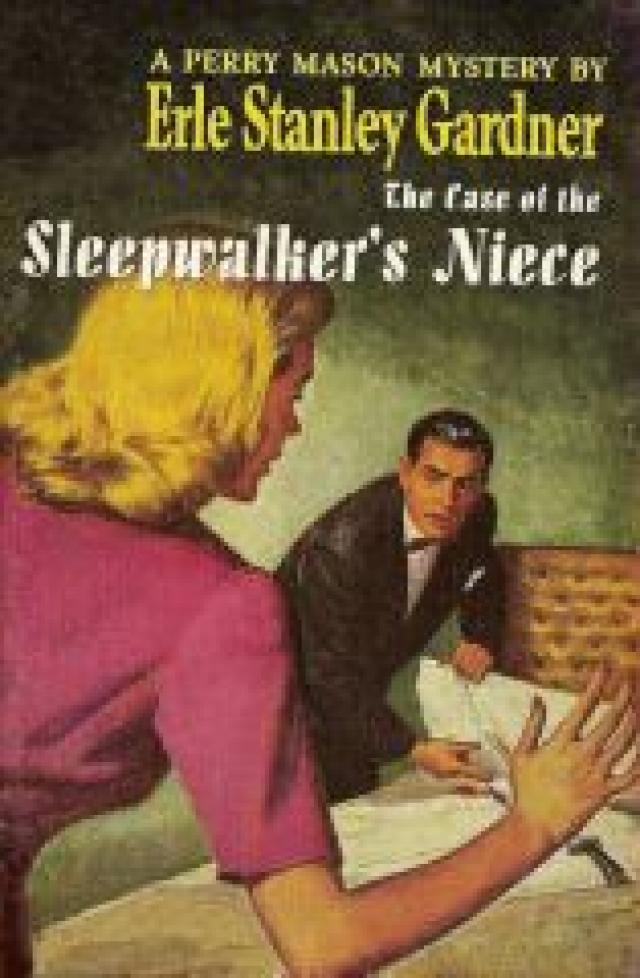
The Case of the Sleepwalker’s Niece (Perry Mason Series Book 8),
p.15


Mason escorted Doris Kent to the corridor. “I’m very sorry,” he said, “that this happened. She really shouldn’t have opened the door to my private office. But she had the appointment. She’s rather wealthy and quite impulsive....”
“I understand perfectly,” Doris Kent said, and, turning gave him her hand.
“After all,” she said, “we can be friends, can’t we?” and her eyes were filled with promise.
Mason patted her hand, turned and re-entered his office.
Della Street, looking up at him anxiously, said, “Did I muff it?”
“No,” he told her, “you did nobly. Just exactly what I wanted.”
“What was the big idea?”
“Get a bunch of glad rags and move into the Lafitte Hotel. Keep sticking around until you see Doris Kent. Go over and get acquainted with her. Tell her how sorry you were that you interrupted her conference; that you realized afterward you had no right to bust in on her and that you don’t know what made you do it. Tell her I’m usually so careful about appointments, that you felt there’d been a mistake made by someone in the office; that you were in a hurry and simply had to see me.”
“Then what?” she asked. “Surely, Chief, you don’t think she’d become confidential and tell me anything which would damage her side of the case? Particularly when she knows that I know you, and . . .”
He chuckled. “What’s the name of the girl who got gypped in the love racket?”
She frowned at him and asked, “What the devil are you talking about, Chief?”
“You know, the girl that wanted me to handle her case? She got gypped for five thousand dollars. . .”
“Oh, you mean Myrna Duchene.”
“That’s the one,” he told her. “Where’s her boyfriend?”
“He’s at the Palace Hotel. Going under the name of George Pritchard.”
“Okay,” Mason said, “now you go to the Lafitte Hotel. Cultivate a speaking acquaintanceship with Mrs. Kent. Get Myrna Duchene to point out this love pirate to you. I presume he’s the type that makes a girl’s heart go pitty-pat, isn’t he?”
“I gather that he is,” Della Street said, puzzled. “I saw a photograph of him. He certainly looked like the answer to a maiden’s prayer.”
Mason said, “Scrape an acquaintance with him. Hand him a hard luck story about having lost your money but don’t do that until after he’s called on you at your hotel. Keep him calling there until you have an opportunity to point out Mrs. Kent to him as a very wealthy widow. And, if you can possibly work it, you’ll introduce him to Mrs. Kent and . . .”
Her eyes showed swift comprehension.
“And let nature take its course?” she interrupted.
Mason bowed and smiled. “Exactly,” he said.
Chapter 18
The sign which stretched across the front of the store was relatively new. “PEASLEY HARDWARE CO.” it read. The rest of the store was old. In the dusty, drab show windows an attempt had been made to put new wine into old bottles. Various tools had been arranged in geometric designs. Wooden steps had been covered with green cloth and used to display stock to advantage, but, for the most part, that stock gave unmistakable evidences of having been on display for some time.
Perry Mason pushed his way through the door. Obviously new electric fixtures showered brilliant illumination over the counters; but the gloomy walls drank up the light and left only drab dregs for the eye.
Bob Peasley came walking briskly forward from a little office in the rear. When he was close enough to recognize Mason his step faltered appreciably, then he squared his shoulders and came up, giving Mason a forced smile of greeting.
“How do you do, Mr. Mason? This is indeed a pleasure!”
“Hello, Peasley. Nice place you have here.”
“Think so? Glad you like it.
“How long have you been here?”
“Not so long. I picked it up cheap at a receiver’s sale. I’m trying to get rid of some of the old stock now. Then I either want to move or else have the whole interior done over.”
“A lease?” Mason asked.
“Yes, and it’s rather an advantageous lease. But I can’t get the landlord to do anything toward fixing up to make changes and improvements at my own expense, however.”
“Going to start soon?”
“Soon as I can move some of the old stock and get some cash.”
“How’s it going?”
“Fair. I’m going to have a big clearance sale in about thirty days. I really don’t know all that I have here yet. There wasn’t any current inventory, and the one the receiver made was just a makeshift. It was so dark in here that I honestly don’t know how a customer ever had a chance to find his way in. I put in new lights, but, somehow, it still seems cobwebby.”
Peasley glanced cautiously over his shoulder, lowered his voice and said, “How was the carving knife?”
“Excellent,” Mason answered. “Just exactly what I wanted.”
Peasley fidgeted uncomfortably.
“What’s the matter,” Mason inquired, “anything?”
Peasley shook his head.
“Seen Helen Warrington lately?”
“Last night,” Peasley answered. “Why? Nothing wrong is there?” His eyes didn’t meet Mason’s.
“Seen Miss Hammer lately?”
“No.”
“Harris?”
Peasley’s face flushed. “Any particular reason why you should ask me about him?” he asked.
“Just wondering,” Mason said.
“No, I haven’t seen him.
“Well,” Mason said, “whom have you seen?”
“What do you mean?”
Mason placed a fatherly hand on the young man’s shoulder.
“Look here, Peasley,” he said, something’s gone wrong. What is it?”
Peasley hesitated a moment then said in a mumbled undertone, “Nothing.”
He casually moved so that Mason’s hand dropped from his shoulder.. His manner turned surly.
Mason said slowly, “I think I’ve been double-crossed. What do you know about that?”
Peasley’s eyes flared. “Not a damn thing,” he said, “and I don’t know what you’re coming here for.”
“Talk with anyone about the knife?” Mason asked, casually, and almost cheerfully.
Peasley said, “Say, what the devil are you after?”
“Just wanted to find out,” Mason remarked.
Peasley kept quiet.
“Have you?” Mason asked.
“I can’t tell you.”
“Why can’t you?”
“Because ... because I can’t.”
“Helen Warrington tell you not to?” Mason asked.
Peasley was silent.
Mason laughed and said, “Don’t make such a mystery of it. Sergeant Holcomb knows about it so there’s no reason why you shouldn’t tell the world.”
Peasley’s face showed a peculiar change of expression. “You know about that?” he asked.
“What, about Sergeant Holcomb?”
“Yes.”
“Of course I know about it. He told me. . .”
Mason took a cigarette case from his pocket, extended it to Peasley. They both took cigarettes. Mason held a match.
“Holcomb’s a pretty smart chap,” Mason said, casually. “He doesn’t miss much.”
“I’ll tell the world he doesn’t.
“How did he find out about the knife, did he tell you?”
“No.”
“Did you give him a written statement?”
“Look here,” Peasley said, “I’m not supposed to discuss this.”
“Oh, Holcomb wouldn’t care, if you talked it over with me.”
“You’re the very one he didn’t want to know about it.
Mason raised his eyebrows in surprise. “Why, I don’t see how that can be, because I do know about it.”
“Yes, but he didn’t think you did.”
Mason yawned and said, “Shucks, Peasley, it’s all right with me. If you don’t want to talk about it, you don’t have to.”
“Well, I was just following instructions, that was all. You put me in a spot, Mr. Mason.”
Mason’s face showed surprised incredulity. “I what?” he asked.
“Put me in a spot.”
“Why, nothing of the sort,” Mason said. “You have a right to sell hardware to anyone.”
“That isn’t the way Sergeant Holcomb looked at it.”
“To hell with Sergeant Holcomb,” Mason said easily,“ Tell him to go jump in the lake. He hasn’t got any money invested in the store, has he?”
“No.”
“Well, what’s bothering you?”
“He said it dragged Helen into it.”
“He’s a liar,” Mason remarked cheerfully. “No one’s dragged Helen into anything.”
“But I gave you the knife that you were going to substitute for. . .”
“Substitute?” he asked. “For what?”
“Why, for the other knife.”
Mason’s shake of the head was a slow, solemn gesture of amazed, incredulous negation.
“Why I wasn’t going to substitute any knives,” he said.
“What did you want it for then?”
“Just to conduct an experiment. In order to perform that experiment, I had to have a knife of the same size and appearance as the one that had killed Rease.
“What was the experiment?”
Mason sucked in a quick breath, as though about to answer the question in detail, then paused, exhaled and slowly shook his head.
“N-n-no, I don’t think I’d better tell you. You see, I’m not quite ready to confide in Sergeant Holcomb, and he might ask you. It would be a lot better for you to tell him that you didn’t know than to tell him that you knew but were sworn to secrecy. Sergeant Holcomb is a bit impulsive at times and he might feel you weren’t cooperating with him, particularly if he thinks there’s anything questionable about getting that knife for me. I certainly hope he didn’t rattle you any, Peasley.
“Well, I was annoyed and a little worried.
“Worried?”
“Yes. Holcomb said something about compounding felonies.”
Mason laughed and said, “Don’t let a police sergeant tell you what the law is. Get your law from a lawyer. I wouldn’t ask you to do anything that wasn’t quite all right.”
“Well, I’m relieved to hear that. I was worried, not for myself, but for Helen.”
“Forget it,” Mason told him. “By the way, I want to get some more of those knives.”
“Some more of them?”
“Perhaps half a dozen. Do you suppose you could send to the manufacturer and get them?”
“I guess so, yes.”
“Would it take a long while?”
“I think I could pick them up from some of the wholesale houses here in town.”
“Go ahead and do it, then,” Mason instructed, taking a roll of bills from his pocket and tossing a couple of twenties on the counter. “That should cover your expenses as well as compensate you for any extra trouble you go to.”
“I’ll only charge you the regular price,” Peasley said hastily, “but I’d have to get Sergeant Holcomb’s permission.”
“An attachment on the store?” Mason asked.
“No, certainly not.”
“I don’t see why you can’t sell merchandise without permission from a police officer.”
“But he wanted me to keep him advised of anything you said to me. Otherwise, he claimed he’d have to make trouble over that knife business last night.”
Mason laughed heartily and said, “Sure, go ahead. Ring him up and tell him I was in and wanted half a dozen more knives. Don’t tell him, however, that I’ve said anything at all about him. He might not like that. Just say I came in and asked you to get me some more knives. If you handle it that way, you won’t have to tell him you discussed his visit with me. He’s a peculiar chap and he might not like it.”
“All right,” Peasley said with eager alacrity. “I’ll do that. I’ll handle it just that way, Mr. Mason.”
“And, if I see him, I won’t mention talking about him with you. That may make it better all around. You can ring him up and tell him I was in asking for half a dozen identical knives.... Well, I must be going. Hope I didn’t interrupt you.”
“Not at all.
“And it won’t be too much bother for you to get those half dozen knives?”
“Certainly not.”
Mason shook hands and left. At the corner drug store he telephoned his office.
“Della there?” he asked.
“No, Mr. Mason, she went out to the hotel you told her to go to. I have the telephone number here.”
“Give it to me,” Mason said. He made a note of the number, called the Lafitte Hotel, asked for Miss Street in 609, and shortly afterward heard Della Street’s voice on the line.
“Holcomb been in the office, Della?” he asked.
“No, why?”
“He pumped Peasley about that knife business.”
“He did! What did Peasley tell him?”
“Spilled the whole business.”
“How did Sergeant Holcomb know about it in the first place?”
“That’s what I’d like to find out.
“Edna Hammer certainly wouldn’t have told him.
“One wouldn’t think so,” Mason agreed.
“Will you be in trouble on account of it, Chief?”
“I don’t know. I’ve done whatever I could to counteract it. That is, I’ve managed to mix the case all up.”
“By doing what?”
“Ordering more of the same article. How are things looking down there?”
“Everything’s coming fine.”
“Met the woman yet?”
“Yes. Had a nice conversation with her. Very sweet and formal. You know, the nice soft paw covering the sharp claws.”
“Swell,” he told her. “Met the man yet?”
“No, but I’m going to.”
“Stay with it,” he said, “I’ll give you a ring, if anything new turns up.”
Chapter 19
The clerk swore the jury.
Judge Markham, shrewd-eyed student of human nature, settled back behind the massive mahogany “bench.” Hamilton Burger, the district attorney, broad-shouldered, thick-necked, with the powerful muscles of virile maturity, sat in watchful attention, studying Perry Mason as a catcher observes a runner who is taking a long lead off first base.
Beside him sat Sam Blaine, young, tall, slender, and trying to look impressive, fingering the black ribbon which dangled from his glasses.
At the opposite counsel table, Perry Mason sat alone. A few feet behind him, Peter Kent, with white, drawn features, kept twisting his fingers. Slightly back of him, Lucille Mays watched proceedings with apprehensive eyes. At times she tried to smile reassuringly at Peter Kent. The effort was a pathetic failure.
Judge Markham said,“ Permit me to congratulate Counsel for both sides upon the expediency with which jurors have been selected. Do you wish to make an opening speech, Mr. District Attorney?”
District Attorney Burger moved up in front of the bar which separated the twelve curious jurors from the portion of the courtroom reserved for Counsel. Back of the bar, the crowded courtroom was tense with hushed expectancy.
Burger said, “Gentlemen, I am not going to indulge in oratory. I shall at this time tell you briefly what the Prosecution expects to prove. On the thirteenth of this month the defendant, Peter Kent, was living in his residence in Hollywood. There were in that residence, besides the servants, Edna Hammer, a niece; P. L. Rease, a half-brother; John J. Duncan, an attorney from Chicago; Frank B. Maddox, a business associate of the defendant; Helen Warrington, the defendant’s secretary.
“We expect to show that on the morning of the fourteenth the defendant entered the bedroom of P. L. Rease and stabbed him to death. We expect to show that P. L. Rease, without the knowledge of the defendant, had exchanged bedrooms with Frank B. Maddox, that between Maddox and the defendant was bad blood; that the defendant labored under the impression, either founded or unfounded, that Maddox was swindling him and trying to hold him up in a business deal.
“As nearly as can be ascertained the decedent met his death from a stabbing wound inflicted by a carving knife at approximately three o‘clock in the morning. Death was instantaneous. We expect to show that at the hour of three o’clock in the morning Peter Kent, the defendant, having this same carving knife in his hand, was moving stealthily, in bare feet, across the patio which separated the wing containing his bedroom from that containing the bedroom of Frank B. Maddox, which was then occupied by the decedent, P. L. Rease.
“We expect to show that the fatal weapon was subsequently found under the pillow of the bed occupied that night by the defendant; that the blade of the knife shows unmistakably that it was the weapon used to kill P. L. Rease.
“We expect to show that subsequent to his arrest, the defendant voluntarily admitted that he was an habitual sleepwalker; that he had every reason to believe that while walking in his sleep he had homicidal tendencies .
“The Court will instruct you gentlemen that once the killing by the defendant has been established, the burden of proving circumstances that mitigate, justify or excuse it shifts to the defendant. So far as the Prosecution is concerned, it will show the death of Rease; that the death was due to a stabbing wound inflicted with a carving knife; that the carving knife was in the possession of the defendant at approximately the time of the murder; that the defendant was actually seen leaving the wing of the house containing the bedroom of the decedent at approximately the time of the murder. We expect to show that the defendant thought Maddox occupied the bed in which Rease was sleeping, that the defendant had every motive for murdering Maddox.
“As you gentlemen have been made aware by questions asked you by the Defense when you were selected as jurors, the Defense will reply, at least in part, upon a theory of sleepwalking. We expect to show that upon a prior occasion, approximately one year before the commission of the crime, the defendant secured a carving knife and...”
Perry Mason slowly raised himself from his seat and said, “Your Honor, I object to the district attorney incorporating in his statement anything which took place a year before the commission of the crime; object to his seeking to anticipate our defense, and move that the jurors be instructed to disregard his statements.”