The case of the sleepwal.., p.21
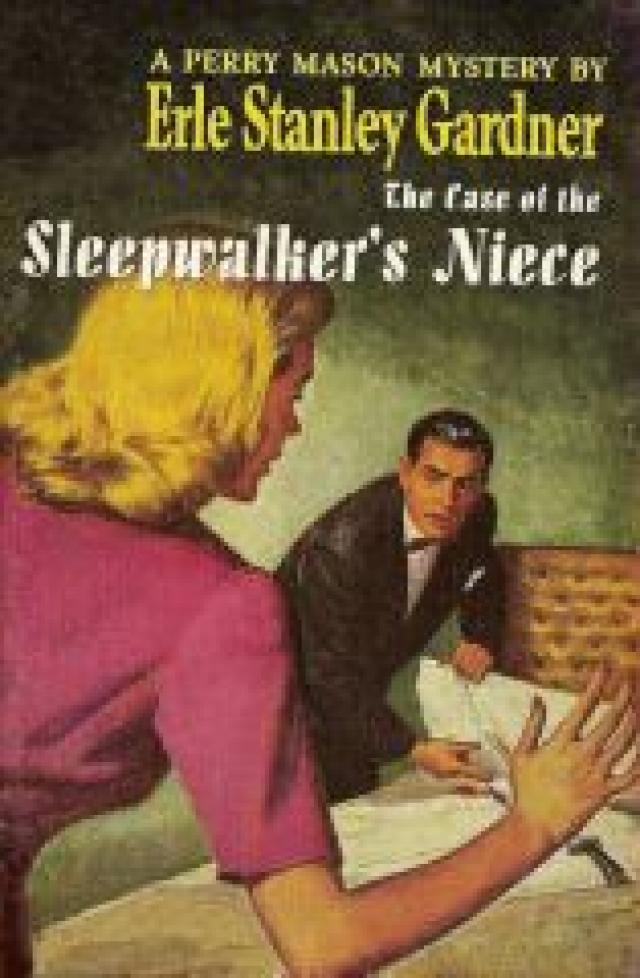
The Case of the Sleepwalker’s Niece (Perry Mason Series Book 8),
p.21


“As soon as I considered that possibility, I realized that it was the only explanation. It had been right there in the open all through the case, clamoring for attention, and we simply hadn’t thought of it. Harris, ostensibly, was watching the house in Santa Barbara to see that Mrs. Kent didn’t leave. He wanted to rush back to Los Angeles, commit a murder, and then return to Santa Barbara. He realized that if Mrs. Kent left the house in the meantime, it would be highly advisable for him to know that fact. Therefore, he decided to call her on the long distance telephone. Naturally, he couldn’t use his own name. Looking around for a plausible name to use, he picked on Maddox, because he figured it was a logical development for Maddox to try to get together with Mrs. Kent. The trouble was it was too logical; too well thought out. Through Duncan, Maddox had already telephoned to Mrs. Kent. By that telephone conversation, Harris accomplished two results which were very valuable to him. First, he made certain that Mrs. Kent was at her residence at three o’clock in the morning; second, he took notes of everything that she said so he could repeat the conversation and thereby make it seem he was there in Santa Barbara within a few minutes of the time the murder was committed.
“But why did he want to murder Rease?”
“He had two reasons. Rease was the only other heir to Kent’s fortune, aside from Edna Hammer, who had recently become Harris’s legal wife. By murdering Rease, he got one heir out of the way and then, by pinning the crime on Kent, he was going to have the hangman get Kent out of the way.
“But Kent had made a will disinheriting Edna.”
“No, he hadn’t. He was going to make such a will after Harris married Edna. That was why Harris arranged to have the ceremony a secret one. He thought he’d have a chance to get Kent out of the way before Kent learned of the marriage and changed his will.”
“But Harris himself was the one who asked Kent to change the will.”
Mason laughed and said, “That was a mighty ingenious touch. Harris is an adventurer, an exploiter and an opportunist. He realized that Edna Hammer was a mighty attractive young woman who was going to inherit a considerable fortune. He also had looked up the situation enough to know that Kent was kicking out every suitor who might be a fortune hunter. So Harris beat Kent to it by asking him to disinherit Edna after he married her. He was playing the same game Pritchard was. He’d picked up a little stake from somewhere and was using it to give himself a swell front, hoping he’d be able to marry a wealthy woman.”
“But what if Kent had taken him at his word and had already changed the will?”
“No,” Mason said, “Kent was too much of a business man to do anything like that. He wanted to be certain Edna was happily married before he made a new will .
“Looking back on it, I don’t think Harris planned murder from the start. You see, he was just a sheik with enough money to put up a good front, and an ambition to marry into some real coin. He started, I think, as an opportunist, just one step at a time. First he wanted to get legally married to Edna. Then he saw such a splendid opportunity to get both Rease and Kent out of the way that he couldn’t resist it. Edna had told him about Peter’s previous history of sleepwalking, then, when Harris realized that his wife was walking in her sleep, taking the carving knife from the sideboard and hiding it, then going back to bed and going to sleep, Harris conceived the idea of capitalizing upon Kent’s sleepwalking propensities.
“Therefore, on the night of the twelfth, after Edna had pulled her sleepwalking stuff and gone back to a sound slumber, Harris took the knife from where she had secreted it, slipped quietly into Kent’s bedroom, after first unlocking the door with the key he had taken from Edna’s purse, and planted the knife under Kent’s pillow. Kent found it in the morning and was paralyzed with fright. Edna also found it. Both of them jumped at the conclusion Kent was walking in his sleep again.
“Edna knew she was a sleepwalker, but didn’t know she had been getting the knife from the sideboard. Therefore, she didn’t suspect herself. Harris had everything planned for a murder. I don’t know how he’d planned it, but when the Santa Barbara business came up he changed his plans so as to take advantage of it.
“Harris had set the stage. All he needed was to find a good alibi. I unwittingly played into his hands by giving him the chance to go to Santa Barbara, return to Hollywood, and slip into Kent’s residence. He had the key which Edna had given him. He only needed to go to the coffee table in the patio and raise the lid. If the knife hadn’t been there, he might have had some other scheme of murder. I don’t know. But the knife was there. All he had to do was take it, kill Rease, go to Kent’s bedroom–by this time he’d had a duplicate key made to Kent’s door–slip the knife under Kent’s pillow and start back for Santa Barbara.”
“Then it couldn’t have been three o’clock in the morning when Duncan saw the sleepwalker?” Della asked.
“Certainly not. It was quarter past twelve. That was where coincidence happened to play right into Harris’s hands.”
“He skipped out?” she asked.
“Sure. As soon as he heard me say that Mrs. Doris Sully Kent was in the courtroom and we’d reached a compromise, he knew that she’d testify about that telephone conversation and tell me frankly about the conference with Maddox and Duncan. Harris realized early in the game that the fact she had left for Los Angeles right after that telephone conversation was a circumstance which was going to put him on the spot, if anyone happened to appreciate the full significance of what must have happened. And Duncan’s testimony about Maddox and he being together when they called Mrs. Kent at eleven o’clock damned Harris.”
“And Maddox skipped out, too?”
“Yes. He was mixed up in that fraud so that his only hope of coming out on top of the heap was to get a good settlement from Kent. With Kent in jail, he hoped to deal with Mrs. Kent. When he saw that door was closed, he slipped. He wasn’t running away from a murder charge, he was running away from a fraud charge.”
“But would there have been a case against Mr. Kent if Rease hadn’t changed bedrooms with. Maddox?”
“Trace that back,” Mason said; “and you’ll find the suggestion came from Harris. Rease was a hypochondriac, and all Harris needed to do was to suggest he should change bedrooms in order to avoid a draft, and the thing was as good as done. Remember that Harris was the fair-haired boy-child around that house. Likeable, magnetic and all of that, he enjoyed the confidence of everyone.”
“Was the district attorney flabbergasted?” she asked.
“So damned flabbergasted he listened to me explaining the clues in the case to him in the Judge’s chambers and stuck his cigar back in his mouth wrong end to, and burnt his mouth out of shape,” Mason said, chuckling delightedly as he recalled the spectacle.
Della Street started to say something, when the door from the outer office opened and Jackson entered the room.
“Were you expecting a Bishop Mallory?” he asked.
“Bishops are just." Mason shook his head, smiled and said, a bit out of my line, Jackson. What does he want?”
“He won’t tell me the nature of his business. He says he’d like to know whether a man can be arrested for manslaughter more than three years after the crime.”
Mason raised his eyebrows and said, “And the man’s a bishop?”
“Yes, he’s an Episcopalian Bishop from Australia.”
Mason’s eyes showed his interest. “I suppose,” he said slowly, “he’s making the inquiry on behalf of some penitent parishioner.
“I thought so at first,” Jackson said, “but he insists he must see you personally and he’s very excited. His hand trembled when he held a match to his cigarette, and he started to stutter when he was telling me how important it was that he see you personally.”
Mason turned to Della Street, who shook her head and said, “Lots of people have been trying to see you, Chief. I’ve been stalling them off until after you’ve finished with this case. Suppose you tell this bishop he can either talk with Jackson or get some other lawyer?”
“Della!” Mason said reproachfully. “A bishop who’s been guilty of manslaughter, skipped out to Australia, wants to come back, is afraid he’s going to be prosecuted, and starts stuttering when he gets excited–and you want me to pass him up?”
“Not pass him up,” she said, “turn him down.”
Mason shook his head.
“How do you know he committed the manslaughter?” she asked.
“It’s just a hunch,” Mason said, “but I’ll bet he did.”
He turned to Jackson and said, “Show Bishop Mallory in.” Della, you slip into the secretarial room and take notes.”
“And I presume,” she said, “we make a file entitled...”
He nodded, smiled and said, The Case of the Stuttering Bishop.1
Courtesy of the Harry Ransom Center, The University of Texas at Austin
Erle Stanley Gardner (1889-1970) is a prolific American author best known for his works centered on the lawyer-detective Perry Mason. At the time of his death in March of 1970, in Ventura, California, Gardner was "the most widely read of all American writers" and "the most widely translated author in the world," according to social historian Russell Nye. He was cited by the Guinness Book of World Records as the #1 Bestselling Writer of All Time. The first Perry Mason novel, The Case of The Velvet Claws, published in 1933, had sold twenty-eight million copies in its first fifteen years. In the mid-1950s, the Perry Mason novels were selling at the rate of twenty thousand copies a day. There have been six motion pictures based on his work and the hugely popular “Perry Mason” television series starring Raymond Burr, which aired for nine years and 271 episodes.
1 The Case of the Stuttering Bishop was first published in the fall of 1936.
Erle Stanley Gardner, The Case of the Sleepwalker’s Niece (Perry Mason Series Book 8)