The case of the rolling.., p.16
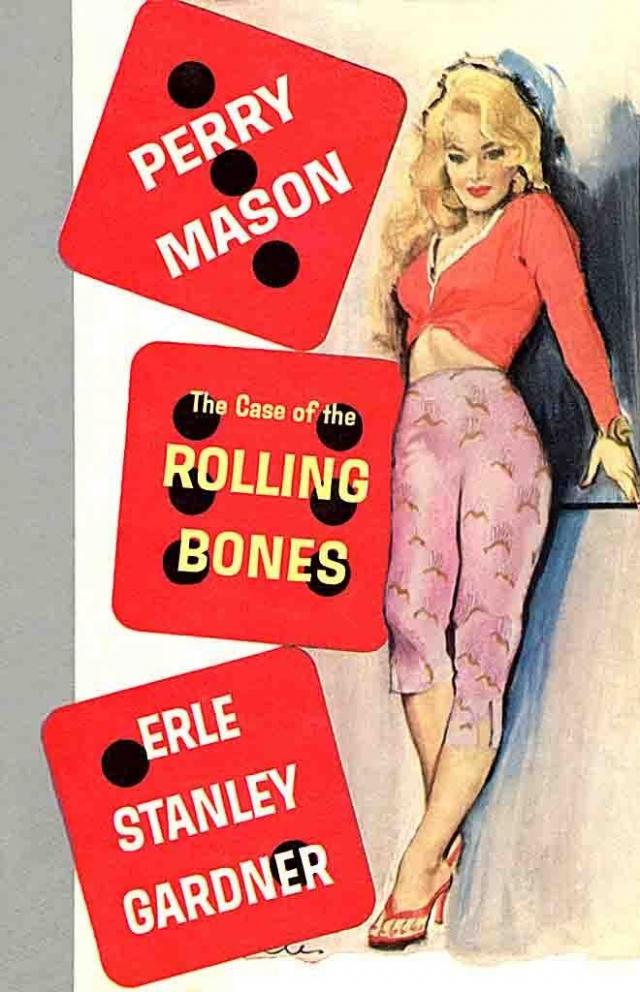
The Case of the Rolling Bones (Perry Mason Series Book 15),
p.16


Mason’s low laugh was filled with calm confidence. “He really thought that?” he asked. “It’s what we wanted him to think, of course, until we had him trapped. That’s why I refrained from asking Jason Carrel whether he had loaned his car to his cousin.”
“Then you’re. . . you’re Perry Mason, the lawyer who’s representing Alden Leeds?”
Mason nodded.
“You can’t pin it on Harold.”
Mason said patiently, “We’re not pinning anything on anyone—but Harold can never convince a jury he didn’t do it.”
She said, “Harold went downstairs to see him, and he was dead.”
“Went alone?” Mason asked.
“Yes.”
“And told you he was dead?”
She nodded, in tight-lipped silence.
“Why didn’t you notify the authorities?” Mason asked.
“As far as that’s concerned, why didn’t Alden?”
“I’m asking about you,” Mason said conversationally.
“For the very good and sufficient reason that we couldn’t afford to mix into it. We didn’t think anyone knew. How did you find out?”
Mason said, “Finding out things is our business, Miss Colton. Don’t you think you’d better make a complete statement?”
Della Street, who had unobtrusively slipped her shorthand book from her purse and taken notes of the conversation, now shifted her position so that the notebook rested on the arm of the chair.
“There’s nothing to tell. I. . . We. . . ”
She broke off as a gentle tapping sounded on the panels of the door. Without making any move to answer, she raised her voice and said, “I have nothing to say. Even if you do accuse Harold Leeds of murdering Milicant, you can’t. . .”
Mason upset his chair, jumped to his feet and made for the door. Inez Colton screamed.
Mason jerked the door open, said to the figure which was sprinting down the corridor, “Come back here, Harold, and face the music. Running away isn’t going to do you any good.”
Harold Leeds paused uncertainly, turned a wan, frightened face toward Perry Mason.
“The house is watched, you fool,” Mason said. “Come back here and face the music.”
A door in one of the apartments opened. A fat, blonde woman with startled eyes stared wordlessly from Mason to Harold Leeds.
“Come back,” Mason said. “Don’t leave Inez to face the music alone.”
Harold Leeds turned and walked slowly back toward Mason. “Come on,” Mason said. “Hurry up. Don’t act so much like a dog coming to take a licking. You’ve played a man’s game. Now face the results like a man.”
Harold Leeds glanced appealingly at the blonde woman in the doorway who was regarding them with startled, curious eyes. It was as though he hoped someone would come to his rescue, that he might wake up and find it was all a horrible nightmare.
As Leeds came closer, Mason took his arm, escorted him to the door of Inez Colton’s apartment. Drake was sitting very much as Mason had left him. Inez Colton was in the chair, sobbing quietly. Della Street had changed her position slightly so that her raised knee partially concealed the shorthand notebook.
Drake said conversationally, “Figured you could handle the situation out there, Perry. Thought I’d better keep an eye on the one here.”
“Oh, Harold,” Inez Colton said tearfully. “Why did you do it? You promised you wouldn’t come near me.”
Harold Leeds said sullenly, “Gosh, Inez, I made absolutely certain no one was following me. How did I know I was going to walk into this guy?” indicating Mason with a jerk of his head. “I simply had to see you.”
Mason said, “Suppose you tell us all about it, Harold. Sit down where you can be comfortable, and get it off your chest. You’ll feel better then.”
“I have nothing to say,” Harold Leeds said, “particularly to you. If I talk, it will be to the district attorney.”
“That’s swell,” Mason said. “But first, young man, you’ll go on the witness stand as a witness for the defense. I’ll ask you why you went downstairs to John Milicant’s apartment, what your business dealings with Milicant were and why you deemed it necessary to kill him. You can answer those questions on the witness stand. Here’s a subpoena.”
With a flourish, Mason handed him a subpoena to appear as a witness for the defense in court at ten o’clock A.M. the next day. The young man, as one in a daze, extended a quivering hand to take the folded oblong of legal-looking paper.
Mason said to Paul Drake, “Okay, Paul, let’s go. Come on, Della. We have nothing more to do here.”
Leeds said, “Wait a minute. You can’t. . . can’t put me on the witness stand.”
“You just think I can’t,” Mason said.
“No! No! You can’t! I wouldn’t help your case any. I’d hurt it, and I can’t afford to get mixed up in this thing.”
“Why not?” Mason asked.
“Because. . . because I can’t.”
“That’s too bad,” Mason observed without sympathy, starting toward the door.
Inez Colton straightened in the chair. “Oh, go ahead and tell him, Harold,” she said. “What’s the use of trying to lie out of it now.”
Then, as Harold remained sullenly silent, she said to Mason, “All right. I’ll tell you if he won’t. Harold’s crazy about the ponies. He can’t keep away from them. Neither can I. I’m a married woman. I was married to a man who was a race track tout. We knew John Milicant, but we knew him as Louie Conway, a plunger. I met Harold out at the race track. I was having a squabble with my husband. Harold and I fell in love. I decided to leave my husband, and wanted some place to live where he’d never find me, because he’s just the type to make trouble. I spoke to Louie Conway, and asked him if he couldn’t get me a job. He could and he did. I took an apartment in the same building where he had an apartment. I went under the name of Inez Colton. Harold started calling on me, and one day he and Louie ran into each other in the elevator. Harold recognized Louie as John Milicant. Louie, of course, recognized him as Harold Leeds. That was all there was to it. Louie told Harold to keep quiet about what he knew. He was afraid his sister was going to find out what he was doing. Then when Harold found out that Alden Leeds had made a big check in favor of L. C. Conway. . . Well, Harold thought he should do something about it. Louie told him to come down and talk things over.
“Harold went down to his apartment.
“Milicant told a most amazing story. He said that he was actually entitled to a full one-half of all of the money Alden Leeds had ever made, that Alden Leeds secured his original start by stealing one-half of his fortune, that it all went back to the time when Leeds was in the Klondike, and. . .”
Mason, his eyes glinting with interest, said, “Are you, by any chance, going to say that Milicant claimed he was Bill Hogarty?”
Her face showed surprise.
“Yes,” she said, “that’s exactly what he did say and showed documents to prove it.”
“Where are those documents now?” Mason asked.
“I don’t know.”
Harold Leeds said sullenly, “He was Hogarty all right.”
“And Emily Milicant is his sister?” Mason asked.
“She’s no more his sister than I am,” Inez Colton said. “Up there in the Yukon, Leeds took possession of the cabin and all the grub. He beat up Hogarty and then drove him out of camp at the point of a gun, without blankets, without food, and, as he thought, without matches. Then Alden Leeds took all the gold, and mushed out to civilization. He was shrewd enough to take the name of Hogarty, making it seem that Leeds had been the one to disappear. That threw the authorities off the track. Hogarty almost died of cold and exposure. Leeds had hit him a terrific blow on the head in the fight which preceded his being driven out of camp. The fight was over Emily Milicant who had been Hogarty’s sweetheart. She was a Dawson dance hall girl.
“Hogarty decided not to complain to the authorities. He made up his mind he could let Leeds think him dead, that then, after Leeds had grown careless, he would track him down, and force an accounting.
“Leeds went to Seattle, met Emily Milicant, told her Hogarty was dead, and married her. He married her under the name of Hogarty. Then, in some way, Leeds found out Hogarty was on his trail, and ran away—vanished into thin air, leaving his wife behind him. The real Hogarty found the wife. There was an argument, of course, a period of hot words and accusations, then they made up. They lived together as man and wife for some time, then finally broke up, but remained good friends. She wanted to find Leeds. Hogarty wanted to find him and force an accounting. They finally discovered him. Leeds had again taken his real identity when he thought there was no further danger. That’s the way Hogarty told the story to Harold, the way Harold told it to me.”
Mason turned to Harold Leeds. “Is that,” he asked, “the truth?”
“That’s the truth,” Leeds said.
“What did you do?”
“What could I do? My hands were tied. Apparently, it was a matter between Hogarty and Uncle Alden. Hogarty said that Uncle Alden was willing to make out a settlement.”
“And you went down to see Milicant, or Hogarty or Conway, whatever you want to call him, the night of the murder?” Mason asked.
“Yes,” Harold Leeds said, in a voice which was almost inaudible.
“What time was it?”
“Right after Uncle Alden left.”
“How do you know?”
“I saw Uncle Alden leave the Conway apartment and walk down the corridor to the elevator.”
“Where were you?”
“I was coming down the stairs. The stairs are back toward the end of the corridor. I’d just reached the foot of the stairs when the door of the apartment opened, and Uncle Alden walked down the corridor to the elevator. He was moving very rapidly.”
“You didn’t speak to him?”
“No.”
“Why not?”
“He seemed—well, nervous and upset—and I couldn’t explain to him about Inez. I didn’t want him to know I was. . . there in the building.”
“So what did you do?”
“After he’d gone down in the elevator, I went to the Conway apartment.”
“Knock on the door?” Mason asked.
“The door was slightly ajar, an inch or so. I knocked on it. There was no answer. I pushed the door open, and called Conway’s name. He’d asked me never to call him Hogarty, and not to refer to him as Milicant while he was there in that apartment. There was still no answer. The apartment had been searched. Papers were scattered about. There were some empty dishes on the table. Evidently, two people had eaten a hurried dinner, and . . .
“Why hurried?” Mason asked.
“Because places weren’t set at the table. The plates were placed just as they’d been left, with the knives and forks dumped on the tray. There was a pot that had contained coffee on the tray and two saucers. The cups were dirty.”
“The dishes weren’t piled up?” Mason asked.
“No, left just as though people had eaten hurriedly and dropped the dishes back into place.”
“And the knives and forks were on the tray?”
“Yes.”
“You evidently looked that over pretty carefully.”
“I did. I wondered if Uncle Alden had been eating dinner with Conway because—well, I thought Uncle Alden had broken in and stolen those papers Milicant—Hogarty—bad.”
“You say there was a pot of coffee?”
“The pot had contained coffee. You could smell it.”
“There wasn’t any left?”
“No, not a drop.”
“Any food left?”
“No. The plates were slick and clean.”
“No bread, no butter?” Mason asked.
“Nothing, just the bare plates.”
“Go on from there,” Mason said.
“Well, I looked around the apartment a little, and opened the bathroom door.”
“It was closed?”
“Yes, it was closed but not locked.”
“What did you find?” Mason asked.
“The body.”
“Then what did you do?”
“I stood right there with cold sweat breaking out all over me,” Leeds said, talking more rapidly now as he warmed to the story. “Then I realized what a sweet spot I was in. I’d messed around there altogether too much. So I took my silk handkerchief, polished off the doorknobs I’d touched, and beat it.”
“Did you leave the door open?”
“No. I wanted to delay the discovery of the body as long as possible so we could clear out. I pulled the door shut. The spring lock clicked into place.”
“How long was it after your uncle had left the apartment when you went in?”
“Perhaps ten or fifteen seconds, just long enough for Uncle Alden to walk rapidly to the elevator and start down in the cage.”
“How long were you in there?”
“Not over two minutes.”
“To whom have you told this?” Mason asked.
“Not a living soul except Inez.”
Mason glanced significantly at Paul Drake, then looked over to where Della Street, catching up with her fountain pen on the rapid-fire conversation, held her hand poised over the shorthand notebook.
Inez Colton said, “So you see Harold’s position. He can’t help your client any, Mr. Mason, and his testimony would clinch the case against Alden Leeds.”
“You think Alden Leeds did it?” Mason asked, staring steadily at Harold.
“I don’t know,” the young man said. “I do know that Uncle Alden was raised in a hard school. If Hogarty’s claim was justified, I hope Uncle Alden would have done something about it. I like to think so, anyway. But if it wasn’t justified, and Hogarty was trying to hold him up, I. . . Well, I don’t know just where Uncle Alden would draw the line. I know one thing, I’d hate to have him on my trail. Any time you cross Uncle Alden, you have a fight on your hands. . .. I think Uncle Alden found him. . . No, I don’t know what happened.”
Abruptly, Mason got to his feet “Well,” he said, “that’s that.”
“How about this subpoena?” Inez Colton asked.
“Forget it,” Mason said. “As far as we’re concerned, it hasn’t been served. Tear it up.”
Harold Leeds shot forth an impulsive hand. “That’s mighty white of you, Mr. Mason,” he said, “and you can rest assured that I’ll keep all of this under my hat.”
“Sorry we broke in on you this way,” Mason said to Inez Colton. “Come on, folks. Let’s go.”
Della Street closed her notebook, slipped it back into her purse. Drake glanced sidelong at Mason, then got to his feet without a word. Mason led the way out into the corridor. Inez Colton bid them goodnight and closed the door.
As the three marched wordlessly down the corridor, the fat, blonde woman, who had stood in the doorway when Mason brought Harold Leeds back into the room, opened the door and stood staring silent, expressionless, motionless. She was still standing there when the trio entered the automatic elevator.
“Well,” Mason said, on the ride down, “I’ve played right into the D.A.’s hands. Apparently, Milicant really was Hogarty.”
“I thought you knew he was,” Drake said.
Mason twisted his lips into a lopsided grin. “I wanted the police to think I thought he was,” he said. “Let’s get to a telephone where I can put through a long distance call.”
“Want me any more?” Drake asked.
Mason said, “No. Get to work and try to plug some of these other loopholes.”
“Looks as though you’d bitten off a little more than you can chew, Perry,” Drake said, dropping a hand on the lawyer’s shoulder. “Take it easy this time. Remember this isn’t your funeral. If your client’s guilty, he’s guilty. Evidently he’s lied to you. Don’t throw yourself into the case and leave yourself wide open.”
Mason said, “He isn’t guilty, Paul—at least not the way they claim.”
Drake said, “Okay, Perry. I’ll take a taxi back to the office.”
He walked over to the curb, gave a shrill whistle, and sprinted for the corner to stop a cruising cab.
Della Street glanced at Perry Mason. “Well, Chief,” she said, “we seem to be taking it on the chin.”
Mason said, “There’s a hotel in the next block, Della, with a switchboard and telephone booths. I think we can get a call through.”
“Whom are you going to call, Chief?” she asked.
“Emily Milicant,” he said. “There are some holes I want mended. . .. Evidently she knew there would be.”
They walked to the hotel. Mason gave the switchboard operator his call and told her to rush it. “Mrs. J. B. Beems at the Border City Hotel, Yuma, Arizona.”
They smoked a silent cigarette. Della Street’s hand moved over to grip Mason’s arm, a wordless pledge of loyalty. Then the telephone operator beckoned to Mason. “The hotel’s on the line,” she said, “but they have no such party registered.”
“I’ll talk with whoever’s on the line,” Mason told her.
“Okay,” she announced, snapping a key on the switchboard. “Booth three.”
Mason entered the telephone booth, said, “Hello, is this the night clerk of the Border City Hotel?”
“That’s right,” a man’s voice said.
“I’m anxious to find out about Mrs. Beems.”
“We have no one by that name registered here.”
“You’re certain?”
“Absolutely certain.”
Mason said, “I received a letter from her, stating that she was registered there under that name and would stay there until she heard from me. She’s heavy around the hips, thin in the face, with big, black eyes. She’s around fifty, although she could pass for forty-two or forty-three, medium height, with black hair, talks with a quick, nervous accent, and keeps her hands moving while she’s talking.”
“She isn’t here,” the night clerk said “This isn’t a large hotel. We only have three unescorted women, none of whom answer the description—and it happens we know something about all three. One of them has been here a year, one going on to three months, and the other two weeks.”