The case of the rolling.., p.5
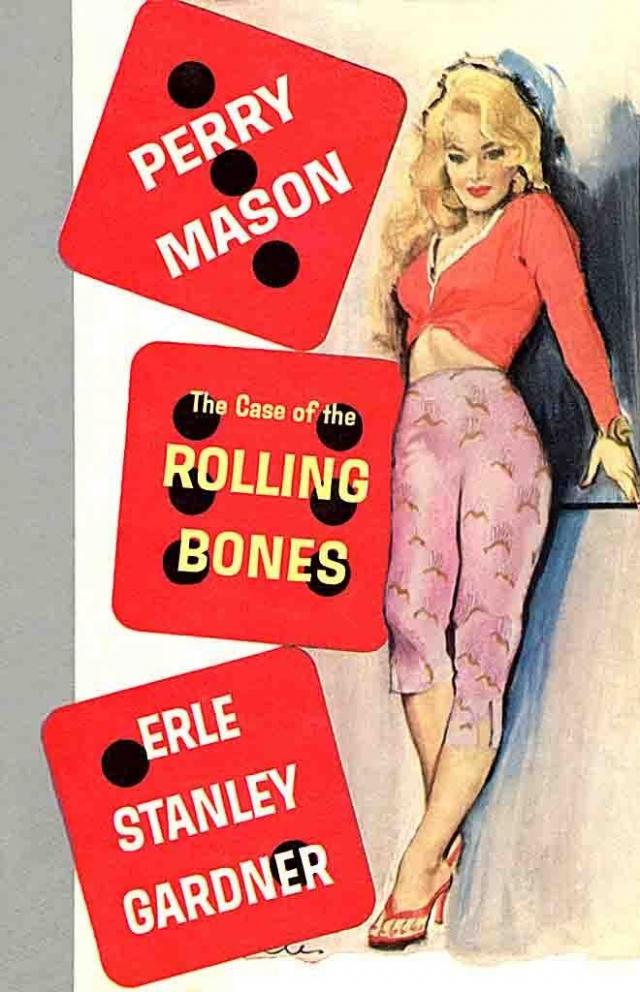
The Case of the Rolling Bones (Perry Mason Series Book 15),
p.5


Mason said, “I’ll fire those girls. Find out which one did it, and give her her time. That’s one thing I’ve particularly cautioned them against.” He whirled to the officer, thrust out his hand, and said, “Thanks to you, Jim, old boy, we got here in time. The girls might not have been able to handle it. There are valuable papers in that desk, also some darn good cigars. How about taking a handful for you and your buddy?”
The officer was grinning. “Well, now,” he said, “that’s better. Who was it said, ‘A woman is only a woman, but a good cigar is a smoke?’”
Mason, handing out a double handful of cigars, said, “No, Jim, I can’t subscribe to those sentiments. Recent events have convinced me that women are vastly underrated.”
The officer said, “Well, you may have something at that.”
Mason escorted the officer to the corridor. “Say, what happened to the girl who was in the car with you?” the officer asked.
Mason laughed. “She couldn’t stand the pace,” he said. “Frightened her to death.”
As the cage took the officer down, an ascending elevator paused to discharge Della Street. Mason looked at her and laughed. “Well,” he said, “you fooled me.”
Her voice showed nerve strain. “I had to. I wasn’t certain I could put it across, so I didn’t want to tell you about it. Did it work?”
“I’ll say it worked! Incidentally, Gertrude gets a raise in pay.”
“She needs it,” Della Street said. “What are you doing out here in the corridor?”
“Just getting rid of the cops.”
They walked down the corridor together. Mason latch-keyed the office door to find Gertrude down on hands and knees scrubbing at the charred carpet.
“Gertrude,” he said, “arise and receive the benediction of the Order of Traffic Violators. You’re a girl after my own heart. In the bottom right-hand drawer of that desk you’ll find a bottle of whiskey and glasses. While you’re pouring the whiskey, Della will make out the check which raises your salary twenty dollars a month, effective from the first of last month.—Were you frightened?”
She looked at him with emotions struggling into expression. “A twenty dollar raise!” she exclaimed.
Mason nodded.
She said, “Gee. . . Thanks, Mr. Mason. I. . . I. . . ”
Mason gravely opened the desk drawer, took out a bottle of whiskey and glasses. Gertrude Lade, tall, thin as a rail, her figure angular, her face plain, took the glass of whiskey Mason handed her, grinned at them, and said, “Here’s regards.” She tossed off the whiskey in a single swallow, handed Mason back the empty glass, and said, “Listen, Mr. Mason, any time you want anything pulled around here, don’t be afraid to call on me, and. . . thanks for that raise.”
She turned and walked with long-legged strides through the door to the outer office.
Mason finished his whiskey, set down the empty glass, grinned at Della Street, and said, “She talks like a trouper.”
“She sure does,” Della Street said. “I was afraid I’d have to argue with her. I didn’t. All I said was, ‘The boss is in a jam. Go into his office and set fire to a wastebasket where it’ll do about ten dollars’ worth of damage.” I waited for her to ask questions and argue. All she said was,’Is that all?‘”
Mason chuckled, picked up the telephone, and said, “Tell Paul Drake to come in, Gertrude.” He hung up the telephone, looked at Della Street, and chuckled again. “Getting a girl for that information desk and switchboard has been something of a job,” he said, “but I think we have one now. That remark of hers is priceless.”
“Her voice didn’t show the least excitement,” Della Street said. “She was just as casual about it as though I’d told her to mail a letter.”
Mason said, “Well, we’d better get this whiskey away before Drake comes in, or he’ll mooch our booze as well as our cigarettes. Della, call Emily Milicant, and tell her I want to see her as soon as she can get here.”
Della Street gathered up the empty glasses. “I’ll wash these, and bring them back,” she said.
A few seconds later, Drake knocked at the door, and Mason let him in.
Chapter 6
The detective draped himself over the black leather chair as limply lugubrious as crepe hanging on a door. “Hell,” he said, “that bozo is as wise as a treeful of owls.”
“Meaning Milicant?” Mason asked.
“Meaning Milicant,” Drake said. “I put a man on him when he left your office, and got another man to tag along for relief. Milicant never even looked back. He went right along about his business, leading the fellows on a merry chase while he put on a swell act of a man about town keeping business appointments. Then when he got ready, he ditched them so neatly that it wasn’t even funny. Of course, he made a beautiful build-up by never looking behind him, never acting at all suspicious, and going right on about his business.”
“Any chance it was accidental?” Mason asked.
“None whatever,” Drake said. “These boys weren’t exactly amateurs, you know—even if Milicant did make them look like it.”
“That makes him look more and more like Conway,” Mason said.
“It does for a fact.”
“All right, Paul,” Mason said. “Within the next few minutes, Emily Milicant is going to be at the office. I’m going to tell her things which will make her hunt up her brother. You have men ready to take over when she leaves the office.”
“Sounds like you’re gunning for big game,” Drake said.
“I’m going right on down the line, Paul. What else do you know, anything?”
Drake said, “I gathered you wanted me to look up Emily Milicant’s past.”
“Did I tell you to?” Mason asked.
“Not in so many words,” Drake said. “I read your mind.”
Mason said, “Nice going, Paul, only remember it was telepathy. What have you found out?”
“Not too much,” Drake said. “I expect more details as soon as my Seattle agency runs down a couple of leads.”
“Why Seattle?” Mason asked.
“She used to be a dance hall girl.”
“In Seattle?”
“No, in the Klondike.”
“When?” Mason asked.
“Around 1906 and 1907. Ever hear of the ‘M and N Dance Hall’in Dawson, Perry?”
“Seems to me I’ve heard something about it.”
Drake said, “There were two dance halls, the ‘M and N’ and the ‘Flora Dora.’ Emily Milicant was in the ‘M and N.’”
Mason said, “Well, now we’re commencing to get some place. That makes Emily Milicant a lot more understandable to me. She may have known Leeds up in the Klondike. Get your men working, Paul, and let’s see what they can turn up.”
“Okay,” Drake said. “How did you burn the carpet, Perry?”
“Oh,” Mason said, “Della did it.—It was arson. Get her to tell you about it sometime.”
Drake jackknifed himself up out of the chair. “Hell, Perry, don’t try to arouse my curiosity. I haven’t any. I wouldn’t investigate that damn carpet unless you paid me for it.”
Mason grinned. “How about Emily Milicant?”
“She’s different. How long do you want her tailed, Perry?”
“Only until she leads to Conway.”
“Okay. I . . .”
The door from the outer office opened. Della Street came in with the three clean glasses. “Emily Milicant just came in,” she said.
“Did you tell her you’d been trying to get her?” Mason asked.
“No.”
“Good girl. What does she want?”
“Just to see if there’s anything new.”
Mason said, “Tell her I want to see her. Tell her to wait a minute.”
Drake looked at the three whiskey glasses, and said significantly, “Guess I got here a little too late.”
Mason took the glasses from Della Street, left them on the top of his desk. Drake grinned and said, “Oh, go ahead and put them in the drawer, Perry. I know where you keep it—the right-hand bottom drawer. I’d be a hell of a detective if I didn’t know that.”
Mason grinned. “Got some men you can put on Emily Milicant when she leaves, Paul?”
“Yes.”
Mason said, “Any husbands in her life, Paul?”
“She’s reputed to have married a man by the name of Hogarty,” Drake said, “but I haven’t the details.”
“What happened to him? Was she divorced?”
“I don’t know. I guess so. She’s going under her maiden name.”
The telephone rang. Mason said, “Wait a minute, PauL This is probably Phyllis Leeds. I told Gertrude not to ring this phone unless it was someone connected with the Leeds case.”
Mason said, “Hello,” and Phyllis Leeds, talking rapidly, said, “Mr. Mason, Uncle Alden wasn’t home. When we got here, the place had been ransacked.”
“You mean the whole house?”
“No, Uncle Alden’s study. Papers were all over the floor. Drawers were pulled out of the desks, and the filing cabinets were open. The sheriff went right to work on it.
“Listen, Mr. Mason. Uncle Alden gave another twenty thousand dollar check, payable to L. C. Conway and endorsed the same as the other one was. This time the check was cashed by a woman around forty-five with black eyes and high cheekbones. At the same time she presented the check, she gave the cashier a letter in Uncle Alden’s handwriting stating that if there was any delay about cashing the check, he would take his account out of the bank.”
“Did this woman leave a name?” Mason asked.
“No. She seemed to know her rights. She was very curt. She insisted on having the money in cash. The bank cashier says it was unmistakably Uncle Alden’s handwriting. He’s very much concerned about it. He was tempted to refuse payment, but the note frightened him.”
Mason said, “I want to see that check.”
“I’ve arranged for that,” she said. “I’ve already given instructions to the bank, and a messenger will have it in your office within the next ten minutes.”
“Good girl,” Mason said into the telephone. “How are you feeling, worried?”
“No,” she said. “I think Uncle Alden can take care of himself, now that he’s free, but I’m mad.”
“At whom?” Mason asked.
She laughed and said, “I don’t know. Sometimes I think it’s Uncle Alden.”
Mason said, “All right. Take it easy. Your uncle will show up all right. When was that check dated?”
“Today. It was drawn from the checkbook he carries with him in his pocket. I feel certain he must have written it after he got out of the sanitarium.”
Mason said, “Let me know if anything new turns up.”
“What do you know, anything?” she asked.
“We’re plugging along,” Mason said.
“If you find Uncle, will you let me know?”
“Certainly. Do you want me to have Drake send out a woman operative to stay with you?”
“No,” she said. “Why should I want anyone?”
“I thought you might be nervous, what with the study having been ransacked.”
“I’m all right,” she said, “but if I catch anyone prowling around the house, he’s going to wish I hadn’t. I’m mad enough to shoot someone.”
“All right,” Mason said. “Keep me posted. ‘By.”
He hung up and gave Paul Drake a digest of what Phyllis Leeds had told him.
Drake shook his head. “We’re supposed to be working for Alden Leeds,” he said. “I have a hunch we aren’t actually helping him any.”
“Perhaps not,” Mason said.
“I think Leeds is going to be sore when he finds out about it.”
“I think he knows about it,” Mason said. “He’s been in circulation for a while, and he seems to get around pretty fast, once he starts moving. He hasn’t given any stop orders. Go to it, Paul. We’ll get all the information we can. Tell your Seattle agency to show some speed.”
“I’ve already told them,” Drake said, “and I’ll pick Emily up as she leaves the office. So long.”
He ambled out through the outer door, moving as casually as though he had all the time in the world.
Mason said to Della Street, “Show Emily Milicant in. When the bank sends up the second check, Della, rush it over to our handwriting expert. Dig up some genuine samples of Leeds’ handwriting.”
Della Street nodded and quietly withdrew.
Mason opened his desk drawer and took out the pair of loaded dice. Drake had given him. He sat there, rolling them easily across the desk.
Emily Milicant was very much excited and showed it. Her eyes seemed unnaturally large and glittering. The hollows of her cheeks were more pronounced, the quick nervousness of her gestures more emphasized.
“Isn’t it the most horrible thing?” she said. “I’ve been talking with Phyllis over the telephone.”
Her eyes watched Mason’s hand as he rolled the dice. The motion seemed to increase her nervousness.
“I’m anxious to know something about your brother,” Mason said.
“My brother!” she echoed.
Mason nodded.
“I understand you asked Phyllis to bring him in, and asked him some questions about a crap game. Would you mind telling me what it’s about?”
Mason said evenly, “What I’m particularly interested in is whether a shrewd lawyer could show that your brother regarded you as a means of support.”
“What do you mean, Mr. Mason?”
Mason pounced upon the uneasy expression which crept into her eyes, as an alert cat jumps on a mouse. “Have you,” he asked, “ever supported your brother?”
“Why. . . I hardly know how to answer that question.”
“A lawyer,” Mason observed, “would ask you to answer it ‘yes’ or ‘no.’”
“Why, I suppose every sister helps out her brother from time to time. She’d be a poor sister if she didn’t.”
“Exactly,” Mason agreed. “That brings us to the question of what you mean by ‘from time to time.’”
“Why, whenever a man finds himself in a pinch, or when there’s an emergency.”
“Has your brother ever given anything to you for your support?” Mason asked.
“No, I was thrown out on the world when I was a child. I had to earn my own way.”
“But you’ve helped out your brother?”
“Yes.”
“Often?”
“Occasionally.”
“In the form of loans?”
“I suppose so, yes.”
“How much of those loans have been repaid?”
“Why. . . I don’t know.. . . You don’t consider your brother the same way you would a stranger. I. . . I don’t keep any account of it.”
“How much money have you given him in all?”
“I don’t know. I tell you I never kept track of it.”
“As much as a thousand dollars?”
“I guess so, yes.”
“Two thousand?”
“Perhaps.”
“Three?”
“Really, Mr. Mason, I don’t see the object of this.”
“Four?”
“But, Mr. Mason. . . ”
“Five?”
She straightened indignantly, and said, “What difference does it make?”
Mason said, “If he goes on the witness stand, a judge is quite apt to rule that it’s proper cross-examination as showing the extent of his interest. Was it as much as six?”
Her eyes, blinking rapidly, showed indignation. “It may have been.”
“As much as ten?”
“I don’t know.”
“Of this amount,” Mason asked, “has he ever repaid a dime?”
“I couldn’t tell you.”
Mason gently shook the dice together in his cupped hands. She watched him as if fascinated. He rolled them out with a long, sweeping gesture.
“For Heaven’s sake!” she snapped out. “Stop rolling those dice!”
“What’s the matter?” Perry asked, putting the dice down on the desk. “Don’t you like the bones?”
“No—. Yes,” she said. “Oh, I don’t know, you just make me nervous.”
Mason said, “Now, let me ask you another question. Did you ever hear of the Conway Appliance Company?”
“The name is familiar. Oh, I know. That was the name on the check. Alden gave the check to L. C. Conway.”
“That’s right,” Mason said. “The company specializes in the sale of crooked crap dice—like this pair—and includes, as a ‘premium,’ a lottery ticket. The company was originally operated by L. C. Conway. Then, a few days ago, it was apparently sold to a man named Serle—Guy T. Serle, who has moved the business to 209 East Ranchester Avenue. Does any of that mean anything to you?”
“Not a thing.”
Mason said, “Look here, Miss Milicant, I’m going to be frank with you. Here’s a description of L. C. Conway—approximately fifty-five, five feet ten inches, weight around one hundred and eighty, heavy features, partially bald with black hair coming to a peak near the center of his head. Has a slight limp. Does that description mean anything to you?”
She met his eyes. “Is it supposed to?”
“I thought it might.”
“The description,” she said abruptly, “fits my brother,” and Mason noticed that her hands were gripping the arms of the chair.
Mason said, “So it does,” as though the idea had just occurred to him. “Are you trying to suggest to me that your brother and L. C. Conway are one and the same?”
She said, “I thought you were the one who was trying to suggest that to me.”
Mason said, “I think you’d better check up on your brother and the possibility that he is the L. C. Conway who got that twenty thousand dollar check from Alden Leeds.”
Her face was white enough so that the patches of orange rouge ceased to blend with her natural color. “He couldn’t have done that,” she said slowly, “simply couldn’t—not after all I’ve done for him. It would be a terrible, a wicked thing to do.”