

The case of the rolling.., p.20
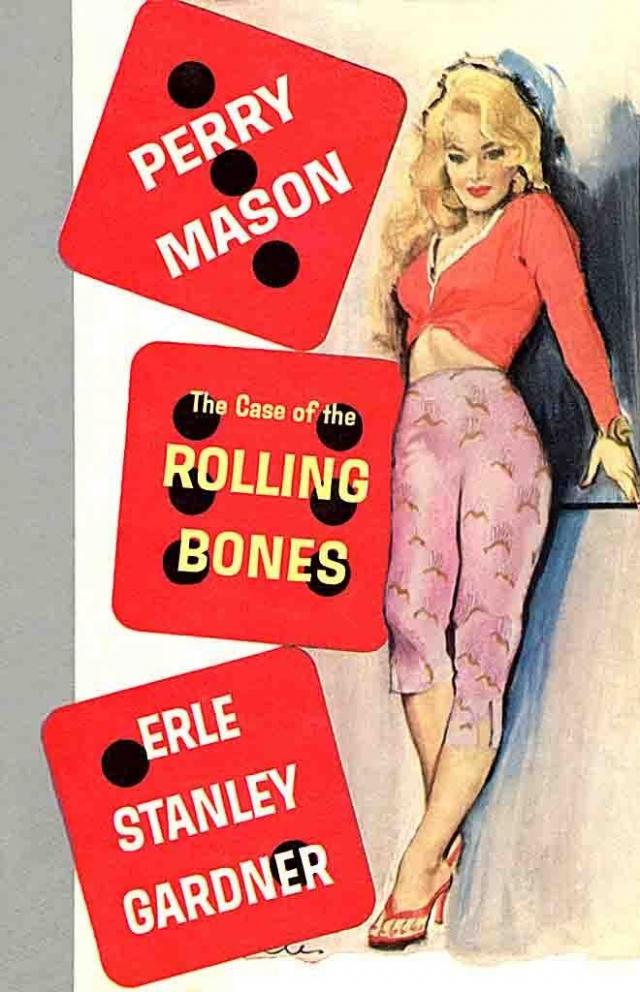
The Case of the Rolling Bones (Perry Mason Series Book 15),
p.20


“What makes you think he discovered the body?” Mason asked.
“You said he did.”
“I wasn’t under oath,” Mason observed.
“But you were acting as his attorney.”
“That’s right. But you can’t convict a man of a crime because of a statement his attorney has made. As a matter of fact, Leeds had never told me that he discovered the body. I’d never asked him that question in those specific words. I merely commented on what I thought had happened, in order to assist the court in arriving at a decision.”
Judge Knox smiled. “It may interest you to know, counselor,” he said to Kittering, “that they caught Serle in the corridor. I don’t want to suggest to you how you should conduct your office, but if I were a deputy district attorney, I certainly would strike while the iron was hot, and try to get a confession from him.”
“I’ll do that,” Kittering said savagely. “But I object to these damnable tactics.”
Judge Knox frowned.
Mason said, “You tapped my telephone line and listened in on confidential. . .”
“That isn’t the point,” Kittering interrupted. “The point is, that you tried to trick that. . .”
“What I did was perfectly legal,” Mason cut in, “but tapping our line was manifestly illegal. However, you close your eyes to that. Because you were getting something on me, you were perfectly willing to overlook the manner in which the evidence was obtained. You wouldn’t have known anything about the dead man being Bill Hogarty unless you’d taken advantage of information received through tapping my telephone line. If I’d tapped anyone’s telephone line or hired a detective agency to do it, you’d have had me arrested and instituted disbarment proceedings.”
“Occasionally,” Kittering admitted to Judge Knox, “we have to condone certain irregularities in order to combat criminal activities. It’s a case where the ends justify the means.”
“The ends in this case,” Mason observed, “would have been the conviction of an innocent man of first degree murder.”
Kittering jumped to his feet. “You,” he said, “can’t. . .”
“I really think, counselor,” Judge Knox interrupted, “that you should get busy and start discharging the real duties of your office.”
Mason smiled across at Judge Knox. “The attitude of the prosecution,” he said, “is that they don’t care so much about who committed a murder as about keeping me from winning a case.”
“That’s not true,” Kittering shouted.
Judge Knox fastened him with a stern eye. “It seems to be true,” he observed, and then added, “If your office has been listening to privileged communications over a tapped wire, it would seem that your position is definitely precarious. You understand, counselor, that if Alden Leeds had been guilty, the situation might have been different. Leeds’ innocence, however, puts your office in an entirely different position, and puts Mason in a different position, legally, ethically, and morally.”
“Some day,” Kittering flared, “Mason will defend a guilty man, and then. . .”
Mason yawned, and said, “Well, if counsel doesn’t care to confide his discussion to the present, and wishes to neglect the duties of his office, to waste time in idle speculation on the future, I’d like to ask him what he thinks about railroad stocks as an investment. . .”
Kittering flung himself out of the door.
Judge Knox stared across at Perry Mason. “You have to admit,” he said, “that you skate on pretty thin ice, Mason—how long have you known Serle was the guilty party?”
“Not very long,” Mason admitted. “I should have known it a lot sooner than I did.”
“way?”
“Well,” Mason explained, “it’s this way. Right from the first, the evidence showed dinner had been ordered at the Blue and White Restaurant, not in the usual manner, but in a most extraordinary manner. In other words, they didn’t ask the waiter what was on the menu and then make a selection. The waiter was told to get lamb chops, green peas, and potatoes, and if he didn’t have them available, to get them. Then again, the evidence showed right from the first that the plates were empty. It’s unusual for two men who are engaged in a hurried conference to order a dinner in that manner. It’s unusual for two men to both order the same thing. It’s unusual for men to clean up everything on the plates, and it’s absolutely unique for a man who has been eating a lamb chop to devour the bone. And you’ll remember the waiter testified that the plates were bare. Nothing remained on them.
“Moreover, it’s always been my idea that when a man has an iron-clad alibi in a murder case, it’s a very good thing to inspect that alibi closely. While a man who has a genuine alibi can’t have committed a murder, nevertheless, a man who has committed a deliberate murder always tries to provide himself with an alibi. Serle was the only one involved who had an alibi. It looked iron-clad on the face of it, but alibis should never be taken at their face value.
“It was quite apparent that the dead man had a large sum of cash in his possession. That money disappeared. It would seem, therefore, that at least one of the motives for the crime was robbery. Now Alden Leeds might have killed him because of that blackmail business, but he would never have robbed the corpse—not unless he had done so in an attempt to throw the officers off the trail. If he had done that, he would have been far too cautious to have left his fingerprints all over the apartment.
“I knew that Serle ate regularly at the Home Kitchen Cafe. I knew that they had a weekly menu—that is, each day of the week they featured a special, the same dish on the same day.
“The murder was committed on a Friday. Serle accompanied Conway or Milicant or Hogarty—or whatever you want to call him—to his apartment. They were both smoking cigars. At that time in the evening, a cigar usually represents an after-dinner smoke. And then I suddenly remembered what I myself had eaten at the Home Kitchen Cafe on Friday night—roast lamb, baked potatoes, green peas. And I had the menu that they use week after week to prove I wasn’t dreaming! A good chemical analysis would probably show the difference between beef and lamb after the digestive processes have stopped working, but the difference between roast lamb and broiled lamb, never.”
Judge Knox said, “Personally, Mason, I think it’s a most remarkable piece of detective work, an example of sheer deductive genius.”
Mason shook his head. “I’ll never forgive myself for becoming so engrossed in the incidental matters.—After all, Judge, that’s one thing a detective should guard against. He should never let his attention become so concentrated on the incidental matters that he feels they are other than mere incidentals.”
Judge Knox studied him curiously. “What,” he asked, “were the incidental matters which so engrossed you?”
“Minor matters,” Mason said, vaguely, “interesting but purely incidental.”
Judge Knox smiled. “Are you, by any chance, referring to the identity of John Milicant as Bill Hogarty?”
Mason said, “That really was a surprise to me, although I should have appreciated the significance of that clue of the frostbitten foot.”
Judge Knox let the smile fade from his lips, although his eyes remained kindly. “Mason,” he said, “the proof that Milicant was Hogarty certainly seems rather vague and sketchy. If Milicant had been blackmailing Leeds, and one of Leeds’ relatives had called on him for an explanation, wouldn’t it have been only natural for Milicant to have used the documents in his possession to substantiate a spurious claim made by way of justification to the nephew that he actually was the Bill Hogarty who had been wronged by Leeds years ago? Wouldn’t this be the logical way to fabricate a justification for blackmail?”
Mason’s face showed surprise. “That,” he said, “is an interesting question.”
“And do you want me to understand that you have never given it any consideration?” the judge asked.
“Well,” Mason said with a grin, “no oral consideration.” Judge Knox sighed. “Mason, I confess to a liking for you. I like the colorful life you lead. I like the dashing way you shortcut the conventional methods. I like your career of adventurous excitement. But has it ever occurred to you that Kittering’s prophecy is undoubtedly correct? The time will come when you will find yourself defending a guilty client.”
Mason arose from his chair. He saw fit to favor the judge with a grin. “He won’t be guilty,” he said, “until they prove him guilty.”
Knox sighed. “I’m afraid you’re incorrigible.”
Mason bowed. “Thank you, Your Honor,” he said, “for the compliment.”
Chapter 15
Mason sat in his office, reading the afternoon paper. The sob sisters had literally “gone to town” on the story. Many of the facts which were set forth had been obtained through an interview with Perry Mason, attorney for Alden Leeds, and the reporters reciprocated this donation of information by singing extravagant praises of the manner in which Perry Mason had solved a puzzling case.
Alden Leeds and Bill Hogarty had been in the Yukon in 1906 and 1907. They had fought over a woman. Hogarty had tried to kill Leeds. Leeds had shot him in self-defense. Hogarty had crawled away into the dark, and when it came daylight, Leeds had been unable to find him. It was a wild country. Leeds had a fortune in gold which he dared not leave. Nor did he dare to leave the country without reporting the shooting. He was trapped. So he took the name of Hogarty and left the country. He married the girl under the name of Hogarty.
But Hogarty had not been killed, despite what the others had thought. He had lain desperately ill in the cabin of an Indian. He had shown great determination in journeying to civilization, seeking revenge. Twice on that trip, he had been near the point of death. When finally he had reached civilization, his foot had become frostbitten, and it had been necessary to remove several of the toes on his right foot.
He had carried on his quest for vengeance. In the meantime, Alden Leeds and his wife had separated. Hogarty finally found the woman, but, because she was legally married and not divorced, he had entered into her life, posing as her brother. Then they had found Leeds.
Emily Milicant had realized she was still in love with him. Hogarty, posing as Emily’s brother, wanted blackmail. Leeds, finding himself in this position, had tried his best to work out some fair settlement with Hogarty. His relatives, recognizing the quick, romantic attachment which had sprung up between Leeds and Emily Milicant, and naturally misinterpreting it, had sought to thwart a marriage by having Leeds declared incompetent.
In the meantime, the implacable Hogarty, under the name of Conway, had built up a lottery business which he had sold to Serle. A disgruntled customer had tipped off the police, thinking to get revenge on Conway, in place of which, the trap had closed on Serle, and Serle, in turn, had made demands on Hogarty. When Hogarty laughed at those demands, Serle planned to get his money back from Hogarty. Not being able to do it, save by resorting to murder, he had planned a deliberate crime which, under ordinary circumstances, he could have committed so as to give himself a perfect alibi. It was the ingenuity of Mason’s spectacular courtroom tactics which had punctured that alibi.
Della Street entered Mason’s office as he was finishing with the paper. “Alden Leeds, his wife, Phyllis Leeds, and Ned Barkler are in the office, Chief,” she said. “The police have just released them.”
“Tell Gertie to send them in,” Mason said.
Mason smiled genially as they crowded about him, shaking hands, showering congratulations. When the first excitement had died away, and Mason was able to get his callers seated, Leeds said, “Mason, I want you to do everything possible to protect Emily. The authorities have been working on that old murder case. The understanding, by which she was released and under which I was released, was that if Alaska wanted us, we would still be held to answer on that old charge.”
Mason grinned. “Don’t you see?” he said. “There isn’t any old charge. They can’t charge either of you with the murder of Bill Hogarty because Bill Hogarty was killed on the seventh of this month by Guy T. Serle. Here’s a press dispatch which says so.”
Leeds knitted his frosty eyebrows for a moment in thought, then glanced up at Mason with a smile. “I see,” he said. “You apparently managed to kill two birds with one stone.”
Mason grinned. “I didn’t kill ’em,” he said. “I resurrected’em so I could give my clients clean bills of health.”
Alden Leeds whipped a checkbook from his pocket. “I have only one way of expressing my gratitude,” he said.
Mason nodded. “Fair enough,” he said. “And while you’re about it, don’t forget that it might be well to make some arrangement for Marcia Whittaker. After all, you know, Leeds, you can’t take it with you.”
Leeds, shaking ink down to the point of his fountain pen, said, “When you see the amount of this check, Mason, you’ll realize I’m not trying to.”
Mason took the loaded dice from his pocket, rolled them casually across the top of the desk, and watched the figures five and seven show up with amazing regularity.
Ned Barkler gave a dry chuckle. Mason looked up inquiringly.
“Seeing you rolling those bones,” the prospector said, “makes me think of something.”
“What?”
“Bill Hogarty,” he said. “Probably you’re wondering why I made a dash to San Francisco—It goes back to something nobody ever inquired about—How I happened to meet Alden Leeds in the first place. It was over a pair of crooked dice.”
Alden Leeds blotted the check he had just written, started totaling figures on the stub and said, “Go ahead and tell him, Ned.”
“You see,” Barkler said, “I knew Hogarty. . .. Met him in Seattle. Got in a crap game when I was a little high, and lost two thousand bucks. Next morning I found out that the dice were crooked. A bartender tipped me off. It took me a while to make a stake to get up to the Klondike, and then I found Hogarty and Leeds were down the Yukon a ways. I took after ’em, found Hogarty, stuck a gun in his belly and made him pay me off in gold dust.
“Well, when I saw this stuff in the paper about Hogarty and the frostbitten foot, damn me if I didn’t get your play right from the start. Emily told me she was going to Yuma and would register in some hotel as Mrs. Beems; that she’d call for messages at the telegraph office.
“Well, you know, I’ve got a couple of toes off on account of frostbite—taken off in Dawson City. I figured maybe Emily could fly up there, locate the doctor’s records, and claim that Hogarty had also gone under the alias of Barkler. I figured that wouldn’t hurt your case any.”
He chuckled again. “It would have been a swell game if we could have worked it. Emily got my wire and flew up to San Francisco. Just as we were hatching out the details, in comes the law. . . . Heh heh heh. . .. I was so darned afraid they’d find out about my frostbitten foot that I slept with my shoes on all the time they had me in the cooler. . . . Heh heh heh.”
Mason surveyed him with thought-slitted eyes. “You could,” he said, “state to the newspaper reporters that you knew Hogarty, that he was always a great man to go under an alias, that in addition to Conway and Milicant, he had the crust at one time to go under your name for more than a year.”
Barkler puffed thoughtfully at his pipe. “I getcha,” he said. “Shortly after that, I take it, I’d sorta disappear, and then those Dawson hospital records would crop up.”
Mason said, “When the police walk into a trap by means of wire tapping and listening in on confidential conversations, I always like to give them good measure, crossing the t’s and dotting the i’s.”
Barkler tamped tobacco into the bowl of his pipe with an energetic forefinger. “That detective agency of yours got a man in Dawson they can trust?” he asked.
Mason slowly shook his head. “Not for anything like that.”
Barkler grinned across at Alden Leeds. “Well, pard,” he said, “I’ll be shaking hands now. There’s a boat leaves Seattle for Skagway tomorrow afternoon.—And old Ned Barkler would hate to have it said that a lawyer guy had to take a hammer to drive an idea into his head.
“Well, I sort of owe Hogarty one for the trick he played on me with those galloping dominoes. He certainly could handle the bones, that boy, but, hell, he never could have rolled bones all the way from the Yukon down to Southern California like you done.—I’ve heard of guys killing two birds with one stone, but when one corpse squares two murders—That’s what I call a natural! Heh heh heh.”
Courtesy of the Harry Ransom Center, The University of Texas at Austin
Erle Stanley Gardner (1889-1970) is a prolific American author best known for his works centered on the lawyer-detective Perry Mason. At the time of his death in March of 1970, in Ventura, California, Gardner was "the most widely read of all American writers" and "the most widely translated author in the world," according to social historian Russell Nye. He was cited by the Guinness Book of World Records as the #1 Bestselling Writer of All Time. The first Perry Mason novel, The Case of The Velvet Claws, published in 1933, had sold twenty-eight million copies in its first fifteen years. In the mid-1950s, the Perry Mason novels were selling at the rate of twenty thousand copies a day. There have been six motion pictures based on his work and the hugely popular “Perry Mason” television series starring Raymond Burr, which aired for nine years and 271 episodes.
Erle Stanley Gardner, The Case of the Rolling Bones (Perry Mason Series Book 15)















