The casebook of sidney z.., p.4
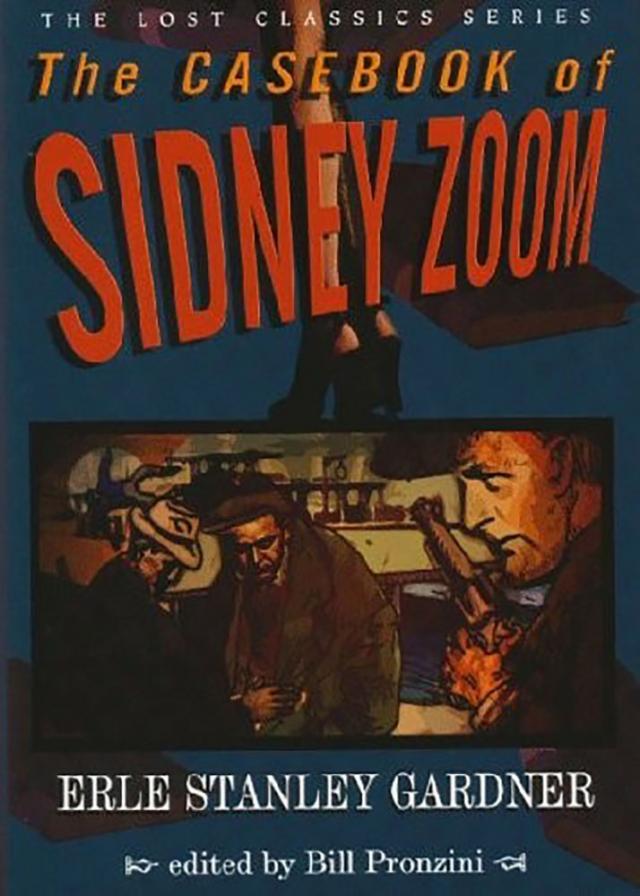
The Casebook of Sidney Zoom,
p.4


A tawny police dog, heavy of shoulder, yellow of eye, came into the room. A dignified wag of the tip of his tail by way of greeting, and the dog crouched down on the floor, tense as a coiled spring.
“What’s the matter, Rip?” asked Sidney Zoom, over his shoulder.
The dog gave a single thump of his tail, then lowered his muzzle to his paws, cocked his ears forward.
“He thinks you’re going out.”
“I am.”
“Soon?”
“Yes.”
“You want me to remain here?”
“No. Go to your apartment. I’ll telephone if I have anything for you to do.”
“Did you intend to call upon Mr. Pratt?”
“No. It would do no good. He prides himself on being able to find a legal excuse for everything he wants to do. He’s smart. A word of warning would be wasted.”
“You intend to make him pay over some of his ill-got gains?” Sidney Zoom whirled and faced her.
Tall, well-muscled, though slender, there was about him something of the untamed tension of the crouching police dog.
“Yes!” he snapped, and the word was full of menace.
“Someday you’ll get into serious trouble with your ideas of justice,” she said. He shrugged his shoulders.
“At any rate, my method is better than the courts. They have so many laws they stumble blindly through a maze of procedure, lose sight of the primary purpose of all courts—to do justice. However, there’s no use going into that now. I’m going out. Come, Rip.”
And Sidney Zoom, whirling an arm, slammed the door of the cabinet, picked up a hat and coat, flung open the door. The dog at his heels, he ascended the companionway, pounded across the deck and leaped to the float.
Behind him the girl, her eyes suddenly tender, looked at the little cabinet, then at the door.
“He’s like that,” she murmured to herself. “Whenever I get at all personal he runs away. Heavens, I’m not going to bite the man.”
Then she laughed, but there was a throaty catch in the laugh.
II
SIDNEY ZOOM had dinner at an exclusive club, placed his dog on leash, and strolled through the lighted shopping district. But his keen eyes did not so much as glance at the window displays. He looked at faces, darting his hawk’s gaze into the features of passing pedestrians.
How much he saw, only Sidney Zoom knew, but it was said of him that a single, swift glance could tell him all about the character of any person, man or woman.
For more than an hour he walked, the dog tugging at the leash, attracting attention. Then they swung from the shopping district, picked up Zoom’s expensive sedan and cruised about the city. By ten o’clock Sidney Zoom parked his car near the entrance to one of the city parks, and resumed his walk.
This time his feet crunched over smooth gravel, and there were few pedestrians. For the most part, the occupants of the park were clustered in shadow; couples, sitting on benches. Occasionally the soft murmur of a subdued voice was heard, but this was exceptional. The park was shrouded in silence.
The dog flung his nose to the wind, caught the odor of every one he passed. It has been said that a dog can smell emotion. Certain it is that he can smell fear, and he can smell rage. There is more reason to suppose that a dog can smell the other emotions than to presume that he cannot. But a dog’s keen nose can smell one thing remarkably well, and that is the odor of burned powder in the barrel of a revolver.
Hence, when the dog suddenly stopped, flung himself around and strained at the leash, Sidney Zoom turned his eyes to the figure at which the dog’s nose pointed.
A single dejected figure sprawled on the bench, head supported on a crooked arm, one leg crossed over the other.
The dog barked once, a short, imperative bark.
Sidney Zoom moved forward.
“Pardon me, my friend, but you have a loaded revolver in that coat pocket.”
The man gave a single convulsive leap and was on his feet, his eyes wide with panic.
“A holdup man, perhaps?” The voice of Sidney Zoom was kindly.
The man shook his head, would have run, but a throaty growl from the dog stopped him.
“I wouldn’t try to escape. You see, my dog’s been trained for police work. And he can detect the odor of a fouled barrel on a gun. I would say the gun had been discharged and not well cleaned. Of course, you know it’s a crime to carry one of those weapons.”
The man tried to say something, failed.
Sidney Zoom placed a firm hand on the elbow. “Come with me.”
“Am—am—I arrested? Good God, not that! I meant no harm to anyone except myself—”
Sidney Zoom shook his head. “Come,” he repeated.
When he had placed his unwilling guest in the sedan and started the motor the man broke into swift speech.
“Say, what are you doing? Are you an officer or not? You’ve got no right to—” Sidney Zoom turned cold eyes upon him.
“You want me to call an officer?”
“No, no!”
“Why did you have the gun?”
“I can’t tell. It’s none of your damned business.”
Sidney Zoom nodded, the nod of one who merely confirms an earlier opinion. “People don’t often confide in me,” he said, and swung the car in to the curb. “You’ll stay here with the gentleman, Rip,” he said to the dog, and slipped the
leash.
The dog half bared his fangs and growled. Sidney Zoom telephoned his secretary.
“Come to the yacht at once,” he said, hung up the telephone, returned to the car. The drive was completed in sullen silence.
“I might use that gun on you, you know!” rasped the captive, as Sidney Zoom escorted him across the float to the deck of the yacht.
It was the dog that made answer. Something in the man’s tone carried to the canine’s brain an understanding of the threat. He growled and bared his fangs again.
“Come,” said Sidney Zoom, and led the way to the cabin.
Vera Thurmond had preceded them. Her eyes were dark with emotion, her lips half parted.
“Another?” she asked.
“Another,” intoned Sidney Zoom. Then he turned to the man. “You’ll talk with her. People never talk with me.”
And he strode to a connecting door, walked into an adjoining room, and slammed the door shut.
The man turned to the girl.
“If I’m not out of here in ten seconds,” he snapped, “somebody’s going to get hurt.
I can shoot that damned dog before he can get to me.”
But his only answer was a smile from the girl, a smile of tender understanding. She crossed to him.
“Sit down,” she said. “A few weeks ago I was like you. I, too, thought life too stern to tackle. I tried to end it. He saved me.”
And she inclined her head toward the closed door. “I don’t want to be saved. I know what I’m doing.” She motioned toward a chair.
“It’s his hobby—righting wrongs. He calls himself a Doctor of Despair, a Collector of Lost Souls; and he makes things come right.”
“Bah! I don’t want charity.”
“It isn’t charity. He’s a fighter, and he teaches others to stand up and fight. Suppose you tell me?”
The man dropped in the chair. The girl drew up a stool, looked at him and smiled. “You’re married?” she asked.
The man’s jaw clamped. “Yes.”
“I wonder if your wife—knows—”
That remark crashed down the barriers of sullen antagonism. He averted his head that she might not see the swift rush of tears that filmed his eyes.
“Clara,” he said, and the name was breathed with the reverence of one who prays, “and Effie! They’ll know afterward, but it’s the only way. You see there’s a life insurance policy for two thousand dollars, and it’s good, even in the event of suicide.”
She nodded.
“And you’d break their hearts for two thousand dollars?”
“It isn’t that. They’ve got to have the money, and—and I’m no good. We had some money laid aside for a rainy day. That’s gone. I—well, I had some money that was a trust fund. That’s gone.
“They persuaded me to borrow money and then they wiped me out. I was a boob.
Clara didn’t know. She must never know—until afterward.”
“Two thousand would save them?”
“Yes. It would pay off the trust fund and leave a little. Clara can work. She’s done it before, but there mustn’t be any disgrace.”
The girl was on her feet.
“You coward!” she blazed. “We help poor, unfortunate souls here. But you’re just a boob. I don’t believe you even love your wife. You’re selfish. You haven’t got nerve enough to face the situation. That’s all. You don’t care how much you hurt—”
The door of the adjoining room flung open, and Sidney Zoom strode into the room.
“Shut up, Vera. You don’t understand. You see things only from a woman’s viewpoint. This is one case I can handle better.” He turned to the man, whose face was now the color of a boiled beet. “You see, there’s a secret telephone between these cabins. I heard every word you said. Will two thousand dollars square you and take you out of your difficulties?”
The red face nodded.
“Very well. I’ll get you two thousand dollars. But I’ll expect a certain service in return.”
“I don’t want charity.”
“You won’t get it. I want you to do something risky. You won’t be committing any crime. You won’t be in danger of jail. But you’ll have to do exactly as I say.”
III
“WHAT DO you want me to do?”
“There’s a private banker here who owns the entire interest in a bank; it’s one of the few private banking institutions in the city. He’s been defrauding people who couldn’t afford to be defrauded. I want to make a little collection. Will you help?”
The man tugged a nickel-plated revolver from his side pocket. “Would I need that?”
Sidney Zoom reached out a hand, took the weapon, walked to the open port hole, tossed it into the outer darkness. There sounded a sudden splash.
“No,” he said, with a half-smile twisting the grim mouth, “you won’t need that.”
“What do I do?”
Sidney Zoom spun the combination of a wall safe. “Your name?”
“Robert Dundley.”
Sidney Zoom abstracted a packet of letters. They were frayed, dog-eared envelopes, addressed to Miss Myrtle Ramsay, and the street number was that of a cheap theater. The packet was tied with a pink ribbon.
Sidney Zoom gazed at it with eyes that had softened.
“One of life’s little tragedies,” he said. “Miss Ramsay was a chorus girl in a burlesque. She died leaving a little girl, penniless. The public administrator auctioned off the personal property—a few clothes, a cheap suitcase, and these letters. I bought the letters.”
There was silence in the room for a few moments. “Why did you buy them?” asked Vera Thurmond. Sidney Zoom shrugged his shoulders.
“A human document. People pay fabulous prices for old manuscripts of fiction. Here is a manuscript of fact. One George Stapleton was in love with Miss Ramsay. His letters are filled with expressions of affection for her and uncomplimentary references to his wife. Yes, Stapleton was married. It’s an interesting subject for speculation, whether the chorus girl saved the letters because she intended to use them for blackmail, or whether because she loved Stapleton.”
Vera Thurmond leaned forward.
“Did Mr. Stapleton bid for the letters when they were sold by the administrator?”
“Stapleton was dead. He shot himself the day after Miss Ramsay died.”
There was a silence for a few minutes.
Sidney Zoom handed the packet of letters to Robert Dundley.
“To-morrow morning at precisely ten minutes past eleven you will go to the Pratt State Bank and ask for Mr. Albert Pratt. You will then give him this package of letters. He will give you ten thousand dollars in cash. You will keep three thousand dollars for your trouble. The remaining seven thousand you will distribute to these people in the amounts set opposite their names.”
Sidney Zoom tore a list from a page of his notebook.
“It happens that those persons are ones who have been defrauded of various small amounts by Albert Pratt. You will refrain, however, from mentioning the reason the money is paid, or the source of that money. Simply hand to each one of those people the amount indicated.”
The man’s mouth sagged. “But—what—how—”
“You will pay no attention to details. You have my assurance that you are not violating the law in any way. And you will agree that it is better to secure three thousand dollars for your wife in this manner than to have the insurance company pay her two thousand.”
He took the packet of letters. Tears blinded his eyes. He held forth a groping hand, then suddenly stiffened.
“If this is another fake—” he began.
Sidney Zoom’s face suddenly became hard as flint. His hawk-like eyes stared into the other’s face with an expression of such untamed ferocity as to make the other recoil.
“You will do exactly as I said,” snapped Sidney Zoom, “and you will receive the exact amount indicated. You will answer no questions and you will ask none. You will state that you have a packet of letters to be delivered upon receipt of ten thousand dollars. Beyond that you know nothing. And now I will take you to your home.”
Sidney Zoom, locking a firm hand upon the other’s arm, escorted him to the float, marched him to the sedan, drove him to a taxicab stand. There he handed a driver a ten-dollar bill.
“Take this gentleman home—wherever it is,” he said, and turned with no word of farewell.
Back at the boat he found Vera Thurmond regarding him with questioning eyes. “Do you know what you are doing in this case?” she asked.
“I always know exactly what I am doing.”
“You’re dealing with a shrewd banker, one who knows the law. Are you certain you won’t slip up upon some technicality and be guilty of crime?”
His voice remained cold, formal.
“I, too, know the law. I have specialized in legalized fraud. The law—bah! What a crude system it is! Every year they pass thousands on thousands of new laws, and still the system is deficient. The very number of laws, the very complexity of our civilization makes it easy for one who knows his way about to perpetrate frauds that are perfectly legal.”
She sighed. “Do you know, I know very little about your real activities. You have never allowed me to really share in your life.”
“This time you will have the chance,” he assured her. “You have had some stage experience. Can you make-up like a loud-mouthed burlesque actress who is an expert on blackmail? Can you play the part of a flashy woman to whom profanity comes naturally?”
She laughed lightly.
“I would love to—if it would help you!”
But Sidney Zoom seemed to notice neither the softness of the tone nor the gleam of her eyes. He had whirled to his cabinet, where he kept his disguises. His fingers were busy checking over clothes and equipment.
“Take the sedan to your apartment,” he said gruffly. “I’ll sleep on the boat. Be back here at nine o’clock in the morning, and have some loud clothes. Better invest in some cheap perfume, too.”
“But,” she protested, “chorus girls aren’t all like that.”
“The one you’re going to take the part of is,” he assured her. “And, good night.” She paused, opened her mouth as though to speak, then clamped it shut.
“Good night!” she said, and whirled on her heel.
At the door she paused again. But Sidney Zoom was apparently entirely lost to his surroundings. His long, artistic fingers were busily engaged with the disguises, and his touch contained a delicacy of handling that was almost a caress.
Swiftly the girl took two steps back into the room, stooped, pulled the dog’s shaggy head to her cheek, then opened the door.
“Good night,” she called again.
But Sidney Zoom apparently failed to hear the words. He was adjusting a false mustache to his upper lip, trying on a pair of horn-rimmed spectacles, contemplating the result in the mirror.
IV
ALBERT PRATT rested his bony knuckles upon the mahogany desk and frowned. “You insisted upon seeing me personally, Mr. Stapleton?”
Sidney Zoom, so perfectly disguised that his personality seemed to have entirely melted into another individual, nodded a cringing assent.
“I’m sorry to disturb you. It’s most important.”
And there was in his appearance just the right touch of servility to match the part he was to play. To all appearances he was a man about town who liked to pose as a lion under the white lights, who expanded his chest and boomed a welcome to prosperity, but who cringed when luck ceased to smile, whined when he was hurt.
His hair was parted in the middle, slicked down almost to his cheek bones with some oily preparation which emanated a sickly-sweet odor. His eyes blinked behind a pair of massive spectacles, obviously chosen to give him an appearance of owlish wisdom. His upper lip sported a trick mustache which looked like an elongated smudge. His tie was loud, flashy; his clothes, though well-tailored, were cut in the style affected by extreme youth.
Albert Pratt was familiar with the type. Ordinarily there was no money to be made from them. He cast his pale eyes over the figure in haughty disapproval.
“If it’s a loan,” he said in his most icy manner, “you’ll have to make an application—”
He broke off as his visitor reached a well-manicured hand toward an inner pocket
and began pulling out money. The money was in crisp, new bills; the denominations were five hundred dollars each, and the stack which began to grow on the mahogany desk indicated that there was a small fortune in immediate cash being placed before the greedy pale eyes of Albert Pratt.
“There is a man bringing in some letters,” whined Zoom in his disguise of George Stapleton. “You see, he wouldn’t take any chances with them. He insisted that he’d deliver them to you in person and you could deliver him the money.”