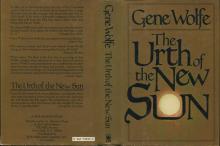
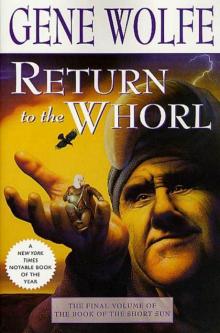
The giant, p.67
The Giant,
p.67



Someone had thrust something white beneath his door. His first thought was that the maiden had left a note for him, but it was only a stamped letter, postmarked at the southerly town of Gilman the week before. When he unfolded the sheet it held, he discovered to his infinite astonishment several bills of no mean denomination.
Dear Master Bambrick,
Though it is somewhat early for Christmas gifts, we thought it better to send this now, since Wade has told us that you will return to your own home for the holidays.
Our gratitude goes with them. Wade’s letters show clearly how much influence you have gained in a very short time, and how well that influence has been employed.
Wade is destined for the university, as you clearly realize. That you will do everything in your power to fit him for a career there, now and at the university itself should you so desire and his progress at New Lake continue satisfactorily, is the grateful wish of—
Charles & Natalie James
Enan smoothed the bills, marveled at the numbers in their corners for a minute or more, and after some thought pinned them inside his shirt, which he decided was fit for a third wearing in the morning.
This accomplished, he draped the shirt carefully over the back of his chair, positioned the chair close to the head of his bed, heaped the rest of his clothes on the chair seat, read Mrs. James’ letter a second time, and a third, and retired. Lying in the dark with his hands behind his head, he told himself that he had almost certainly misunderstood. She had not said tonight, but tomorrow, or perhaps Tuesday—although it might be that she was delayed. No matter how beautiful she was, or how good, she was still, like every other woman and every man, at the mercy of Fate. What was it Apollo had confided to King Croesus? “Even the gods… Not even the gods…”
She woke him with kisses. “May I lie here beside you? How warm you are!” Her hand was a benediction. “Paul Snyder swears you can’t infect me.”
Enan had kissed a woman, had held her hand and embraced her—had done those things three times precisely beneath the ancient apple that stood at the center of the common. He responded as a boy, half afraid, half asleep, and wholly unbelieving. When she left him at last, she left him frightened and unbelieving still. As if in a trance he heard the scratching of the match, and shut his eyes against the flare of light and the steadier radiance of the candle.
“Do you mind? I can’t very well get dressed in the dark. Besides, I thought you might want to see me.”
Rolling his head on the pillow, he looked. Looked, and saw Modesty Seely wiping herself with one of his handkerchiefs. She posed for him briefly, standing on tiptoes to appear taller, her arms above her head to lift her breasts. “Aren’t I beautiful?”
He managed to nod.
“I want to tell George.” She smiled. “Let him know where I’ve been. I want to see his face.”
A shadow dashed from the room.
“Can you fasten this for me, Enan? There’s a little catch at the back.”
When she had gone, he sat for a time on the bed, his bare feet flat upon the freezing floor. At length he stood, washed as well as he could in water from the ewer, and began to dress. The money was still pinned to his shirt; he noted it without interest, as he noted the burnt matchstick on the floor. The first shot came as he was tying his shoes.
For a moment he remained just as he was, the shoelaces in his hands, listening to the echoes and the sounds of running feet. He completed the bow and pulled it tight. Somewhere, on a floor below him, someone was pounding on a door. The second shot came as he stood.
He picked up the candle and looked about the little room. Was there anything here he wanted? He remembered the coat he had worn as far as Bradford and lost when the ice gave way beneath him. It would be nice, he thought, if that coat were returned to him now. But it was not there.
An odd sound had replaced the shouts and the running feet; he thought of some great animal, a fighting bull or a buffalo, rushing through a thicket of thin and very brittle twigs. There was a smell of smoke. He stuffed three letters from his mother in one pocket, The Queen of the Air in another.
He opened the door upon a darkling landscape. Sullen fires smoldered far off, and a dead man in bronze armor lay almost at his feet. Dark bowmen on lean and eager horses wheeled like the falcon; one loosed an arrow, missing his head by a scant inch.
“The dead have need of you, Enan.”
It was the maiden. “You came!” he said.
“This is their darkest hour. Today ten legions fell at Cannae. Varro escaped to Venusia with seventy horsemen, and those seventy constitute the Army of Rome tonight.”
He nodded, resigned yet frightened still. “Marcus Junius Pera will raise a new army. No one can say how.”
The maiden smiled, and it was the smile of one who knows a secret. “Some scholars have called that an army of freed slaves and boys.”
They had begun to walk over the battlefield. Enan said, “Boys and freed slaves could never defeat Hannibal. Pera will require every man. Take me to him.” A gust of smoke made him sneeze. He stepped across a shabbily clothed corpse, and only when it was behind him realized that it had been his own.
Placidaque ibi demum morte quievit. “At last he found rest in peaceful death.” For we are ever most at peace where we are most sorely needed.
Useful Phrases
I. Show Me Something Better
I found the Phrase Book in my pocket. That itself seems to me extraordinary and significant, for I have a great many books, both at home—to confess the truth, my small apartment is furnished with little else—and in my bookshop. I need not, I hope, describe my shop to you, who have been in it so often. There are a great many used books there, as you know, a few new ones, and a small rack with magazines. There is a cat asleep in the window; her name is Lafiondalinda. There is the aspidistra, the cash register, and me. Mine is the last bookshop in the city, and has been for many years, to wrap purchases in brown paper and tie the package with string. I have some customers who give me their trade for that reason alone.
I frequently buy entire grocery boxes of books, when they can be bought cheaply enough, without examining their contents very thoroughly. After all, if I can get the whole boxful for three dollars, and I’ve seen two books that should bring five or more each, why shouldn’t I? When I have more time, I go through the box with care, put the junk into the twenty-five-cent bin I set out on the sidewalk on fine days, and (alas!) take home a book or three that I imagine I may someday wish to read myself.
No doubt the phrase book reached my pocket by that route, though I have no memory of having put it there. On a day in late winter or early spring, I must have purchased such a box (I wonder what else was in it?) from somebody who was moving. (I think I can guess, now, where he was going.) It must have intrigued me, even then, though not so much that I remembered it when I reached home. At the tail end of October, when the first ice storm swept in from the plains, I wore my winter coat again and discovered it.
It is small, and by no means thick, with a handsome blue cover I take to be simulated leather. The odd script on this cover means (as I now know) no more than “Useful Phrases”—Tobish Ablar. The full title, from the title page, is Tohish Ablar Sens-Orriyya Ert, that is to say, “Useful Phrases for Piteous Visitors to Earth.” (I am guessing at the final word, which does not occur elsewhere; but this identification seems to me very probable.)
At first I could not make heads nor tails of the writing, of course. But opposite each phrase in the script of Tcôvé, the book supplies both a phonetic translation (likewise in the fifty-three characters of the diloveta, naturally) and a plain, written version in the terrestrial language involved: Tem um melhor? for example, which is “Show me something better” in Portuguese.
I concentrated on the English and French at first, for obvious reasons, and they provided me with the pronunciation of the characters of the diloveta, six of which are pronounced alike (as P) but one of which is pronounced in five different ways (K, Q, CH, CH in German ich, X, and VK) depending upon its position in the word and the word’s in the sentence. As was only to be expected, I supposed then that the language was a merely terrestrial one with which I was unfamiliar.
Even so, many of the phrases thus translated struck me as peculiar. Who would wish to say, “You no longer recognize her,” “Mine is a similar address,” or “I will tell the trees to be quiet”? I studied all these phrases diligently, however—so much so that I sometimes found myself murmuring in my bath, Pava pacch, tîsh ùtra. Neéve sort dufji. “How like a ghost are the fountain’s waters! The flood carries away my riches.” The paper is marvelously thin, and yet completely opaque; the print sharp-edged even when viewed through my best magnifying glass.
All this time, I should explain, I was fairly itching to put my bookplate in the book and index it as a permanent part of my library, neither of which I felt that I could properly do until I learned the location of Tcôvé, the linguistic group or groups to which its tongue belonged, and something of its history. I consulted atlases and encyclopedias, and found all equally unhelpful. Tcôvé, I decided, was surely one of those nations (like Deutschland and Hellas) which we call by quite different names. Still, I persisted in my determination. A pêpennes tilyat scémpterrissomatya oto dommrosmoreii, as has been so finely said: “I shall know the names of the angels on the peaks of my homeland.”
II. The Three Visitors
A year or more passed while I studied and planned (though only for my own amusement at first) the advertisement I eventually ran. Should I offer a reward? It could not be a large one—a hundred dollars, perhaps, or five free books. Should I include no more than my telephone number? And if so, should it be the number of the store or that of my apartment? What about a coded box at the newspaper, such as one sees in the Personals? In the end, I settled for the wording I give here:
HESITANT SPEAKER OF TCOVESE WOULD WELCOME ACQUAINTANCE OF NATIVE SPEAKERS & DISCUSSION OF LANGUAGE AND CULTURE PREVIOUS PAGES BOOKSHOP 444 N. WASHINGTON
I was greatly tempted to write the ad itself in Tcôvese, as you may imagine; but it would have lost half its force (or so I felt) in the Roman alphabet, and would almost certainly have been disfigured by the printer.
My first visitor arrived on the first day my ad ran. He showed me a badge, and asked to speak with me in private. I took him into the little back room I call my office. He asked how I had found out about Tcôvese, and I asked whether he spoke it.
“Just a little,” he said. “A few words.”
I confessed that it was the same with me. Naja pouvrei.
“You could be useful to the Department,” he told me. “We could pay you a little something. Not much.”
The fixed stare of his narrowed eyes told me he was lying; I wished that I’d had a better look at the badge he showed me.
He pursed his lips. “Let’s say twenty-five a head, fifty if we need you to ask them questions.”
I indicated that additional income was always welcome, and asked what he wished me to do.
He gave me a business card. (I have it still; it identifies him as Detective Lieutenant James J. Ropinski. The address is that of the Eighteenth Precinct, but the telephone number is not theirs.) “First off, I want you to call me anytime somebody comes in about that ad. Give me a name and a description, and tell me everything he said. Try to get an address and so on. Any hard information that you can. The Mob’s been bringing in hit men from Tcôvé. We need to know about every one of those guys.”
I nodded, although I had already decided that I would not cooperate.
“Am I the first one?”
I asked what he meant.
“The first one that’s answered your ad.”
I assured him he was, and asked what Tcôvese looked like, in order that I might recognize them. I had visualized small Orientals.
“Pretty much like you,” he said, “or like me. Regular people.”
I addressed him in Tcôvese, employing one of the phrases from the book: Retop embrasôneia minmias costenti sus? “Are you familiar with these lovely caverns?”
He stared at me and shook his head.
When he left, I looked up the number of the Eighteenth Precinct in the telephone directory, called, and asked for him. I was told, as I expected to be, that there was no one of that name.
My second visitor arrived almost a year to the day after my advertisement had appeared, long after I had surrendered hope of any further response. He was a very tall black man, exceedingly well dressed.
“I come for what you have say here.” He extracted my advertisement, much folded and refolded and soiled, from an elegant ostrich-hide wallet. “I am consul Tcôvee. You hear? Not here this city, ’nother city. For me a long trip. You hear?” His hand shook as he held out the torn scrap of paper.
I addressed to him the phrase I had so often rehearsed: Semphonississima techsodeliphindera lafiondalindu tuk yiscav kriishhalôné! “How delightful to discover in the shrinking sea a crystal blossom of home!”
He dropped my advertisement and ran from the shop.
My third visitor arrived only last night; it is due to that visitation (if I may employ so pretentious a word) that I am writing this account for you.
The day had been dark, as winter days here so often are. At six, when I inspected the cat’s food and water bowls and locked the front door of the shop, and pulled down the blind, the street lights were on. The thought of my cold, empty apartment, with its waiting stacks and boxes of books, held no attractions. I lit the gas ring in my office instead, and filled the kettle.
Then, settling into my old, wooden swivel chair, I mused upon the possibility of night hours. What if I were to close each day at two, nap, and reopen at night, remaining open till midnight? Might I not soon discover that I had acquired a new clientele? Or however it’s pronounced. Might I not increase my income sufficiently to afford a vacation? I wanted very badly to go somewhere, though I did not know where.
After a moment or two, I rebuked myself for wasting my time when I might, if I had gone to my apartment, be studying Tohish Ablar, then remembered that it was in the pocket of my overcoat and got it out.
Ensueshh nemblar sissert va? “Where may strangers erect their pavilions?”
Nemit mirrya orriy sus. “You will be my wife while I am here.”
Arbitorri Tcôvesessit tanyat sklora. “Le paradis perdu n’est pas celui qu’on pense.”
A ffuwtelle togong bluté. “I hunger for taller trees.”
I dozed, and it seemed to me that I was walking beside a little rippling stream whose water was so pure as to be almost invisible, and so cold that flecks of ice tumbled in its current, flashing in the sunshine. Minute fish with wide wings of polychrome gauze that were in fact their pectoral fins leaped from the freezing water to catch lying seeds that seemed to know and fear them, darting this way and that like tiny green helicopters, then plunged back into the stream to breathe. The trees to either side of the stream (no doubt they were inspired by the last phrase I had read) were fifteen feet or more through the trunk, and seemed almost to touch the sky. Springs gushed from about their roots, bordered by flowers that turned their blossoms toward me as I walked as though eager to be seen; each was like the beautiful face of a young woman—I do not mean that they had eyes, noses, and so forth, but that they evoked the same response in me. I knelt, discovered that I was holding a small knife with a crooked blade…
And woke.
The shop was dark, and silent except for the hissing of my gas ring and the bubbling of the kettle; and yet I knew that I was not alone, that someone had entered while I slept, turned off the lights, and remained, waiting.
I got up and went out into the public part of the shop.
“Trifor nemell?”
Remember me?
A soft voice, vibrant and haunting. “No, no,” I said, “I don’t even know who you are!”
“A temmenti nogivé sus.”
I forgive you.
“Who are you?” I shouted. “Where are you!”
“Qibbeia susentifeda sus shoonlend? Nebor?”
Why can’t you forgive yourself? Please?
By that time I had reached the light switch. I shouted something more (I do not remember what I said) and turned on the lights.
I was alone, still old, still dressed in my old tweed jacket, which badly needed cleaning. (As do I, I suppose.) Nothing had changed. My cat, Crystalflowermaiden, trotted busily about the shop, peering behind each freestanding bookcase, obviously looking for someone who was no longer present. When I returned to my little office to take the kettle off the gas ring, I found that someone had already brewed a cup of tea for me, and that there floated in it, briefly, a tiny pink-and-white blossom like those in my dream. As I watched it melted, filling that dusty little room with an indescribable fragrance. Which vanished too in half a minute or less.
III. The Hidden Page
It was very late before I could bring myself to leave the shop and walk the five blocks that separated me from my apartment. Perhaps I should not include this here, but I was mugged, knocked down from behind by someone I never saw who took my money and my watch and searched me frantically, while I lay sprawled on the sidewalk, for something that he never found; I remember that he searched my left coat pocket twice, tearing it away to make certain it was empty.
Dazed and bleeding, I reached my building at last, locked and bolted the door of my second-floor apartment (for I was very much afraid my assailant had followed me, though I know how irrational that sounds) stripped and showered, contrived a clumsy bandage for the wound at the back of my head, which was still oozing blood, poured myself four fingers of Scotch, and took the phrase book from my ruined coat’s remaining pocket.