Empty graves, p.8
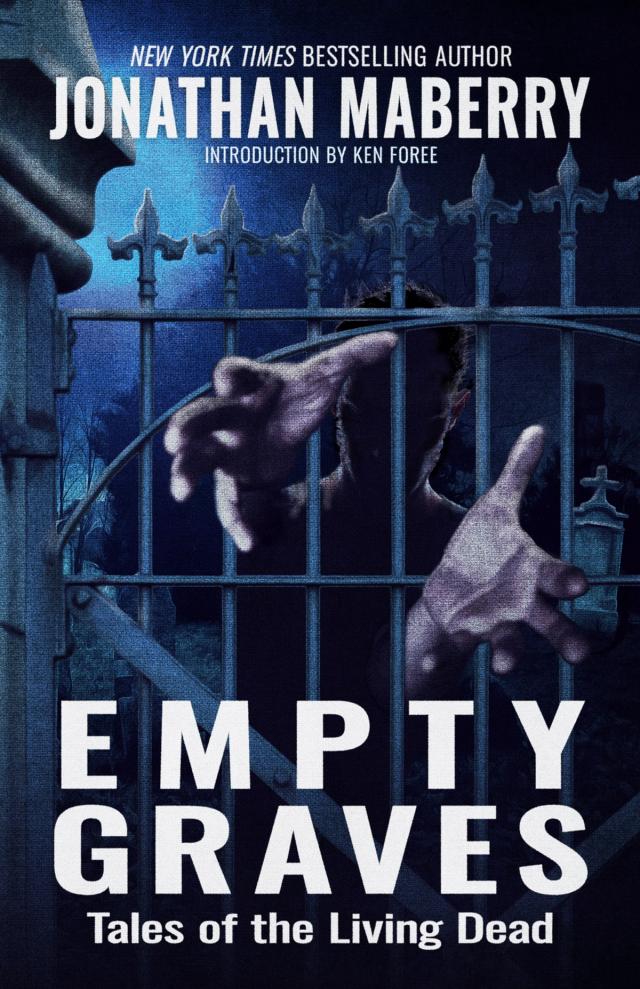
Empty Graves,
p.8


Sam didn’t know.
There were dog footprints in the dirt, too. And a lot of boot and shoe prints. A big party. Well-armed, working together. Getting the job done.
Fighting back.
For the first time since coming to Pennsylvania with the Boy Scouts, Sam felt his heart lift. The buses of kids and the lady cop had gotten out. And now someone had organized a resistance. Probably a redneck army, but fuck it. That would do.
He walked around the house to try and read the footprints. The group who had come here had walked off east, across the fields. Going where? Another farm? A town? Anywhere the fight took them or need called them.
“Hooah,” he said, using the old Army Ranger word for everything from ‘fuck you’ to ‘fuck yeah.’ For now, it meant ‘fuck yeah.’
East, he thought, was as good a direction as any. Maybe those hunters were protecting their own. Sam glanced at his truck. Maybe they could use some food and a little professional guidance.
Maybe.
He smiled into the darkness. Probably not a very nice smile. A hunter’s smile. A soldier’s smile. A killer’s smile. Maybe all of those. But it was something only the living could do.
He was still smiling when he climbed back into the cab of his truck, turned around in front of the old house, found the road again, and headed east.
This story is a direct sequel to the previous tale. And although written after George Romero’s death, I rather think he would have enjoyed it.
Not this War, Not this World
-1-
“This is Billy Trout reporting live from the apocalypse …”
The radio still worked. That was something.
As long as that kept working Sam thought there might be a chance. He didn’t believe in much. Didn’t really believe in that. But a guy has to hold onto something.
He held on.
-2-
Sam Imura leaned against the hard plastic wall of his elevated tree stand and carefully and quietly opened a can of beer. Doing it slowly to allow the gas to hiss very softly and to keep the metal from screeching. He pushed the tab down into the opening and folded the ring back. Nice and neat.
The beer was warm. A local brew that tasted almost, but not exactly, like piss. He drank piss once. Years ago, during a week of hardship training at Fort Bragg. Anyone who complained about it got shipped back to whatever branch of service they came from. Sam sipped the beer and revised his opinion. This stuff tasted every bit as bad as hot urine. He took another swallow and set the can down.
The deer stand was in a nice spot. Just inside a shadowy tree line. To either side and behind, he could see well into the woods, which rose in a series of small humps. Lots of trees, not too much shrubbery. Exposed roots, which made animals walk carefully and made two-legged targets trip. The other direction looked out on a big field that wandered up toward a farmhouse.
The house was empty, cleared out two nights ago. A smoldering mound of gristle and bone was humped in front of the porch. Three other mounds were situated around the property, including one by the blackened shell of a pickup truck that had blown itself up by an old gas pump. There was a story there, but Sam didn’t know what it was.
The house itself wanted to tell another story. From what he could tell, a few people had tried to reinforce it, but fucked it all up. They nailed boards in a haphazard way across all the windows, but the nails had been driven straight in, not toe-nailed, not screwed. Nothing to give them real resistance. And someone had rigged the cellar door with crossbeams, but for some reason hadn’t hidden down there.
There was blood everywhere—and some shell casings.
From the mess in the yard Sam could tell that a wave of people had come through and cleaned out the leavings of the failed stronghold. Shell casings told him that it wasn’t military, though. Mostly pistol and hunting rifle rounds, some commercial shotgun shells, so he figured it was local hunters and maybe some cops. That made sense. There would be more of them, and this was rural Pennsylvania. Every goddamn person out here owned a couple of guns.
By the time Sam got here, though, the killing was done and the killers had moved on. He hoped they were the good guys. If there were any good guys left. He was cynical enough to have his doubts. While running with DELTA and later with the Department of Military Sciences, he’d seen a lot of the worst side of humanity. The tendency toward savagery. The kneejerk reaction to lash out in fear, and to grab in need.
He took another sip of beer, adjusted his billed cap to shade his eyes and studied the field. Nothing moved except what the wind pushed, but that didn’t mean anything. There was something out there.
At the very edge of his unaided visual range was his truck. Sitting in the middle of the road with a busted axle. When he’d driven out of here two days ago, he got exactly three hundred yards. That was it. He knew it hadn’t been the road that killed the truck. It was them.
Them.
Bodies break and burst under the wheels of a big rig, but they are still made of bone, they still have mass. Sometimes he’d had to smash into crowds of them. Sometimes he’d driven over them. Bumping and thumping over dozens of bodies. Men. Women.
Children.
It was worse than driving down a rutted country road. He figured he cracked the axle punching through the last bunch. Maybe did something to the radiator and the engine. The truck was as dead as everything else around here.
Sam never considered abandoning it, though, because he’d spent the best part of a day using a forklift to load pallet after pallet of supplies into a semi. Food, water, camping gear, fuel oil, tents, tools. All the things he thought would be useful to any group of survivors he met.
So far, he had no one to share his supplies with, and no motivation to leave it behind. His plan—still a bit rough around the edges—was to secure the house and the area up to a mile in every direction. Kill anything that needed killing and clear the way for survivors to come find him. There was a cemetery near here, in a town about seventeen miles away, a town called Willard, but Sam couldn’t find it on a map or with the truck’s GPS. Useless as fuck.
So, he stayed where he was.
The deer stand was already here, though old and in disrepair. He fixed it. Sam was always good with tools. Building things was as much therapy as it was a hobby. It had the precision that satisfied his sniper’s need for detail, and it made things instead of destroying them. That mattered.
Killing was a constant in his life. He enlisted on his eighteenth birthday, choosing that path instead of following his father into law enforcement. His younger brother, Tom, was in the police academy in California. Sam wondered if any of his family was still alive. Maybe Tom. The kid was resourceful. Practical and tough. His dad was old and slowing down, though. Sam didn’t know a lot about his stepmom and had never seen his baby half-brother, Benny. They were three thousand miles away, high in the Sierra Nevada Mountains of Central California. Maybe this plague hadn’t reached that far.
Maybe pigs would sprout wings and fly out of his ass.
That news guy, Billy Trout, said it was everywhere, that it was traveling at the speed of human need. Planes, trains, and automobiles. Out-flying and outdistancing prophylactic measures. Outrunning all common sense and precaution; spread by the people who were trying to outrun it.
There was a joke in there somewhere. His old boss, Captain Joe Ledger could have said something funny about that. A twist of wit, sarcasm, and social commentary. Sam wondered where he was. Probably dead, too.
He drank the rest of the beer and put the can into the canvas cooler because he didn’t want the breeze to knock it off the deer stand. Sam was cautious like that.
He froze.
Something out there moved. He was sure of it.
Sam raised his rifle. It was a CheyTac M200 Intervention sniper rifle. Best of the best for someone like him. Too much gun for hunting, but this wasn’t really deer season. He scanned the field with his shaded eyes first to zero on where he’d heard the movement. Found it. Something moving through the corn off to his left. He leaned into the spotting scope, but the corn was tall and green and lush. The stalks moved, but he couldn’t see why.
He’d used super glue to attach a sock filled with beans to the rail of the tree stand, and he rested the rifle on that. He did the math in his head. Baseline trajectory and bullet drop. His breathing was calm, his finger relaxed along the outside of the trigger guard.
If this was a deer, then he’d let it go past. He could be here for a while if no one came, and there was plenty of food in the truck. It would make more sense to let the deer breed next year’s food. Sam had a feeling that would matter.
If it was a person, he’d have to coax them into the open and make them stand there until he could come over, pat them down, check them for bites, and ask a few questions.
But if it was one of them … then there was only one option. A single round placed just so. Catastrophic brain shot. Something he’d done in hostage rescue situations more times than he could count. A shot to the brain stem or the neural motor cortex that kills so instantly that body reflexes cannot react. What was funny—in a curious rather than humorous way—was that it was a golden shot for snipers, something they aspired to, but which was rarely even considered by other branches of the military. Most of the soldiers he’d known on the way up had been more concerned with seeing how much ordnance they could throw downrange, operating on a more is better plan. Snipers were stingy with their rounds. It was a matter of pride with them, and Sam seldom pulled a trigger unless he was certain of a kill.
He was loaded with .408 Cheyenne Tactical cartridges in a single-stack seven-round magazine, and at four hundred rounds he could kill anything he wanted dead. He’d dropped targets at much greater distances, too, but this wasn’t that kind of war. If this was one of them, then they would walk right up to take the bullet.
“Come on,” he murmured, softer than the whispering breeze.
The weeds parted.
It was a child.
Six years old. Maybe seven. Sandy blond hair riffled by the wind. Jeans and a Spider-Man sweatshirt. Red sneakers. Holding something in his hands.
For a moment Sam thought it was a teddy bear. Or a doll dressed all in red.
“No,” he said, and it came out as a sob.
It wasn’t a doll.
It wasn’t a fucking doll.
It wasn’t.
It …
-3-
Sam took the shot.
-4-
The bullet did what it was designed to do. It ended all brain function. It ended life. Snap. Just like that.
The boy’s head was blown apart like a melon. Very immediate and messy. The body puddled down, dropping the awful red thing it carried.
A perfect shot.
Sam sat back and down, thumping hard onto his ass. Gasping as if the shot had punched a hole in the world through which all air was escaping. The day, even here in the shade, was suddenly too bright.
He felt the burn in his eyes. Not from muzzle flash or gunpowder. Tears burn hotter than those things.
The sound of the shot echoed off of the farmhouse and the ranks of corn and the walls of hell. It went away and then found him again, punching the last air from his lungs as he fell onto his back and squeezed his eyes shut.
This was the world.
This was how the world was.
-5-
He came down from the tree stand and stood for a moment, leaning against the rough oak bark. The rifle was up there. He couldn’t bear to touch it.
It was bad enough that it had been one of them. He’d been sent to this part of Pennsylvania at the start of the plague. He knew the science of it. Lucifer 113, an old Cold War bioweapon cooked up in some Russian lab but brought out of history’s trash bin by a deranged prison scientist named Herman Volker and used on a death row inmate. The plan had been to torture the condemned serial killer by introducing the genetically engineered parasites that would hotwire the man’s brain whole, hijacking his motor cortex and cranial nerves. It would keep the higher functions awake and aware, but with no connection to motor functions. The killer would go into his grave totally connected to all five senses—hyperaware of each—while his body, unable to die any normal death, slowly rotted. But aware. Completely and irrevocably aware.
The killer never made it to the grave because when it came to doing things right the system was almost always in clusterfuck mode. A relative appeared out of the devil’s asshole, or someplace equally unlikely, claimed the body, and brought it home to a little shithole town called Stebbins. In the local funeral home, the killer woke up.
Woke up hungry.
That was how it started. Less than a goddamn week ago. Sam knew the story because he was one of the people who had a need to know. Most people probably still didn’t know what the plague was, or why it was, or how it spread. And the one thing that was nowhere on the news was the fact that every single motherfucking one of them was aware. Trapped inside. Connected and in touch with every taste, every smell, everything nerve conduction could share. All of those people. Helpless passengers, forced to be both witnesses and accomplices in the murders they committed.
All of them.
The little boy, too.
And the baby he carried.
Every.
Last.
One.
Sam staggered out into the field. Not to see the boy. That kid was gone. Freed, if that word could apply. No. He had to find the baby.
The red, ragged bundle the boy had been carrying.
No, Sam demanded of himself. Tell the truth. Know the truth. Have the balls to honor the dead by accepting the truth.
The boy had been feeding on the infant. Carrying it around.
Eating.
-6-
It was in there. On the ground. Twitching.
Handless. Footless. Faceless.
Alive.
Or … un-alive. Sam didn’t know the new language required for this fucked up version of the world.
What were these things? They were not living. They weren’t dead. Not really. The body was hacked, controlled. All nonessential systems were shut down to conserve food and other resources for the parasites. So much so that a lot of the surface flesh and even some of the organs became necrotic, and the slow rot released chemicals and proteins which the parasites devoured. If not alive and not dead, what was the third option?
Living dead?
It had a lurid quality to it, but it also fit. Like a bullet fits the hole it creates as it drills in the flesh. Forced, but functional. Sufficient to its purpose.
The living dead.
This is what Sam chewed on while he knelt in the dirt and dug a hole with his hands. No, not a hole. A grave. He bruised his fingers on roots, tore his nails, numbed his flesh with the cold, cold soil.
Digging.
There were better ways to do this. He had a knife, and it could chop the earth better. That was reasonable. He drew the blade and used it. Tried not to listen to the sound he made. Could not bear to listen to the sounds the little undead thing made. Gurgles. Like a baby would. Like a real, normal baby would.
He chopped and stabbed the ground, widening the hole. Deepening it. Then he stopped when he realized that he was making the hole too neat, too perfect. Overdoing it.
“Fuck,” he said, and then almost apologized out loud because there were kids there. Kids. Holy fuck.
The infant squirmed and tried to reach for him with its ragged stumps of arms. The hole was deep enough but there were two logistical challenges. Lifting the child meant touching it. And then ending it.
This was not shooting three or four hundred yards from an elevated firing position. This was right here, up close and way too personal.
With a baby.
Living dead or not, it was a baby. If there was anything more clear in the rulebook of soldiering it was that soldiers were there—by their nature—to protect the innocent. All arguments about collateral damage aside, this was a certainty; to go against that was the ultimate taboo. Militarily and as a human goddamn being.
“Do your duty, soldier,” he told himself. Speaking out loud. Speaking in an ordinary tone of voice, which was way the fuck out of the ordinary, all things considered.
He paused for a moment, listening to what was going on inside his head. Is this it? he wondered. Is this me going crazy?
After hundreds of conflicts in scores of battles, after pulling the trigger on a legion of targets, Sam had always taken some rough pride in being stable. No PTSD. Snipers were practical, pragmatic. Grounded.
Except he was talking to himself in a cornfield after shooting one kid and contemplating how best to murder another. Kneeling by a hole he’d dug that was surgically neat.
Oh, yeah, no chance of mental damage here, folks. Move along, nothing to see.
The baby rolled over on its side and then flopped onto its belly. The truncated legs pushed against the dirt. The toothless mouth snapped at the air in his direction. Biting the smell of him.
“Jesus fuck,” said Sam. This time there was nothing normal or calm or controlled in his voice.
He looked away. The knife that stood straight from the mound of dirt he’d removed. Then down at the automatic in the shoulder rig he wore. Bullet or blade. Either would get it done. Which, though, would hurt less. The baby. Him. Both.
Knife was quicker. It was right there, but he couldn’t do it. Sam could not even bring himself to touch the handle. Not for something like this. Knives were too personal. They were meant for enemy flesh. He’d used that knife, and others over the years, to cut throats, puncture hearts, end lives. Those targets had been enemies. They were playing the same game of war and understood the rules. The knife, in those moments, was a tool no different than the hammer the person who’d boarded up the windows of the house had used.
Sam knew he could never use that knife on this target. This child. Never in ten million years. On himself, maybe. Sure. That even felt likely. Attractive. Comforting in its way.