Empty graves, p.9
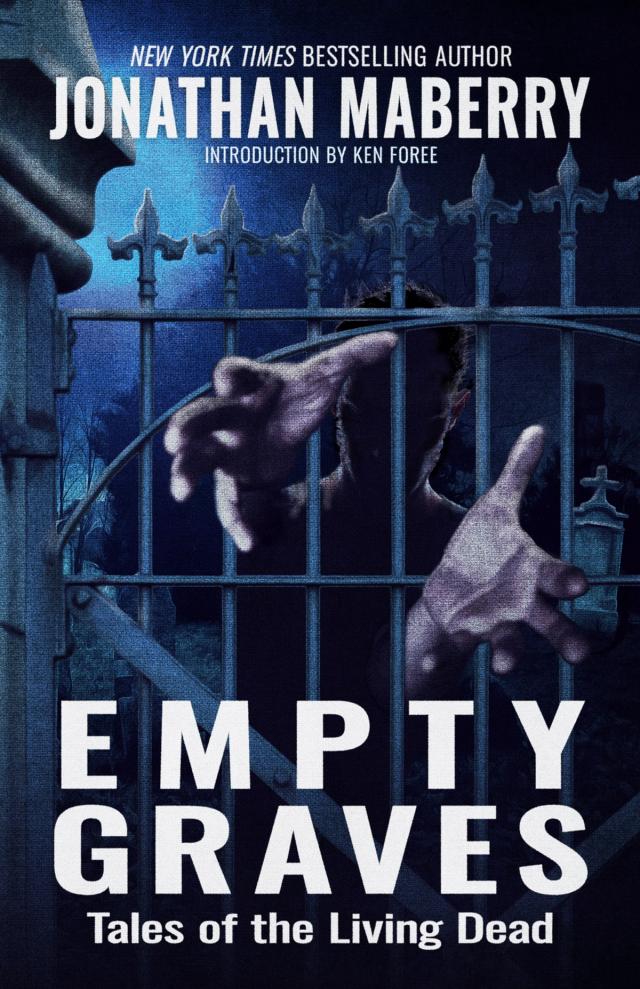
Empty Graves,
p.9


Not on a baby.
The gun, though?
He drew it and held it, weighing it. The gun was a SIG Sauer P320-M17. Fully loaded, as it was now, it weighed twenty-nine-point-four ounces. Seventeen 9mm jacketed hollow point rounds. It was too much gun. A .22 would do it. And it would be appropriate because that caliber was notorious as an assassin’s gun. And was this an assassination? A murder? Certainly not an act of war.
Or, he wondered, was it?
The plague was spreading exponentially across the country, and by now almost certainly globally. It was unique in that anyone killed by the plague, or improperly killed by any other means, was recruited by design into the opposing force. A self-sustaining war of attrition. The infected were clear aggressors.
So, sure. War.
The baby kept trying to reach him. To bite him, even though it had no hands to grab, no teeth to bite. If Sam was in hell, then so was it. He bent down and looked into its eyes, wondering if there was an infant’s mind looking back. But it was a stupid thing to do because he wasn’t sure he could even tell that with a living baby. Maybe he could have with the boy.
Do it, he told himself.
“Do it,” he said aloud.
I can’t.
The gun fired. Immediate. Unexpected. Blasting a big red hole in the world.
It was a massive sound because he was bent down close to the baby and because he had no idea his hand was going to fire. The blast punched him in the side of the head and he cried out, reeling, dropped the weapon, grabbed his head. Screamed.
The green corn stalks were painted with bad colors. Red and black. The blood hadn’t yet undergone the full biochemical change from normal to totally infected blood. Even so, he could see tiny threadlike worms wriggling in the droplets as they ran down the cornstalks.
-7-
Sam did not remember burying the child.
For the rest of that day and all through a bad night he wasn’t sure he had. But when he went out in the morning the hole was filled in, with a hump of dirt patted neatly above it. And there was a second mound next to that one. Bigger. The boy. Sam understood that he must have dug that grave, too, but there was no shred of memory anywhere in his head.
He knew that he should be worried about that. Really worried.
He went and sat on the porch steps to try and sort out exactly how worried. There was a small cloud—just one—skating across the sky. He watched it, leaning back to track its slow progress. He squinted into the sun, closed his eyes for a moment, and woke to darkness.
Crickets sang in the corn and in the grass. Fireflies danced in the air, and overhead someone had shot holes in the nighttime sky, through which cold light shone. The moon was down and the day was gone.
Gone.
Gone where, though?
Sam sat there, shivering with cold that had nothing to do with the temperature. He got slowly and painfully to his feet. Everything ached. Every muscle and tendon; every inch of his skin. The bones of his ass hurt, and he knew that he must have been there all day. How long? Ten hours? Twelve? More.
It terrified him.
Then he heard the sound.
Soft. Furtive. Sneaky. Not close, but out in the cornfield. Near where …
Suddenly he was off the porch and running across the lawn, past the trees and the driveway, past the burned wreck of the pickup truck and the splintered shell of the gas pump. He reached the front wall of corn and plunged into it. The stiff, sharp leaves slashed at him, cutting his face and hands, but Sam bashed at them, slapped them aside as he ran.
There were noises in the field now. Grunts. Whispers. No … not whispers. It was more basic than that. Moans.
Then he burst through one row and collided into someone.
Some-thing.
A man. A farmer in coveralls. The man fell backward and down, landing hard. Sam rebounded and caught his heel on something, and he went down, too, crashing down on his aching buttocks, jarring his tailbone. He cried out as pain punched from his coccyx all the way up his spine.
The farmer grunted, too. But not in pain. It was a strange noise. A duller, less emphatic sound. Air jolted from lungs but absent of pain.
“I’m sorry,” said Sam.
And knew that it was not the thing to say. There was nothing he could say to make this moment work, to fix it. The man sat up and in the darkness his face was etched with blue starlight. His eyes were dull and seemed to look straight through Sam. His lips hung rubbery and slack. There was dirt on his hands from where he’d been digging.
Digging.
For food.
The farmer uttered that same moan. It was a terrible sound of bottomless hunger. Of a need that could never be satisfied. An ugly, awful sound.
“I’m sorry,” said Sam again as he reached for his gun.
Which. Was. Not. There.
No gun. No knife.
The farmer lumbered to his feet and reached for him, moaning louder now. From deep inside the cornfield there were answering sounds. Other moans. Many, many more.
Sam Imura screamed.
Special operator. World-class sniper. DELTA gunslinger. Killer. He screamed because the world was not the world anymore. This was the world. It was all broken, and, in that moment, beneath the crowds of stars gathered to witness it, Sam realized that he, too, was broken.
So very badly broken. Splintered, fragmented. Torn loose from the things that fastened him to any understanding.
He screamed and the woods erupted with newer, louder moans. The green stalks shivered and shook as pale figures shambled toward him. Reaching and reaching. Farmers and cops, housewives and school kids. A man in a funeral suit. A naked woman with three bullet holes in her stomach. An old lady in a hospital gown. A nurse without eyes. A fireman with no hands. Coming for him.
Sam screamed and screamed, and then something in him broke. Snapped. Shattered.
He was running across the field with no awareness of leaving the cornfield. He was running and yelling. Figures came out of the shadows and he swung at them, chopped at them with the edges of his hands, kicked at them to break knees. They fell but did not die. The broken ones crawled after him. The others walked, lumbered, loped, staggered.
But he ran.
-8-
He blinked his eyes and he was in the plastic tree stand, up in the tree. His hands were cut and sore; he had scrapes on his shins. But the rifle was there. His gear bag with the four boxes of shells was there. His other handgun, a Glock 26, was there. Even his canvas bag of beer and food was there.
He was there.
The moon peered over the tops of the trees. More time was missing, but he thought he understood it now. He was going mad, or had gone mad, but some part of him was still on duty, still protecting him. That part of him did not allow Sam to see everything. Not the worst parts. It disallowed him to witness the process of his own collapse, and so it skipped forward, letting the body do what it needed to do and then allowing his consciousness to catch up.
Sure, he thought, that sounds reasonable.
And it was reasonable. Just not to the sane. Not to the unbroken.
Below the tree stand were them. At least forty. Maybe more. When the moon was all the way up, he would be able to count better. He had four boxes of rifle ammunition, fifty cartridges to a box. And a hundred rounds of pistol bullets. Sam Imura, broken or not, didn’t need more than one round per target. Not at this range. Not with these slow, shambling targets.
He thought about it. About what the best play was here. He could fight, and maybe clear these things out of his fields—and they were his fields now. Or he could use that handy little Glock and go find his brother and his parents and his friends. After all, if the world was this badly broken, why not simply opt out?
Why not?
This wasn’t the war he trained for. This wasn’t the world he fought for.
Right?
He removed the Glock from the bag, ejected the magazine, held it to the light to make sure it was fully loaded and slapped it back into place. Made sure there was one in the pipe, too. Ready to rock and roll.
The moonlight painted the tops of the corn a lovely silver. He couldn’t see the graves he’d dug, but knew they were there. Two graves. One small, the other smaller. Digging those graves cost him more than he ever wanted to spend. It wasn’t fair that he had to pay that price. It wasn’t fair that those kids had to die like that.
He bent and picked up his radio and fiddled with the dial.
“This is Billy Trout reporting live from the apocalypse,” said the voice. As if waiting for Sam to find him. Billy was still there. Sam listened to the reporter give updates on what was going on out there. About battles. About losses. About a convoy of school buses taking kids down south to North Carolina. To Ashville, where the military was making a big stand. Billy talked and talked, and there were tears in his hoarse voice.
Sam listened. The dead moaned.
“If you can hear my voice,” said Billy, “here’s what you can do.”
He ran down the ways to kill these living dead. Billy called them zombies, but the word didn’t work for Sam. Billy went on to list safe roads, and ones that were impassable. He listed shelters and rescue stations, and disputed the ones that were overrun. Billy talked and talked and talked as the moon rose.
Sam stood there with the Glock. Sometimes he pressed the barrel up under his chin. Sometimes he pointed it down at the white faces.
The two graves burned in his mind.
Billy was with the convoy of school buses. All those kids. Living kids.
That’s how it started for Sam. He and his team helped Billy and his girlfriend, a local cop named Dez Fox, get as many kids out of Stebbins as possible. Some adults, too. Heading south. Heading to Asheville.
Those kids.
Still alive.
The moon was up now and he could count. Fifty-six of them. And probably more out there. Maybe as much as a hundred more who might be drawn by the sound of gunshots. Maybe two hundred more.
Sam smiled. Okay, say two hundred and fifty of them between him and the house. And ten thousand rounds of ammunition split between the house and the truck.
Those kids.
The living ones.
He could not bear the thought of rows of little mounds of carefully sculpted dirt. Could not bear it. That hurt worse than trying to hold onto his sanity. It hurt worse than trying to stay alive.
All those kids. With a single cop, a few adults, and a stupid news reporter to keep them safe.
“This is crazy,” he told himself, saying it out loud, putting it on the wind.
The dead moaned. Dead people moaned.
So, yeah. Crazy.
But at least this was on the sanest side of crazy. Useful crazy. That’s how Sam saw it.
He raised the pistol and took aim. It was a target-rich environment. Any shot would hit. Only careful, precise shots, though, would kill.
He was very careful.
He was very precise.
He never missed. Not once.
And if he was crazy, then so what? Surely the world—the broken, hungry world—was crazier. So that balanced it all out. At least he was crazy with a purpose, a goal. A mission. Soldiers need a mission. Even insane ones.
Maybe especially insane ones.
That’s what Sam told himself. As he fired and fired and fired.
“I’m coming,” he said to the night. To the wind. To all those children on the buses. “I’m coming.”
-9-
Sam did not really remember leaving the farm.
He had no idea where he got the UPS truck, or how he filled it with supplies from his crippled truck. So many things were blurry or simply gone.
Sam smiled. “I’m coming.”
The sign ahead said, Welcome to West Virginia.
The truck rolled on, heading south.
This creepy little tale is almost more ghost story than zombie tale. It’s set in the dark hills of the Appalachian Mountains, and it was a story that brewed on a low fire in the back of my mind for quite a few years. Although it wasn’t the first short story I ever wrote, it was the first complete short story idea I ever cooked up. It just needed time to properly marinate.
Calling Death
“It weren’t the wind,” said Granny Adkins.
The young man perched on the edge of the other rocker, head tilted to lift one ear like a startled bird, listening to the sound. He was stick thin and beaky nosed, and Granny thought he looked like a heron, the way they looked when they were ready to take sudden flight. “Are you sure?”
“Sure as maybe,” said Granny, nodding out to the darkness. “The wind fair howls when it comes ’cross the top of Balder Rise. Howls like the Devil himself.”
“Sounds like a howl to me,” said the young man. “What else could you call it?”
Granny sucked in a lungful of smoke from her Pall Mall, held it inside for a five count, and then stuck out her lower lip to exhale in a vertical line up past her face. She didn’t like to blow smoke on guests and there was a breeze blowing toward the house. A chime made from old bent forks and chicken bones stirred and tinkled.
She squinted with her one good eye—the blue one, not the one that had gone milky white when a wasp stung her there forty years back—and considered how she wanted to answer the young man.
Before she spoke, the sound came again. Low, distant, plaintive.
She left her initial response unspoken for a moment as they sat in the dark and listened.
“There,” she said softly. “You hear it?”
“Yes, but it still sounds like a—”
“No, son. That ain’t what I meant. Can you hear the sound? The moan?”
“Yes,” he said, leaning into the wind, tilting one ear directly into its path.
“Now,” said Granny, “can you hear the wind, too?”
“I …” he began, but let his voice trail off. Granny waited, watching his face by starlight, looking for the moment when he did hear it. His head lifted like a bird dog’s. “Yes … I hear it.”
They listened to the moan. It was there, but the wind was dying off again and the sound was fainter, thinner.
“That, um, ‘moan,’” the young man said tentatively, “it’s not the wind. You’re right.”
She nodded, satisfied.
“It’s a separate sound,” continued the young man. “I—I think it’s being carried on the wind.” He looked to her for approval.
She gave him another nod. “That’s another thing about living up here in the hills,” she said, tying this to their previous conversation. “When you live simple and close to the land, you don’t get as blunt as folks in the cities do. You hear things, see things the way they are, not the way you s’pose them to be. You notice that there are more things around you, and that they’re there all the time.”
The young man nodded, but he was half distracted by the moans, so Granny let him listen for a spell.
His name was Joshua Tharp. A good name. Biblical first name, solid last name. A practical name, which Granny always appreciated because she thought that a name said a lot about a person. She would never have come out onto the porch if he’d had a foreign-sounding name, or a two first-name name, like Simon Thomas. Everyone Granny knew with two Christian names was a scoundrel, and half in the Devil’s bag already. However, this boy had a good name. There had been Tharps in this country going back more generations than Granny could count, and she knew family lines four decades past the War of Northern Aggression. Her own people had been here since before America was America.
So, Joshua Tharp was a decent name, and well worth a little bit of civility. He was a college boy from Pittsburgh who was willing to pay attention and treat older folks with respect. Wasn’t pushy, neither, and that went a long way down the road with Granny. When he’d shown up on her doorstep, he took off his hat and said ‘ma’am,’ and told her that he was writing a book about the coal miners in Pennsylvania and North Carolina, and was using his own family as the thread that sewed the two states together.
Now they were deep into their third porch sitting, and the conversation wandered a crooked mile through late afternoon and on into the full dark of night. Talking about Granny and her kin, and about the Tharps here and the Tharps that had gone on. Joshua was a Whiskey Holler Tharp, though, but there was no one left around here closer than a third cousin with a couple of removes, so everyone told him to go see Granny Adkins.
“Hell, son,” said Mr. Sputters at the post office, “Granny’s so old, she remembers when God bought these mountains from the Devil, and I do believe the Good Lord might have been short-changed on the deal. You want to know about your forebears—and about what happened when the mine caved in—well you go call on ol’ Granny. But mind you bring your full set of manners with you, ’cause she won’t have no truck with anyone who gives her half a spoonful of sass.”
Granny knew that Sputters said that because the old coot phoned and told her. Wrigley Sputters was a fool, but not a damn fool.
Come calling is exactly what young Joshua did. He came asking about his kin. That was the first day, and even now they’d only put a light coat of paint on that subject. Granny was old and she was never one to be in a hurry to get to the end of anything, least of all a conversation.
Joshua’s people, the true Whiskey Holler Tharps, were a hard-working bunch. Worked all their lives in the mines, boy to old man. Honest folk who didn’t mind coming home tired and dirty, and weren’t too proud to get down on their knees to thank the good Lord for all His blessings.
Shame so many of them died in that cave-in. Lost a lot of good and decent folks that day. Forty-two grown men and seven boys. The Devil was in a rare mood that day, and no mistake. Guess he didn’t like them digging so deep.
Granny cut a look at the young man as he sat there studying on the sounds the night brought to him. He was making a real effort to do it right, and that was another good sign. He came from good stock, and it’s nice to know that living in a big city hadn’t bred the country out of him.