My life as a rat, p.20
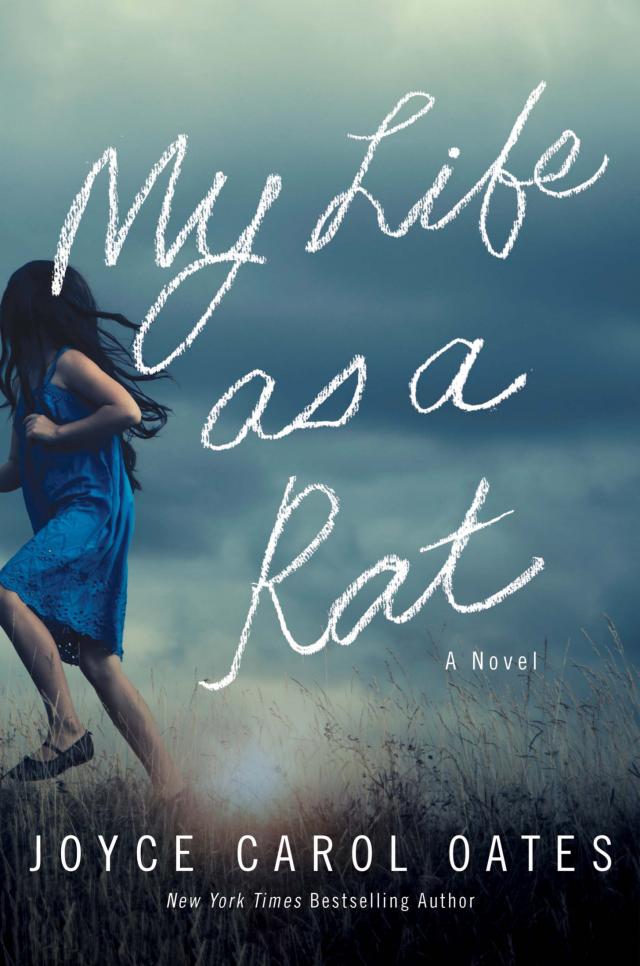
My Life as a Rat,
p.20


Oh Lula—I am trying. So hard . . .
Was Violet like this with you? Sometimes she won’t even look at me . . . And Oscar, he is trying too.
Disconcerting to recall, when you’d first come to live with the Allyns you and your uncle had often helped your aunt in the kitchen, clearing the table after the evening meal, stacking the dishwasher. Deferring to Oscar, the male, to set the dials and start the machine properly.
Oscar hadn’t been staring crudely at you then. You had not been afraid of him then. You’d have been astonished to be told that, one day, the (well-intentioned) (deeply boring) man your aunt had married would be worthy of your hatred.
Not wanting to think—But I am the one. I caused this.
When your aunt returns Oscar has left the house. In astonishment Irma asks where on earth has he gone, just before supper?
You tell her you don’t know. No idea.
But had he said when he’d be back?
No. Had not.
As jubilance fades, as your blood beats less fiercely, you begin to feel guilty. Dirty girl.
Following this, Oscar avoids you. Conspicuously. But Oscar avoids his anxious wife, too.
He has ceased going to church with Irma. Sunday mornings, Irma drives to church by herself.
This is the dangerous time: alone in the house with your uncle. As soon as you realize, you leave the house also. You walk swiftly, you can walk for miles. You break into a run, exhilarated. Recalling how desperately you’d run to your grandfather’s funeral. And how futile the effort.
You are not wanted. Go away!
You wonder if it is time for you to go away again. You wonder if Aunt Irma will ask you to leave. Or if you must remain with her, since she loves you.
In all the world, it is Irma who loves you. Yet, you understand that Irma has no idea who you are and if she knew, she would draw back in disgust.
Oscar has fallen into a pattern of returning home late after work. Even on Saturdays he disappears for hours. Irma is helpless to confront him. Irma is stunned, baffled. You think of a cow that has been struck by a mallet, led to slaughter. The brain is annihilated, the legs collapse. Irma holds herself upright by an act of will.
You hear Irma on the phone speaking with relatives, friends. You have the idea that she doesn’t speak with your mother, however. A faltering hurt-female voice. A voice that invites sympathy, pity. But also impatience.
It is your fault, you are thinking. Dirty girl.
And your aunt had tried so hard to love you. You!
Away for hours and when Oscar finally comes home after 11:00 P.M. his unsteady, heavy footsteps on the stairs remind you of your father’s footsteps you’d heard as a little girl, lying in bed wide-eyed.
The stricken look in your aunt’s face reminds you of the stricken look in your mother’s face, you have not recalled in a long time.
Fleetingly it occurs to you, the man could hurt you if he wished. Very badly.
If he has been drinking and is fortified by drink. Not often that you are alone together in the house but sometimes it happens, despite your vigilance.
In your room with the door locked you would be protected (you think) but the door has no lock. Dragging a chair in front of the door is just too pathetic, you are thinking. (Or is it?)
The bathroom door has a lock but it is a loose lock, not reliable.
His footsteps, his presence outside the door. Can’t concentrate on calculus. Is anything so absurd as calculus—figures on a sheet of paper, that might be crumpled in the man’s hand.
You are beginning to sweat with the possibility that he will repay you for laughing at him. It is the unforgivable insult—laughing at the man, the maleness of the man, unbearable to him.
If he wishes he will push open the door. If there is a chair dragged in front of it, Oscar could (probably) send the chair flying. His body has gone soft and slack and yet Oscar Allyn is strong, you have seen him lifting heavy objects for Irma, a stone bench in the backyard she’d asked him to relocate, bags of fertilizer, salt for the winter driveway.
Easily, Oscar outweighs you by one hundred pounds. He has been drinking, he is summoning his strength. His desperation, chagrin. How you have unmanned him with your shrieking laughter. If Oscar wishes he will burst upon you and cause you to scream another way. Your jeering laughter the man has not been sensitive enough to understand is the laughter of hysteria will be permanently silenced. He will hurt you between the legs however he can, plucking at you, his fingers crude, fingernails sharp. Or possibly something he will grab, your hairbrush. The handle of your plastic hairbrush, shoved up inside you.
Dirty girl. This is what you like.
Or, if indeed the man has an erection. If the man can sustain an erection. That will be his triumph, annihilating you utterly.
Whatever it is, this revenge. You will not register it fully, you will not live to recall it. In his jubilance he will snuff out your young life, a pillow snatched from your bed as you thrash in desperation, screaming mouth mashed against the pillow, pleading and begging, mute.
All this is the male prerogative. You’d known, watching from a doorway your brothers at their video games. Kill! Kill! Kill the enemy! Certainly you’d known, when Lionel shoved you down the icy steps with a prayer you’d crack your skull.
Outside your door the man listens for the sound of your quickened, frightened breathing. Eagerly the man listens to the silence of your fear which is a kind of reverence, an acknowledgment of his power.
Will he smother you, or will he strangle you. Will he force himself between your legs, will he rape you, or will he merely pluck and pinch at you with his fingers, in a fury of impotence, and toss you back down onto the creaking bed, leave you your debased life as if it isn’t worth taking from you . . .
In a trance of terror you have not breathed for some time. One of your comforting fantasies since you have come to live in exile has been that you are a soft boneless sea-creature protected inside a shell and (perhaps) it is a beautifully striated shell that camouflages itself amid seaweed surroundings so that it is not visible to the eyes of predators nor could the creature inside the shell hear anything of the outer world, concentrating on its own heartbeat and the coursing of its blood . . . This fantasy you have only to shut your eyes in school, in a classroom. And when you are alone.
But it is inescapable, you are not alone now.
Trapped in your (second-floor) room. In the house with the person who wants badly to defeat you, to defile you, and if defiled you will have to be murdered for he cannot risk your telling on him; it is the fatal move of the victim, the telling.
Though perhaps he is thinking—She didn’t tell on the other. The pervert.
You remain very still. You do not pray but you instruct yourself to remain very still, scarcely dare breathe, perhaps the man will come to his senses, as it’s said; will relent, will think twice, step away from the door without grabbing the handle and shoving the door open.
Instead after several minutes of silence tense as a wire strung tight to bursting he will decide to pass by with just a thump on the door, flat of his hand, a gesture that might be interpreted as jocular, mock-fatherly—Hey there, Vi’let! Just me.
BUT EVENTUALLY IRMA LEARNS. DESPITE THE HUSBAND’S STRATAGEMS, and the niece’s determination not to tell, she learns. Of course she is deeply shaken, stunned.
Her marriage! Her precious marriage!
Her husband Oscar Allyn of whom she’d been so proud, that he was her husband. That she’d acquired, at almost-thirty, a husband. For Irma had passed her girlhood in a trance of dread at being left behind—never engaged, never married. The plainest of sisters, yet not the smartest. The good girl—born to be a virgin through her (long) life. Her fate would be that of those daughters common in large Irish families, aunties, spinsters whom others take for granted, condescend to, pity.
She cannot bear it at her age, beyond fifty. Losing the husband. The man.
And yet, the shame of the man’s behavior with her sister’s daughter, under her very roof—the girl she has hoped to protect and cherish! She prays to the Virgin Mary for solace, advice: What should she do?
Possibly, Irma speaks to the priest at confession. You don’t know who this might be, for you’d never gone to confession at Irma’s church.
It isn’t clear what precipitates the crisis. Possibly Aunt Irma, meek-mannered, fearful of raising her voice, stricken with embarrassment at a ribald joke on TV, nonetheless dares to confront the (drunken) husband on one of the evenings he returns home late.
And possibly, the husband refuses to answer her, or in an outburst of fury has loudly denied “touching”—“threatening”—her niece in such a way that she understands that—of course— he is guilty.
Of course Irma has known. Slow to realize but it’s inevitable. The strain between her husband and the girl, tense silences at mealtimes, hostile glances. The husband’s flushed face and glaring eyes, the girl’s sullen manner. Why, the husband and the girl are not speaking to each other!—she finally understands.
And there is Oscar’s clumsy humor. Attempt at humor. Looking at Irma, keeping his gaze fixed on Irma even as (almost, she can sense this) he is keenly aware of the other at the table, the girl. Fumble of a smile. Not acknowledging the girl, at the very table with them. Sick, sagging look in his face, jowls.
He’d become obsessed not with the girl, his “niece” by an accident of marriage, but with the possibilities exacted upon her by another: the notorious pervert Sandman.
The beauty of rot, phosphorescence. An unspeakable filth, beyond comprehension. Certain poisons that impress the tongue initially as sweet—irresistible.
No one knew what Sandman had done to the girl, precisely. Much was speculated but nothing known. Nor did the girl know, herself. Was this not the most delicious part of the equation, that the girl did not know, herself?
Yet it was a fact in the community, like a baptism.
And so one day Irma confronts the girl: “Violet! I have something to tell you, please don’t run away upstairs.”
“Violet, Goodbye!”
NEVER HAD A CHANCE TO SAY GOODBYE TO MY FAMILY.
Never had a chance to say goodbye to Geraldine Pyne, I’d loved like a sister.
Never to my seventh-grade teachers. Especially Ms. Micaela who’d been so kind to me.
Nor did any of these say the words I wish I’d heard and could cherish waking in the night suddenly uncertain of my surroundings—Violet, goodbye!
My mother hurrying out of the safe house to wait for Miriam in the car. Not a glance back at me, not a murmur of regret, remorse.
My father refusing to visit me in the safe house for fear (Miriam would tell me) that he would be so furious with me, in the hearing of others, he’d have been arrested on the spot.
And so, I was grateful that Aunt Irma would say Violet, goodbye!
That Aunt Irma would hug me, and weep over me—Violet, I love you.
Goodbye!
MY AUNT HAD MADE HER DIFFICULT DECISION: SHE WOULD TELL her husband Oscar to move out of the house.
Surprising me by saying that she’d spoken with a lawyer. Not to explain to the lawyer why she was asking her husband to leave, why specifically, only just that she needed to know the law on “separating”—establishing separate legal residences.
Separation? From Oscar? Divorce?
Not divorce. Irma didn’t think so. But the Church does allow legal separation.
That night, whenever he returned, she would tell him. He must move out of the house.
Why?—he’d know.
Certainly. He would know.
Though Oscar was co-owner of the house. Though Oscar supported the household. Though financially Irma and Violet, wife and (unofficially) adopted daughter, were supported by Oscar.
Better this way, Irma said bravely.
Thrumming with excitement, apprehension. If I’d touched my aunt, might’ve recoiled from a quick shock.
Though even then she was averting her eyes. For she would not tell me her suspicions. For she’d asked me, weeks ago, more than once she’d tried to draw out of me what was happening in the suddenly strained household, what had Oscar said, or done, or hinted at doing, or threatened to do—she’d tried to question me, in her discreet way, and I had insisted that nothing was wrong.
Going to pack a suitcase for him, this very hour. Two suitcases.
She’d called a downtown hotel, booked a room—Oscar Allyn.
For he must leave tonight. Couldn’t abide the thought of sleeping under the same roof with her husband one more night.
She was excited, her hands flailed and fluttered. So resolute, I wouldn’t have believed her capable. Thinking, with awe—Lula would not be this strong.
But having to tell her, no. I didn’t think so.
Told her that I would be the one to leave, not my uncle. For this was his house. He should stay in his house.
My response astonished Irma. Whatever she’d expected from me, it had not been this.
Yes, I would leave. Better me, than Uncle Oscar.
Calmly I told her. As if it were a decision I’d come to independently of hers.
The remainder of the afternoon, Irma and I talked. So frankly, so freely we’d never spoken before.
The following week, I would be eighteen. An entire lifetime had preceded this birthday. I was not young, and could certainly live alone. I would live in Port Oriskany for a while, I would visit Irma often.
At first Irma did not wish to be dissuaded. She’d rehearsed the words she would say to Oscar. No more and no less. Only what he needed to know. (Not that anyone had accused him of anything. Like any guilty man Oscar wasn’t likely to ask.) So long she’d contemplated the grave decision, simply to call a lawyer had required enormous courage on her part. To make up her mind as she might make up a bed—methodically, perfectly, all wrinkles smoothed out.
Once made, she did not wish to unmake it.
But then by degrees, Irma weakened. It was time for me to leave home—her home. There was nothing wrong between Uncle Oscar and me—truly.
Soon I would be leaving for college. A scholarship at St. Lawrence University, three hundred miles away.
I’d planned to work over the summer. I wanted to support myself. She and Uncle Oscar had supported me for years. Now it was time that I moved away.
Tears shone in Irma’s eyes. I understood that she’d capitulated.
“Oh, Violet! You’re still so young . . .”
“Mom supported herself cleaning houses when she was my age, and younger. But I guess you know that.”
Irma peered quizzically at me. “Supported herself cleaning houses? Lula?”
“Didn’t she?”
“When was this?”
“When she was sixteen . . .”
“Sixteen! I don’t think so, Violet.”
“But—Mom told me . . .”
“That’s ridiculous! None of us were—cleaning-women, maids . . . We were not that poor.”
“But—”
Irma was shaking her head, frowning as if she found the subject distasteful.
In any case the decision seemed to be made: I would leave, and Oscar would remain.
This was only right, and just: the Allyns would remain together.
Only as I was preparing to leave I felt a sudden flood of emotion for the tidy beige-brick house on Erie Street, Port Oriskany. A longing for what I was giving up. And for my aunt Irma who hugged me tightly, wetting me with her tears.
“Violet, goodbye! I love you, honey. I will miss you so. But you are right, it is time for you to move away.”
III
The Scar
YOU’VE BEEN STARING AT THE SCAR ON MY FOREHEAD. I see you.
Not clear if it is actually a scar, or a birthmark, or some sort of exotic tattoo.
Of course, you won’t ask. Not until we know each other better and even then you might be shy, you might hesitate, guessing that I am a moody individual, that I might bite.
You can touch the scar, if you wish. It is soft to the fingertips like something other than human skin. An unborn skin, you might think.
Very soft, fascinating. Just slightly repulsive.
Here, let me take your hand!—I know that you are curious.
Your touching the scar makes me shiver, shudder. It is very erotic.
Often without being aware of what I am doing, I touch the scar myself. My fingertips find their unerring way to the ultra-soft starburst tissue at my hairline, just to touch, stroke. Confirm.
Yes. It is real. All that has happened to me is real.
A sensation like flame rushes through me. Breasts, groin. My breath comes quickly, there is a flush to my face.
All, all is real.
How did it happen, you are eager to know.
A visible scar is the way to the secret scar between the female thighs with their terrible muscular power to clamp shut.
There, the secret scar for which you are yearning, I see in your eyes.
The most secret place. Fiery-moist, the deep throbbing pulse.
A man sees such a luscious scar, his first thought is—Let me taste that with my tongue. Let me make that deeper. Let me make that bleed again.
It is to your advantage to allow him to think—Only I know how.
The Burrow
SHE’D NEVER BEGGED, I DON’T THINK SO. THAT WAY OF SAYING Help me, will you? C’mon.
Pursing her lips for a kiss.
So almost you’d think it was a game, you could play with Mommy just the two of you. The hell with the others, Mommy laughed so you’d know she wasn’t hurt.