My life as a rat, p.30
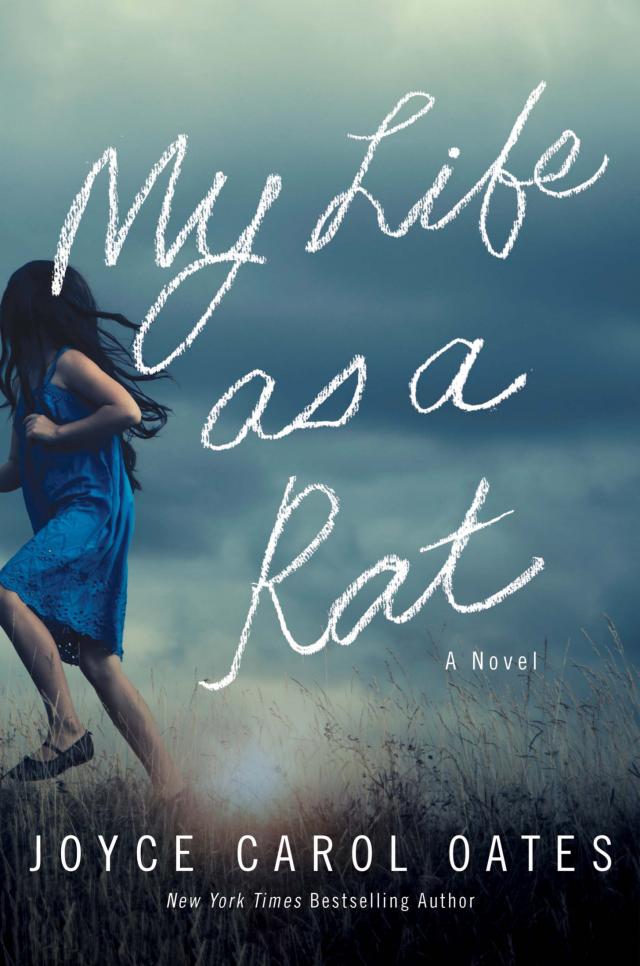
My Life as a Rat,
p.30


Wanting to ask my sister—But do you think Daddy would have forgiven me? Eventually? But no, of course I won’t ask.
IT IS TRUE, I AM FRIGHTENED OF SEEING MY MOTHER AFTER SO many years.
Last glimpse I’d had of Mom she was walking away from me in the “safe house.” Drugged and unsteady on her feet but determined to escape me.
Hard to avoid acknowledging the fact that my mother had abandoned me. Made me into an orphan. Why?
She’d loved your brothers more. No—she’d loved your father more.
Like a memory of having been poisoned by something you’d eaten. Barely managed to survive. And yet—here is the food again . . . And you are hungry.
But Katie has assured me: Mom wants to see me, this will not be an unpleasant surprise to her.
Our grandfather’s funeral had been too soon. They wouldn’t have been ready to see me yet, Katie says. But now . . .
And yet: I am shivering with anticipation, that somehow in her medicated state, distraught or depressed from Daddy’s death, Mom will not remember that this visit has been planned, that I am in South Niagara staying with Katie.
Or, Mom may remember. But may have changed her mind about seeing me again.
Rat-girl! You.
Driving to the new address that is only a few blocks from our old house I am making a conscious decision not to drive by 388 Black Rock on the way. The house in which I’d lived for twelve years. The only house I remember, deep-imprinted in my soul.
Better not. Not now. Another day.
For on Black Rock Street I will see—again—the dead end, the uncultivated land, dirt paths leading to the edge above the rushing Niagara River.
The scrubby-wooded area where my brothers buried the baseball bat. Where they’d buried the murdered black boy, kicked dirt and leaves over him in his shallow grave . . .
In some of my confused dreams, this was so. The murdered boy buried with the baseball bat in a shallow grave.
In another dream, I’d seen my brothers kick other things into the grave—broken bicycle, a baseball cap . . .
Have to shake my head, to dislodge these phantasmal memories. So many years haunted, I am not always sure what is real, and what is not-real; what I have seen with my own eyes, and what I have imagined might have been by my eyes if I’d been in the right place at the right time.
Oh!—here is the “new” house. As the family calls it.
A mild shock, the house at 111 Harrison Street is considerably smaller than my parents’ old house, more ordinary, even run-down, though also shingled wood-frame painted gray, on a smaller lot.
Just a stoop at the front. No real second floor except what appears to be an attic room beneath a peaked roof. (Where Lionel is living?) One of numerous post-war houses cheap-built as Daddy would say with a sneer, along streets like Harrison.
Probably my father repainted this house, did some repairs. With a mortgage he’d bought it as a temporary measure, deeply in debt from lawyers’ bills. Must’ve pained Jerome Kerrigan to live here, a man who’d taken such pride in maintaining his property.
Badly cracked asphalt driveway is so narrow, you’d hardly imagine that a full-sized car could drive on it. A blighted elm, most of the tree removed, only a trunk remaining in the front yard.
In a working-class neighborhood it had seemed crucial to mark small distinctions. Black Rock Street with a row of houses overlooking the Niagara River was acknowledged to be a superior place to live set beside lesser streets like Harrison. See what I have done for my family—a father’s statement of pride.
So nervous, I have been sitting for several minutes in the car parked at the curb trying to summoning my courage. It’s as if the outer layer of my skin has been peeled away. I have not told Tyrell Jones much about my life, nor has Tyrell asked me though yes, he does know who I am. Impossible to have grown up in Port Oriskany without being familiar with the name Kerrigan. But I’d told him that my father had died suddenly, I had to depart at once for South Niagara and so—would he take Brindle home with him for a while?—and without hesitation he’d said yes. Of course.
Tyrell also said Whatever happens, Violet—there will be some logic to it.
Logic! I want to believe this.
My wish is to live a life in which emotions come slowly as clouds on a calm day. You see the approach, you contemplate the beauty of the cloud, you observe it passing, you let it go. You do not dwell upon what you have seen, you do not regret it. You are content to understand that the identical cloud will never come again, no matter how beautiful, unique. You do not weep at its loss.
RINGING THE FRONT DOORBELL IN A STATE OF SUCH ANXIETY, I am (absurdly) relieved when no one answers. I am carrying a red climber rose for my mother’s garden, gripped in my arms against my chest like a shield.
Katie has told me, probably Mom will be in her garden. If no one answers the door just go around to the back.
Mom had chemotherapy yesterday. She will be feeling the effects today. One of our young cousins is staying with her, looking after her until Katie can come over in the late afternoon.
Strange, unnerving, to walk around to the back of the little wood frame house at 111 Harrison Street which I have never seen before. Underfoot the grass is scruffy, gone partly to seed. All of the blinds at the windows have been pulled down. How like trespassing this feels, in a fairy tale in which the clueless young girl blunders into the forbidden and will regret it.
A mild shock, turning a corner of the house, and there is an ordinary backyard, a small plot of tilled soil, a few flowering plants, shrubs, and there, in splotched sunshine, seated in a canvas lawn chair with a straw hat partly covering her face—an older woman in loose-fitting clothes with white skin, delicate features like a smudged watercolor. My mother?
“Mom?—hello . . .”
Here is the true shock: my mother stares at me blinking rapidly, without seeming to recognize me. Then she smiles, stiffly.
“Mom? It’s Violet. I—I’m visiting Katie.”
Swallowing hard, for this is awkward. (Should I come to my mother, to embrace her? Take her hand? Kiss her? I am carrying the rosebush in my arms, and will set it down at her feet.)
“I—maybe Katie told you?—I’m staying with Katie at her place for—a few nights.”
My mother is beautiful!—that is my first impression.
Her skin seems translucent. Her mouth is thinner than I recall, but touched with lipstick, lightly. In the shadow of the straw hat, her eyes are large, luminous.
“Mom? It’s Violet.”
The thought occurs to me—She doesn’t know who I am.
“Aunt Lula? You have a visitor.”
A strapping big-thighed girl in bib overalls hurries out of the house to facilitate the visit. Evidently she is my cousin Trix whom I scarcely recall as a little girl, and Trix is trained as a nurse’s aide, staying with Aunt Lula whenever she’s needed.
“Aunt Lula? Look: somebody’s brought you a present.”
Foolishly I stammer there are more rosebushes in the car . . . for Mom’s garden.
Determined not to burst into tears and yet within a few seconds, I am weeping uncontrollably.
“Oh hey, Vi’let—it’s OK. Your mom is doing really well, there’s nothing to be sad about. Aunt Lula? See who’s here? It’s ‘Violet.’”
My mother has continued to stare at me, with an expression of slow-dawning recognition. Her voice is hoarse and near-inaudible: “‘Violet’—?”
My mother is not exactly welcoming me but neither is she turning away from me in repugnance.
Probably, her memory has been affected by the chemotherapy. Though Katie has prepared her for my visit, she seems to have forgotten.
“‘Vio-let’?”
Of course, I too am changed. Changed enormously. Can’t even remember what I must have looked like, when my mother last saw me.
Twenty-seven years old! Not a girl any longer.
I am stooping to embrace my mother in the chair, awkwardly. I see that her eyes are grotesquely bloodshot. Her skin is unnaturally pale, brittle-looking as if it might disintegrate to the touch. Beneath the wide-brimmed straw hat, that gives her a quasi-glamorous look, the strawberry blond wig is slightly askew.
“Oh, Mom! I am so sorry.”
How natural it seems, to apologize. Always, the easiest recourse.
An effort for Mom to lift her arms but she manages to lift her arms. Awkwardly I am crouched above her, trying to hug her without hurting her. Such frail arms! Such a frail body! Lula had once been fleshy, comforting in her ample breasts, hips; now I am concerned that I may bruise her.
“Violet. Hello . . .” Still Mom seems uncertain about me, who I am or why I am here. Her voice is scratchy, barely audible. But she is alert to the fact of the red climber roses, a gift. “These are pretty! Thank you.”
“For your garden, Mom. I’ll help you put it in.”
I am wondering if, with her bloodied eyes, Mom can even see the little roses clearly. She grips my wrist to steady herself.
Mom is wearing a loose-fitting sweater and slacks, bedroom slippers on thin white feet. A chemical odor wafts from her body, pinching my nostrils. Seen close up the strawberry blond wig is obviously synthetic; a human-hair wig would have cost a thousand dollars. But I don’t doubt that Daddy was deceived by this wig, or wished to be deceived.
I am wishing that Katie had warned me about the bloodshot eyes. Broken capillaries from the chemo, must be. And the pungent odor! I am close to gagging.
Seeing that I am distracted, shaky, tears running down my cheeks, my nurse’s-aide cousin Trix shoves a box of tissues at me. Offers me a glass of grapefruit juice—“Your mom loves this and it’s good for her, not too much sugar.” Drags another lawn chair over for me to sit in, close by my mother.
Daringly, I take one of Mom’s hands. Thin, cool, papery skin, veins visible through the skin, and no rings—this is not a hand I have ever seen before. And so soft.
No rings, her fingers are too thin. I wonder if she misses them. If she will ever wear them again.
“Oh, Mom. Gosh . . .”
No words but inane words. At such times, words stumble and fade, fail us.
Mom manages to squeeze my hand in return, weakly. Though (possibly) she isn’t altogether certain who I am, why I am here, what is happening, she behaves with a woman’s natural instinct for what is expected of her.
Squinting at me: “Are you staying long? Do you live here now?”
Interpreting—Are you the one who is staying here long? Are you the one who is living here now?
I am not sure how long I am staying. A week? Two weeks? How long will I be welcome?
I tell my mother that I don’t live in South Niagara just now. I am living temporarily in Mohawk, New York. Finishing college at last.
I would tell Mom more—why it has taken me so long to complete college, what I am studying and what I hope to do after college—but she has become agitated suddenly.
“Is Katie here? Where is Katie?”—Mom glances about worriedly.
“Katie is not here right now, Mom. Katie is coming over later.”
“Why isn’t Katie here? I thought—they said . . .”
But I am here. I am Violet. I am here with you now.
“. . . they were going to bring Dad. Katie was. He’s there now, he has his own floor of the house. You know how your dad takes over,” Mom says with a breathless little laugh, tugging at my wrist as if trying to pull herself up, or to pull me down. “Anyplace he is, he just—takes over . . . They gave him his own truck, at work. He never took orders from anybody.”
Excitedly Mom is gesturing with her hand in the direction of the street. Does Katie live in that direction?
I am wondering why Katie hadn’t warned me that Mom doesn’t seem to know that Daddy has died. Or maybe it is painful knowledge that waxes and wanes and she has lost the strength to maintain this knowledge for now.
Tomorrow, I will visit our father’s grave in the cemetery at St. Matthew’s. Katie has offered to come with me but I think I will go alone.
Katie has said that our brother Rick calls Mom each Sunday evening. He’d had a bad spell with drugs after high school but went into rehab, now he’s a counselor at a rehab facility in Boise, Idaho. Our brother Les seems to have disappeared for the time being: he’d been living in Buffalo, working in a small parts factory, married, two young children, then in the process of a divorce he disappeared without notifying anyone and might not even know that Daddy has died, Mom has had cancer.
Of course, Miriam calls all the time. Visits when she can, from Albany.
And then there’s Violet Rue. Where has Violet Rue been!
Of the seven Kerrigan children only Katie remains in South Niagara. Years ago she’d wanted desperately to leave but had not left, remained in South Niagara because of our mother and now it looks as if she will never leave, she has said.
How like a gigantic tree, a family. No matter if the tree is badly damaged, beginning to die and to rot, roots are entangled underground, inextricably.
As Mom and I struggle to speak together, faltering, lapsing into silence and beginning again, our cousin Trix has been hovering nearby. Watching my face, gauging my emotions like a trained professional.
(Does she expect me to faint? Burst into tears again, like an overgrown child? Strange to see a younger cousin regarding me like a medical worker.) Seeing that Mom and I are doing reasonably well Trix offers to bring the other rosebushes from my car and trots off—breaking into an elated run—eager to exercise her strong, muscled legs.
Husky girl in her early twenties with a big easy smile, a thick ponytail bouncing behind as she runs. Badly I wish to know Trix, to have known Trix as she was growing up. One of many cousins! I have lost all my cousins. I have virtually no family. It is my fault almost entirely—I might have tried harder to keep them even when they’d rejected me.
Feeling a stab of guilt, how I’d taken Aunt Irma for granted. I vow: I will call Irma, visit her soon. I will behave in a way to allow her husband Oscar to know that whatever took place between us, or did not quite take place, I’ve forgotten, forgiven.
“Aunt Lula, look! Gorgeous roses for you.”
Trix has returned with the other bushes which she sets down in front of my mother.
“Oh, thank you! Are these from—?” Mom glances about, uncertain. In the fog of her confusion she yet retains a wifely, motherly instinct for not wishing to hurt anyone’s feelings.
“From Violet, Aunt Lula. You know—Violet.”
“From me, Mom. For your garden.”
Now, we have something to talk about. Something to look at, to regard together, to admire. And I can identify the roses for my mother. The red climber rose is Dublin Bay. The yellow rose is King’s Ransom. The exquisite pale pink/lavender rose is Sapphire.
While Mom looks on blinking and smiling Trix and I plant the rosebushes in her garden. The soil is moist, dark, almost bare of weeds; obviously, someone has been helping my mother with the garden which is flourishing with bright-colored zinnias, dahlias, delicate coneflowers, marigolds, bachelor’s buttons as well as several rosebushes in reasonably healthy condition.
“Remember, Mom? Those Japanese beetles that used to eat your roses?”—the memory returns to me, with a flood of childish nostalgia.
But Mom doesn’t seem to hear. She is looking tired now, her eyelids flutter and droop. It is all that she can do to keep awake, observing Trix and me digging holes with a shovel and a hoe, setting the rosebushes carefully in place, watering the roots, covering the roots with soil. Exhilarating to work with Trix, my so-capable cousin.
How grateful I am for the beauty of flowers. Thank God for beauty, a balm to the soul.
Trix goes away, returns with more grapefruit juice. Mom makes an effort to drink but her hand shakes, she spills some of the liquid onto the front of her smock, which I dab with a tissue. Mom laughs, and reaches for my hand. Impulsively, she kisses it.
“Well. Here you are—‘Violet Rue.’ Why did you take so long?”
Forgiveness
VIOLET. HELLO.”
Lionel’s voice is cracked, hoarse. In prison he’d injured himself, as prison medical records would state. Mysteriously crushing his larynx in an “accidental fall” in the way that, if you’d suspected that another man had injured your brother, whether another prisoner or a C.O., would seem to indicate that he’d been kicked in the throat, hard.
Of course, if that were so, if Lionel had been violently attacked in the prison, kicked repeatedly in the throat, possibly his assailant had even jumped on his throat as he lay on his back on the floor, intent upon crushing every bone in his throat, Lionel would not have told authorities about the assault. In prison you dare not snitch. You dare not rat.
“Lionel! Hi.”
Shyly you take your brother’s big-knuckled hand which is extended not to you exactly but toward you, guardedly. As if, if your hand recoils from his, Lionel is prepared to quickly draw back his hand, too.
Cold fingers, somewhat stiff, unyielding. You can feel the wariness in your brother’s body as you’d feel in an animal that is tensing before leaping away. Or leaping at you.
Shy with your brother whom you have not seen in more than thirteen years.
Yet eagerly you stare at each other. Strangers trying to see in the face of the other a trace, a clue, explaining the connection between you.
Lionel seems to be mystified that your hair isn’t the color he’d expected—yet, now that he thinks about it, he can’t seem to recall the color of your hair when you were a girl.
Like his own, you tell him. More or less.
His own?—Lionel touches his hair, his close-cropped head. As if he can’t recall the color of his hair, either. You would describe it as wheat-colored, light brown. Not a remarkable color. Not darkly dramatic like your father’s hair before it had become threaded with gray. Not strawberry blond like your mother’s hair when she’d been young.
Mild panic in Lionel’s eyes. Unless you are imagining it.
No doubt, there is a glisten of mild panic in your eyes.
Are we really doing this? Are we really—here?