My life as a rat, p.33
My Life as a Rat,
p.33


Any of the Kerrigans. Any of the white people you’d known.
Though not your grandfather Kerrigan, he’d have uttered a harsher term . . .
Might be best to drive a little farther, if you don’t see Howard then make a U-turn. Not much traffic on Delahunt at this time of day.
At last, you see a sign for Howard Street—you think. But closer up, you see Powell.
Finally at the city limit you make a U-turn in the road, return. But this time you have no better luck. The Honda Civic is an economy car without a tracking system. Your cell phone is a rudimentary model—only just a phone. You feel shy about turning onto one of these streets where small bungalow-type houses are set in surprisingly large lots, at the edge of the city.
In the western sky the sun has spilled out at the horizon, a pale orange-red, slowly, then rapidly fading behind hills. Dusk.
Not an ideal time to be driving any distance. As Katie has warned you.
On Delahunt there appear to be no street lights. On the small side streets you aren’t sure.
A convenience store, at a corner. You could go inside, inquire about Howard Street.
But you hesitate, you drive past. And now a gas station—is it open? No? Seeing belatedly that it appears to be open though the interior is dimly lighted . . .
At last you catch sight of a street sign—Howard.
No wonder you’d missed it, the sign is turned sideways.
And now, driving slowly along Howard Street. Blocks of small woodframe houses. Howard Street is paved but badly potholed. Vehicles parked on both sides make driving difficult. Without lights house numbers are indistinct. And not all houses seem to have numbers. You are squinting to make out numerals on mailboxes. Beside doors. Forty-four? Eighty-eight?
It is late, you should have come earlier. Should have come yesterday. Still shaken from your brother’s assault, not thinking clearly. Not seeing clearly.
Beginning to feel panicked. No idea where you are.
But yes, you know where you are. Just no idea where Ethel Johnson’s house is.
Approaching a more populated neighborhood. The large scrubby yards have vanished. Brownstone row houses built close to the curb. Trashcans at the curb. Vehicles parked close together in the street.
You are disappointed, you have long imagined Hadrian Johnson’s house standing by itself. Ethel Johnson whom you’d seen on TV, for whom you’d felt great sympathy, living in a house of her own. With maybe a garden behind it—hollyhocks, wild climber roses, morning glories. Receiving the Valentines you’d sent, puzzled, but smiling, as she opens the oversized envelope, examines the Valentine so obviously handmade with care, tenderness . . .
Stopping the car at one of the rowhouses. But the numeral beside the door appears to be twenty-one, not twenty-nine . . .
You are startled by a knock on the window beside the passenger’s seat. You lower the window, a young woman peers inside, asks what sounds like Can I help you?
You tell her, you are looking for Ethel Johnson. Who lives, or used to live, at twenty-nine Howard.
The woman doesn’t hear you, you must repeat your question. Your voice is faint, hopeful. Apologetic.
In your white skin, confronting this stranger. Of course you are apologetic, it is a tic like your brother ending each remark with OK.
Your jaw has begun to ache, speaking in a normal voice is painful. Your eyes are aching too, the vision in both eyes has blurred.
The young woman can’t help you, it seems. Doesn’t seem to know where twenty-nine Howard Street might be, unless she hasn’t heard you clearly.
Awkwardly you manage to turn the Honda Civic around in the narrow street, drive back in the direction of Delahunt, slowly, leaning over the steering wheel, peering at house numbers. Oncoming headlights are blinding. It is too late! Too dark! What a bad idea this is. Brake your car, back up to let another driver through the narrow street, with excruciating slowness.
Hoping that he won’t scrape the side of your vehicle. For you have no business here, on Howard Street.
Like dirty water the futility of the search washes over you. Never will you share with Tyrell Jones the logic of this naïve quest.
At last! On one of the dour narrow brownstones built only a few feet from curb is the numeral twenty-nine. To your disappointment the house is darkened.
“Oh. God damn.”
Still, you get out of the car. You knock on the door. As if you might entice whoever is inside, hiding in darkness, to declare herself to you.
Elsewhere on the block is the glow of warm lights within houses, mysterious lives. Drumming music, TV voices uplifted. More headlights threading their slow way along the narrow street.
Another driver, a woman, having parked her car in a nearby driveway, sees you on the front step of the rowhouse and approaches you. For a confused moment you think that she might be the friendly woman from the Greyhound bus, the woman whose concern for you made you cry, then you recall that Sarabeth lived in Port Oriskany. This woman is no one you know and she is much younger than Sarabeth and not smiling as Sarabeth would smile.
“Ma’am? You’re looking lost, can I help you?”
“Yes, thank you! I’m looking for Ethel Johnson.”
“Who?”
“Mrs. Johnson? Ethel? She used to live here . . . twenty-nine Howard Street.”
Smiling so hard, your face aches. The woman stares at you, frowning.
You repeat your awkward query. You consider uttering the name Hadrian Johnson—but do not.
Politely the woman asks if you are from the—(you can’t decipher the word, perhaps a proper name)—you tell her, “I don’t think so. No.”
No idea how to identify yourself. No idea really why you are here in this neighborhood you know nothing about and where no one knows you. Your head is wracked in pain, your knees are shaky. You cannot—quite—absorb what it means that this very day you were beaten, kicked. Cursed. And if you were to meet Hadrian Johnson’s mother Ethel, what could you possibly say to her?
So many cards you’d written to her, and thrown away. Perhaps that is best, to write, and throw away. Your yearning, your inexpressible longing. Maybe best, to spare the murdered boy’s mother a reminder of her loss, after so many years.
The woman repeats her question asking if you are from the people Mrs. Johnson worked for and this time you understand: your white skin signals that you are looking for an employee of your family, a cleaning woman perhaps.
Not a friend, an employee. You feel a wave of shame, the woman has judged you by the color of your skin.
Of course it’s a reasonable assumption. You understand.
You tell the woman no, you are not from that family. You thank her and tell her that you will come back another time to see Mrs. Johnson. N Nothing important, just—wanting to say hello.
Return to your car, you’ve left the key in the ignition and the motor running. Not thinking clearly. Take care, you can have an accident easily in such a state.
Behind you on the sidewalk the woman remains, watching as you drive away. She has been more curious about you than suspicious. She has not been unfriendly—exactly. In the rear view mirror you see her figure retreating until it has vanished in the darkness of Howard Street and you’ve returned to Delahunt where there are tall street lights and you can breathe more deeply.
Next time you are in South Niagara you will do better, you promise yourself. You will knock on Ethel Johnson’s door in the daylight, and you will introduce yourself.
Just hello.
Home
IN THE HONDA CIVIC, HEADED EAST TOWARD THE THRUWAY. Buoyed by waves of relief so intense it feels like happiness.
At last headed back to Mohawk. Home.
Night isn’t an ideal time to be starting off on a drive of several hours by yourself but you are eager to escape South Niagara. The air feels oppressive here, difficult to breathe. So close you’d come to being murdered in this place, kicked into insensibility. And maybe, as a parting gesture, your brother would have set his foot upon your exposed throat as you lay helpless on the ground, pressing down, grinding down, exactly as someone had done to him.
The joy of silencing another, forever!—you have never felt such joy but you have come to understand it, in others.
Is it true, as you’ve promised your sister, that you will return to South Niagara, soon? To see your mother, and to see Katie? To see where your father is buried in the hilly cemetery behind St. Matthew’s Church?
No. You will never return.
But—yes. Maybe.
Never say never. A frequent remark of your father’s, of the nature of What goes around comes around. An old boxing adage, you think.
You do want to see Katie again. You do want to see your mother . . . You are not so certain about visiting the cemetery, in fact. He never forgave you, he was not ever going to forgive you, that was his prerogative.
But yes, you would like to drive along Howard Street, in daylight.
AT THE ENTRANCE TO THE THRUWAY YOU STOP TO CALL TYRELL Jones on your cell phone.
Clutch of panic, the phone might have lost its power. Or, worse—there is no such number.
Your relationship with Tyrell Jones is so mysterious to you, so forged in inexpressible yearning, silences and ellipses—in uncertain moments you wonder if it is real, and not a dream. You wonder if, away from you, Tyrell Jones feels the same way.
The need you have of him. The hunger.
As the damned little dog has of you. Might as well admit it.
Hearing the phone ring at the other end. Biting your lower lip in anguish, that the might not be answered . . .
He will see your caller I.D. It is the man’s prerogative, to answer, or not answer.
Then, you hear Tyrell’s voice. For an instant you are unable to speak, there is a tight band around your chest.
“Violet? Hey. H’llo.”
“Hello . . .”
“Where are you? What has happened?”—Tyrell’s voice is clear and assertive. It is always a surprise to you, to hear this adult voice over the phone, so different from your own, hesitant voice.
You tell Tyrell that your visit home has not gone so well as you’d hoped, and you are returning to Mohawk early. Quickly you speak, briskly enough, so that Tyrell doesn’t ask why.
You have not told Tyrell much about your background. All that he knows of the Kerrigans has little to do with you. He has never asked you about your family. He has never asked you about your (notorious) brothers. He could have no idea that one of them had been released from prison, still less that this brother might be living with your mother, and that there was a likelihood of your encountering him.
Tyrell asks when you estimate you will be home and you tell him—you hope before midnight.
He will wait up for you of course. He is bringing take-out Chinese food home, he will make sure there is enough for you.
Close to the edge. Close to tears. You feel your throat ache, as if someone had kicked you there. I love you. Forgive me. All of us—forgive us.
Such a declaration would only embarrass Tyrell. No possible way he could reply to it.
Seeing how he looks at you sometimes, with what bemused affection, you wonder if Tyrell understands you as you have never dared to suppose another person might understand you. As if you stood before him naked, in the illusion of being fully clothed.
Tyrell has fashioned himself into a professor of American history, after all. He is much altered from the shy tongue-tied high school boy terrorized by the white-devil math teacher. He has brilliantly triumphed over that devil, and has moved on. Shrewd, crafty, if it is revenge Tyrell Jones requires, this is the perfect revenge: knowledge. Not emotion, not the waywardness of desire, or the ecstatic joy of violence, but rather knowledge, and the power of knowledge.
Now, you must move on. Your old, wounded life, the perverse pride in your scarred face, you must surrender.
You have lost the thread of what you’ve been saying. This hurried conversation in your car, by the Thruway entrance at dusk, as a succession of headlights glides over you like rippling water, is domestic, pragmatic. Yes, before midnight. If all goes well. And yes, Chinese food will be perfect. You are weak with gratitude. You are close to tears. Tyrell, protective by instinct, is quick to assure you that it’s wonderful news you are returning home sooner than you’d planned—“Brindle has been pining for you.”
Acknowledgments
In its earliest form, My Life as a Rat appeared as a short story titled “Curly Red” in Harper’s Magazine (2003), which was reprinted in the collection I Am No One You Know (Ecco, 2004). Other sections have appeared, in slightly different forms, in Narrative, Boulevard, and F(r)iction.
About the Author
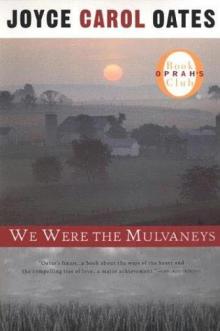
JOYCE CAROL OATES is a recipient of the National Humanities Medal, the National Book Critics Circle Ivan Sandrof Lifetime Achievement Award, the National Book Award, and the PEN/Malamud Award for Excellence in the Short Story. She is also the recipient of the 2018 Los Angeles Times Mystery/Thriller Award for A Book of American Martyrs and the 2019 recipient of the Jerusalem Prize for the Freedom of the Individual in Society. She has written some of the most enduring fiction of our time, including the national bestsellers We Were the Mulvaneys; Blonde, which was nominated for the National Book Award; and the New York Times bestseller The Falls, which won the 2005 Prix Femina. She is the Roger S. Berlind ’52 Professor in the Humanities Emeritus at Princeton University and has been a member of the American Academy of Arts and Letters since 1978.
Discover great authors, exclusive offers, and more at hc.com.
Also by Joyce Carol Oates
Novels By Joyce Carol Oates
With Shuddering Fall (1964)
A Garden of Earthly Delights (1967)
Expensive People (1968)
them (1969)
Wonderland (1971)
Do with Me What You Will (1973)
The Assassins (1975)
Childwold (1976)
Son of the Morning (1978)
Unholy Loves (1979)
Bellefleur (1980)
Angel of Light (1981)
A Bloodsmoor Romance (1982)
Mysteries of Winterthurn (1984)
Solstice (1985)
Marya: A Life (1986)
You Must Remember This (1987)
American Appetites (1989)
Because It Is Bitter, and Because It Is My Heart (1990)
Black Water (1992)
Foxfire: Confessions of a Girl Gang (1993)
What I Lived For (1994)
Zombie (1995)
We Were the Mulvaneys (1996)
Man Crazy (1997)
My Heart Laid Bare (1998)
Broke Heart Blues (1999)
Blonde (2000)
Middle Age: A Romance (2001)
I’ll Take You There (2002)
The Tattooed Girl (2003)
The Falls (2004)
Missing Mom (2005)
Black Girl / White Girl (2006)
The Gravedigger’s Daughter (2007)
My Sister, My Love (2008)
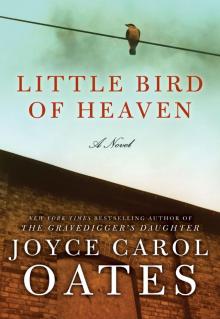
Little Bird of Heaven (2009)
Mudwoman (2012)
The Accursed (2013)
Carthage (2014)
The Sacrifice (2015)
A Book of American Martyrs (2017)
Hazards of Time Travel (2018)
Copyright
This is a work of fiction. Names, characters, places, and incidents are products of the author’s imagination or are used fictitiously and are not to be construed as real. Any resemblance to actual events, locales, organizations, or persons, living or dead, is entirely coincidental.
MY LIFE AS A RAT. Copyright © 2019 by The Ontario Review, Inc. All rights reserved under International and Pan-American Copyright Conventions. By payment of the required fees, you have been granted the nonexclusive, nontransferable right to access and read the text of this e-book on-screen. No part of this text may be reproduced, transmitted, downloaded, decompiled, reverse-engineered, or stored in or introduced into any information storage and retrieval system, in any form or by any means, whether electronic or mechanical, now known or hereafter invented, without the express written permission of HarperCollins e-books.
FIRST EDITION
Cover design by Rebecca Lown
Cover photograph by © Karina Vegas/Arcangel
Digital Edition JUNE 2019 ISBN: 978-0-06-289990-3
Version 04262019
Print ISBN: 978-0-06-289983-5
About the Publisher
Australia
HarperCollins Publishers Australia Pty. Ltd.
Level 13, 201 Elizabeth Street
Sydney, NSW 2000, Australia
www.harpercollins.com.au
Canada
HarperCollins Publishers Ltd
Bay Adelaide Centre, East Tower
22 Adelaide Street West, 41st Floor
Toronto, Ontario, Canada
M5H 4E3
www.harpercollins.ca
India
HarperCollins India
A 75, Sector 57
Noida
Uttar Pradesh 201 301
www.harpercollins.co.in
New Zealand
HarperCollins Publishers New Zealand
Unit D1, 63 Apollo Drive
Rosedale 0632
Auckland, New Zealand
www.harpercollins.co.nz
United Kingdom
HarperCollins Publishers Ltd.
1 London Bridge Street
London SE1 9GF, UK
www.harpercollins.co.uk
United States
HarperCollins Publishers Inc.
195 Broadway
New York, NY 10007
www.harpercollins.com
Joyce Carol Oates, My Life as a Rat