Scarlet carnation a nove.., p.19
Scarlet Carnation: A Novel,
p.19


They are in your hands, Lord. They are in your hands.
Her tears ran out, and she wiped her eyes. She found Willie and then her mother to deliver the good news. Together they could celebrate the joy set in the middle of this painful day. They’d saved their home on the day their sons were leaving to fight for their country.
CHAPTER 19
MAY
July 1917
“Sit with me,” Nana Lisbeth directed.
May joined her grandmother at the dining room table.
“You are troubled?” Nana Lisbeth proclaimed, more of a statement than a question.
May nodded.
“About John returning to your life?” Nana Lisbeth confirmed.
May nodded again. Tears stung her eyes, and she blinked them away. For days she’d seesawed back and forth. Each time she landed on a decision she questioned it.
May replied, “Two years ago he was everything I ever dreamed of; it seemed the height of sophistication to marry a college professor.”
“And now?” Nana Lisbeth wondered.
“I’m a jumble of uncertainty,” May replied. “How can I know less when I’ve lived more?”
Kay Lynn toddled to her and raised her arms, wordlessly asking to climb onto her mother’s lap. May smiled at her daughter and lifted her into her arms. She kissed the top of the little girl’s head and rubbed her silky hair.
“You are asking yourself what is best for her?” Nana Lisbeth suggested.
May nodded. “How do I know? Marin is supposed to be lovely—country living near the city. It used to seem close to Oakland. But with Momma sick, it’s too far. She might not . . .” May left the unthinkable sentiment unsaid, but her heart clenched tight at the thought of her mother’s death. It was too much to bear.
“You make the best choice for you and Kay Lynn,” Nana Lisbeth declared. “Your mother and I will be fine with whatever happens. Do you understand?”
May nodded but that didn’t suddenly give her clarity. “I wish someone else could make this decision for me—and Kay Lynn.”
“There are some choices we can only make for ourselves. And we make them without fully understanding the repercussions. I find when I sit quietly in prayer, there is a still, small voice that tells me what I truly want. Not what I should want, but somehow the right choice for me. Learn to trust that voice,” Nana Lisbeth said.
“Do you think that is God talking?” May asked.
Nana Lisbeth shrugged. “I’m enough of a Unitarian that I’m not certain—nor do I care. Is it my own intuition? Is it the voice of God? As you just said, the more I’ve lived the less certain I’ve become. Does it matter what we call it? In another language or religion it has a different name, but I have learned to rely on it, whatever it is.”
“I have agreed to visit San Rafael on Tuesday. At least I can see Marin County and my future home before I decide,” May said. Her heart clenched. “You would never move there, would you?”
Nana Lisbeth sighed. “I will visit you and Kay Lynn.” She smiled at her great-granddaughter. “But no, I would not move across the bay, so far from home, but that doesn’t mean it’s a mistake for you.”
“But Momma . . . ,” May questioned.
“When she’s better, your Momma might join you,” Nana Lisbeth said.
“But . . .”
“Diana will come. She has told me she will move here anytime we ask. Others can cover her work at the produce market.”
May nodded. Of course her Aunt Diana would do whatever was necessary to take care of family.
Nana Lisbeth said, “I believe you need to have another conversation before you make a final decision.”
May pulled in her eyebrows in a silent question.
“Your mother,” Nana Lisbeth said. “Talk to Sadie. She had a terrible choice that affected your entire life’s course. Hear her out before you make this decision on Kay Lynn’s behalf.”
May’s heart raced. Nana Lisbeth was right, but she was scared about what she might learn. Would it reflect badly on her mother, her father, or both of them?
The pungent, earthy aroma from the warm cup of tea in May’s hand filled her nostrils even with a mask on. The Chinese herbalist had left a pouch filled with roots, bark, and pods after he treated Momma a few days before. They simmered the dark mixture in water, filling the house with this smell. Momma said it tasted horrid, but they told themselves her cough was improved, though it was difficult to know for certain. Momma wasn’t suddenly healed, but they still had hope it would cure her.
The open windows in the sickroom allowed in fresh air, the best remedy known to modern medicine. May set the cup on the bedside table and took Momma’s thin elbow to help her sit up. A coughing fit bent the sick woman forward. May rubbed her back, to comfort her soul and perhaps calm her lungs. When the fit stopped, Momma rested against the pillows and May sat on the edge of the mattress.
“Momma, will you tell me the story”—May’s voice shook as she asked—“about my father?”
May saw her mother take in a shaky breath. Her mother nodded and held up a hand. She wasn’t ready to talk—from the illness or perhaps a reluctance to tell May the truth.
Eventually she spoke in a raspy voice. “He had a temper. If I ever crossed him he stopped talking to me.”
May’s eyes watered and Momma stopped talking.
“Keep going,” May insisted.
“He tried to keep me away from my family. On occasion he would hit me,” Momma said, her voice even quieter.
May leaned in to listen, her chest clenched in dismay.
“After every anger fit, he would apologize. He always had an explanation and he insisted it would not happen again, but it did.
“I thought I simply needed to be kinder, more patient, more compliant. I could accept how he treated me.” Momma looked at May. She blinked her eyes and then hung her head. It seemed she was gathering her strength to say more.
“The day he turned against you . . .” Momma’s eyes got hard and she shook her head. “One day he held you out a second-story window, threatening to drop you if I didn’t obey him immediately. You were not yet a year old.”
May’s throat closed tight and her eyes opened wide. She swallowed hard.
“You know that I avoid Twelfth Street near Sam and Diana’s? I can point to the window where it happened. He was crazed, demanding that we move to Hawaii, where you and I would be trapped by him—even though the journey there was a risk to your health because you were so premature.”
Stunned, the horrific image of her own father holding her out of a window filled May’s imagination; she pushed it out of her mind.
“For years I lived in terror he would return to take you from me,” Momma whispered so quietly that May had to lean in to hear her. “When he didn’t come back or write, I despaired that he did not care to see you again.”
Silence filled the room. May sat upright to study her Momma’s face.
“I never found the strength to tell you,” Momma confessed, “though I always believed it was your right to know. What is the correct age to tell a little girl her father threatened to kill her? How was I supposed to inform you that your father abandoned you and never, not once, sent a letter asking about you? It was too easy to imagine your confusion and sorrow, and painfully difficult to contemplate disturbing you.”
Momma fell silent, panting from the exertion of speaking so much. May watched the gingham curtain flutter in the breeze. Her chest held back an explosion of feelings. Momma was right, this was devastating. In her imagination he’d been perfect, exactly what she desired in a father at any moment.
“I took the coward’s way.” Momma’s voice was weak. “Please believe me when I say I did it out of love and as a kindness.”
May’s eyes welled up.
Momma’s bird-thin hand rested on her arm. “Can you forgive me?”
“Yes, I can,” May replied. “I already have.” And she meant it. Losing the idea of her father had ceased to be important after facing the very real possibility of losing her actual mother.
“Truly?” Momma asked, yearning on her face.
“Momma,” May explained, “my situation, with John and Kay Lynn, has taught me that life is not as simple as I’d hoped. Hard times call for hard choices. How can I fault you for Heinrich’s decisions?”
May took in a deep breath and said, “Momma. I’m so sorry you . . . I can’t even imagine. The terror.”
Momma nodded. She closed her eyes. “Sometimes the image intrudes and I see you falling from his hands.” Momma bit her lip.
May took her Momma’s hand. “I didn’t; you protected me.”
Momma nodded.
“Thank you,” May said to her Momma, tears in both of their eyes. “For saving me. And for telling me the story.”
A newfound respect for her mother’s strength rose in May. Momma had fought to protect her daughter. May would as well. She didn’t yet know their best future, but she’d see what John was offering before deciding their fate.
CHAPTER 20
NAOMI
August 1917
The house was dark and quiet by the time Naomi returned from work. As it went with babies, she was never certain if she would return by six for supper or late into the night, like today.
She was exhausted and jittery, the strange combination that seemed to accompany those precarious labors that might end in a death. When the baby finally emerged he was blue and flaccid—not able to take a breath on his own. Naomi’s forceful exhalations right into his mouth eventually revived him. He might be slow for the rest of his life. Or his entry into the world might not leave a mark on him. Only time would tell.
Her stamina wasn’t helped by the fact that sleep was getting harder and harder to come by. Heat waves from the change of life woke her even on cold, foggy nights. Once she was awake she fretted about her sons’ well-being. Letters from Joseph and Cedric were of little comfort. Much could have changed between the time they wrote and when she read their words.
Naomi turned to prayers, but they weren’t always effective in relieving her burden. Gramma Jordan told her the change of life could go on for years. She’d have to learn to live with this somehow, but it seemed an unfair burden to face such an intrusive internal disruption in a time of family crisis.
Naomi smiled at the plate covered with a blue cloth napkin. Maggie had made sure she would come home to a good meal.
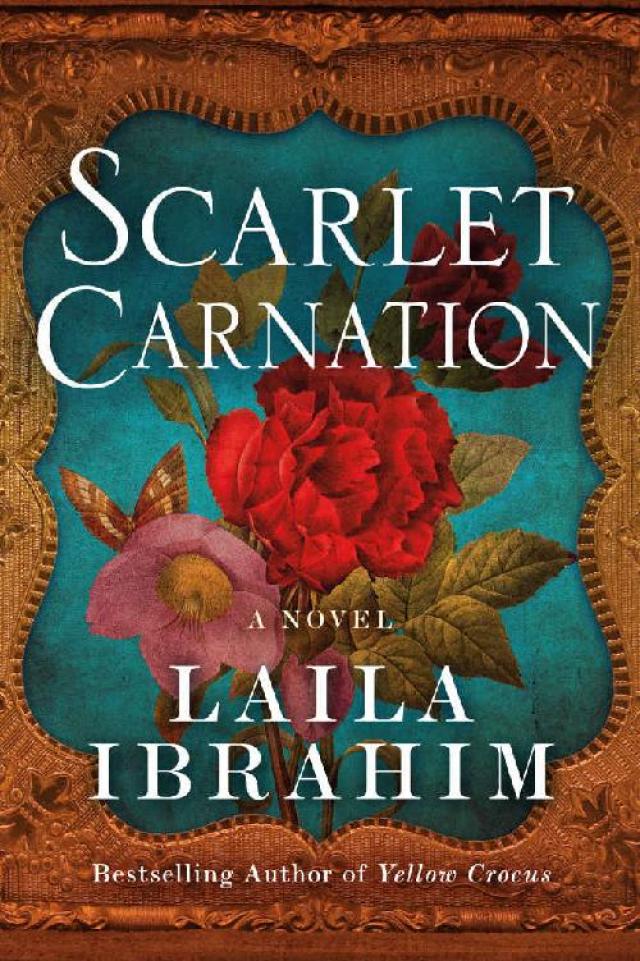
She unpinned the scarlet carnation from her uniform and placed it in the food scrap bin. It would be put on the pile outside and in time turn into nutrition for their garden. Like many mothers with a son in the war, Naomi pinned a scarlet carnation to her clothes each morning to broadcast her pride and fear.
She looked out the window as she washed up. It was a clear night, not something she could count on in August. She wished on the three stars that made up the handle of the Big Dipper: Keep Cedric and Joseph safe; Keep Cedric and Joseph safe; Keep Cedric and Joseph safe.
The evening paper sat unopened next to the plate. Willie was away for work and Maggie didn’t read it as she found the news depressing. Every day Naomi pored through the paper looking for names of dead and wounded soldiers stationed around the world, a terrifying and heartbreaking ritual. She began with a prayer that her sons would not be named and ended it by sending a blessing to the young men who were in the paper and their loved ones.
She also scanned every page, looking for any hints about the Negro troops. Most often she was rewarded with a sentence or two that told her where her sons were stationed or about their mission guarding the border with Mexico.
Naomi carried her plate and the newspaper to the dining room to eat with Joseph and Cedric. She opened the paper and her heart stopped cold at the headline.
RIOTING NEGRO TROOPS ORDERED FROM TEXAS
Her stomach clenched tight and her lungs contracted.
Dear God, Please protect my son.
She put her fork down and skimmed through the horrid account. The first paragraphs told her nothing about how Joseph might be faring. It explained that the Houston Chamber of Commerce had assured the War Department the Negro troops would be accorded respect, but trouble began on the day they arrived. Sixteen people were dead: thirteen white, one Mexican, and two Negro soldiers. Martial law was in place.
She scanned for one name: Joseph Smith. She flipped to page three and kept searching, her heart beating hard. A few names popped out, but not her son’s. She breathed out in relief, but then felt a small measure of shame. God bless the souls of those who died. And send your love to their families.
She returned to the front page and read more slowly about the simmering conflict the NAACP warned about before the troops arrived in Houston. On the third page, in the second column, she read of the tipping point as recounted by Major K. S. Snow, the commanding officer of the Negro battalion:
Thursday morning in Houston a police officer arrested a Negro woman and in doing so, I am informed, slapped her face. A soldier of the Twenty-Fourth, who had been drinking, remonstrated with the policeman for what he considers his unnecessary striking of her. The officer then began beating the soldier with his pistol.
The man’s face and head were badly cut by the pistol butt. He was arrested by the same officer and taken to the station, where he is now held.
Thursday afternoon, according to a report to me by Corporal Baltimore of my military police force, a soldier of my command was arrested by an officer. Corporal Baltimore, who was nearby wearing his military police badge, asked the policeman, purely for information, he says, about why the man was arrested.
The policeman told him it was none of his business. He then hit Corporal Baltimore on the head with his pistol butt. Corporal Baltimore ran up the street, the policeman firing at him as he fled. He took refuge in a house under a bed. The policeman followed, dragged him out, used further abusive language and struck him twice more with the pistol.
When the men in camp heard of these occurrences Thursday afternoon it excited them greatly and they made open threats of retaliation.
Naomi kept reading, nausea joining her pounding heart as she imagined the fear and pain of the scene. One hundred and fifty men were blamed for the violence. One hundred were arrested; fifty escaped. Was her Joseph one of them?
The pride of young men would be their undoing. They became so certain of their position that they harmed themselves in their own defense. She wanted to believe her Joseph would not have taken out his anger on innocent bystanders, but she knew he was as likely to go along with a crowd as anyone.
Her chin quivered. She heard a sound escape from her own chest. Naomi pressed her hand to her mouth, muffling herself, hoping to tamp down the emotion. She was tired from the long, hard birth and didn’t have the reserves to keep her feelings inside. Tears streamed down her face. She surrendered to the overwhelming emotions, letting the sobs come.
She felt a hand on her shoulder. Maggie stood at her side. Naomi pointed at the newspaper. Her daughter read the article, fear and sorrow overtaking her face as she read.
“Oh, Ma. We must pray for Joseph . . . for all of them,” Maggie said when she was finished. “He wouldn’t have . . . ?”
Naomi shrugged. Her tears had run out. “He would give his life to defend his friends; you know he would.”
“His name isn’t in the paper,” Maggie replied, wanting that to be the evidence Joseph was safe.
“There are two dead colored men and one hundred more arrested. Fifty are on the run. We don’t know any of their names.”
“What do we do?” Maggie asked.
“We do what too many women are doing right now. We wait and we pray.”
Dear God, watch over our sons. I pray Joseph is safe from harm.
Naomi repeated that prayer each time panic rose in her throat. Every few minutes throughout the day she caught herself imagining the worst. She’d take a deep breath, say her prayer, and keep going.
She combed through the paper the next day for any news that could relieve her fears. There was nothing about the Negro troops on the front page. On page eight a letter to the editor stated that due to the mutual animosity between Negroes and whites in the South they should be kept separate.
Fury built in Naomi. There was no recognition of the history borne by Negroes, nor of the obligation of the government to protect the dignity and freedom of the colored men fighting for the United States.
The Sunday paper reported that the men were sent to New Mexico to be court-martialed by the military though twenty-five hundred citizens of Houston signed a petition to the federal government demanding the soldiers not be removed from Houston. At church there were prayers and speculation, but not much more information. Two families received telegrams with the words: I AM FINE. Naomi wished Joseph had the means to send her such reassurances. She longed for a letter from him.
Monday evening she feared she would have an actual fit when she read in the Tribune that more colored troops were being sent to Houston.
“Ma,” Maggie said gently. “Are you certain it’s in your best interest to read the news? It seems to upset you greatly and not offer you any useful information.”
Naomi stared at her daughter. Maggie was correct; the news was more upsetting than reassuring, but if her son had to live through this trial, she was strong enough to be aware of it.
A week after she read about the troubles, a letter from Joseph arrived in the mail. Naomi’s heart leapt at the sight of her son’s bold script. Blood pounded through her temples as she tore open the letter she prayed was written since the conflict. Seven days was barely enough time for a letter to cross the nation.
Dear Ma and Pa,
I am fine.
Naomi closed her eyes, exhaled, and gave praise: Thank you, Lord. You are great. She sat at the table, wiped her eyes, and blinked until she could make out the words again.
Dear Ma and Pa,
I am fine. I cannot say the same for all of my fellow soldiers. I don’t have the luxury of going into detail. However, I want you to know the man who was arrested for defending the colored girl is an honorable person. The accounts say he was drunk, but he was not—only outraged at her treatment. He could not stand by and watch the abuse being rained upon her. Corporal Baltimore, the military police officer who inquired about the arrest, is the most fair, measured, and reliable man I have met. He feared for his very life even after he’d returned to our base.