Poison for breakfast, p.2
Poison for Breakfast,
p.2


This angered the eccentric woman, and she put a curse on the family, saying they wouldn’t get any work done until sundown. Sure enough, after the old woman left, the Emersons found that their doors and windows were impossible to open, and that their cries to their neighbors were apparently going unheard. They were trapped inside their home, unable to attend to their work or their plans for romance. When the sun went down, the curse was lifted, but Sally had missed her appointment with her young man, who left town without her. I always remember the last sentence—“She married Stephen Jones, as her parents had hoped”—a bewildering ending to a bewildering story.
I read all this in a book which claims that the story is true—although of course you can’t always believe what you read—but it is hard to say if it is more bewildering if the story actually happened or if someone made it up. Why would the woman, witch or not, be so angry at the family? “Come in and help yourself” is a remarkably generous response to a sudden request for breakfast, and the witch could have been enjoying
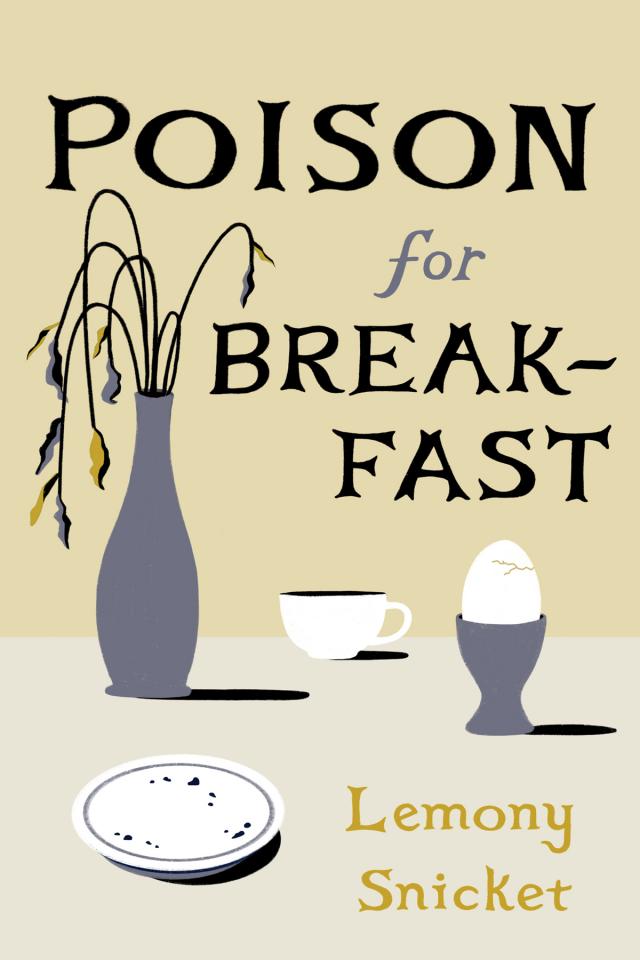
Tea
with honey,
a piece of toast
with cheese,
one sliced pear,
and an egg perfectly prepared,
in no time, but instead she put a curse on the Emersons. In most stories, witches put curses on people to teach them a lesson, but it seems unlikely to me that the family said, “Well, next time an old woman asks for breakfast, I suppose we’ll drop everything and get cooking.” Perhaps they even appreciated their time indoors, once they realized that they were truly stuck there, and enjoyed a quiet holiday from work, spending the day reading or teaming up to finish a jigsaw puzzle. Sally, of course, was probably not in the mood for such things, because her whole life had been ruined due to a missed appointment. But this is bewildering too. Sally’s suitor, whatever his name was, seems a bit impulsive, a word which here means “too quick to leave town just because Sally didn’t show up at a certain time.” So perhaps it was for the best that she missed her appointment and did not marry a man who did not even write Sally a note saying, “Sorry to have missed you, how about we try again tomorrow at the same time?” Perhaps her life wasn’t ruined at all. Perhaps Stephen Jones was not as dull as his name might suggest, and this was the beginning of a happy life for Sally Jones, née Emerson.
I stood looking at my breakfast dishes, clutching the scrap of paper and thinking of this story. “Née” is a French word which here means “born,” although it is also often used to refer to a woman’s first last name, in the event she changes it when she marries or flees from the law. This morning was née pleasant. Since breakfast it was fraught with danger. I looked at the words again, you had poison for breakfast, and although I knew, as you know, that you cannot believe everything you read, the ink on the paper seemed very believable to me. I had eaten poison for breakfast. Each moment I stood there staring at my scrap of paper was a moment closer to my death.
I did not want to die, of course. You are probably not looking forward to your own death either. It is likely that when you see death, real or imaginary, in the pages of a book or on a museum wall, projected on a screen or happening right in front of you, you think, Well, I hope that doesn’t happen to me. But it will, of course. We are all going to die. You might die when you are very young (nobody wants that) so people will say that it’s such a tragedy, you were so young when you died, or you might die when you are very old (supposedly, everybody wants this) so that they’ll say that it’s not such a tragedy because you were so old, or you might die somewhere in between, and people won’t know whether it’s a tragedy or not. You might die in a common accident, or in a remarkable one, remarkable enough that people who didn’t know you still want to hear all about it. You might die of a disease (again, a common one or a remarkable one) which might be very sudden or quite protracted, a word which here means that it goes on for far too long. You might be killed by another person, either by accident, which is tragic, or on purpose, which is sinister, or by an animal, in which case figuring out whether it was tragic or sinister might be impossible. It might happen by surprise, or you might have plenty of warning, although no matter how much warning you have it probably won’t seem like enough. It might happen late at night (burglary?) or the daytime (grease fire?), during a thunderstorm (puddle?) or a blizzard (toboggan?) or just a quiet breezy afternoon (old age, spoiled milk) in the middle of a celebration (trumpet, bad luck) or a swim meet (electrocution, jealousy), during a quiet evening at home (pneumonia, blanket) or a long drive in a tractor (revenge, cardboard box). Many, many more people have died than are living now, so when you die you will have something in common with the vast majority of human beings, but still it is as impossible to imagine as it is to avoid. You’ve probably tried to imagine it before, as I have, closing your eyes and lying still, the way you might imagine a food you’ve never eaten when you see it on a menu. But we do not know what it really tastes like.
It is easier to imagine our funerals. People will gather someplace, in a house of worship or at a cemetery or billiards parlor, and cry and carry on and offer their condolences, a fancy word for sad words that are only offered at funerals. Perhaps there will be a grand procession, which here means a kind of parade in celebration and grief. People might stand up and say kind things about us, and perhaps read out loud from books that seem meaningful or appropriate. Just last night I was reading a book containing passages which were read at funerals in ancient Egypt:
You have journeyed over rivers of millions and hundreds of thousands of millions of years. You sail over them in peace and steer your way over the watery abyss, which is the place that you love.
I have very little idea what it means, but it sounds lovely, and it’s nice to imagine people standing up and saying lovely things about me when I am gone, even if I might find the words bewildering if I weren’t.
One nice part of thinking about a funeral is imagining people wishing they’d been kinder to us when we were alive. “Why oh why didn’t I treat Lemony Snicket better?” I can almost hear them saying, over their very loud weeping, but of course some people will not feel badly at all when they learn I am dead. I’m sure you can think of people who, when informed of your death, will have trouble hiding small, nasty smiles. “Curse that person,” they will say about you, like a witch who has been told she has to prepare her own breakfast, and they will think very hard about all your wicked ways. Most of these people are, naturally, wicked themselves, because you are probably very sweet and charming. But let’s face facts. Some of these people will be right about you, because all of us have behaved badly toward other people whom we did not like for one reason or another. Sometimes I am in a foul mood and spend a few moments devising curses for people whom I do not like. I hope your hair falls out one afternoon at a restaurant, I think. I hope your teeth leave your mouth and run around town biting people and you are blamed and sent to jail. I hope you move to a new house and your new house smells horrible. I hope you step on a rug and it wriggles beneath you and you fall to the ground and bruise something. I hope the rug turns out to be a wolf that was sleeping on the floor and the wolf is angry and hungry and strong. To be fair, some of these people are wicked and so deserve to be cursed, I suppose. But then if we keep on being fair, some of these people are people I just happen not to like, and who would be shocked to learn that I occasionally imagine them being flattened by a falling chandelier.
It is one thing to think horrible thoughts, but it is another to behave atrociously, as you know. You can easily think of times when you were horrible, and when I say easily I mean it is very easy to remember these times and hard to stop remembering. They ache in the brain and the body, these shameful memories, like a broken bone that has never quite healed right. Once, many years ago, I was a young man in a hurry in the pouring rain, and I saw an empty taxicab which I ran to catch. I jumped into the back seat, grateful to be sheltered and on my way, when a man on the sidewalk grabbed my arm before I could shut the door, and I realized that the taxi had stopped for him, and not for me. “Please,” he said, and gestured through the rain to a woman standing with him, who was pushing a baby carriage toward us. But I was already inside the nice warm taxi, and I shut the door. It was many years ago, but not a week goes by that I do not think about it, and wonder what on earth was going through my mind. I was in a hurry, yes, but it was not an emergency. I am certain that the little family did not perish in the rain, and that they found another taxicab, and perhaps have forgotten all about it, as it was so long ago. But I have not forgotten, and I would not blame them if they sat around occasionally, wishing that I would get my foot stuck between two heavy rocks as a swarm of furious hornets approached, or that every cracker I ever ate was stale. I get sad, when I think of my own wicked acts, although I suppose if I weren’t sad about them it would mean I didn’t care. I’m glad that I care, so I’m a little happy that I’m sad.
But in any case I will never see them again, that poor rainy family, so I will never get to apologize, which makes me sad all over again. When you apologize, it is a bit like reaching the last page of a book. The book is still there, with your wicked deed inside, but at least it is closed and put on a shelf. Every single thing I ought to have apologized for, and didn’t, is like a book lying open and unfinished. When I do get to apologize, I like to say of my bad deed, “That was not my finest hour,” and although “finest hour” is a phrase which means “a time when I was at my best,” I like to think of my finest hour as an actual hour in which I am at my most true and good. I don’t know when this hour is, whether it is in my future or if it went by unnoticed in my past, but I keep watch for those sixty shiny minutes. I know they are somewhere.
I stood thinking about all this, death and funerals and Egypt and taxis, holding the bewildering scrap of paper in my hands. I knew, of course, that one cannot go around looking for one’s finest hour the way one can look for a lost glove or a deranged woman in a nightgown. But solving this poisonous mystery, I thought, investigating this message in my hands and perhaps even delaying my own death, would be something to do in my finest hour, if it happened to be now, and with that thought I went to the door and opened it, to see if there was any trace of whoever had slipped the message into my house.
If I were making up a story, I would have it gray and miserable outside, but it was sunny and miserable instead, glaringly bright and bitterly cold, as if the sky could not decide if it was in a good mood or would spend all day growling. I didn’t mind this kind of weather, weather that cannot make up its mind, because I am often the same way, or at least I think I am. I don’t know.
My home was at the top of a large hill, and a curvy road led down to the busier neighborhoods of the city, where I did my shopping and met my companions and visited my library and performed the other tasks that made up my daily life. I saw a man on the curvy road walking away from me. I could not see his face, and his clothes were rather ordinary, but I did not think he was someone I knew. He was no friend of mine, nor was he an enemy I recognized, someone who spends their time cursing me and wishing me harm. He was a stranger. I decided at once to follow him.
I grabbed my coat from a hook by the door. Sliding my arms into the coat always reminds me of the same thing—
Where does the king keep his armies?
Up his sleevies.
—but the scrap of paper I was pocketing was no joke. I looked back at the ghosts of my breakfast—
Tea
with honey,
a piece of toast
with cheese,
one sliced pear,
and an egg perfectly prepared,
—and numbered my thoughts again, to get them in order.
1.Don’t think about your dirty dishes as ghosts,
I told myself.
2.Or how the chair looks lonely without you in it, Snicket—a wooden outline of someone sitting.
3.Grab a pen and a few scraps of paper, so you can take notes on your investigation.
4.In fact, perhaps you’ve already taken a note or two, while you were thinking about all those other things.
5.And bring the book you were reading at breakfast.
6.Remember what you learned, years ago: You’re never sorry you brought a book.
7.Besides, it’s a small book. Look, it fits easily in the pocket of your coat.
8.It’s why you like that coat so much, because books fit in its pockets,
9.So you can take books with you on all your journeys.
10.Leave now.
11.Don’t think about journeys,
but I couldn’t help remembering a time when I sat in a room with several other writers, discussing how we made books, all the different stories we admired and the ones we disliked and the ones we wanted to write. One writer there was quite famous and very unpleasant, and he gave us all a disgusted look as we talked about all the different stories. There were, he said contemptuously—a word which here means “in a tone that indicated he found us as tiresome as we found him”—only two stories, really:
A stranger comes to town.
and
Someone goes on a journey.
The writer I liked best in the room, a woman quick with a joke and generous with kind words, murmured a secret to me: “Those are the same story.” I asked her what she meant, and as I hurried out of my house to follow the unfamiliar man, I thought of her explanation, and wrote it down: When a stranger comes to town, they have arrived from someplace else, so someone has gone on a journey. She was right, they were the same story, and we laughed quietly together, while the famous and contemptuous author kept lecturing the room.
12.You have always been grateful to her, for lifting the curse of boredom on that long-ago day.
13.She’s dead now.
CHAPTER THREE
I left my house as quickly as I could, pausing only to lock the door behind me. This took longer than usual because my hands were trembling a little. It occurred to me that trembling hands could be an early effect of being poisoned, and I wondered if soon my whole body would be trembling, or if my limbs would begin to ache or if my hair would fall out or if something ghastly might happen to my eyes and lips. To calm myself down I remembered that the trembling was likely just the result of excitement and nervousness and mystery and dread and suspense. Those are a lot of things to feel at once, and I was so busy feeling them that when someone spoke it startled me enough that I made several involuntary noises, a phrase which here means “sounds without meaning to.” Involuntary noises are my least favorite kind of noise I can make. If I’m going to sound foolish I would at least like to have done it on purpose.
“Good morning,” is all the voice said, and I turned and saw my next-door neighbor, sitting on her porch with a book in her hands. It was, of course, not a good morning for me, not so far. But I did not want to tell my neighbor about what was on my mind. She was not a neighbor I know well, certainly not well enough to share with her my troubling message. So I just replied, “Good morning,” two words which always give me the impression that things are all right. If I find myself among strangers, at a bus stop for example, or in an elevator or a small island surrounded by crocodiles, and everyone says “good morning,” then I know we are all civilized people and things will turn out all right. We will fashion a drawbridge from palm fronds and cross safely to the opposite shore, or repair the elevator cables using dental floss one of us happens to have with us, or the bus will show up on time. If I am the only one to say “good morning” and everyone else just looks at the ground and mutters, then I know that the bus will catch fire and everyone will be pushing others aside to leap out the windows, or the elevator will have terrible music playing but everyone will be afraid to say so, or I will be singled out as chum, a word which here means “person being eaten while everyone else escapes,” so I immediately returned my neighbor’s greeting.
“Good morning,” I said.
“What are you up to, Lemony?”
As I’ve mentioned, I don’t enjoy being called by my first name unless I ask someone to do so. Even when I was very young, I preferred to be called “Mr. Snicket” or even “Master Snicket,” a term some people use for young boys which has the additional advantage of making the person saying it sound like a servant.
“I have some things I need to take care of,” I told her.
“Errands?”
“In a manner of speaking,” I said, using one of my favorite ways of saying “No, you are wrong.”
“When you opened the door you were looking all over the place,” she said. “I thought perhaps you had lost something. Did you lose something?”
“My life, perhaps,” I wanted to say, but instead I just told her I hoped not.
“Somebody loses something,” she said thoughtfully. “I remember someone told me that all stories could be summarized as somebody loses something.”
“I heard that it was either someone goes on a journey or a stranger comes to town.”
“But those are the same story,” my neighbor said. “If a stranger comes to town, it means someone has gone on a journey.”
My eyes were on the man walking down the hill. “Speaking of which,” I said, “did you notice any strangers around recently? Someone on my doorstep, for instance.”
“I’m not sure,” my neighbor said. “To tell the truth I’ve been lost in my book.”
“What are you reading?” I couldn’t help asking her. Even in my hurry I was curious, as I always am, to see what book is in someone’s hands, and when she showed me the book I felt as if it were a magnet and I were a paper clip tumbling toward it. “I love that book very much,” I said.
“Do you?” she said. “I’m liking it so far.”
“You’ve never read it before?”
“No,” she said.
“I envy you,” I told her as I walked away, and it was true. It’s the sort of book that’s so terrific you are almost sorry when you first finish it, because you will never get to read it for the first time again. I had a tingly memory of the first time I had read it, when a librarian of my acquaintance had slipped it into my hands. There are some librarians so trustworthy and so interesting that you know any book they recommend will be worth your time, and I didn’t even wait until I had walked home to start the book she had given me. I was standing at a corner waiting for the light to turn green, when I opened the book to read it for the first time.