Poison for breakfast, p.6
Poison for Breakfast,
p.6
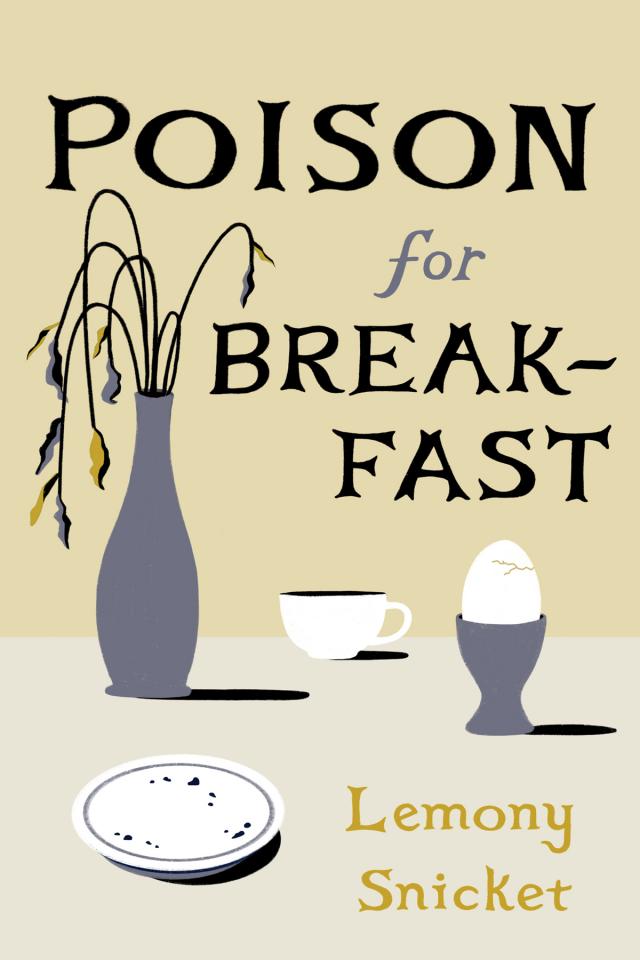


I usually bought my usual bread for my usual toast for my usual breakfast—
Tea
with honey,
a piece of toast
with cheese,
one sliced pear,
and an egg perfectly prepared,
—at a supermarket, but I didn’t like buying it there. As I have said, I prefer a shop which sells one thing to a shop which sells many things, and a supermarket, of course, tries to sell everything, and there is always something distrustful about a place so eager to please. I could have bought my bread at one of the two bakeries nearby, but the people at one of the bakeries move so slowly that I am always afraid the bread will be stale by the time they hand it to me, and the people at the other bakery are so mean I am always afraid I will have to use the bread to soak up my tears from hurt feelings. “I don’t like your shirt,” one of the workers at the second bakery said to me recently, handing me my bread and adding, “You should wear something else.” I am not so fragile that I cannot stand to be criticized for my shirt, which that day was a very ordinary color with average buttons and regular stitching and a completely unremarkable collar, but for the next few days at breakfast, the loaf I had purchased appeared to be looking at me and shaking its floury head over my choice of clothing. Two years ago, meanwhile, I had asked for a loaf of pumpernickel at the first bakery, and the employee is still putting it into a bag. (I am exaggerating, of course, but not by much.)
The supermarket, on the other hand, had a sign on the outside that reads Come On In! which stared at me as I arrived. With its high-spirited exclamation point and friendly words, the sign was neither slow nor mean, and yet it seemed to me like something a dragon might put up outside its cave to lure passersby inside to be eaten. When I stepped inside, there were a few sentences painted on the wall that were so enthusiastic that I was wary, a word which here means “filled with unease no matter how many times I’ve read them.” I reread the sentences for the umpteenth time, and copied them onto several scraps of paper, and I will write them here now, along with my unspoken thoughts as I read them, but I will not write the name of the supermarket in this book, in case my description is so upsetting that the grocers decide to get revenge.
Here at So-and-so Market, the wall began, our primary concern is your happiness, and the phrase “primary concern” was a creepy way of saying that it is the thing the market or wall is thinking about most. Happiness, in my experience, is like a bowl of bananas, because if you pay too much attention, it gets gobbled away, but if you forget all about it, either a robber steals it or it ends up rotten mush. It can be tricky to keep one’s happiness intact, and the interference of a supermarket strikes me as only making things trickier. The sentences Our primary concern is that our food is not spoiled or Our primary concern is that the floors aren’t so slippery you will fall and break your leg or Our primary concern is that none of our bread has been poisoned, I thought, would be more welcoming.
We’re here for you 24 hours a day, 365 days a year, the wall continued, and this struck me as alarming, because I didn’t want a supermarket thinking about me much more often than I thought about the supermarket. The supermarket should be thinking about the delivery schedules of its trucks full of turnips and noodles and duck, I thought, and whether the back door has been propped open to admit poisoners, instead of thinking about me, particularly late at night when I might be tucked into bed telling myself that of course there are no grocers peeking at me through the curtains. I knew, of course, that the phrase We’re here for you did not necessarily mean that the supermarket was thinking about me, but just that it was there, where So-and-so Street met Such-and-such Avenue, whenever I might need groceries. But this also made me wary, because promising to be there 24 hours a day, 365 days a year, sounded not only exhausting but unlikely. Someday the supermarket will close down, because of bankruptcy or mice or an invading army, and so this promise will be shattered along with the wall on which it was written. I would have been more reassured by sentences like We’re here, although you know this already because you’re here too or We have reasonable business hours or Goodness gracious, we hope nothing ghastly happens to this supermarket.
Lastly, the wall said, We consider each and every person who walks through these doors a friend, and this I found the most bewildering sentence of all. I do not want to be friends with a supermarket or its wall. I want to be friends with people who are honest and interesting, generous but not ridiculous, thoughtful but who don’t have irritating voices. You might use different words to describe the sort of people you want as friends, but I’m certain one of the words would not be “indiscriminate,” which refers to people who’ll be friends with absolutely anyone. You want friends who choose you, because they find you charming and fascinating, rather than just each and every person who walks through your door.
As I walked around the supermarket, I did not feel like a friend. I felt like a stranger, and I looked around at the other strangers, walking down aisles and peering into bins for whatever foodstuffs they wanted. There was music piped in—a phrase which here means “being played too loudly through speakers in the ceiling”—and it was another reason to be suspicious of the supermarket, because supermarkets usually choose music they think everyone will like, the way they think each and every person who walks through the door is a friend of theirs, and there is no such thing, of course, as music everyone likes. There is only music that some people think everyone likes, and I almost never like things some people think everyone likes. I do not like peanut butter and jelly sandwiches. I do not like paddling a kayak in the hot sun. I do not like Santa Claus. I do not like it when someone takes out a guitar and everyone has to sing. I do not like standing in a cheering crowd, particularly if the crowd is watching people whose job it is to throw a ball throw a ball. I do not like a picture of a man on a horse. I do not like it when everybody is doing the same thing and someone is standing with a stopwatch waiting to give a prize to the person who finishes doing it first. I do not like hot chocolate and I do not like wearing a shirt or a hat with the name of a place written on it so everyone knows you have been to that place, and I am not a fan of raisins, so I am often frowning at the music in the supermarket.
Surprisingly, however, the music that was playing right then was a piece of music that I liked very much. It is a very old song, so old that no one is sure who wrote it, and it has been sung by all sorts of people, although the version I prefer, the version that was playing in the supermarket, is sung by a woman who had an adventurous and challenging life. The song is about a man who has done something wrong. The song does not tell us what it is, perhaps so we can fill it in with our imagination or our memories of awful things we have done ourselves, but the man is running and trying to escape from whatever wrong he has committed and how terrible he feels about it. I walked from aisle to aisle in the supermarket, listening to the woman singing about the man and where he runs.
He runs to a rock, and then to a river and then the sea, but he finds no comfort in any of those places. Then he prays to God, and I remembered when I first heard the song I thought I knew what would happen, because usually a man in a song who prays to God finds comfort. But the song follows not only the second rule of writing, which is leaving out certain things, such as the wrong thing the man has done, but also the first rule, which is to include the element of surprise, because instead of offering comfort God says to him, “Go to the Devil,” referring to an evil figure in mythology and religion. The man goes to the Devil, as God has suggested, and then the only thing the song tells us is that the Devil is waiting, and nothing more. There is something a little frightening about this, just as there was something a little frightening about the aisles of the store. The song seemed to be saying that something evil has just been waiting while the man has been running around for so long, and now I saw food waiting everywhere, stuffed onto towering shelves and arranged into gigantic displays, the infinite sights and endless smells competing in the air, just waiting for someone to buy them. Knowing I had been poisoned made me feel queasy and anxious, so I was not hungry, and wandering amid such abundance, a word which here means “too much food,” made me feel even more uncomfortable.
But truth be told, the abundance in supermarkets has always been bewildering to me. I stopped at a loaf of bread, for example, much like the one from which I had a toasted slice for breakfast. It was in a paper sack and gathered up with other identical loaves in a larger bag which was tucked into a basket, alongside many other baskets of bags of sacks of loaves of bread, next to a wall of high shelves with many, many more loaves, all in different bags and all with labels on the outside listing their ingredients.
The first ingredient in my bread was flour made from wheat, a plant I actually had growing in my tiny backyard. A friend had planted it for me as a gift, but only a little bit had sprouted, because I wasn’t much of a gardener and didn’t know how to make it thrive, a word which here means “grow tall and bushy rather than shriveled and dead.” Somewhere someone was a proper farmer, and somewhere was a bigger piece of land—much, much bigger—where people were growing enough wheat to make all these loaves of bread arranged before me, and all the extra loaves that were likely in a refrigerator behind that door marked No Admittance, a phrase which here means that you can’t go in, even though two people in aprons were walking through it at that very moment. And think of all the markets, I thought, super and not super, all over the world with all their loaves of bread. Somewhere was enough land to grow all that wheat, but it was impossible for me to imagine. Field after field of wheat, stretching out as far as my mind could picture them, but how could there be enough room for them, and have there still be space on Earth for scorching deserts and icy mountains and all the places wheat cannot grow?
All that land was just for the wheat, and the wheat was just for the flour. My bread had other ingredients, and all the other breads had still more, salts and yeasts and seeds and nuts and chemicals and additives harvested in marshes and picked in groves and cooked up in laboratories and manufactured in factories. People worked in all those places, making all those ingredients and mixing them together to make bread, and someone made the label and the sack and the bag and the basket. Someone had loaded a truck, and driven it to town to be unloaded, and someone had arranged all the loaves in the supermarket, all to bring me this loaf of bread I would buy for a pittance, a word which here means “hardly any money.” This pittance, of course, would be split among the grocers and the farmers and the label makers and all of the people I had imagined, plus all of the people I hadn’t imagined and would never imagine. Surely it was not enough money for everybody. Surely someone was not getting enough money. I could imagine them living in poverty, maybe even starving, and yet there was so much bread, right here, that they might eat. The whole story was bewildering, and perhaps even cruel, and yet I did not want it to end. I did not want the supermarket to close down and stop selling its abundance. I liked this bread.
There is an expression from Persia, a part of the world which is now often called something else, that says, “When the cat and mouse agree, the grocer is ruined,” presumably because if the cat didn’t chase the mouse out of the store, the mouse would nibble on the groceries and perhaps frighten customers away, and the market would fail. If the mouse is happy, the grocer is suffering, and so for the grocer to be happy, the mouse has to suffer instead. For every creature who is happy and well fed, I thought, imagining the starving people while I stood surrounded by abundance, perhaps there is a creature who is hungry and ruined. No wonder, I thought, some people poison others.
The song, which was still playing, seemed to be saying that the wicked choice, the wrong thing you may have done, is easier to find than comfort and forgiveness, that it takes more effort to be a good person than a bad one, which might be why one sees wickedness in abundance, just sitting and waiting, while goodness is often so elusive, a word which refers to things that keep slipping away. This philosophical realization helped me put the bread down and slip away myself. If this were a story in a book, I thought, and the most suspicious place turned out to be villainous, then there would be no element of surprise. The thing to do, I decided as I left the supermarket, was to go to the least suspicious place instead.
CHAPTER EIGHT
I always feel hopeful when I step into a park. When a city or town sets aside a piece of land for public relaxation, it is a sign that someone is thinking about the happiness of someone else, that some people are trimming grass and sweeping pathways just so other people can have picnics and take walks or perhaps just sit and think. There are enormous parks with different areas for different activities, and there are parks so small they can fit under just one tall flagpole. There are parks full of devices and structures for playing, and parks full of flowers and trees for admiring, and parks full of statues and sculptures for appreciating, and parks full of garbage that really ought to be hauled away.
A proper park is open to the public, and when anything is open to the public, the public gets worried. If anyone is allowed into a place, then anyone might go there, and often there are all sorts of worried conversations about parks and the people who might cause trouble and activities that might upset people and times of day when a park should be one way and not another, and whether animals, who do not count as the public, will come into the park and mess it up or kill the flowers or bark too loudly or eat little children. But I like to use a park as the antidote to worry, rather than as an excuse to worry further, and I never mind whatever animals I see in a park. I’ve seen squirrels and chipmunks, snakes and salamanders, butterflies and ladybugs. I have seen dogs that look like foxes and foxes that look like dogs, and I have seen raccoons who look like burglars, although not yet any burglars who look like raccoons. I have seen, of course, many birds whose names I do not know, but I have also seen people whose names I do not know, runners and walkers, police officers on horses and horsey-looking people on bicycles, crying children with bored guardians and bored children with crying guardians, lost tourists with maps in their hands and kite flyers with string all over them, laughers and arguers and lovers, a word which here means “people who are kissing.” Kissing is a common thing to see in parks, and this chapter contains more about kissing in a few pages, so if you are made uncomfortable by such things, you have now been fairly warned.
My favorite animals in this particular park, however, were not the lovers or the foxes or even the person selling popsicles in unearthly colors. My favorite were the goats. In this park there was a large herd of them employed as lawn trimmers, moved from field to field to feed on the grass so the sound of lawn mowers did not spoil the relaxation. The milk of the goats is also used to make cheese, and in fact the cheese I had on my toasted bread that morning was made from the milk of goats, so it made sense to continue my philosophical investigation by standing at the tilting fence for a few minutes, watching the goats and their goatherd, a word which here means “young man who always seems very bored looking after goats.” I had spoken to this man once, and he’d admitted he was as bored as he appeared. I had suggested that he bring a book, one of those books that is interesting enough to keep you from being bored, but not so fascinating that you forget to look up from time to time to make sure the goats are safe, and he told me that he’d once brought such a book, and that the goats had eaten it. I waved at him now.
The goats, to judge from appearances, also looked bored, although I suppose it wasn’t fair to judge by appearances. An associate of mine wrote a poem I like very much, which I thought of as I watched the herd wander around the meadow nibbling. The poem is called “300 Goats,” after a large group of goats the poet is watching on a very cold day. “O lead them to a warm corner,” she says to the goat rancher, using the letter O by itself which is always fun to write. “Lead them to the brush, which cuts the icy wind.” But the goat rancher just shrugs at the poet’s concerns. “They know what to do,” the rancher says. “They’re goats.”
It is similar to the sentence the expert had said to me, when I had asked about the birds scrabbling around in the dirt: They do that, a simple and elegant summary of perfectly innocent behavior. I knew that this herd of goats, or indeed any herd of goats, would not be scheming to poison me, and that goatherds and cheese makers would not likely feel hostile toward a writer who regularly ate the cheese they’d made. They’d be more likely to poison the goats, I thought, for devouring their reading material, and so I turned my attention from the innocent goats and looked at some of the people around me.
Another interesting thing to do in parks, where so many different people may be seen, is to imagine what everyone is thinking and doing even though you will probably never know. At the other end of the meadow, two people were sitting on a scuffed-up bench, and as I walked toward an enormous tree, which rose straight up over a patch of gravelly ground, I imagined what the two people might have been saying to each other.
SYLVIA: Kiss me, Terry. O kiss me! Stop watching the goats and kiss me!
TERRY: Not now, Sylvia. And I’m not watching the goats. I’m watching that man walking toward the tree. Do you see him? His hair looks a little damp, as if he has recently been swimming in open water, and his eyes look a little haunted, as if he has recently been in a supermarket.
SYLVIA: Yes, I see him, Terry. He has a wistful expression on his face, as if he is remembering something happy that happened to him a long time ago.
I did not know what Sylvia and Terry, whose names, of course, I was imagining, were really saying, but they were correct in what I imagined they were imagining about me. I was in fact thinking of a time, a long time ago but in the exact same place I was standing. It is always strange to stand in a place where something happened to you long ago, particularly if the place has not changed much. The tree had surely grown a little, and the fence was perhaps more windblown and the benches a little scuffier than they were on that happy day, but it looks more or less the same, I thought, and I knew this because I had a photograph of the time I mean, the time I was thinking about.