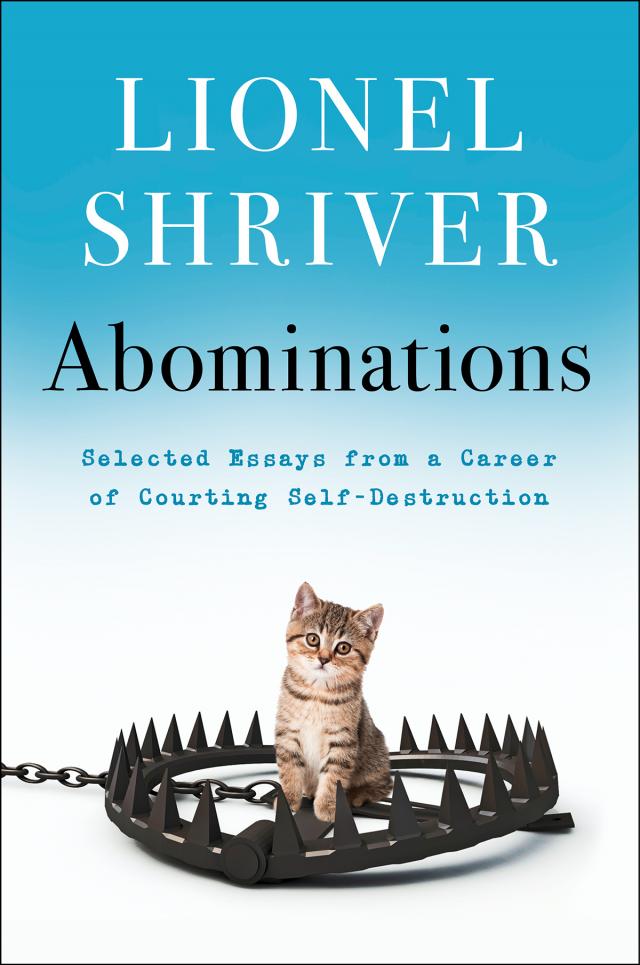
Abominations, p.25
Abominations,
p.25


For all their demands for “systemic” transformation, 2020’s protesters don’t really want that much to change. They want to keep curating their playlists on Spotify and ordering oat milk from Amazon Fresh. They want Netflix to keep churning out new entertainment, through whatever nefarious corporate machinations, because they’ve already binged the fifth season of Ozark. Thanks to horrible racist capitalism and centuries of oppression, their computers can communicate instantaneously with Minsk. They have not only enough to eat, but a range of dim sum in their local supermarket’s freezer, from shrimp to pork to vegan pumpkin. This last spring, you can be sure that these same young people got as consternated as everyone else when those supermarkets ran short of paper towels (and I recently read a fascinating Wall Street Journal article on paper-towel manufacturing; the process is far more intricate and sophisticated than you’d think). Thanks to the police they detest, these protesters still enjoy “safe spaces” in many smaller cities—in the sense that “safety” used to mean: protection from physical harm.
Up to a point, dedication to racial equality—in countries that have never been less prejudiced—is laudable. But in a society that provides shelter, clean water, and sustenance to the vast majority of its inhabitants, even in densely populated cities where otherwise we’d be slaughtering each other in packs, the opportunity to obsess fetishistically about “microaggressions” and “unconscious bias” is one more luxury borne of the system these activists abhor. Even the right to demand curtailment of free speech requires the right to free speech.
In the United States, I’m loath to histrionically predict a second civil war. Nevertheless, in Minneapolis, Portland, Seattle, DC, San Francisco, New York, and Kenosha, arsonists are both literally and figuratively playing with fire. This summer has seen the most tumultuous civil unrest since the 1960s. Opposing sides in the culture war no longer seem to feel like citizens of the same country. Few in the white majority feel any responsibility for slavery, and many white Americans are themselves struggling to pay bills or unemployed; should the reparations movement be victorious, white resentment could be incendiary. And if a deadly confluence of logistical disarray and mutual distrust means there’s no clear winner after November’s presidential election, I foresee mayhem. (For that matter, if Trump wins clearly fair and square, I especially foresee mayhem.) Left-wing rioters, looters, and vandals already have form. Self-nominated defenders of the republic already have guns.
Centuries in the making, contemporary Western civilization is so complex that it shouldn’t really work at all—but somehow, after a fashion, it does. In fact, on the whole we’ve never lived more comfortably, more peaceably, or more justly. Yet shrill voices on the hard left preach that countries like the US, the UK, and Australia are a disgrace and should inspire only shame. Subjecting the fruits of one’s forebears’ toil to contempt signals not only complacency, but ingratitude.
Nevertheless, I reserve my own contempt not primarily for callow protesters, with no appreciation for how utterly dependent they are on social order to afford to dabble in disorder. Young people have always erred on the side of poorly thought-through idealism and sanctimonious hotheadedness. In my own teens and twenties, I wasn’t any different. Far more do I deplore the grown-ups: global leaders in 2020 who should know better.
With rare sane exceptions like Sweden’s, Western governments have installed unprecedented nationwide lockdowns of their whole societies for month upon month, and continue to threaten the reimposition of economically catastrophic, near police-state conditions on their ostensibly “free” populations. These governments are also guilty of an obscene complacency. Having done no cost-benefit analysis before pressing a giant pillow over the territories entrusted to their guidance, politicians have credulously assumed that civil liberties can always be magically restored (and that’s assuming these officials don’t come to rather fancy wielding unlimited power). There will always be more taxpayers. Treasuries can always “borrow”—meaning print—more money, and the currency will still retain its value. Is that so? Politicians’ oblivious, tunnel-vision focus on a single pathogen only moderately more lethal than the flu is not only wreaking short-term fiscal havoc, but is pumping up the Ponzi scheme of escalating sovereign debt, which no one really imagines will ever be paid back.
The authorities’ wholesale capitulation to COVID hysteria—which set the emotional table for racial hysteria—has inflicted a scale of destruction that might, had leaders looked before they leapt, have been anticipated. Indeed, a 2006 paper by Dr. Thomas Inglesby, the director of the Johns Hopkins Center for Health Security at the Bloomberg School of Public Health, predicted nearly every disastrous consequence of a theoretical lockdown that we can now verify in practice. This expert on epidemics wrote, “The negative consequences of large-scale quarantine are so extreme . . . that this mitigation measure should be eliminated from serious consideration.” Yet even poor countries have aped this clumsy protocol, which may kill millions from starvation.
Once lockdowns are finally eased, successfully terrified workforces refuse to venture out their front doors—especially in the UK, where two-thirds of employees are still working, or neglecting to work, from home. For some processes are far easier to set in train than to reverse. It’s not that difficult to frighten people. Unfrightening them is a bastard.
Small business has been ravaged by bankruptcy. Public transportation with minimal ridership is running unsustainable deficits, and many systems could enter a death spiral of reduced services and higher fares followed by even smaller riderships. The financial and commercial centers of great cities like New York and London are hollowed out. Midtown Manhattan, Wall Street, the City of London, and Canary Wharf are currently all ghost towns, as if commandeered by film crews for movies about the end of the world. The West’s collective GDP look like an apple that a Saint Bernard took a bite of. The performing arts, precious in and of themselves but also vital engines of tourist revenue, have been incinerated. Airlines are on their knees. Unemployment is high, and job losses are often as irreversible as fear. Swaths of restaurants, bars, hotels, and nightclubs have closed for good. Tax bases have effectively been plunged into vats of acid—at the same time as demand on the public purse has skyrocketed. Focused myopically on COVID, many health systems are failing to treat more lethal ailments like cancer.
Look. A short, sharp shock, such as a fortnight’s cessation of business-as-usual in March, however also extraordinary, might have been safe or even prudent: life briefly on hold, as health care systems prepared for the unknown. But instead some lockdowns have already lasted six months. They’ve been only timorously lifted, always with the threat of reintroduction with no warning. The grotesque consequences were entirely foreseeable. What were politicians thinking? They weren’t thinking. They were reacting. They were “doing something” to disguise the fact that they had no idea what to do. In preference to making measured, informed trade-offs, Western leaders mindlessly copied both the worst possible model for governance, Communist China, and each other. They implicitly relied on the excuse many a parent has found wanting: “Well, everyone else is doing it!” To whatever degree our leaders have exercised any independent judgment whatsoever, they’ve trusted naively that an effective vaccine will put everything back to the way it was.
The same complacency extends to us, the citizens of once liberal democracies. At least in comparative terms, we assure ourselves, we’re rich. We’re used to being rich, just as in terms of worldwide military havoc we’re used to relative peace. So of course we’re going to stay relatively rich and stay relatively peaceful. No matter the scale of the upheaval, in the long run we’ll be fine, because we’ve been more or less fine for seventy-five years. As peoples, we have ludicrous faith in the state to take care of us—underaware that at least financially we are the state. We watch disaster movies all the time, yet no longer believe in the possibility of proper disaster on the near side of the screen. We’re lazy. We have flabby imaginations.
But as a novelist, I’m paid to have an athletic imagination.
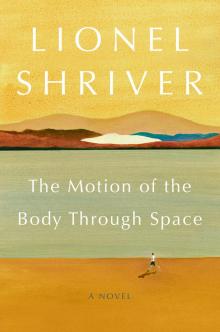
Set in a near-future America, my 2016 novel The Mandibles describes a dystopia of an expressly economic sort. The book begins on the centenary of last century’s stock market crash, October 2029. Because China and Russia are mistrustful about America’s towering national debt, the “almighty dollar” is replaced by a new international currency that’s actually worth something and backed by real assets. Thus the dollar loses its status as the world’s reserve currency. In retaliation, the president renounces the national debt—some of which is held by foreign parties, but the bulk of which is owned by domestic investors and pensioners, whose bonds convert overnight to poorly absorbent toilet roll. As a faithless debtor unable to borrow on world markets, the US government frenetically prints its way out of a fiscal hole. Surprise: inflation soars. First food is scarce; then food is available but insanely expensive. Social order unravels. My middle- and upper-middle-class characters go from impatiently awaiting the trickle-down of a sizable inheritance to growing their own vegetables (which are all stolen), mugging schoolchildren for groceries, and panic-buying paper clips, in the wan hope that at least stationery, unlike their currency, will retain some value. At length—spoiler alert—the Mandibles are forced from the family house at gunpoint.
It was supposed to be fiction. I would like it to stay fiction. Writing that novel gave me an appreciation for the frailty of civilization—more appreciation, honestly, than I want. As we only half-learned in 2008, when we came closer to worldwide fiscal collapse than anyone cares to recall, the financial systems on which we now rely are impenetrably complicated and precariously interrelated. Complexity theory foretells that complex systems collapse catastrophically. Even violent anticapitalists, much less presidents and prime ministers, take for granted that there will always be affordable food in supermarkets. That when you flip a switch, the lights will come on. That the taps will always flow with potable water. That in the main, come what may, citizens can walk down the street without being murdered for a pound of hamburger.
Widespread, simultaneous, long-lasting, and often repeated international lockdowns may be unprecedented, but COVID-19 is not. The 1957 Asian flu killed between one and two million worldwide. The 1968 Hong Kong flu killed between one and four million. During both pandemics, world leaders didn’t close so much as a newsagent. The disproportionate response to one more disagreeable albeit sometimes lethal virus boggles the mind. Thus far, real-world data demonstrate no correlation between the stringency of government restrictions and COVID infections, hospitalizations, or deaths. There’s growing acknowledgment that lockdowns will cost many more lives than they saved—and that’s assuming they saved any lives, rather than simply dragging out inevitable fatalities over a longer period of time.
But my biggest worry isn’t the immediately devastating economic losses and personal suffering that this copycat, knee-jerk overreaction has wrought on the ground. I’m worried about implosion on a more historic scale. COVID lockdowns have massively sped up the rate at which national debts are burgeoning. How tall can a house of cards rise before it topples?
According to “magic money tree” thinking, a.k.a. modern monetary theory, a government that controls its own currency can print money to cover its expenses without limit. We can see why this theory is so popular: everything for nothing. For a sneak peak at my latest novel, Should We Stay or Should We Go, here’s a passage from a chapter set in a fairy-tale near future:
After the scare of what, in historical retrospect, proved a relatively brief economic downturn following the global lockdowns to suppress COVID-19, an obliging monetary theory was demonstrated to be faultless. Lo, it was more than possible for the government to print an infinite amount of money and then give the money to its citizenry to buy things. If the citizenry ever wanted to buy more things, then the government could print still more money so that the citizenry could buy more things. Everyone marveled at why retrograde economists had ever installed the unnecessarily convoluted business of employment and taxation. The technique caught on all over Europe, and effectively established an indefinite lockdown, except in this one you could leave the house.
What’s wrong with this picture? It’s deeply counterintuitive, and never underestimate common sense. I can’t cite a single product that can be manufactured in infinite quantity and still retain its value. Flood the market with corn, and the price of corn plunges to below the cost of production. Our gut intelligence dictates that the logic of oversupply also pertains to money: the more you conjure from thin air, the less it will buy. As an ominous early warning, the US Federal Reserve announced last month that it will not be raising interest rates, even if inflation rises to above the Fed’s target. Stay tuned for more such cheerful news from the Bank of England and the European Central Bank.
The international monetary system is held together with rubber bands, bits of string, and appeals to divinity. Because it’s in everyone’s interest to have confidence in this fragile kludgeocracy, we all determinedly have confidence in it. But frankly, ever since all money became fiat money—backed by nothing and therefore generated ad infinitum at no apparent cost—countries have competed with one another over whose currency could be more worthless. The race to the bottom is well under way. Me, I’m astonished that any currency in the world right now is worth anything at all. I’m positively impressed that the pound and the dollar continue to be accepted in exchange for genuinely valuable tangibles like wheat and oil. But we have succumbed to complacency. The insouciant assumption runs that because we’ve been getting away with murder for all this time, and because so much rides on our continuing to get away with murder, we will therefore be able to get away with murder forever more. We can thus pile up national debts of over 100 percent of GDP, even 200 percent, so why not 300 or 400 percent? A thousand? Isn’t the sky the limit? Yet all Ponzi schemes collapse. The only uncertainty is when.
I yearn to be wrong. I would love for modern monetary theory to prove astonishingly sound, so that the two governments under which I live in the UK and the US can continue to provide services like health care and national parks, and fund the military, and pave the roads, while my taxes never rise, all the people I care about thrive, and peace and goodwill toward men descend upon all the earth.
I’m not being entirely facetious. I feel an enormous personal investment in the economic stability of the next couple of decades. I’m already into my midsixties, which puts me on the cusp of both physical decline and an inevitable drift toward the professional sidelines. But I worry that no matter how much I save for my retirement, national or even international economic implosion could wipe me out (and in any financial apocalypse, I’d have a horrifying amount of company), thus leaving me destitute in my old age, when I’m at my most dependent and most disposable. As a character observes in my new novel, “The only thing worse than being old is being old and broke.”
I also dread ever having to watch the civilization that has nurtured me, and that has provided me such an exhilarating cultural inheritance, fall apart. I could not bear a real-life dystopia in which the Statue of Liberty is toppled and Parliament burns to the ground. In which libraries and online search results are strictly policed in order to serve a single, narrow, fanatical dogma (a process that Facebook and YouTube have already begun). Today’s hard leftists are eager to bulldoze their “systemically racist” societies into landfill, but have no constructive replacement for what they would gleefully destroy. Their blind rampages go hand in hand with our idiotic COVID lockdowns. Both the Marxist Trojan horse of BLM zealotry and these suicidal, shortsighted “public health” policies eat away at everything in Western life that I treasure, from reading artful, ideologically unorthodox books to being able to buy a chicken. Yet in protesters and politicians alike, I detect that deadly complacency, as if you can rock a boat as wildly as you want—all because it’s stayed afloat so far.
Sure, I may be an alarmist crank. In a few years’ time, this address may seem hilarious. I hope so. Bring on the ridicule. I’d welcome being laughed at, so long as I’m spared any real-life manifestations of the visions that haunt me.
The relatively safe, prosperous, tranquil existence I’ve unthinkingly inhabited my whole life was many centuries in the making, the fruit of endless trial and error by our forebears. It could be destroyed in a weekend. Trying to exorcise anxieties about my own life as I enter its last tranche, I set The Mandibles, you’ll recall, in 2029. I’m not known for being an optimist. But as of 2020, I now worry that my fictional choice of year zero was on the late side.
“Catastrophizing Is My Idea of a Good Time”
The Spectator, 2018
When, on a test of general knowledge, the highly educated score far worse than chimpanzees, university degrees may be overrated (definitely). But something more interesting may also be going on.
According to the newly released Factfulness by Hans Rosling, we would-be smart people would improve our results on multiple-choice questions about the current state of the world (16 percent) if we picked the answers at random (33 percent). We all seem to think that humanity is in the toilet and swirling more deeply into the sewer by the day. We’re willfully blind to social progress. The more cheerful a host of indices look, the more belligerently we cling to the conviction that everything is getting worse.
Strictly speaking, I might score more highly than the average chimp on Rosling’s twelve-question quiz, because I’m technically aware that human history has become steadily less violent, extreme poverty has plummeted during my lifetime, education of girls is on the increase, and immunization against the likes of polio has been so successful that until very recently the WHO was on the cusp of eliminating the disease from the planet. But temperamentally, I flunk.