The porpoise, p.6
The Porpoise,
p.6


She looks up. The clouds have cleared to reveal a moon only a couple of nights away from fullness. The craters, are they extinct volcanoes or dents left by meteorites? She knew once but she can no longer remember. If only her heart would stop beating so fast. A fox barks in the distance. Darius had come to take her away. She cannot connect this fact to anything.
Then she hears the noise, a damp thunk from the trees at the bottom of the garden. There is a second thunk, then a third. They could be the sounds of a poker striking the trunk of a tree. They could be the sounds of a poker being stoved into a human head. She doubles over and throws up onto the patio. It is the strangest thing. She doesn’t feel sick. She doesn’t feel anything. She doesn’t think. Her body is reacting to something which her mind is refusing to accept.
After a long time the dark at the end of the lawn thickens to the figure of a man walking slowly towards the house. Might it be Darius?
It is her father. If Angelica were a different woman she might run, but running is a skill she was never allowed to learn. Running means having somewhere to run to. She cannot picture herself elsewhere and alone. Beyond those dark hills right now it might as well be Nunavut. It might as well be the Skeleton Coast. Rusted hulks and sun-leathered corpses. It might as well be Pentapolis or Ephesus.
A terrible sadness presses upon her, as if she were lying beneath a mattress and stones were being laid on top of the mattress. She is so profoundly tired. She uses a sleeve to wipe a final strand of sick from her mouth.
Her father walks up the concrete steps holding the poker. His white shirt is ripped and soiled. He is going to kill her, she is convinced of this. She hopes only that he does it quickly. “Go to your room.” She will look back and think of this as the greater cruelty, letting her life carry on precisely as it was before. She does not move. “Go,” he says, more sternly this time. She turns and steps through the glass door. Her father follows her into the house. She heads into the hallway. As she climbs the stairs she hears her father say, into his phone, “Hervé? I need you to do something for me…Yes. Now.”
She opens her bedroom window and leans on the sill. The light of the full moon throws a black silhouette of the house over the rear lawn, and in the centre of the silhouette lies a skewed trapezium of room-light, and in that skewed parallelogram lies the silhouette of a girl. It is impossible to tell which of them is more real, the flesh or the shadow. Bats slip through the dark, too fast for the eye to follow, their nights ablaze with squeaks and echoes. The world of sound which sits inside the world of light. Nothing happens for a long time. In the distance she hears tyres on the gravel. Doors slam. Silence. Doors slam again. Tyres on gravel.
Darius is dead, or he escaped and ran away. She does not know which is more terrible. The police will not help even if they are asked. Like doctors, like lawyers, the police are functionaries. She has seen it happen before. The law bends before wealth. It is the way the world works. She tries to cry but she feels scraped out, raw and empty.
It is the first night in a very long time that her father does not come to her room. She should feel relieved. Instead she feels scared and abandoned. She is disgusted with herself for feeling this. She cannot sleep. The wound on the side of her head has scabbed over but the pain still pulses in time with her heartbeat. She turns off all the lights and squats in the space between the cupboard and the wall, hugging her knees and rocking gently back and forth to calm herself. The house clicks and creaks. The fox barks again. Shreds of moonlit cloud change shape as they track across the uncurtained window. Every so often the wingtip navigation light of a plane passes in the opposite direction and she has the same thought she used to have as a small child, that it is her mother, made into a star by God.
Dawn comes. The staff arrive at eight. She feels drained and wretched but safe enough now to go downstairs for breakfast. She tells Dottie that she fell in the bathroom and banged the side of her head the evening before. Dottie nods. Anyone else would know that Dottie is sceptical about this story, but Angelica has never learnt to hear the conversation which runs beneath a conversation. She eats scrambled eggs on sourdough toast and drinks a black coffee. She says that she has a headache. Dottie gives her two paracetamol. Her father enters the room and Dottie slips away, saying she has chores elsewhere. He tells Angelica that he is very sorry but he does not say precisely what he is sorry for.
He comes to her room in the evening. He undresses her. He says he loves her. She leaves her body behind. It is only an animal which houses the mind after all. She enters that foggy border country between dream and story. She is seated high in the citadel, far above the armies at war on the plain below. She is weaving another world. And right here, in the very corner of the tapestry, is Darius, clamping his injured arm to his side as he jogs down the drive to the main road where he is very nearly hit by a clanking farm pickup and trailer which squeal to a skewed halt in front of him. Sheep bleat. Hooves scrabble on metal.
* * *
. . .
A twig snaps nearby. The two men freeze. Darius is on the ground. Philippe stands with the poker raised above his head. The dark between the trunks is absolute. Another twig snaps. Someone—or something—very large is standing very close to them. There is a smell of burnt hair and cellar damp. There is deep, regular breathing like that of an iron lung. The thing is too big to be human, though surely even the biggest stag would have bolted by now. Darius does not care what it is. The only thing that matters is Philippe’s distracted attention. He grabs hold of a low branch with his uninjured left arm. There is a wall of flame he can pass through if he pushes himself hard and moves fast. He grunts like a weightlifter and hoists himself. The pain is spectacular. He is on his feet. He clamps his broken arm to his side and steps between the trees. He is on the gravel. He jogs towards the main road.
He will not be able to drive. He is five miles out of Winchester and it is nearly midnight. He will have to knock on someone’s door or hide in a field. As if in answer to his desperate need, however, the hedge on the far side of the road begins to glow. He picks up speed in case he is too late, reaches the gates, runs into the road and is very nearly hit by a clanking farm pickup and trailer which squeal to a skewed halt in front of him. He hears sheep bleating and the scrabble of hooves on metal. The driver leans out of the window—cigarette, baseball cap, some kind of sore at the corner of his mouth. “Get in, then.” He sounds like a tired father retrieving his teenage son from a party. Darius cannot persuade his left arm to give up its role of splinting the right in order to open the passenger door, so the driver gets out, shaking his head wearily. There are little furred faces behind the barred air vent at the back of the trailer. “There you go, mate.” The driver takes a last drag on his cigarette and pings it into the rural dark. Darius swings his legs one by one into the footwell. The farmer slams Darius’s door and walks back round the mud-spattered bonnet. Through the driver’s window Darius sees a shape moving rapidly towards them down the drive. Whether it is Philippe or the unseen creature intent on doing to him what it has very possibly just done to Philippe he doesn’t know. The farmer climbs in, slams his own door and restarts the asthmatic engine. Something bloody and terrible looms briefly on the far side of the man’s baseball-hatted head, the ill-tempered gears mesh and they pull jerkily away, the sheep scrabbling and bleating behind them.
The driver glances across at him and laughs wryly. “Looks like you’ve had a bit of an evening.”
Darius wonders if the man has been drinking. “Thank you. Thank you for stopping.” He leans back against the burst leatherette headrest, detaches himself from the world and is aware of very little beyond the flaming circle of his hurt until he is stretchered into a curtained bay in A & E at Southampton General. Hoops scoot noisily along a metal rail and a plump nurse leans over him. Her hair is purple and she has shaved three little stripes into her left eyebrow. Darius looks around. The only traces of his Good Samaritan are a faint smell of dung and some agricultural stains on the chinos draped over the orange plastic chair together with his shirt which seems to have been cut off. Two hundred pounds from Louis Vuitton.
The nurse says, “What happened to you, then?”
He says, “Someone tried to kill me.”
She says, “That’s not nice, is it.”
He wonders if it is a regional thing. She administers four squirts of nasal diamorphine and a doctor appears. The man is a mad professor—bald pate, curly hair, round glasses, a Polish accent or somewhere thereabouts. He examines the break in Darius’s arm, nodding appreciatively so that Darius feels obscurely proud of having sustained a proper injury. He should get in touch with the police but the diamorphine is kicking in and time has turned to toffee. Another nurse appears with a trolley. They are going to plaster his arm prior to surgery. He is given a mask and told to breathe in as hard and as frequently as he can while they align the bone, so he sucks and blows and sucks and blows and a great white balloon lifts him into the air so that he is looking down on the whole world as if it were the largest and most detailed model train-set in history. Far below a tiny Darius is lying in a tiny hospital bed. The tiny mad professor hauls on the wrist of the tiny Darius the way a stevedore might heave on a rope to bring a tug alongside a jetty while the second nurse wets strips of plaster in a kidney-shaped metal bowl of water and wraps them around the tiny Darius’s upper arm. It reminds Darius of making papier mâché at school. “Nearly there.”
Then the mask is removed and the air goes out of the balloon and Darius descends rapidly and the two Dariuses are recombined and he feels really very sick indeed. He vomits into a bowl of cheap grey cardboard a nurse is holding under his chin. Wood pigeon, asparagus, peach and seaweed. He loses track of time. At some point he is given a pre-med then taken into surgery where the mad professor is arguing with another doctor about whether Real Madrid or Bayern Munich are going to win the UEFA Champions League. The other doctor slides a cannula into the crook of the elbow of Darius’s unbroken arm and suggests he count from ten to one which Darius had assumed happened only in films. He reaches seven and instantly he’s coming round, terrified that the anaesthetic hasn’t worked and that they are about to cut him open; but the ceiling is different and the room is different and his arm is now sealed inside a tube of petrified slate-grey carpet. There is a third doctor but he’s wearing black and smells of wood sage and sea salt. A faint alarm sounds in the back of Darius’s brain. He fights his way through layers of milky sleep. He can’t remember how you tell your body to sit up. Shaved head, white shirt, grey suit. The PA-cum-bodyguard who met him on the drive. Sweet Christ. Suddenly he is awake. The man has unscrewed the top from the suspended bag of saline and is topping it up from a small brown bottle.
Darius swings his plastered arm. It is no more than a rudimentary flipper but it is heavy and it is hard. The stand topples and the cannula is yanked out, the long tube flicking towards the ceiling like a fishing line being cast, an arc of bloody fluid airborne in its wake. The shaven-headed man is unfazed. Darius swings his arm again but the man steps back the way you would step back to avoid your shoes getting soaked by the next wave on the beach. “I’ll see you later.” He turns and leaves the room.
The pain in Darius’s arm is very unpleasant indeed. He remembers that there is a poker-shattered bone inside the plaster. He waits for the pain to ebb a little. The room spins the wrong way, not roundabout but ferris wheel. He grips the steel rail until it slows down and comes to a halt. His other arm is bleeding where the cannula was ripped out. There is an empty bed to his right and two against the opposite wall. There are many medical machines of incomprehensible function. There is a low, scientific hum. The bladder of saline continues to empty itself onto the tiles. He stands up, wobbles, sits down, waits, stands up again and takes a few careful steps across the wet floor. Using his only functioning hand he removes a small red fire extinguisher from its wall-holster. It is the only object in the room that comes close to being a weapon. He listens for a few moments at the room’s only door then opens it onto an empty corridor. Voices far off, the buzz of a striplight. There is a window onto some dead plants in a drab little courtyard. It is daytime. Many hours must have passed while he was unconscious. There are five ghastly abstracts on the wall—slashes of orange on blue backgrounds, slashes of blue on orange backgrounds. He turns two corners and finds himself on the hospital’s main thoroughfare. Oncology and Paediatrics. Threadbare dressing gowns and white coats. Three elderly ladies with identically bandaged ankles cackle together like witches. No shaven-headed man. He stands the fire extinguisher against a wall and wipes the blood from his leaking arm. His car keys and his wallet are in the pocket of his chinos. God alone knows where the chinos are. Now is not the moment for worrying about such matters. Now is the moment for getting away from this building as fast as possible. He will get a taxi to the Viceroy. He will borrow the fare from the hotel reception. He will do all this wearing nothing but a backless cream hospital gown. He remembers the man with the shaved head, the utter blankness of his expression, the little brown bottle. He has no choice. He strides confidently through the main doors of the hospital onto the forecourt.
Harbour Cars. A triple-masted schooner in silhouette behind the name on the passenger door. It costs thirty pounds on top of the meter to override the driver’s qualms about giving a lift to a manifestly crazy person, but the Viceroy rises in Darius’s estimation when they lend him the cash without so much as a raised eyebrow. He is walking across the hotel lobby, however, when he glances into the lounge and sees, in the bay window, the shaven-headed man selecting a scone from a mini-ziggurat of silver traylets being proffered by a waiter. The man looks up. That same blank stare. No surprise whatsoever. Five, six seconds. The man looks back to the table and charges his knife with butter. Darius runs up the stairs, locks the door of his room and sits on the bed. He has a passport but no wallet. His car is ten miles away, the keys are ten miles in the opposite direction. Two men want to kill him. One is very rich, the other is possessed of borderline supernatural powers. A jackdaw sits on a branch which bobs and sways outside the window. Black body, little grey hood, half nun, half pilot. It twists its head, its tiny eye glints and Darius finds it hard to shake the suspicion that the bird is trying to deliver a message of some kind. He rubs his face. He will call his father’s lawyer. He needs to be on home turf. The two of them will put aside their deep historical differences because there are more important things at stake. Stephanos will book him a flight. Security, too. Several large, trained men will stay with him until he boards the plane. It is something he did for Darius’s father on occasions. Even Philippe and his henchman can’t bring down an Airbus. Once he is in Athens he will be safe.
He stands and walks to the table where the hotel phone squats like a black toad. He is about to lift the receiver when he glances down at the urinating putti and sees the most extraordinary thing.
* * *
. . .
He hoists the sash and whistles ineptly. Helena breaks off from conversation with her two nautical colleagues, looks up, tilts her head sideways in the manner of a dog analysing a faint but interesting sound and is doubtless about to make some dry quip about her friend’s unclothed state and broken arm when Darius puts a finger to his lips and beckons her silently upstairs, raising nine fingers for the room number. Helena does an aye-aye-captain mini-salute in return and flips her cigarette into the fountain.
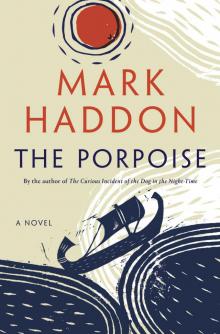
She is wearing a Sonic Youth T-shirt—I stole my sister’s boyfriend, it was all whirlwind heat and flash…—and khaki utility-trousers with square black knee patches and more zips than necessary. She has nut-brown skin and blonde hair so salt-stiffened and wind-tangled that she appears always to be squinting into bright sunlight and a strong headwind. She does not acknowledge the serendipity of their vanishingly unlikely meeting. She would approach an alien invasion or a flat tyre in the same way. She is picking up a refitted wooden schooner for a wealthy client whose name, for once, she genuinely cannot share. “The Porpoise. 1972. Three masts. No fibreglass. Twenty-four metres. Five cabins. New engine. Not fast, but she is bloody lovely.”
It is some measure of the unexpectedness of Darius’s story that Helena keeps one eyebrow raised for a good five seconds before saying, “I think we can solve this problem.”
Helena helps the injured Darius into his warmest clothes—ripping yet another Louis Vuitton shirt to accommodate his plastered arm—and ten minutes later the two of them are walking swiftly downstairs while Hervé’s attention is diverted by Helena’s colleague, Anton. Hervé, however, is unconvinced by the large Russian man who claims to recognise him. “Frankfurt, perhaps. Did we meet in Frankfurt? Were you in Frankfurt in April?” The man is blocking Hervé’s view of the hotel lobby and Hervé very much wants to keep an eye on the hotel lobby. There is a rapidly escalating altercation which involves, in its final stages, a pot of scalding tea, upturned furniture and a pastry fork which has, thankfully, been dulled by a century of parkin and Chelsea buns. It ends with Anton running from the hotel entrance, hand clapped over a bloody neck wound, with Hervé in pursuit.
Anton yells, “Go!” and throws himself through the open back door of the rented Toyota Yaris. Marlena, who completes the party, whoops excitedly, Helena puts the car into gear and the shaven-headed man thumps the roof so hard that the dent is visible from the inside. They pull away and take several corners almost but not quite on two wheels before joining the M3 and heading south to Poole Harbour.
THE PORPOISE
What Darius knows about ocean-going yachts was picked up during a week’s tour of the Baltic with Helena and a small group of mutual friends and amounts to little more than a memory of seasick hangovers and the dimensions of a toilet too small to enable one to sit down and shut the door simultaneously. But even he can see that the Porpoise is beautiful—polished oak, polished brass, everything singing with little bursts of sunlight. There is a ship’s wheel with protruding handles at which you could stand and be Barbarossa or Vasco da Gama, there are cream canvas sails which belly and ripple and slap, there are portholes and winches, there are proper ropes of twisted sisal.