On submission, p.10
On Submission,
p.10
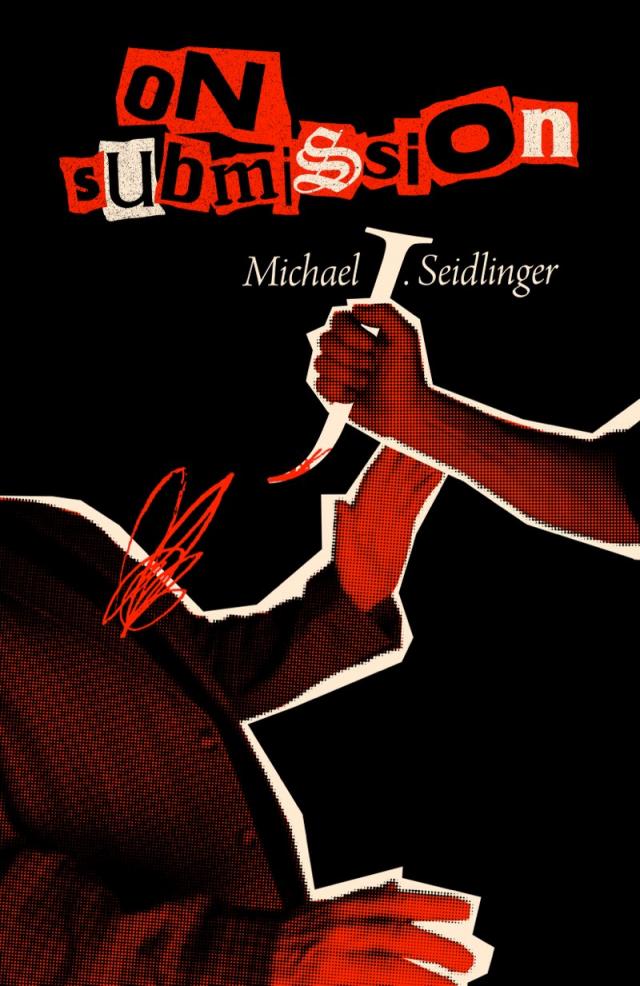


“Lucky you,” Kawada says. “I’ve been rejected 4x.”
“It only takes one!” I keep it cordial, establishing that we are peers, colleagues, authors facing the void. In truth, that will be my steady and methodical entrance into his story.
First, leave him hanging. Last DM being his, asking if I have an agent.
Leave it like that, no reply can get Kawada’s mind racing. Maybe it’s a sensitive subject. Something he shouldn’t have asked. Now he may have someone who had been a fan turned into an enemy. It’s a self-imposed spiral, a mind-fuck of micro proportions. And I’ll leave it at that. My alt-account has 32 followers. I’m a nobody. He moves on.
Second, wait until the end of the day to reply back. Pick back up like nothing happened. Kawada will be so relieved that there wasn’t any disdain that he’ll reply back on impulse. Keep it brief: “Nope, no agent,” and he’ll reply with, “Oh you will.” He adds, “Keep racking up those bylines and you will.”
That’s how it works.
The industry trades on the prestige, the merit of the byline. When it comes time, merit is tested, and the test… book sales.
Third, make him feel seen yet vulnerable. “You worried about the book selling?”
It can go either way, cold shoulder or a kind retort, but there won’t be any room in between. He’ll get back to me quickly, “Duh. It’s a lot of pressure.”
It is a lot of pressure, being judged by your latest book. That axiom has always and continues even more so every day to be the slogan scrawled above the gates of hell, the publishing industry declaring: You are only as good as your last book.
“It’s good to be aware of what’s expected of you,” I say. “But all you can do is your best.”
“Your best isn’t always good enough,” Kawada says. A warning for both me and him, yet I can tell it’s more for himself.
“That’s why it helps to be around other authors, part of the community,” I say, leading into what will become the moment we meet under the awning of a bar on Park Ave. “There’s a badass reading tonight. I’m going. You should go. Get out of your head a little.”
He’ll consider it, unwilling to confirm until the last minute.
I’ll be there, standing with a vape pen, flavored smoke plumes, one after the other, counting how many inhales before he arrives, and I take his breath away.
Chapter 9
Pendel reports Deadly Reads under the pretense of harassment. He should feel better, the account will likely be subjected to removal, but it lingers, this feeling of helplessness. It’s what he’s felt every single time Alexander Moyer emailed, yet it could be his stubbornness that keeps him from connecting the dots. Then he gets a call from Becky on his personal cell rather than the agency line, “Oh, what now?” and it’s all he can think about.
Stress level high, Pendel lets it go to voicemail, knowing that Becky will leave a message, offering an indication of the nature of her call.
“Henry? Henry. When you get this call me back. This is urgent.” End of message. He waits a few minutes before returning the call. It’s evident that she’s upset. The magnitude of the current moment—her husband’s dead, everywhere she looks there are reminders of her loss—he expects her to be wafting between the stages of grief. With no one else to turn to when it comes to the business side of things, Pendel’s at the top of her contacts list.
Maybe she even thought of them as friends. Pendel never saw it that way; though it’ll later come out that he exhibited preferential treatment, carte blanche, to J.D. Church and looked the other way when Church abused his power. All because Pendel was too busy nursing his own fixation on prestige, nursing the latest pour of bourbon, the latest sales figures, and just how unstoppable both he and Church seemed to be.
My author. For Pendel, it was always about the money.
Inbox, nothing. No new offers. He checks the time. It’s still early; they have a bit more time. Pendel still can’t shake the feeling that he’ll hit a few speed bumps.
For now, fine, he’ll pretend to care.
“Becky, you called?”
She’s been crying, he can hear it in her voice, out of breath, “I don’t know where to start.”
“You’re going through a lot,” he says. “We’re going through a lot. I have to say, though, we’re on the verge of getting an offer! Jerry’s work and your livelihood are all taken care of. Which reminds me, did you look into his files, on his computer, cloud drive, all of it? What are we working with in terms of unpublished work? Knowing how productive he was, I’m hoping that there’s dozens of novels we can work with. I can only imagine how many years of exciting new work his readers will be able to enjoy.”
He expects Becky to join him in celebrating, quick to lighten up and offer him the good news: tons of manuscripts discovered, a veritable long list of novels, memoirs, short stories, and more. J.D. Church had always indicated to Pendel that he was working on multiple projects. It was kind of expected after a few years of representation.
Becky’s silent, and then she breaks down, sobbing as she accuses him of being insensitive, “How can you think about making deals at a time like this?!”
Pendel shifts instantly into damage control: “I understand, really I do. This is tough, talking about business when he’s left us so recently, but you need to know that I’m doing this in honor of Jerry. All the books he’s published, and everything he wasn’t able to give his readers, this is my duty, as his agent, and as his friend, to usher into motion.”
“No!” Becky interrupts, “You’re not telling me the full truth.”
He doesn’t follow, “I have no reason to withhold any information.”
“Yeah? Is that so? Then what about a certain Detective Monroe? Hmm? Did he not pay you a visit?”
How did she know? Fact: The detective has already made his rounds. Tread carefully, he tells himself. “He did,” he says. “He had a few questions for me. Mostly getting a handle on our professional relationship.”
“And he didn’t ask you anything about Jerry’s tenure at the University of Georgia?”
“No,” he says.
“I don’t believe you, Henry,” she says. “I know he asked you about what happened, and the fact that you didn’t just come out and tell me is really hurtful. I should have heard it from you, not from some fan showing up at my doorstep!”
“Wait, what?” His heart starts racing, mouth dry, nerves tensed. “I don’t understand.”
“You understand completely,” says Becky. “It takes a fan at my doorstep and then a detective calling me up, sniffing around about my husband, thinking that maybe the murder was vengeance, and then you’re not even remotely interested, or even showing any signs of grief, talking instead about how much money you’re going to make.”
She’s talking too fast for him to keep up, “Becky, please. What’s this about vengeance?”
“…and this fan, can you believe it? This fan shows up and has a tattered copy of Harvest Falls with her. She takes it, starts tearing pages from its spine, one by one, and then sets them on fire. I’m already exhausted, and then I have to put out the pages before they ignite the dead leaves or something. This fan, they tell me that Jerry got what he deserved. They tell me that they think it is vengeance, that it’s karma for all that he did to her. Do you know what he did to her, Henry? Because when she signed up for his workshop, I don’t think she was signing up for that.”
Pendel’s mind goes back to the allegations.
Shit. He didn’t think it would come up so soon.
“He told me that it wasn’t true,” he says, instantly regretting the disclosure. In the context of this conversation, it confirms what Becky suspects.
Pendel has been withholding the truth; he had known about the allegations when Becky clearly hadn’t. A fresh new laceration, Becky can only react in anger, “He wasn’t a person to you, just a payday. He was also a monster.”
“He’s more than a payday…”
“I think I need to seek legal counsel.”
“I have a lawyer,” he says.
“I need one that isn’t on your payroll. I need one that isn’t in bed with you and your reputation.”
“Becky, you’re upset. Please—”
She hung up on him.
The entire conversation came out of the blue, completely unexpected. Now what? Pendel sits in silence, in complete shock. Without any means of processing the events, Pendel returns to his default, the inbox open, no new offers. He becomes suddenly determined to jolt one out of an editor, to get things moving.
Chapter 10
Take his breath away. Kawada certainly needs it. Needs to get out. All that sitting behind a screen, fixated on social media discourse, has his mind all warped. It makes telling his story that much easier. If I’m honest, I see him walking up to the bar and I sideline him at the street corner, preferring to jump ahead. No need for exposition. The plot is simple. Kawada’s young and impressionable, the world equally an exciting and scary place. His dreams are nothing short of any author’s dreams: accolades, bestseller status, a long career full of wins. Yet I’m here to help him make sense of what pockmarks any career: the losses.
For every loss, there’s another layer of defense, thicker skin, but he doesn’t know that yet. I’ll have to show him the layers, peeling each back until he’s fully bare.
“Hey, Brendon, right?” I can tell that he’s surprised, but also the moment he sees me, he cools off. I’m exactly the opposite of what he expected. Personable, charming, playing into his preferences. His story is perfectly exposed: lonely, young, not yet fully aware of his feelings, much less his own self. His identity is a blur of expectations. He went to school for creative writing and always wanted to be an author, but never questioned why. The romantic notion of creating worlds with a single thought, spinning together sentences that open doors from which readers step into and are forever changed.
Or really, it’s because Brendon’s most comfortable in his mind, escaping into his imagination. He has so many fantasies, it’s enough for a dozen novels.
For tonight’s workshop, we’ll explore one of his favorite fantasies.
“Hi, Brendon.” The way he smiles tells me that we can move right along. Not like he wanted to sit in the audience listening to people read in their poetry voice for an hour.
Leave it to me. I’ll set up the premise.
I gesture to the front door, “It’s whack. Like three people in there.”
He’s nervous, so I tell him it’s okay. “We haven’t walked in, it’s not like anybody’s going to notice.”
Nobody’s going to notice. So we take a walk into the night, the start of his fantasy. At first there’s not a lot of banter, mostly just me talking about my own writing. Better to be honest, the subconscious can tell. “Rejected,” I say. “Haven’t found an agent yet. But hey, I’m feeling better about things because I’ve been getting a few short stories published.”
“Right, right, you told me! I’m so jealous. The London Review!”
He remembers. Good.
“Right! Thanks. Though I’m the one who’s jealous. You got signed to the best agent in the business, the jackal himself, Henry Pendel, and your book was sold to FSG, one of the top major publishers in the world.”
But he can’t enjoy the success because he is worried about their expectations.
“Whose expectations?”
“FSG, Henry, everyone,” he says. “I feel like I just got lucky.”
“Ah yes, imposter syndrome,” I say, giggling.
“Ah so you’re a member of the club too?” He laughs. A sign that he’s comfortable enough to head over to the park, the one I picked precisely for our discussion. We keep with the industry talk until we make it into the park. That’s when he starts to get some déjà vu. I’m the one talking up a storm, going on about my novel, Friends Selling Friends.
“It sounds fascinating,” he says, but I can tell that it’s bothering him.
When we sit next to each other on a park bench, he begins to catch on, “Wait a minute…”
“Looks familiar, doesn’t it?” I say, gesturing to the darkened park. “Same location as where your two main characters get rid of the bodies.”
“How is that possible?” He doesn’t know how to hide his fear, hands woven together into mock prayer. “It was fiction.”
“Brendon,” I laugh. “Come on now, just because it’s fiction doesn’t mean that it can’t come true. Isn’t it a spitting image?” I bet he wants to know how I’ve been able to read his novel. I’ll save him the trouble, “Oh and I’m a reader. I’m such a voracious reader, I don’t like to wait. When I hear of a book that’s enticing, I find a way. I found a way.” I move closer, our legs touching, “I always find a way.”
Now that he’s primed, we get to the story and its faults.
“You’re nervous about disappointing people, well I’m here to help!”
My toolset, the trusty tried and true, it starts with the blade, the most intimate of utensils. “Your novel is equal parts romance and horror, with gothic undertones. It reminds me of that bestseller from way back. The one with all the shades of grey.”
When I show him the blade, he starts begging for his life.
“Brendon, hush,” I say, pressing the blade against his leg, “I’m offering my feedback.”
And he even apologizes, “Sorry…”
“It’s okay,” I say, unbuckling his belt. “Like in that book, yours is a little too fixated on the vampire as a vampire, when really, isn’t a vampire someone that cannot escape their own demons? They are forced to live in an in-between state, unable to enjoy a moment because it has already passed. They cannot be intimate because everyone they may connect with will die. Well, unless they’re another vampire, which in that case, there’s the part about incompatibility. You get that right, insomuch as it’s new and original, the two vampires literally draining each other when in each other’s presence.”
His pants pulled down to his knees, I take the blade and begin to cut little perforations on his inner thigh. The blood drips off to the side, and he starts to get an erection.
I point it out, “See? My feedback will make for a better story. Your novel could do better if you really focused on that draining.” When he’s fully erect, I take the knife and cut horizontally across his stomach, deep enough to drench his shirt and lap. His boxers stick to his penis, and to illustrate my point, I take the knife and direct it to the shaft. “When you’re dealing with vampires, you really got to focus on the blood. In all respects, the blood, drainage, life itself, the source of what makes us unique.” And cut, the blade goes through clean, and then it’s a little geyser, all that blood that had collected in the muscle, engorged, now a nice showing for the workshop. A little show and tell never hurt.
Dear Brendon passes out from the pain. A group walks by the park. They see us both on the park bench, and I lean in close enough that I feel his warm breath against my lips. Just to make it look like we’re making out until they pass by.
“That’s a shame,” I say, when they’re gone.
Kawada wasn’t paying attention. His story could have used another revision.
Chapter 11
Fact: Becky is disgusted by Pendel’s behavior and actions. He doesn’t care what she thinks. That’s none of his concern. She can see him as what many have said, “a jackal,” but he’s never cared much about the impressions of others. They all better stay away, respect him, and play nice. They don’t want him to get mad. Jerry’s widower better stay in her lane.
He calls Benji and tells him to be on the lookout, “Seems things are picking up since Jerry’s passing.”
“I see,” says Benji. “I’m looking into it right now.”
“Good, because I don’t have it in me to even bother doing a search.”
He can hear Benji’s keyboard, fingers tapping in a flurry of keys. His lawyer will discover the current situation, which has spread quickly, beginning with a social media post that was picked up by TMZ and other media venues. “This is public record,” says Benji. “It’s only a matter of time before the two instances of assault charges are discovered.”
“He has a record?”
Pendel never bothered to look. Church’s publisher and management must have paid a company to bury all the information.
“He does,” says Benji.
“Then how did his wife not even know?”
“Hmm, it seems your client has been quite adept at covert operations, if you catch my drift.”
“No, I don’t. Spell it out.”
“He has two misdemeanor charges and one felony. Like I said, it’s public record. The reason nobody bothered to look is because he made a good show of being a public figure, active with constant in-person events and interviews, always active on social media.”
“He was good at social media,” Pendel says, a gut response. “He’s tried to teach me some things, but I just couldn’t get used to documenting my life.”
“Yeah well, it worked for him, clearly.”
“It did.”
While he’s on the phone with his lawyer, he gets an email from Emily Mills at FSG. Pendel’s heart skips a beat; now’s the best part. He only really feels alive when he’s chasing down the best offer, negotiations are so much like a sport. Who gets the upper hand? Who picks apart the other person’s defense, finding a way to weed out another counteroffer?
“Hey, got something. I’ll call you back. Important business.”
“Yeah sure,” says Benji.
Pendel can’t wait to see the number, his hand shaking as he guides the cursor to the bolded email. Upon opening, he is greeted with the first of many passes. Mills keeps it brief, clearly not wanting to burn any bridges:
Mr. Pendel,