On submission, p.8
On Submission,
p.8
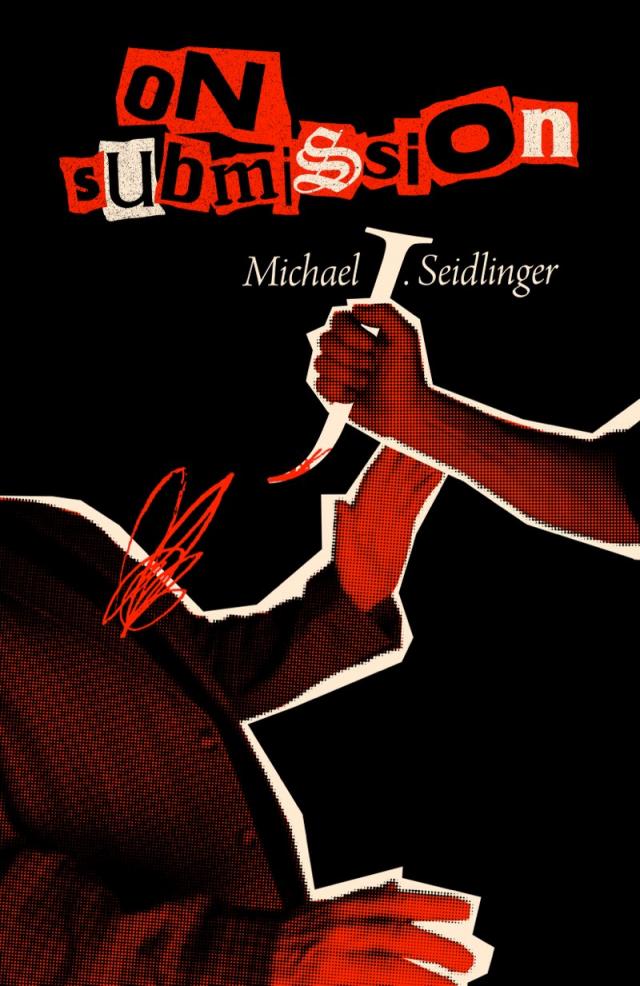


Turn and twist the blade, “But we didn’t sign the contract. Not yet.”
Boom, silence. Hendrix is stunned. There’s an audible sigh, followed by Hendrix waving the white flag in defeat, “Okay. Tell me what you want, and I’ll make it happen.”
“You will make it happen, won’t you?”
A knock at the door.
Expecting to see Marina yet again with another question, instead he sees a man with short graying hair, a blazer, and a dress shirt without a tie. He offers a wave, “Hi there, Mr. Pendel? Your assistant let me through.”
“Yeah, and you are?”
“Detective Monroe. Mitchell Monroe. Is now a good time?”
A knot forms in Pendel’s gut, a series of half-thoughts form—tell him you’re grieving, tell him you’re in the middle of inking an important deal, tell him you’re about to be in another meeting—and then abandon him before they can become in any way logical and legit. They’re all bad ideas, and inevitably, Pendel has no choice but to give the detective his attention.
“Hendrix, I’ll call you back,” Pendel says, ending the call. “Please,” he gestures to the chair on the other side of his desk. “Have a seat.”
“Thank you,” says the detective.
Pendel reads the detective’s body language as he strolls over to the seat, lowers himself, and crosses his legs. The dirt and scuffs on his shoes, the wrinkled shirt, the sight of it all bothers Pendel, leaving him even more on edge than usual.
The edge, it comes from the fact that, well, Pendel simply isn’t that upset about his author’s demise. In death, his author will be as lucrative, if not more lucrative, than he was when alive and well. At the very least, it keeps all the allegations and other negative publicity at bay. For a little bit. It’ll bite back, but it gives the agency communications department, as well as Benji, more time to form a strategic plan of defense. If it comes to it, they’ll be ready to attack.
“Would you like anything to drink?” Pendel asks.
“No thank you,” says Monroe. He takes out an equally worn notepad and pen, like something out of a film noir story. “Just have a few questions. It shouldn’t take up too much of your time.”
“Are you sure? I can always get you something to drink,” Pendel says.
Detective Monroe narrows his gaze, “Just a few questions. If that’s okay?”
That tone just now, Pendel leans forward, elbows on his desk, “Sure, sure, whatever you need. My sincerest apologies if I’m a little scattered. A lot has happened.”
The detective chuckles, “You could say that again. Oh! What am I thinking? Please, my condolences. Seems my mind is elsewhere too.”
“Not at all,” says Pendel.
The empty space between action and response is enough for Pendel to lose his cool. Just come out with it already. Yet the detective lets him sweat a little, perhaps fully aware of how uncomfortable of an encounter this is for someone who hadn’t foreseen its occurrence.
“So, the questions? I’m all ears,” says Pendel.
“Mmhmm,” the detective says, reviewing his notes. “Just one second…”
“Sure thing,” he says, leaning back in his chair, hands folded.
“Okay,” the detective clicks his pen, “How long have you been J.D. Church’s agent?”
He leans forward, “12 years. 12 great, highly productive years.”
“And were you two close? What was the nature of your interactions?”
“It was… professional. We often exchanged banter about the industry, but outside of Jerry updating me about his work, we kept things fairly cordial.”
The hesitation there, a detective notes something like that. “And you just finalized another book deal, correct?”
“Oh yes, a great one. One that would have sustained him for many years of creativity and future success. But now it’ll have to be only in memory. I’m way ahead on ensuring that his work and his intellectual property will live on without him.”
“Great. Great,” the detective jots something down. “Is this the deal with Alfred A. Wolf?”
“It could be. I’m waiting on another offer. I’m thinking it needs to be more than four books.”
“I see,” the detective cocks his head to one side. “Hmm, actually, perhaps you might be able to clear something up.”
“Sure,” Pendel says.
“There was a second deal?”
“Not exactly.”
“You see where I’m not following, right?”
“I’m actively working on an entirely different deal.”
“And this was before or after Mr. Church’s passing?”
Pendel puts it all together. This looks bad.
“After.”
The floor shakes, Pendel’s leg tapping rapidly, a nervous tell that both he and the detective spot at the same time.
“Anyway,” Pendel says, hoping to change the subject. “I’m always looking out for my authors. Sometimes you just got to focus on what you can control.”
“Yes…” Detective Monroe writes in his notepad, Pendel watching nervously.
“Was there anything else?”
Monroe clicks his pen, “We can put a bookmark in it. For now.”
“Excellent,” Pendel grins. He stands up and offers his hand, “Thank you for dropping by.” Don’t forget to show empathy. “And for, umm, what’s the word… the condolences.”
The detective shakes his hand, “We’ll be in touch.”
We’ll be in touch. The detective leaves behind a sobering revelation, to even the inexperienced inquisitor, Pendel didn’t look even remotely upset about his client’s passing.
This is only the beginning.
Chapter 4
Nightcap at some bar called Moot, just the two of us, the trajectory of both our conversation and inevitable commingling being in and of itself moot. She isn’t used to being treated nicely, which is unfortunately more commonplace than it should be. People are looking for a story to relate to, a narrative where they can experience a happy moment or two, maybe even a happy ending.
One drink becomes three, and I’m the one buying.
She’s doing all the talking.
“You wrote the novel in three weeks!”
“I did,” she says, before taking another sip.
“So what’s keeping you from getting that big time book deal?”
She looks at me, this look of defeat, and downs the rest of her drink.
“You can tell me,” I say. “I don’t know anything about this industry. I’m a nobody.”
“You got published in the London Review,” she says. “Well on your way.”
“Maybe.” My turn to nurse the drink.
Boll needs that extra push, the undeniable feeling that she is with a trusted person, someone who has no reason to hold anything against her, and to feel like she can speak her mind.
She sighs, “I get it. I get the feeling of being vulnerable because you feel like nobody really cares, and that it’s an uphill battle, trying to be read and published.”
“I know you get it,” I tell her. But what I’m really waiting for is her confession. There’s a reason why she still hasn’t gotten her book deal, and I’m two steps ahead. I know why. She just needs to say it and then we can go from there.
Out in the open, ready to take it in stride, “You don’t have to tell me. It’s okay.”
“I’ll tell you,” she says. Reverse psychology, the tried and true, it always seems to yield the truth. “I don’t think I’m a priority.”
“Priority?”
“Yeah, my agent signed me, and he was there, very responsive at first; then a few weeks go by, I’m finished with his edits for the manuscript, and then it takes three days and an email nudge to get a response. He tells me that somehow the email slipped by and that he’s sorry and can’t wait to read the new revision.”
“Ugh, that sucks,” I say. Pendel’s MO. But I’m not supposed to know the identity of her agent. Not until she’s told me.
She keeps going, “I circle back with him after a month, feeling like that’s a good enough amount of time for an agent to read it, right?”
“Right.”
“And he takes a few days to get back to me and it’s some terse email saying, I have feedback for you. He doesn’t say what or when, and then it takes me prying via successive emails to see that he might have ideas for yet another revision.”
“The doldrums,” I say.
“Right but he hasn’t given me the feedback, the ideas, or whatever. I’m not a priority. The book could be out on submission, but he hasn’t got around to me.”
What I could say is that agents are busy. That’s true. What I could say is that Pendel isn’t every agent. That’s also true. What I could also say is that Pendel’s really good at his job because he cares only about the dollar signs and major deals, and that would be, like everything else, true. Instead, I tell her what she wants to hear: “You deserve better, Chelsea.”
“Yeah.” She thinks about it and then says, “You’re right.”
She needed to let it out.
“I feel better,” she grins.
“Nothing’s worse than feeling like the person who should be your champion proves that they don’t really care.”
“Yeah,” she says, eying the empty glass.
“I’ll get us another round!”
“No,” she says. “You’ve already paid for…”
I stand my ground, “No, I insist.”
Chelsea, dear vulnerable Chelsea, you have no reason to worry. We’re going to workshop every part of how this story ends.
After the third round, she’s noticeably buzzed and I’m hiding my excitement. There are two ways the story could unfold, and I’ve planned for both. Yet she makes the selection with ease, “My apartment’s like four blocks from here.”
Boll is so starved for attention that she doesn’t want our little flirtatious and fortuitous encounter to end. And why would she? I’m offering to read more of her manuscript, give her some feedback, Pendel’s feedback that remains unsent.
I’ll do anything for another author. I’ll cut them open and find the power of their voice, the uniqueness of their own narrative. Like any laceration, an author’s work bleeds out through every lived experience, just as every lived experience becomes a new vein from which the blood may flow. What it comes down to is being willing, open to another fresh wound.
Boll isn’t like J.D. Church. She remains vulnerable, willing to be seen. She wants to tell her story. I’m going to find out if she’s willing to do anything to tell it.
We spend the next hour on her couch, a printout of her novel, Inside, passed between us. She nods off occasionally, and I take those opportunities to get my tools, the entire process prepped and ready. Thankfully, I can keep everything I need in my little handy bag. None the wiser, I have the blade in one hand and a vial in another. The alcohol does most of the work, but there’s still that extra push, the full reveal to get this workshop started.
“Chelsea,” I say, waking her up. “Chelsea, I finished reading the chapter.”
“You did…” She grins. “I’m so embarrassed. It’s bad.” Her eyelids remain shut, “It’s really bad. My agent doesn’t care because it’s bad and he regrets signing me.”
“Not true,” I say. “Absolutely false.”
I take her left arm, pinch the soft flesh of her wrist, just a little test, and then search for a vein, one good enough for this little jump start.
“I read the chapter; don’t you want to hear what I think?”
Her mouth hangs open, voice barely audible, “I do…”
“Well then let’s get started,” I say, blade raised, sharpened and ready for her prose.
Chapter 5
Pendel doesn’t know what to do with himself, so he turns to the easiest target in his proximity: Hendrix. It starts with an email, subject line: “Well?” in the email, he reiterates how easily the J.D. Church estate can exchange hands, become the cash cow of a competitor. There’s so much at stake, and Pendel at least has this in his control. Doesn’t even take that long to get a response, an email reply with Hendrix keeping it brief, “In a meeting with the publisher as I type this. Will know more soon.”
Yeah, no. That’s just not good enough.
Pendel starts making some calls to other editors. First up is what’s-her-name. The editor at FSG. He uses the fresh Kawada deal and the fact that she had wanted the latest Church novel in the first place as leverage.
“Hey there,” Pendel says. “Remember what I said about how that deal was only the beginning?”
She’s nervous, you can hear it in her voice. “Yeah. I remember.”
“I’m sure you’ve heard by now,” Pendel says. He needs to be sure that he sounds grief-stricken, at least enough to potentially tap into her sympathies. The freshness of Church’s death will potentially draw out every editor, not one with any pushback. Everyone’s going to listen, and everyone’s going to give in.
“I’m so sorry,” she says.
Yeah, he doesn’t actually care. There’s no use for her apologies. Instead, he takes her half step and offers a full stride: “This is the call. The one that will make or break your career. You wanted the latest Church, well I’m offering you the latest and the last, every single unpublished manuscript.”
She’s speechless. Throat clearing followed by a jittery mess of a reply, “Then, uhh, so.”
“Listen up. I said listen up. I always keep my word. Now’s the chance, the moment where I hold out my hand and all you need to do is take it.”
“But I was under the impression that a deal had already been made,” she says.
These young editors, he just can’t with them. “Hey, my hand. You got a narrow window to make an offer.” He makes it even clearer, telling her that she has at best a half hour. “About as long as it takes me to call up other editors.”
Before she can say anything else, he’s ended the call and dials yet another editor. This guy, Pendel has always been bad with names, especially names attached to people from which he sees little value or people he dislikes, and this is no different. He’s that senior editor at Macmillan. The guy always lowballs Pendel. He thinks the guy is a mediocre editor; just not that good at his job. Really, it’s more like the editor doesn’t play into Pendel’s games. He doesn’t find it of any use or interest attempting to clamor over Pendel’s manipulative dealings, particularly when the agent pits editors against each other, provoking the biggest offer, peddling lies and other shadow play, in order to ensure that things fall in Pendel’s favor. They have a history of disagreement, yet Pendel still calls him up.
“You probably have already heard,” Pendel says.
“Yeah, how unfortunate. He was your best author,” says the editor.
What a piece of shit. Pendel ignores the comment, “Now’s your chance.”
No need to spell it out, this editor’s been around. “Thought Wolf had him on lock.”
“Nothing’s official until it’s signed on the dotted line.”
The editor thinks about it, pure silence on the line, each anguished second sending Pendel’s stress level ever close to its peak, and then the editor says, “When do you need an offer?”
“Now,” says Pendel.
“Can’t do that,” the editor says.
“Now meaning within the hour.”
“How about ‘Now meaning EOD?’”
Pendel sighs, “Just get me an offer quick.”
Laughter on the other line as he ends the call.
He turns his attention back to his primary subject. Hendrix hasn’t emailed back, but that’s okay because here’s Pendel with another update.
Update: “Seems there’s interest.”
Maybe one more call, just in case. Pendel thinks of that other editor, someone he’s never worked with, but got close, once. She specializes in genre stuff, which works for J.D. Church, though really, category doesn’t matter here. Church is a category all his own. Is, was, whatever.
Pendel’s mid-sentence when she answers, “…just completely gutted. But I must do right for Jerry, and he deserves the best editor, publisher, and champion. With him gone, I need to know that his words are in trustworthy hands.”
She starts with her condolences, and proceeds to go a full step further, “Reading J.D. Church’s fiction helped me discover the joy of reading. I wouldn’t be where I am if I hadn’t read his novels. They opened an entire world. He’s changed lives. Made a big difference. The book sales are one thing, but the way I see it, he’s one of the reasons younger generations find their way to fiction. Look at any bookstore, he takes up multiple shelves.”
Character details. Proof of her fandom. She’s a long-time reader, hopeful new editor for the author. Pendel brushes it all aside, “Then you understand the importance of finding a champion befitting of his legacy.”
“Yes,” she says.
“I’ll expect an offer within the hour.”
“Wow, wait what?”
“You said it yourself, he’s changed lives. Don’t you want to be at the helm of ensuring that future generations may find and enjoy his work?”
She begins explaining the difficulty, the absolutely unrealistic sense of urgency Pendel is placing on the submission, but he cuts her off, “One hour.”
He prods Hendrix with yet another update: “Seems they’re willing to settle with the agency demands.”
That’s three other editors, cold-called and given a bargain, an offer that should be fathomed as once in a lifetime.
Basically, who wants to future-proof their career today?
Of course, even after all of this, the bitter aftertaste remains, and worse, he hasn’t stopped thinking about the detective. We’ll be in touch. What to do, what can he do? Nothing, and that gets him emailing a few other editors, none of whom he considered to be capable of a lucrative offer. But it’s something. It keeps him busy.
Yet another update to Hendrix: “Going to be a big deal, Church heads to FSG!”
Pendel emails back and forth with editors. Whenever there’s a lull, he returns to previous correspondence with Hendrix, reading between the lines, looking for something that isn’t there. Could be that he’s getting a little paranoid.