On submission, p.20
On Submission,
p.20


Moyer falls asleep next to him, the flight lulling Pendel into a temporary sense of relief. They are just two passengers on their way to a conference.
That’s where they are going, Pendel assumes. From the ticket, it’s written plainly, Eastern Iowa Airport (CID). Cedar Rapids. Pendel has been there before. The Iowa Writers Workshop. It’s about that time for the weeklong Mission Creek festival. Somewhere between all the events, there could be an obligation, programming with Pendel’s name on it.
The ticket is the final piece. Moyer is taking them to the epicenter, where authors both established and emerging gather. Led to the slaughter. Being led to the slaughter.
Pendel’s life does not flash before his eyes.
Rather, he enjoys a would-be tender moment with a retrospective, a real one, the one he wouldn’t share with Moyer, or anybody else. He uses his phone and scrolls through all the screencaps and photos he has saved. Shuffled through miscellaneous photos and memes are those moments, the real moments, when he felt appreciated and grateful, the moments when he saw all his work produce a positive effect.
He stops on an image, the acknowledgements page of a book by an author, one of his authors, the name now eluding him. A shame, one that produces a flicker of guilt and embarrassment before he reads those lines, the reason for taking the photo in the first place. “To my agent and true believer, Henry Richmond Pendel. You’re a rock star, and thank you for fighting the good fight. This book wouldn’t exist without your courage.”
His courage.
Don’t know about that…
Pendel swipes, the image replaced with another. It’s an author interview, again the name of this author, his author, missing from his memory. Yet there it is, more evidence of him being a good person: “So many years of just sucking at writing. That’s what you’ll have to do if you want to get good at anything. You got to suck before you can blow… people away. Anyway, I didn’t have much left in the tank, so to speak. I was querying agents and wrote something like eight novels before I ever heard back from anyone that wasn’t an instant pass. One day I’m ready to quit and the next, I get an email from an agent, and not just any agent: It’s, yeah, Henry Pendel! That’s all it took, seeing him respond to my writing. He asked to send the full MS. Like a week later I had representation. Pendel sent the manuscript to some editors and fast forward like a month later and I became a published author.”
Maybe not a good person, but at least a good agent.
Another image, this one is a photo of Pendel and Mal. She’s so happy in this photo. He has his arm around her, Mal grinning widely. Where was this? Pendel squints, glimpsing what was captured in the background of the photo. Then it hits him suddenly.
“Ah!”
Moyer shifts in his seat.
Pendel holds his breath, waiting for Moyer to settle.
This was the book launch, after party. She had just launched her debut at The Strand. My Time in the Heartland was getting a lot of attention. He even looks happy in the photo. This was before things fell apart. The future looked bright.
Pendel sighs, swiping to the next capture.
Why did he save this one?
It’s a headline: LITERATURE IS NOT THE SAME AS PUBLISHING, most of the article cut off. It looks to be about an independent publisher, Coffee House Press, with nothing to do with him. Still, Pendel rereads the headline, reflecting on this image. When it clicks, he remembers that he had been on the board of directors, made a sizeable donation. Back then he had the right motivations. He wasn’t yet making donations simply for tax purposes or to get that public nod. He took this screencap because it was back when he believed that a book could be more than its pages, a story more than its tale. Elevating the life on the page, elevating the authors who made their sacrifice to produce a manuscript.
He can’t stand it, swiping to another image.
This one’s a video, and before he can lower the volume or better yet delete it, the brunt of its message hits him hard. There he is, Jerry on Letterman, peak of his career, Harvest Falls had just come out, and he’s chatting about Pendel.
“He talked me off the ledge,” says Jerry.
Letterman sets him up to tell a heartfelt tale of an author and his agent, an author facing the biggest lesson of his career and how his agent helped him fight, when all he wanted to do was end his own life. Pendel knows the truth. The way Jerry lies, it’s so convincing.
He must be an author, and a damn good one.
None of it is true. And of course, it was done to make Jerry seem infallible, a weak hero, one that people can relate to, at a time when both Pendel and Jerry were afraid that one of his students was going to press charges.
Pendel replays the video. By the time he goes for a third viewing, the tenderness of his retrospective is shattered, wiped clean and replaced with the punishing shame and fear that will consume his final day of freedom.
Chapter 9
When we get to the campus, the festival is in full swing. Looks like they aren’t familiar with his or my story, which is unexpected. We’re greeted by a student named Iain, who is excited to be on the so-called “welcome committee.” He finds us as we’re walking around the tiny little downtown area, seeing that many a writer has already begun taking advantage of the festivities.
“It’s a fun weekend,” says Iain. “Boozy and bookish.”
I’ll take the lead, having briefed Pendel on the plane ride to Cedar Rapids to remain silent. As always, he must follow me, not the other way around. He wears fear so well, it’ll be up to me to make it a costume, one that keeps all these emerging authors, these hopeful and ambitious writers, believing in the reputation long enough for our final scene.
Back in the city, he’s a bust, reputation death, yet here, they seem to be oblivious. Could it be that they still hope for a breakthrough? Across social media, Pendel has been discussed as an agent of toxicity, with many agents offering their own criticisms of how he conducted business. Editors denounce their relationships with Pendel. Authors remain divided: Some still seeing him as a potential agent acceptance while others, typically the more knowledgeable of the industry dealings, know that even if one were to sign with Pendel now, he wouldn’t be able to get an editor to answer his emails or calls.
“Looks like people aren’t wasting a single moment to pregame,” I say, noticing a group of students openly imbibing from tallboys.
Iain laughs, “You know how it is.”
I do.
“Work hard, play hard,” I say.
The point here is to relate, to become like the students, an author hopeful for a breakthrough. Where victim could become equally villain, it all depends on how the story unfolds, and I’m already three steps ahead. It’ll be in that workshop. There I will be, and so will Pendel, apprehended and caught in the act.
“We can come back later, but you guys kind of arrived a little late and we’re short on time,” Iain says. “Let me show you where housing and your rooms are, so you can drop off what you need.”
“Naw,” I say. “We’re good.”
A look cast in Pendel’s direction, he isn’t paying attention, a contemplative gaze cast across the idyllic campus scene, the same one that I have paid barely any attention.
“Well good,” Iain says, grinning widely. “Was cutting it short but this changes things!”
“Then we can be early,” I say.
Turns out Iain is in the workshop. Outside the classroom, he tells me the situation, “So this is the advanced fiction workshop, but it’s a small crew today, six, seven including me. You’re his handler, right?”
I jab Pendel with my finger, getting his attention.
“Oh, no. No. I’m just along for the ride.”
“Oh,” Iain says. “Okay. I just assumed…” Changing the subject, he asks me if I’m a writer. To which yes, I’ll reciprocate. Better yet, I’ll even go so far as to show a little vulnerability, “I am, or at least trying to. It’s been grueling out there. I think everyone’s burnt out.” That’s enough to make me amiable to an ambitious student and writer like Iain, who not only understands my situation but also secretly believes he won’t arrive at the same fate, not when he’s attending such a prestigious MFA program like the Iowa Writers Workshop. Instant doors opened to possible agent representation and book deals.
Pendel’s turn to say something: “Glad to be here.”
“We’re all excited,” says Iain. “Do you need anything before we get started? We got water and access to a projector, should you require it.”
He gives me a look, yet again going against my command.
“I’m fine,” he says. “Thank you.”
“Well okay,” Iain grins. “I’ll head inside and intro you in a few minutes.”
“Sure thing,” I say, implying that we will follow him into the classroom shortly.
Iain has his hand on the doorknob, “Oh, yes. Right.” He gestures in the direction of the room, “We’ll all get situated then.”
“Great,” I say. “Thanks!”
When he’s gone, I pull Pendel in close. “You can’t fuck this up. This is it, the final scene. We’re not making it past this point.”
He sighs, “I know.”
“Don’t make eye contact,” I tell him. “You’re going to want to stick to what I’ve told you, keep to the discussion points.”
“Okay,” he says.
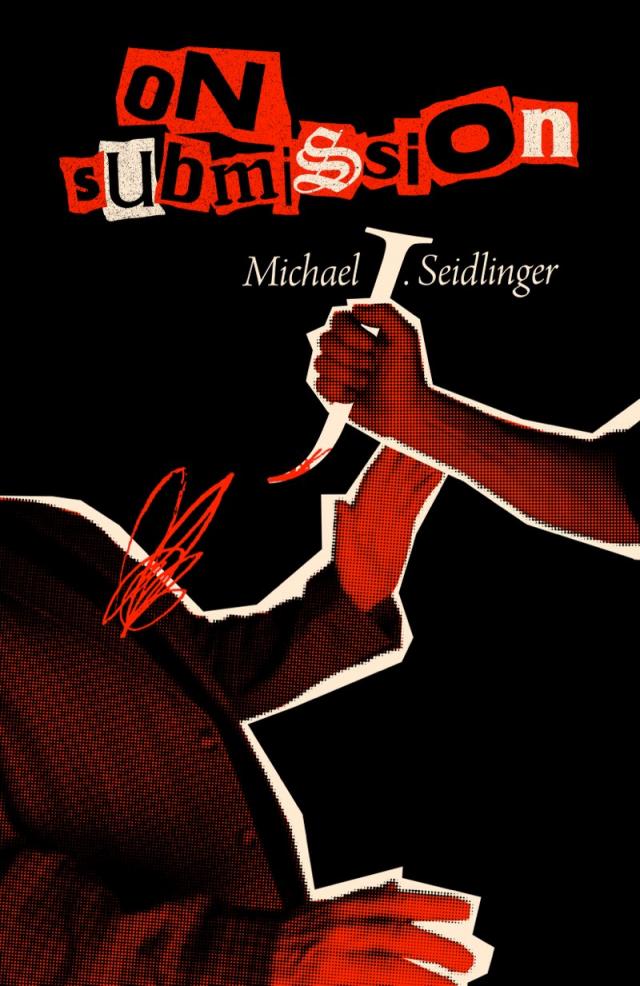
“And here,” I hand him a knife.
He hesitates, “I don’t think I can…”
“Don’t you worry, I’m here to help.” I show him that I’ve got my own blade tucked away in my handy bag.
A workshop professor passes us in the hallway, instantly recognizing Pendel. She stops, turns around, and walks the way she arrived.
“Everybody recognizes me,” he says.
“Isn’t that what you want?”
I go in first, finding a seat up front. Give the students around me a little greeting. Just the usual hey and to the lone student who seemed a bit curious about my appearance, a curt explanation, “They said I could audit the class so…”
The door opens, a grand entrance.
Henry Richmond Pendel.
He can still turn it on when he wants to, huh?
I’m impressed. He takes his position at the front of the classroom, Iain quickly giving a gushy introduction, one that would be heartfelt and kind if it wasn’t so obviously made in hopes of a later offer to query and to be considered as a client.
Pendel grins, “Thanks, Iain, for such a warm welcome. I have to say, I always look forward to a visit to the Iowa Writers Workshop. I know I’m getting the best in every regard: The best accommodations, the best conversations, and the best, most talented writers. I always joke with my colleagues, saying that when you visit Iowa Writers, what you’re really doing is going shopping.”
He gets a minor pop, laughter from the cohort of students.
“It’s kind of true,” he says. I notice the lowering of his right hand, reaching for the weapon stowed away and hidden behind his back. He exhales, “I’d love to quickly go around the room, have each of you tell me your name, your track—fiction, nonfiction, poetry—and your goals, yes that’s the big question, goals as an author. Do you want to become a bestselling author? Do you want to eventually work in the film industry? Do you want to write the Great American Novel? Sky’s the limit.”
Everyone remains silent.
A student in the back says, “Isn’t that kind of, like, presumptuous?”
Pendel frowns, “We’re all being open and honest here. That’s what a workshop is for, isn’t it?”
“I guess,” says another student.
It’s my cue to speak up, “I want to be remembered.”
That gets everybody’s attention, and Pendel, he finally keeps up his end of the story, that recognizable glut of confidence when he says, “You’ll have to be willing to do anything…”
“To tell your story,” I say, finishing his sentence.
What follows is a final exhale, pure violence to preempt the consequences of our actions.
Chapter 10
There are seven students, seven victims, all willing participants in the final scene of a most distressing kind of story. Pendel glimpses the inner wants and desires of each emerging author:
“I want to be a full-time author.”
“I want to win the National Book Award.”
“I want to see my books turned into films.”
“I want to be an acclaimed author and professor.”
“I… just want to be famous. Like David Foster Wallace.”
“I want people to read my stuff long after I’m dead.”
And the last student, Mr. Welcome Committee, Iain, expresses his own desire, “I just want my parents to be proud of me.”
Moyer’s willingness to be so open about his desire causes the rest of the workshop to lower their guard. Pendel congratulates everyone on their candor, their honesty, and proceeds to explain the publishing industry, how it’s more than a well-written story, much more than quality and charisma. “It’s about who you know,” he says, “and who you’re willing to connect with.”
He discusses different networking strategies, including being a literary citizen to a community of authors to get your name out, starting your own journal or indie press, and even going so far as to move to a city with a big scene and play the socialite card.
The cohort listens intently, Pendel expertly worldbuilding while Moyer becomes just another author in the workshop.
“I think now’s a good time to…” From its sheath, Pendel reveals the knife. “Make a few edits. Who would like to go first?”
The cohort is indifferent to the reveal of the weapon, remaining in their seats, holding their works-in-progress close, perhaps expecting the brandishing of a knife to be some metaphor for the grueling nature of writing and rejection.
A voice speaks up, Moyer’s hand raised, “I’ll go.”
Pendel doesn’t know what’s happening. He’s followed the script, yet when Moyer volunteers, he effectively derails his next move. Pendel was supposed to pick on a student, forcing them to offer their work, and from there, they’d discuss it as one would in a workshop, except whenever Pendel found something ill-fitting, he was to physically hurt the student.
Moyer’s choice to be the first changes everything. Joining him at the front of the room, Pendel does his best to maintain composure, “Great, it’s so great when we have a daring and fearless volunteer!” Yet between actions, Pendel tries to communicate with Moyer.
In a hushed whisper, Pendel asks Moyer for new commands.
When he holds the knife above his head, Pendel asks, “Am I supposed to kill you?”
The knife as a weapon and metaphor becomes the focal point of the presentation. Moyer doesn’t give Pendel anything, instead defaulting with, “Follow my lead.”
“Okay, so you’re a novelist then?” Pendel’s reaching, blind to what’s about to happen.
“I am,” says Moyer. “Aspiring novelist.” He chuckles, “I didn’t get into Iowa Writers but I’m here for Mission Creek, so I figured, why not sit in on this, this really important lecture?”
“Right,” says Pendel. “Thank you for your interest. It always makes a person feel great knowing that people fought to hear them speak.”
Moyer tells the class, “I think I’m just desperate, you know? I’ll do anything to be published.”
“Anything huh?”
Moyer issues the latest command, “Now. Knife. My shoulder.”
“No way,” says Pendel.
“Do it,” says Moyer.
“It doesn’t make any sense to…”
“I said do it!” Moyer grabs his free arm, “You’re going to stab me because you want to be remembered. You’ll stab me because there isn’t a better way to end the story.”
What this looks like to the students: Pendel and Moyer inches from each other, backs turned to the classroom. They get every third or fourth word, and then there’s still the recognition of a weapon and a volunteer. This doesn’t add up, not in a workshop environment.
One of the students speaks up, “I’m having trouble following, umm…”
“Now,” Moyer hisses. “Now!”
Put on the spot, the pressures of everything that preceded this scene, the story completes its circle with an inceptive stab, the blade cutting into Moyer’s left shoulder.
The pain is possibly enough, yet Moyer sells it well, instantly in tears, crawling toward a now quite stunned group of students.
Pendel loses sight of himself, the feelings bottled up coming out in a rage. “I didn’t mean to hurt the guy! He did it to himself!”
The students don’t believe him, “We saw you. You stabbed him!”
“Yeah,” says another. “We saw it all!”
Moyer holds onto his left arm, “Please don’t do this.”
“I’m not going to do anything,” Pendel says.
“Someone, get someone!”
Pendel points at a fallen Moyer, “He told me to stab him!”
“No, please,” Moyer begs. “Please, someone, stop him please!”
It’ll be Iain that steps forward, coming to the rescue, and it’ll be like a flinch, Pendel at peak pressure and stress, being publicly prosecuted for a command, the latest in a long line of manipulation. Iain rushes forward and gets a blade in the neck. Nobody sees that coming, not even Moyer. What follows is more violence, a friend of Iain clamoring over his dying body, and then attempting an attack on Pendel, who is too far gone, operating on sheer anger and panic, to prevent additional attacks.
He slashes at one student’s stomach, cutting through their shirt and stomach, deep enough to offer a peek at their innards. Another student loses an ear. The student that attempts an escape gets perhaps the worst that Pendel has to offer, not one but five stabs in the back.