Changing tides, p.14
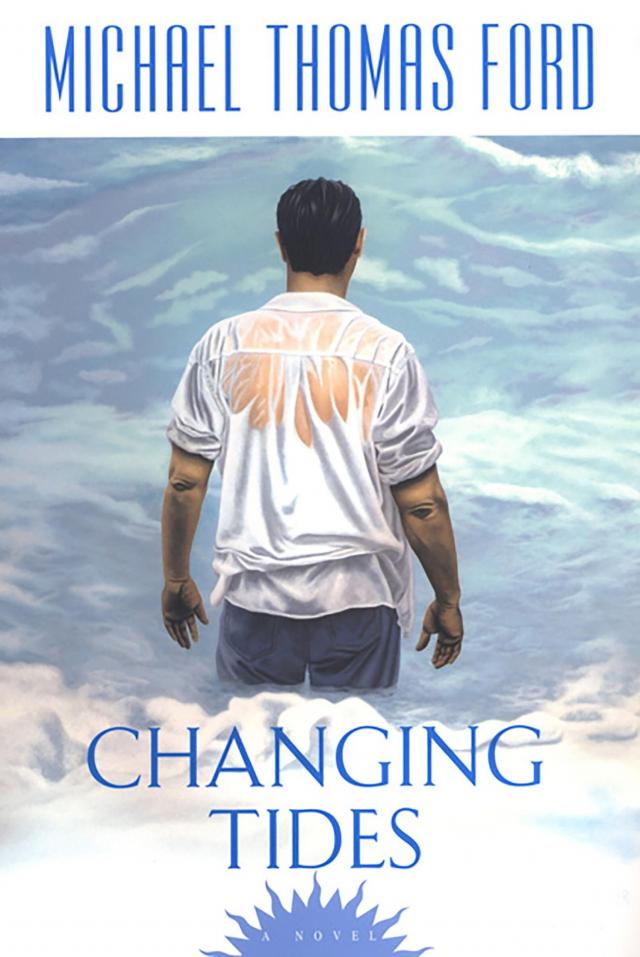
Changing Tides,
p.14


He took the aspirin and brushed his teeth. On his way to the bedroom, he saw the light in the stairway and remembered that he hadn’t cleaned up. It can wait, he told himself as he flipped the switch on the wall, plunging the downstairs into darkness.
CHAPTER 16
“I bet you’ve never had a squid burrito,” Brian said as he backed his car into a spot and turned the engine off.
“And I bet I never will,” said Caddie, making a face.
“Come on,” Brian teased. “Where’s your sense of adventure? If I’d known you were one of those girly-girls, I never would have asked you out.”
Caddie fixed him with a fierce look. “Who are you calling a girly-girl, buddy?” she said.
Brian grinned. “Prove it, then,” he said. “Try the squid burrito.”
The idea of such a thing sickened Caddie. She imagined a tortilla filled with slimy tentacles. But she wasn’t about to give Brian the satisfaction of thinking she was some kind of prissy ditz. “You’re on,” she said as she opened the car door.
Taqueria Del Mar didn’t look like anything special. A faded mural of a fishing boat covered one wall, and the fluorescent lights cast a harsh glare over the beat-up tables and old linoleum floor. As they walked in, Caddie wondered why any guy who wanted to impress her would bring her to such a place, and her opinion of Brian dropped a few notches.
“Hola, amiga,” Brian said to the woman standing behind the counter. When she saw him, her tired face took on a renewed glow, and she smiled warmly. “Hola, amigo,” she said cheerfully.
Brian leaned against the counter. “Dos burritos de calamar,” he said. “Y dos horchatas,” he added.
The woman nodded and went to prepare the food. Caddie sat on one of the tall stools that lined the counter. “Look at you, speaking Spanish,” she said.
Brian shrugged. “I spent last summer working with Iemanya Oceanica, tagging sharks in the Sea of Cortez,” he told her. “I picked up a little bit.”
“Sharks, huh?” Caddie said. “You weren’t kidding when you said you were into this marine biology suff.”
“I’d be back there this year, but I have to earn some money for school,” said Brian. “I made a deal with my parents, last summer doing volunteer work and this summer getting paid. So twice a day I get in the kelp tank and feed the fish. The rest of the time I help maintain the habitats.”
“So you’re a fish maid,” Caddie joked.
Brian pretended to be offended. “I prefer to think of myself as a marine sanitation engineer,” he said. “Maid sounds so cheap.”
The woman returned with their food and placed it on the counter. “Gracias,” Brian said as he picked up the tray and carried it to a table.
Sitting down, Caddie looked skeptically at the burrito. It looked normal, but she knew that inside lurked the dreaded squid. She watched as Brian picked up his burrito and took a big bite. Hesitantly, she poked at hers with a plastic fork.
“What are you waiting for?” Brian asked, watching her. “Dig in.”
Here goes nothing, Caddie told herself, stabbing the burrito and cutting off a chunk. She tried not to look at what was inside as she raised the fork and stuck it in her mouth. She chewed slowly, and was surprised to find that the burrito was delicious.
“Well?” Brian asked.
Caddie nodded and swallowed. “It’s fantastic,” she said, taking a second bite.
“I don’t want to say I told you so,” said Brian. “But I told you so.”
Caddie ate for a minute, then tried the drink Brian had ordered for her. The horchata was a milky white, flecked with brown and smelling of fruit and spices. She took a sip and found that she liked it.
“Don’t tell me you’ve never had horchata either,” Brian said, watching her taste the beverage. “What, do you live in a cave?”
“We can’t all be world travelers,” Caddie said, responding to his taunt with a sarcastic look.
“I just thought someone who grew up in Monterey would have already had her horizons broadened,” said Brian.
“I didn’t grow up here,” Caddie told him. “In fact, I’d never even been here until this week.”
“But I thought you said your father—”
“My parents are divorced,” said Caddie before Brian finished his sentence. “I’m just here—”
She hesitated. She’d been about to explain that she was only there because her mother had made her. Then she remembered, Brian was a college student. That meant he was at least nineteen, maybe even twenty. If he knew she was sixteen, he probably wouldn’t want to go out with her. She did some quick thinking.
“I’m here for the summer,” she said. “But I go to school in L.A.”
“What are you studying?” Brian, busy adding pico de gallo to his burrito, wasn’t looking at her, and so missed the look of momentary panic that flashed across Caddie’s face as she tried to choose from one of a multitude of possible lies.
“History,” she said, grasping at the first thing that came to mind.
“History,” Brian repeated, sounding impressed. “What’s your favorite period?”
Caddie, who at that moment couldn’t think of a single historical era besides the 70s, bought herself some time by saying, “No girl has a favorite period. They all suck.”
Brian snorted. “I guess I asked for that,” he said.
Caddie, relieved, suddenly found that her brain had begun working again. “I guess I’m most interested in the Renaissance,” she said casually. “You know, when everything was changing and there was all of that great art and music and ... stuff,” she finished, wishing she’d stopped when she was ahead.
But if he noticed her fumble, Brian didn’t show it. He was working on the second half of his burrito. “I didn’t much get into history in school,” he said. “To me it was just a bunch of dead guys. No offense,” he added. “I’m sure it’s actually really fascinating.”
Caddie shook her head. “Not really,” she agreed, relieved he hadn’t started asking her about her favorite king of France or something. “I’m considering switching to film or something next year.”
“Now that’s something interesting,” said Brian. “I love movies. What’s your favorite?”
“What’s with you and favorites?” countered Caddie.
“I don’t know,” Brian said. “I guess it’s a fun way to get to know someone.”
Caddie drank more of the horchata before replying. “I guess my favorite movie would have to be Pan’s Labyrinth,” she said, thinking about the last movie she had seen with Sam Bree. “What about you?”
“Pirates of the Caribbean,” Brian said. When he saw Caddie looking surprised he continued. “What? I didn’t say I was deep. Actually, it was one of only two movies we had on the boat last summer. The guy who was supposed to bring them forgot them, so we had to watch that and Steel Magnolias for two weeks straight, until we got back to La Paz and could get some different ones.”
“I’d think you would hate it, then,” said Caddie.
“I think it’s a case of that, what do they call it—Stockholm Syndrome. You know, where you spend so much time with the person torturing you that you kind of fall in love.”
“So you’re in love with Johnny Depp,” said Caddie.
Brian paused, as if considering her statement. “No,” he said eventually. “I don’t like guys with facial hair.”
“Tell me more about the sharks,” Caddie prodded, trying to keep the conversation away from herself and what she was or was not studying at her fictitious college.
“Sharks are amazing,” said Brian, instantly enthused. “What we’re doing to them is absolutely fucking insane. We should be worshiping these things as gods. I mean, they’re one of the last things left around from the dinosaurs. So what do we do, we kill them off by the millions.”
He looked over at Caddie. “Sorry,” he said. “I get carried away. But you’re probably used to that, what with your dad being a marine biologist.”
Caddie nodded vaguely. She’d actually never heard her father talk about anything to do with his work, at least nothing she’d listened to very carefully. She didn’t know if he had an opinion about sharks or not.
“Anyway, they’re beautiful,” Brian continued. “Just amazing. You know how they always say that they have dead eyes? It’s not true. A shark’s eyes are absolutely perfect.”
He continued to talk about sharks—their eyes and every other part of them—for a good ten minutes, while Caddie ate her burrito and listened. She enjoyed hearing Brian talk. He was completely different from her father, who couldn’t tell an interesting story to save his life. If he ever got as excited as Brian did, she might actually have cared about what he did. As it was, she didn’t even really know what it was he worked on.
“One time we were down there and Juan—he’s one of the scientists—pointed behind me,” said Brian, still talking about his experiences the summer before. “There was this big school of hammerheads. There must have been fifteen or twenty of them. They swam right by us, like they saw divers every day of their lives. They couldn’t have cared less.”
“Wow,” Caddie remarked, not sure how else to respond. To her the idea of being near a bunch of sharks sounded more like a suicide attempt than something to get excited about.
She drained the last of the horchata from her glass and wiped her fingers on a napkin. Brian, who had finished several minutes before, piled everything on the tray, then picked up a paper from a pile that was sitting on the floor near their table. “Let’s see what’s playing,” he said, opening the paper and leafing through. He found the movie listings and folded the paper over, laying it on the table and smoothing it with his hand.
“Anything good?” Caddie asked.
“You’re the movie expert,” Brian replied. “I’ll let you pick.”
“What are my choices?”
“I’ll narrow it down to three for you,” said Brian. “A Hugh Grant comedy, some horror flick that I think is about a bunch of ghosts who are pissed off at Lindsay Lohan, or George Clooney playing George Clooney.” He looked at Caddie with his eyebrows raised. “Well?”
“Gee, I don’t know,” Caddie said, folding her hands and looking serious. “That’s a tough one. I guess I’ll have to go with A. Hugh Grant.”
“Then Hugh Grant it is,” Brian said. “It starts in twenty minutes, so let’s go.”
They returned to his car and drove to the theater, walking in just in time for the previews. Brian followed Caddie to a seat in one of the rear rows, where they were far removed from the handful of other people in the sparsely filled room. When, halfway through the movie, Brian found Caddie’s hand and held it, she made no attempt to take it back.
Afterward, once more seated in Brian’s car, Caddie wondered if her night with him might end as her date with Nick had. Instead, Brian looked at the clock and said, “I’ve got to be at the aquarium by six. Do you mind if I take you home?”
“Sure,” said Caddie, not sure if she was disappointed or relieved that he hadn’t attempted to get her into bed.
Luckily, she remembered the name of the street her father lived on, although the exact number escaped her. It didn’t matter, as she would know it by sight, and Brian knew how to get there. He drove slowly, the windows down and the warm summer night all around them.
“I hope you had fun,” he said after they’d ridden in silence for a few minutes. “Because I did.”
Caddie, who had been looking out the window, turned to him. “I did,” she said. “Nothing says romance like squid burritos and a Hugh Grant movie.”
“True,” said Brian. “I don’t know what I can do to top that. Maybe we should just call it quits right now and save ourselves the disappointment.”
Caddie’s heart lurched as a sick feeling filled her stomach. Was he saying he didn’t want to see her again? He’d held her hand, but that was nothing. Guys did all kinds of things with girls they didn’t really like. Hell, she did things with guys she didn’t really like. Why should Brian be any different?
They reached Clipper Street. Seeing her father’s house, Caddie told Brian where to stop. She noticed that he left the engine running. “I guess I’ll see you,” she said, reaching for the door handle.
“Don’t I get a good-night kiss?” Brian asked, stopping her.
Caddie looked at him.
“Unless you don’t kiss on the first date,” said Brian, apparently sensing her hesitation. “I’m sorry. I didn’t mean to be a jerk.”
Caddie answered him by leaning over and kissing him. After a moment, his arms went around her and he kissed her back. But only for a minute, and without aggression. Then he pulled back.
“Can I call you tomorrow?” he asked her.
“I’d like that,” she answered.
Brian opened the glove compartment and rooted through the contents. He pulled out a pen and a piece of paper, which he handed to Caddie.
“What is this?” Caddie asked, looking at the paper. “A speeding ticket?”
Brian grinned. “Fifty-five in a forty-five zone,” he said. “Sorry, officer.”
Caddie laughed, writing her number on the ticket and handing it back to Brian.
This time, when she opened the door, he let her go. She stood and watched him as he turned the car around. He blew her a kiss as he drove away.
She walked to the front door not quite sure how she felt. She liked Brian. But she wasn’t sure how he felt about her. His kiss had been nice, but she was used to guys wanting more than nice. Maybe, she thought, Brian had sensed that she was younger than she was pretending to be. Maybe he knew she was a phony. Before she’d reached the front steps, she’d already decided that she wouldn’t hear from him again.
Inside, the house was dark. She fumbled for the light switch, found it, and flicked the hall light on. Then she looked at her watch. It was almost eleven. Her father was probably in bed.
She went to the kitchen and saw that the sink was piled with dirty pots. Open jars and half a stick of butter—now softened and ever so slowly forming a thick puddle—littered the countertop. She smelled the sharp tang of pasta sauce.
Then she remembered her dinner date with her father. She’d forgotten all about it. Surveying the mess he’d made of the kitchen, it occurred to her that he’d gone to a lot of trouble. When she saw the dining room table, still set as if any moment someone would sit down at it and enjoy the dinner that was waiting, she felt a pang of remorse.
Almost instantly, she banished it. So she’d forgotten about dinner. Her father had forgotten all about her the night before. Why should she be any different? Besides, she told herself, examining the contents of the serving bowls, it was only pasta. Anyone could make pasta. It wasn’t as if her father had done that much. Her mind flashed on the number of dishes in the kitchen, but that, too, she elected to ignore. It was only pasta. And the sauce came out of a jar, she told herself.
She switched off the lights and went upstairs, half expecting her father to appear and confront her about missing dinner. When he didn’t, she told herself that he must not be very upset at her. If he was, she thought, he would have waited up. It’s not that late.
She glanced at his bedroom door, saw that the narrow slit at the bottom was dark, and moved on to his office. The door was open, and inside the room was still. Moonlight coated the empty chair, and the polished surfaces of the typewriter keys winked like tiny eyes in the darkness.
She hurried past and went to her room. Shutting the door, she sank with relief onto her bed, ignoring its muffled protestations. No, she wasn’t sorry. She didn’t owe her father anything. Besides, it was just one stupid spaghetti dinner. He probably didn’t even care that she hadn’t been there. Why should he start now? she asked herself.
She undressed quickly and, after a quick trip down the hall to the bathroom, climbed into bed. She considered taking a Valium, but a quick count of them decided her against it. There was enough pot, though, for a small joint. She deftly rolled it and took a hit, blowing the smoke toward the open window.
Turning off her light, she sat in the half dark, letting the pot relax her. Maybe Brian would call her, she thought. She would like that. And maybe, next time, he’d try a little harder. She would like that, too. Thinking about it, the dirty dishes downstairs faded from memory, replaced by fantasies about what the summer might hold for her. By the time she’d smoked the joint down to its end, she had forgotten all about them.
CHAPTER 17
The young woman behind the desk looked up at Hudson and smiled faintly. “Can I help you?” she asked.
“Yes,” Hudson said. “You can.” Her attitude annoyed him, and he assumed a tone of sarcastic politeness. Then, realizing that he was merely nervous, he stopped himself. He cleared his throat and began again. “My name is Hudson Jones,” he said. “I have an appointment with Helen Guerneyser.”
“One moment,” the young woman said, picking up the phone and pressing a button. A moment later she said, in a much more lively voice, “A Mr. Jones is here.”
She hung up and was opening her mouth to tell Hudson that he could sit and wait when a woman came striding out from the reaches behind the receptionist’s desk. Perhaps sixty, she wore a red suit that fitted her slim frame flawlessly. A cream-colored blouse beneath the jacket was open at the throat, revealing a neat string of pearls. Her hair, auburn and artfully cut in a flattering short style, complemented her fair skin. Hudson observed all of this during the ten seconds it took for Helen Guerneyser to round the desk and hold out her hand.
“It’s a pleasure to meet you,” she said, grasping his fingers in hers. “I feel like we’ve known one another for some time, what with all of the e-mails.”
Hudson nodded. “I know,” he agreed. “But I have to tell you, you’re not what I expected.”
Helen Guerneyser peered at him over small, gold-framed spectacles. “Is that so?” she said.
Hudson, alarmed, fell all over himself trying to apologize. “I didn’t mean ... It’s just that ...”