Changing tides, p.7
Changing Tides,
p.7


As if to prove this point, the dog came running up, stopping in front of the man and dropping the stick onto the sand. When his owner didn’t retrieve it quickly enough, he barked once and nudged it with his nose.
“One more,” the man said, picking up the stick and throwing it. The dog turned, disappearing into the dim.
“It must be nice to be so happy about a stick,” said Hudson.
The man laughed as the dog returned. “Want to go home?” he said, and for a second Hudson thought he might be speaking to him, and thought about saying yes. Then he heard the snap of a leash, and the man and dog walked away, saying nothing.
You really need to get laid, he told himself. He had to admit, it had been awhile. But there were more important things to think about than finding someone to share a bed with. Still, he wouldn’t mind. One night stands had never been his preferred way to meet his need for male companionship, but neither was he adverse to enjoying them from time to time. Sometimes, he thought, it was easier to make love with someone who knew nothing about you. That way you could each be whatever the other wanted.
Suddenly he was very tired. But he wasn’t quite ready to go back to his hotel room. The night was too beautiful to waste. Leaving it so soon seemed wasteful. He stood up and, jumping lightly to the sand, removed his shoes and socks, tucking the later into the former and setting the shoes on the rock. He rolled his pants as close to the knee as he could and then, barefoot, he walked to the water.
The first touch made him retreat a step. It was cold, much colder than he’d expected. Again he thought of his disappointment over discovering that the Pacific was no bluer than its East Coast sibling. Nor, he now found, was it any warmer.
He tried again, letting the waves flow over his feet, steeling himself for its icy touch. Then he took another step, and another, until the water, when it came in again, reached halfway to his knees. It was bitterly cold, but he stood it. How did Ricketts stand in this for hours at a time? he wondered, then recalled the pictures he’d seen of the biologist in tall rubber boots and felt ashamed of his romantic inclinations.
Still, he kept walking. Something skittered over his feet with feathery lightness, and he imagined crabs, tiny fish, the inquisitive tentacles of an octopus. Was there anything in the Pacific to fear? He thought vaguely of sharks, and how they attacked most often in darkness, when they couldn’t discern prey from a helpless grad student.
He stopped, having gone far enough. The water was to his knees now. He felt the edges of his pants where they’d become wet, a definite sign that he should go no farther. He looked back over his shoulder. His rock was a surprising distance away. Low tide, he reminded himself.
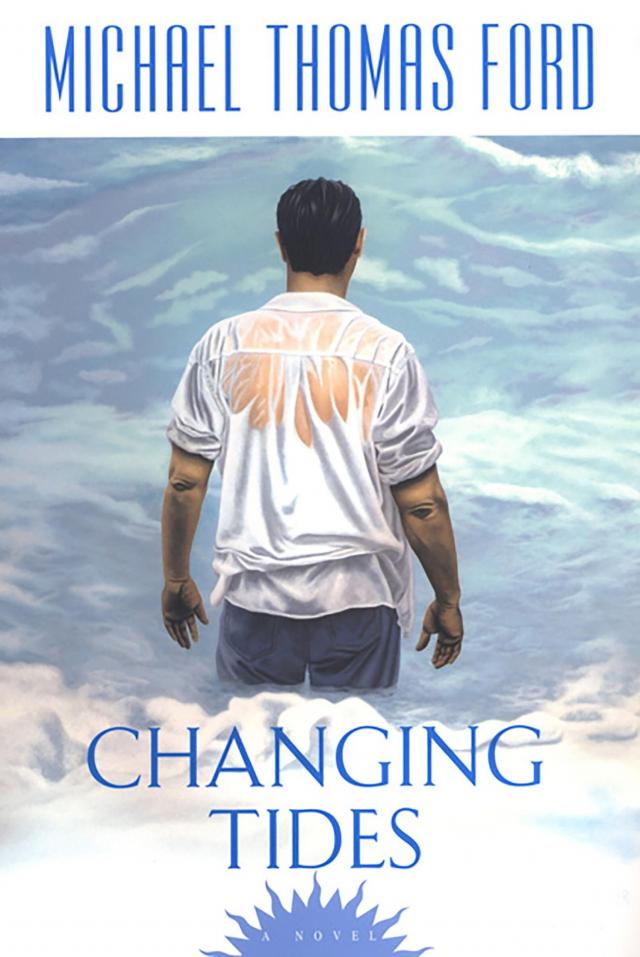
As he was looking back, he heard the rushing of water and turned just in time to see a wave, larger than the previous ones, moving toward him. He tried to back away from it but could not outrun the ocean. The wave, already crashing, hit him at waist level and sent him sprawling backward. He fell, the water rushing over his body, covering his face. He inhaled saltwater and choked. In the darkness, he was lost completely, not sure if he was facing up or down as the waves pulled and tugged at him, spinning him.
He had a very clear image of his death. He saw his body washed up on the beach, perhaps being sniffed curiously by the same dog he’d met earlier in the evening. Would the authorities know who to call? Would the saltwater ruin his student ID, his only link to his real life? Worst of all, what would become of the manuscript? He would die never knowing the truth.
And then the water was gone and he was looking up at the sky, air rushing into his lungs as he gasped, fishlike; on the sand. Before another wave could hit, he scrambled to his feet and ran back to the rock and safety. He was shivering, but the fear had left him, replaced by an overwhelming sense of joy. It was as if the sea had picked him up and tossed him the way the man had thrown the stick for the dog. He felt dizzy, almost giddy with delight at nature’s whimsy.
Laughing, he picked up his shoes and walked, slowly and with great happiness, back to his car.
CHAPTER 8
Ben didn’t notice the smoke rising from the pan until it was too late. The eggs were already burned. Still, he grabbed the handle, dropping it instantly as pain flared through his hand. The pan clattered to the floor, the eggs spilling over the linoleum and lying in the blackened butter like the casualties of a car crash. He looked down at the mess and nursed his hand.
“Better put that under cold water.”
Caddie entered the kitchen, glanced at the ruined eggs, and sat down at the table.
“I was trying to make eggs in a hat,” Ben explained as he turned on the tap and ran the water over his reddened skin. “You used to love those.”
“When I was four,” said Caddie. “Do you have any coffee?”
Ben nodded toward the pot sitting on the counter. Caddie, rising, shuffled over to it and poured herself a mugful. She took it back to the table and sipped it, black, not looking at her father.
Ben dried his hand and pulled several paper towels from the roll above the sink. As he bent to wipe up the remains of what should have been breakfast, he said, “What happened last night? I thought we were having dinner together.”
“So did I,” said Caddie shortly. “I waited until eight-fifteen. When you didn’t show, I figured you’d forgotten.”
Ben stood up, the wad of paper towels greasy and warm in his hand. “I didn’t forget,” he said.
Caddie looked at him, saying nothing. Her mother looks like that when she’s angry, Ben thought as he turned away from her and deposited the paper towels in the wastebasket under the sink. He washed his hands, smarting a little as the warm water touched his burned fingers. It wasn’t bad, though. Nothing a little aloe wouldn’t take care of.
“I didn’t forget,” he repeated. He faced Caddie again as he dried his hands. “I was working on something and lost track of time. You should have reminded me.”
Caddie nodded, looking into her coffee cup. “Maybe I didn’t want to disturb you,” she said.
Ben sighed. “You wouldn’t have disturbed me,” he said. The conversation was going badly already. On top of the ruined breakfast, it was making him tense. He decided now wasn’t the time to get into it with Caddie. “So, where did you go?”
“Out,” Caddie replied, typical of the teenager who doesn’t want to prolong a parent’s exasperation. “Into town,” she added, for which Ben was thankful. At least it was something.
“What do you think?” he asked.
“Of what?” said Caddie.
“Of town,” Ben said patiently.
“Oh,” Caddie said. “It’s all right, I guess. It’s there.”
It’s there, Ben repeated to himself. That was all she was going to say? He felt the strain of forced conversation making him edgy. To distract himself, he opened the refrigerator and removed a carton of orange juice. When he poured the juice into a glass, it emerged in an unappealing mass of congealed pulp. He looked at the expiration date, which had passed weeks before.
“You weren’t home when I went to bed,” he said, dumping the juice down the sink and rinsing the glass. “I waited.”
“You didn’t have to,” said Caddie.
“Did you eat?” he tried.
“I had some pizza,” Caddie said. “Then I walked around a little.”
Ben started to ask her where she’d walked, then thought better of it. Already he knew she was annoyed by his questions, and he had to remind himself that he hadn’t been her father for a long time. It was new for both of them. He poured himself a cup of coffee, thankful that at least one thing in the house was edible, then seated himself at the table across from his daughter.
“It’s a nice town,” he said. “Monterey,” he added, when Caddie said nothing. “It’s very historic. Lots of things to see. Gilroy, too. They have a garlic festival coming up.”
Caddie pushed some hair out of her eyes and looked right through him.
“It’s a big deal,” said Ben. “The garlic festival.” He spooned sugar into his coffee, not caring how much he put in. He didn’t like sugar anyway; it was just a distraction.
“Don’t you have to go to work?” Caddie asked unexpectedly.
The spoon clattered around the edges of the mug as Ben stirred the coffee. “Yes,” he said. “But I more or less make my own hours. It’s one of the advantages of running your own program.”
“Are you going in today?” said Caddie.
Ben nodded. “Sure,” he answered. “What about you? What are your plans?”
“Maybe I’ll check out that garlic festival,” Caddie said. “It sounds off the hook.”
Ben realized he was being mocked and saved himself further embarrassment by not informing Caddie that the festival wasn’t until the end of July. Now that she’d offered him the escape of work, he considered taking her up on it. He’d half planned on spending the day with her, but more and more he wanted nothing so much as to be away from his own child.
“What are your plans for the summer?” he inquired.
Caddie looked surprised. “Plans?” she said, as if the word were completely foreign to her.
“Plans,” Ben repeated. “I assume you want to do something for the next three months instead of just sitting around here.”
Caddie laughed. “You mean like a job,” she said. “You want me to get a job.”
“I assumed you would want to,” said Ben. “Isn’t that what you’d be doing if you were still living at ho ... with your mother?”
No, Caddie thought bitterly. If I were home I’d be having fun. I’d be with my friends and not with you. I wouldn’t be sitting in this crappy house listening to you tell me I should get a job.
“What kind of job do you think I should have?” she asked.
Ben shook his head. “I don’t know,” he said. “What are you interested in? I think there’s a Gap or something not too far downtown.”
“A Gap,” said Caddie. “Fantastic.”
Ben started to make another suggestion, thought better of it, and pushed his coffee away. It was too sweet to drink anyway. “We can worry about that later,” he said. He looked at his watch, feigning concern for the time. “I really should get to the lab.”
He stood up, and for the first time noticed the T-shirt Caddie was wearing. Something about it was familiar, but it took him a moment to realize what it was. “Johnny’s Pizza,” he said. “That’s the place a few blocks away. I’ve ordered from them.”
Caddie, still not looking at him, said, “That’s where I ate last night.”
“And you bought a shirt?” said Ben, puzzled. “Why would you want a T-shirt from a pizza place?”
Caddie looked at him. “It’s kitschy,” she said. “Retro. I like it.”
“It looks awfully big,” Ben remarked. “Didn’t they have your size?”
Caddie said nothing. Ben let the subject go. Probably it was just the latest style, like those ridiculous baggy pants so many of the boys in town wore, walking with their legs spread and their hands in their crotches just to keep them from falling down. And, really, what Caddie wore was the least of his problems as far as he was concerned.
“Okay,” he said. “Well, I guess I’m off.” He reached into his back pocket, pulled out his wallet, and opened it. “I’m afraid there’s not much here to eat,” he said. “But there’s a Safeway. You must have seen it when you were walking. You can pick something up there.” He handed Caddie two twenties. When she didn’t take them, he let them fall to the table. “And tonight we will have dinner together,” Ben said.
He left her there, still sipping her black coffee, and went out the front door. As he got into his old Volvo, he had the simultaneously relieving and unsettling feeling that he was escaping. Or running away, he thought as he started the car. You could stay and talk to her. He put the car in gear and backed out before he could listen to his own advice.
Inside, Caddie listened to her father leave. She, too, was relieved. Simply making an appearance at breakfast had been a major concession on her part. No, not a concession, a necessity. Not being there for dinner the night before had been risky, riskier because she hadn’t returned to the house until after midnight. She’d half expected her father to be waiting up for her, ready for a fight. When she’d discovered the house dark and her father asleep in his room, she’d almost been disappointed.
But the incident with the T-shirt made up for it. That, she hoped, would give her father something to worry about all day. If, that was, he even understood the truth behind her vague replies. Her mother would have, would have known instantly that no girl with an ounce of self-respect would wear something so hideous, that the T-shirt was merely a symbol for something much bigger, for an act of rebellion that demanded confrontation.
Her father, though, had said nothing. Was it possible he truly believed she would buy and wear a shirt like that? Did he not see that it was too large on her not by design but because it had once been worn on a bigger body, a male body that had shaped it into its current shape? He had to have. Surely he couldn’t be that clueless.
She imagined him driving to work, thinking about what she might have been doing instead of having dinner with him. She hoped he was. She hoped, too, that his imaginings came close to the truth.
She lifted the collar of the shirt and raised it over her nose. Breathing in, she smelled the faint remnants of pot smoke. She smelled, too, the sweat-musk of Nick’s body mixed with some kind of cheap cologne. She remembered the saltiness of his neck where her lips had grazed the skin, the way his hair had crackled, gel hardened, under her fingers.
Another woman would have sensed all of this in the way she wore Nick’s shirt. Like a high school ring wrapped with yarn to make it fit over a slender finger, the shirt was a trophy, a skin claimed in victory after a victorious hunt. Not that she’d had to beg Nick for it; she’d simply not given it back to him. Made sleepy by the pot and his orgasm, he hadn’t even noticed. She’d left him in his bed with promises to come see him again.
She would keep the promise, she decided. This realization surprised her. She’d intended Nick to be a momentary distraction, a source of irritation to her father and proof that she couldn’t be controlled. But she found that she liked him, or at least liked something about having him at her disposal. If nothing else, he was a source of fairly good pot. She’d taken some of that, too, along with the shirt.
Ultimately he would be a disappointment. They always were. But at least this time she expected nothing. Not like she had with some of the others, even though she should have known better, even though she’d been warned by friends and by her own sense of self-preservation not to get too close. Those hurts had surprised her, caught her off guard and rendered her vulnerable. But this time she knew what she was doing.
She got up and poured what was left of her coffee down the drain. It had left a bitter taste in her throat, and she asked herself why she had insisted on drinking it at all. She didn’t even like coffee. She’d done it hoping to annoy her father, although she couldn’t remember now why she thought something so mundane would raise his ire.
She opened the refrigerator. With the orange juice gone, it contained very little: a carton of half-and-half almost certainly well beyond safe usage, a piece of cheese mummified in plastic wrap, a container of something unpleasant in both appearance and odor that she suspected belonged not in the refrigerator but in her father’s lab. She wondered where he’d gotten the eggs for his failed attempts at eggs in a hat, then decided she didn’t want to know the answer.
Closing the door, she returned to her room. She opened the little bag of pot she’d stolen from Nick and expertly rolled herself a joint. It was better than the one he’d made for them last night, and she lit it with a feeling of accomplishment and superiority. She allowed herself to smoke half of it before stubbing it out and putting the remainder back in the bag. She felt light, but not out of it.
Her shower was a delight. She luxuriated in the hot water, soaping her skin and removing the traces of the previous night, knowing that they could be reapplied at any time if she so chose. Then she washed her hair, twice, deciding that she would let it dry naturally so that the curl was tighter.
By the time she was dressed in shorts and a tank top, she was ravenous. Returning to the kitchen, she picked up the money from the table, tucked it into her pocket, and walked out into the morning sunshine. Already the children, by now familiar to her, were playing at some silly game, one of them wearing a towel as a cape and, on her head, a plastic tiara. They stared at Caddie as she walked past them, and she rewarded them with a little wave.
In the bright light of day, the town held no more appeal for her than it had in the more flattering illumination of evening. If anything, it was uglier, the sun revealing the faded, worn faces of the buildings and making her squint unattractively. She wished she’d brought her sunglasses, and made a mental note to pick some up as quickly as possible.
At ten in the morning, Johnny’s Pizza was already a hive of activity, which at first surprised Caddie until she realized that in addition to pizza, the shop also sold doughnuts. Judging from the steady stream of customers entering and leaving, they did a brisk business. As she passed the shop’s front window she glanced inside, looking for Nick.
He was behind the counter, wearing the same apron as the day before over a new T-shirt. She thought about going in, then decided against it. She didn’t want him to get his hopes up. Better to let him wonder if he would really ever see her again. Walking quickly past the restaurant, she kept going.
She got breakfast at Denny’s, wolfing down an order of pancakes and bacon, surprised at her hunger. When finally she felt full, and not a little sick, she paid using one of the twenties and then walked half a block to a drugstore, where she purchased a pair of cheap sunglasses and a bottle of Diet Coke.
Back outside, she had no idea what to do next, and so found herself wandering along with the crowd of tourists that seemed to grow thicker as she followed signs pointing toward Cannery Row. What, she wondered, drew so many people there? What could possibly be so exciting?