The dorset house affair, p.12
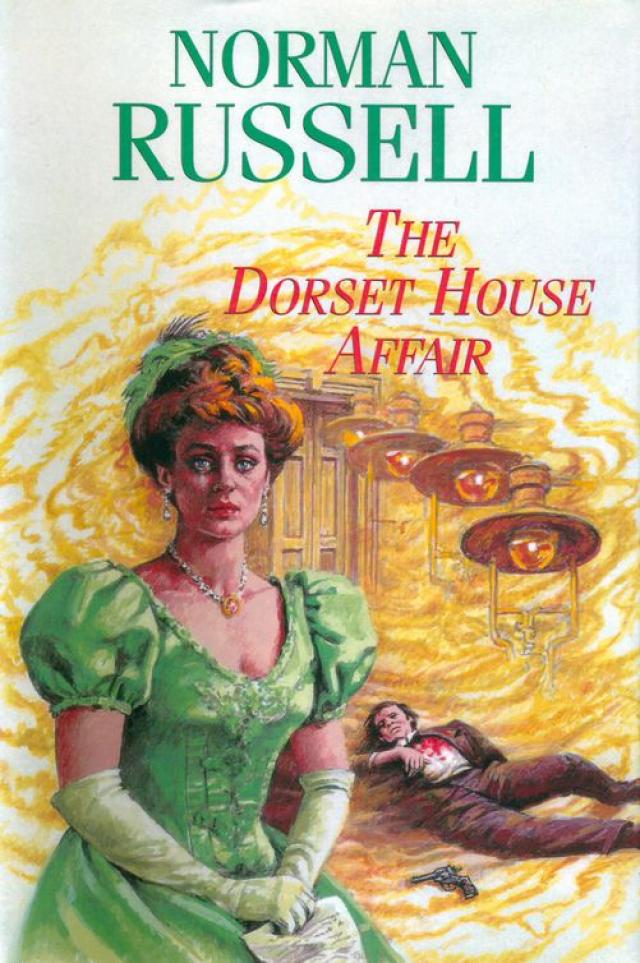
The Dorset House Affair,
p.12


‘Desperate panic…. Have you ever seen that expression before, in your professional capacity?’
‘Yes, I have. You’ll see it when a murderer suddenly realizes that you’ve seen through all his lies, and that you’ve come to arrest him. It wells up in their eyes, you know, when they see the shadow of the gallows looming…. And that’s how Miss de Bellefort looked.’
‘You say she fainted. What happened just before that? I’m beginning to form a very clear picture of what might have been in this wretched woman’s mind.’
‘She kept telling me that the garden passage was empty, but those very words convinced me at the time that she was lying. Why defend an empty passage? I stretched out my arms towards her, meaning to move her gently aside, upon which she screamed again, as though she was suffering all the tortures of the damned, and flattened herself against the door. She cried out for her brother, but he wasn’t there. Next moment, Maurice Claygate’s elder brother, Major Edwin Claygate, appeared from the crowd, upon which Miss de Bellefort gave a final terrifying shriek, and fainted.’
‘What did you find behind the door?’
‘There was nothing behind the door. I considered various possibilities, Miss Whittaker. First, I wondered whether the young lady had drunk too much champagne. Then I considered that she had suffered an hallucination. Later, I learned from the late Mr Maurice Claygate’s sister-in-law, Mrs Edwin Claygate, that Miss de Bellefort might have been reliving a terrifying childhood experience.’
Box told Louise the story of Elizabeth de Bellefort’s heroic defence of her brother against a gang of brigands, an event that had left her with mental scars that had not yet healed. Watching his friend’s uncharacteristically sardonic smile, he felt compelled to add, ‘Maurice Claygate’s fiancée, Miss Julia Maltravers, knew that story, and told me that she considered it to be a fairy-tale.’
‘I should like to meet Miss Julia Maltravers,’ said Louise. ‘She sounds to me like a woman of discernment. But come, Mr Box, you’re not eating anything. Have a sandwich, and some of that cake, while I pour us out some more tea. After that, I’ll tell you what I think about this business of Mademoiselle de Bellefort.’
A little while later, Louise Whittaker put her empty cup down on the table, folded her hands in her lap, and began to deliver a quiet lecture on the topic of the female psyche.
‘I want you to imagine a young woman, Mr Box,’ she began, ‘a member of an old Norman family, who prepares herself to attend a grand reception in the home of a distinguished British soldier, whose name is known and revered throughout the Empire. She dresses herself in a fine silk evening gown, and wears a brilliant diamond necklace. For an hour or so she mingles with the company, behaving as a young lady should. And then, apparently without reason, she chooses to make a vulgar spectacle of herself. She howls and cries like a – like a banshee, spreads herself in very undignified fashion across a door, does some more shrieking, and then faints in a heap on the floor.
‘And for what? To guard a passageway which, you tell me, was quite empty. That, I think, is what is leading you astray in the matter of Elizabeth de Bellefort. There was nothing there, and so she must have been either inebriated or hallucinating. Later, her behaviour is explained away by the concocting of a tale about a childhood experience. I don’t suppose the young lady stayed for you to question her further?’
‘No, miss, she left with her brother for Normandy the next day.’
‘Very convenient for them both, Mr Box. Now, from the way you told your story, I assume that you did not actually see Miss de Bellefort arrive at the door? No, I thought not. So, here is my suggestion. When that frantic young woman threw discretion to the winds and behaved like a lunatic, it was because she knew that there was something behind that door; and she knew that, because she had just come through that door herself!’
‘But Louise – Miss Whittaker – there was nothing behind the door. The passage was empty. What could she have been doing in it?’
Louise Whittaker shook her head, and looked at her friend with a kind of vexed amusement.
‘It may have been empty when you looked at it, Arnold, but it doesn’t follow that the passage was empty when Elizabeth de Bellefort came out of it, and all but fell into your arms. You thought that she was trying to prevent your finding a dead body there, didn’t you? What if that had been true? You arrived at the inopportune moment, and your arrival caused her to panic.’
‘But—’
‘What else, other than a knowledge that a murder had just been committed, could have made an aristocratic lady collapse into blind terror? At least think about what I’ve said, Mr Box. I think the view that I’ve taken is a valid one, given the circumstances.’
‘I am considering your view of the matter, miss. It’s a view that would explain the rapid departure of the brother and sister the next day. It could perhaps account for the presence there that night of a petty criminal known to me who’s since gone to earth. And there was motive, too: Maurice Claygate had abandoned her for another woman. Murder? Could she have lured him away from his guests and into that passage in order to shoot him dead?’
‘These are questions that only you and your colleagues can answer, Arnold,’ said Louise. ‘All I will add is to suggest that this petty criminal you mention was accompanied by others of his kind that night. Perhaps some arrangement had been made to remove the poor man’s dead body elsewhere. With sufficient men in place, I don’t suppose it would take long to spirit a body away, if you knew your way around the house.’
Arnold Box stood up. His legs, he found, felt rather shaky, and the blood seemed to be throbbing in his veins. Why had he not thought to consider the obvious? Even as he stammered his thanks to Louise Whittaker for her analysis of the incident, countless facts were beginning to crowd into his mind to furnish him with a solution to the mystery of Maurice Claygate’s death. It was time to leave the quiet haven of Louise Whittaker’s house and get back with all speed to King James’s Rents.
9
More Revelations
When Box got back to the Rents, he found Inspector Edwards of ‘C’ Division sitting in his office, talking to Sergeant Knollys.
‘I’m glad you’re back, Mr Box,’ said Edwards. ‘I’m due out at Hounslow in an hour’s time, and I was hoping to catch you here for a few minutes, as I promised to come here and see you if anything new turned up. Well, there are one or two things I want to tell you. First, I conducted a fresh examination of 12 Lexington Place. I went over it with a fine-tooth comb, as they say. I found nothing to connect Miss Sophie Lénart with espionage or anything else of a criminal nature.’
‘That was to be expected, I suppose,’ said Box. ‘It’s only in stories that there are secret safes behind panels, or documents in tin boxes under floorboards. Miss Lénart seems to have been a mistress of her craft.’
‘I did find quite a number of legitimate business documents,’ said Edwards. ‘She seemed to have worked as a merchant translator for a number of well-known concerns, turning letters and papers into and out of French and German. It’s a pity she didn’t make that her full-time occupation. She’d be alive now, if she’d done that.’
‘What has happened to her body, sir?’ asked Knollys. ‘Has anyone claimed her?’
‘No, Sergeant, no one’s claimed her. She was buried yesterday at the expense of the parish in the pauper’s graveyard attached to the Soho Union Workhouse. I believe the Foreign Office is going to make enquiries about her family in France, but I don’t suppose anything will come of that.’
Inspector Edwards glanced at the railway clock high up on the wall, and compared it with his watch.
‘I’ll have to go in a minute,’ he said. ‘The main reason I came here today was to tell you that a witness has come forward to say that she saw a strange man arrive at the house in Lexington Place some time after three o’clock on the afternoon of Thursday, 6 September – the day of the double murder. The witness is a Mrs Jane Shaw, who lives across the square in a house facing number 12. This Mrs Shaw was sitting in the downstairs window bay of her front room, reading, when she heard a cab draw up across the square. Here, I’ll read you her exact words.’
Edwards drew a notebook from his overcoat pocket, and opened it at a marker contrived from a long tram ticket.
‘“I looked up from my book,” says this Mrs Shaw, “and saw a well-set-up man of thirty or so standing at the front door of number 12. I noted him particularly, because he was trying to hide himself by cringing against the door, if you get my meaning.” Question: “Can you describe the man?” “Yes, he was tall, with black hair, well dressed. I would say that he was a gentleman. I fancy that his face was pockmarked, but I can’t be sure.”’
‘It sounds very like our friend Monsieur de Bellefort,’ said Box. ‘Go on, Mr Edwards.’
‘I asked her who opened the door to this man, and she replied that it was Miss Lénart herself. She was very insistent on that point. Apparently, Miss Lénart had a part-time housekeeper, but she was not at work that day. As far as Mrs Shaw knows, the visitor never came out of the house again, at least, not by the front door. There is a back way out into an entry, and he probably left by that.’
‘Why didn’t this Mrs Shaw come forward earlier?’
‘Apparently, she only just remembered the incident – if you can call it an incident – this morning. That makes sense to me, Mr Box. People are like that.’
‘Did she hear a shot?’
‘I never asked her. That would have been a leading question. If she’d heard anything, I’m sure that she would have mentioned it. I asked her whether she recalled any unusual activity later that night. She said no, only a couple of drunks, laughing and singing, tumbling out of a cab and staggering away along the alley behind the houses opposite.’
‘Well, well, Mr Edwards,’ said Box. ‘This is all very interesting. I suppose you’ll ask the other residents whether they heard or saw anything unusual on that day?’
‘I will, Mr Box. I’ll set PC Denny on it first thing tomorrow. Well, I must be off— Oh, there’s one more thing. I nearly forgot. I think you’ll remember that there were some books arrayed on the mantelpiece of that first room in Sophie Lénart’s house? They were all in French and German, you’ll recall. Well, I know a schoolmaster who teaches those languages at a private school in Argyll Street, and I asked him whether he’d look through those books, and tell me what kind of books they were.’
‘That was very enterprising of you, Mr Edwards,’ said Box.
‘Well, of course, I can’t read foreign languages, and in fact I’m not a great reader at all. So one morning this gentleman went out to 12 Lexington Place and looked through all the books on the mantelpiece. There’s a constable on duty, and I’d scribbled a pass for him to present at the door. After he’d done the job, he came to see me at Little Vine Street. Most of the books, he said, were fiction – popular novels – though there were one or two volumes of history, and a German book on the Crowned Heads of Europe.’
‘So this Sophie liked to do a bit of reading when she wasn’t busy spying,’ said Box. ‘It was a good idea to get that schoolmaster to look at them, but it doesn’t advance things much, does it?’
‘Maybe not, But there’s more to come, Mr Box. During his examination of the books, my friend found four brief notes slipped between the pages—’
‘Ah! That’s better!’ cried Box. ‘Now we’re getting somewhere.’
‘Four brief letters,’ Edwards continued, ‘all written in French. I know that Sergeant Knollys there glanced through the books when you came to Lexington Place, but he must have missed these. I have them here, together with the English translations that my friend made for me.’
Edwards unbuttoned one of his tunic pockets and removed an unsealed envelope, which he handed to Box, who took the notes out of the envelope, and examined them. They were all written in the same spiky, sloping Continental hand, and their subject was a man called François Leclerc. None of them was signed, and there was no address of sender. Box turned his attention to the translations, which he spread out on the table in front of him.
‘Leclerc is an inveterate gambler, and is desperate for money. He will undertake to make a copy of the list, agreeing to whatever terms I offer on your behalf. Will this satisfy you?’
‘I thought you would not agree, and have seen Leclerc again. He will now secure the authentic Alsace List, and on delivery to me, has agreed to accept my offer of five thousand francs.’
‘Thank you for your kind words. I try to give satisfaction at all times. I will hand the document to you in the usual place on Thursday, 30 August. Get rid of it to a third party as soon as you can, because this Leclerc is a weak, unstable fellow, who would confess instantly if arrested by the French authorities.’
‘You are doing the right thing, Sophie. Get it off your books as soon as possible. In answer to your query, Leclerc is quite safe at present, and still in his master’s household. It will probably suit all parties if he remains unmolested and (unofficially at least) unsuspected.’
‘Do those notes make any sense to you, Mr Box?’ asked Edwards.
‘They do indeed,’ Box replied. ‘I want you to keep all knowledge of these letters under your hat, if you will. They’re part of something that’s engaging the attention of the secret intelligence services at this very moment. François Leclerc – yes, I know who he is, Mr Edwards, but his name’s not to be bandied about in public. Will you let me keep these letters? I know a man who would be very glad indeed to see them.’
‘Do as you like, Mr Box,’ said Edwards, standing up. ‘I must be going now, if I’m to get to that meeting at Hounslow.’
Box saw Inspector Edwards to the door of the Rents, and then returned to his office. As soon as he appeared, Knollys burst into speech.
‘Sir,’ he said, ‘I searched those books thoroughly, and there were no letters hidden between the pages. If Inspector Edwards’s friend found any, then they’d been put there after our visit to the house.’
‘Yes, Jack, I know,’ said Box. ‘This François Leclerc was a servant in the household of the French Minister of Marine – I told you all about this after I’d seen Colonel Kershaw in Piccadilly Circus. Leclerc is still serving the master whom he’d betrayed in his house at Neuilly. It was this Leclerc who provided De Bellefort with an indiscreet letter penned by the minister’s wife, and who had then purloined the Alsace List from his master.’
‘And who do you think wrote those notes, sir? And, more to the point, who put them into those books on the mantelpiece?’
‘The man who wrote those notes, Jack, was probably a professional negotiator of agreements between foreign agents and the likes of François Leclerc. They were all private, sensitive documents. Only a fool would put them between the pages of books where anyone could find them. No; they were locked away in Sophie Lénart’s desk, where De Bellefort found them, together with the Alsace List. He slipped them between the leaves of those books knowing that they would be discovered.’
‘Why, sir?’
‘Because once the name of François Leclerc was bandied abroad, and came to that wretched man’s ears, he would, perhaps, disappear from view, or even take his own life. I expect De Bellefort will drop Leclerc’s name in company where it might make a particular kind of impression. It’s time for Colonel Kershaw to see these notes.’
‘You seem quite convinced that De Bellefort was behind this whole business,’ said Knollys.
‘It was De Bellefort, all right, Jack,’ he said. ‘He calls at Lexington Place after three, shoots Sophie dead, and then steals the Alsace List. He finds those letters, and takes them for future use. Later that same night, his hirelings turn up in that second-hand cab, bringing Maurice Claygate’s body with them—’
‘Steady, sir!’ said Jack Knollys. ‘Are you saying that those drunks—?’
‘Just listen, Jack,’ said Box, ‘while I tell you what Miss Whittaker said about the affair this afternoon. She drew some very interesting conclusions which gave me the germ of an idea – something to do with our elusive friend Harry the Greek, who apparently forsook poor old Pinky Wiseman to set up in business on his own. This is what Miss Whittaker said….’
Julia Maltravers set out on her journey to Normandy on the morning of Monday, 10 September. She travelled by train from London to Newhaven, where she was lucky enough to catch one of the three weekly boats sailing direct to the ancient river port of Caen. They left Newhaven at midday, and arrived in Caen at ten o’clock that night.
During the wearisome ten-hour journey, she had found, both to her pleasure and relief, that a kindly French cleric of her acquaintance, Canon Grandier, was travelling to the same part of France.
‘I’m on furlough from my duties at Brompton Oratory, Miss Maltravers,’ he said. ‘I expect you know that I’ve ministered there to a congregation of French exiles for many years. I’m looking forward to visiting my nieces and nephews in Bretteville, which is a little town a short distance away from Saint-Martin de Fontenay, where the ancient manor-house and demesne of the De Belleforts is situated.’
As they disembarked at the riverside landing-stage at Caen, Canon Grandier decided to give his young companion some sound advice.
‘Miss Maltravers,’ he said, ‘it is late, and you are no doubt fatigued. You must stay the night here, in Caen, and proceed on your journey tomorrow, rested and refreshed. Alas! It is too late for you to see the glories of our ancient town, and the great abbeys built by William the Conqueror and Matilda. Why not take a room at the pension where I am staying for the night? I am well known there, and they will readily find space for you.’
Julia willingly followed the canon’s advice, and next morning, after they had breakfasted, they boarded an early train for the journey south to Saint-Martin de Fontenay. The little train consisted of a single carriage, and an open truck containing a number of protesting cattle and their keeper. For all of the thirty-mile journey, she and the canon were the only passengers.