Alpha 4, p.12
Alpha 4,
p.12



I have been experiencing a sort of mental lassitude unfamiliar to me. Wrong word: not so much lassitude as a preoccupation, with no sure clue to what it is that preoccupies me. By reputation I am a scientist of sorts. Right now I have no impulse to look for data; I want to sit quiet and let truth come to a relaxed mind if it will. Could be merely a part of growing older, but I doubt that. The broken pieces of the wonderful blue shell are on my desk. I have been peering at them—into them—for the last ten minutes or more. Can’t call it study: my thought wanders into their blue, learning nothing I can retain in words. It does not convey much to say I have gone into a vision of open sky—and of peace, if such a thing there be.
The angel chipped the shell deftly in two parts. This was evidently done with the aid of small horny outgrowths on her elbows; these growths were sloughed off on the second day. I wish I had seen her break the shell, but when I visited the blackberry tangle three days ago she was already out. She poked her exquisite head through Camilla’s neck feathers, smiled sleepily, and snuggled back into darkness to finish drying off. So what could I do, more than save the broken shell and wriggle my clumsy self out of there? I had removed Camilla’s own eggs the day before—Camilla was only moderately annoyed. I was nervous about disposing of them, even though they were obviously Camilla’s, but no harm was done. I cracked each one to be sure. Very frankly rotten eggs and nothing more.
In the evening of that day I thought of rats and weasels, as I should have done earlier. I prepared a box in the kitchen and brought the two in, the angel quiet in my closed hand. They are there now. I think they are comfortable.
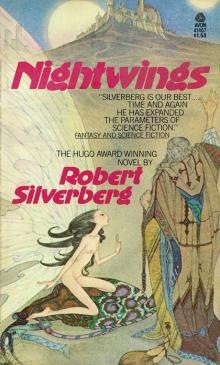
Three days after hatching, the angel is the length of my forefinger, say three inches tall, with about the relative proportions of a six-year-old girl. Except for head, hands, and probably the soles of her feet, she is clothed in down the color of ivory; what can be seen of her skin is a glowing pink—I do mean glowing, like the inside of certain sea shells. Just above the small of her back are two stubs which I take to be infantile wings. They do not suggest an extra pair of specialized forelimbs. I think they are wholly differentiated organs; perhaps they will be like the wings on an insect. Somehow, I never thought of angels buzzing. Maybe she won’t. I know very little about angels. At present the stubs are covered with some dull tissue, no doubt a protective sheath to be discarded when the membranes (if they are membranes) are ready to grow. Between the stubs is a not very prominent ridge—special musculature, I suppose. Otherwise her shape is quite human, even to a pair of minuscule mammalian buttons just visible under the down; how that can make sense in an egg-laying organism is beyond my comprehension. (Just for the record, so is a Corot landscape; so is Schubert’s Unfinished; so is the flight of a hummingbird, or the other-world of frost on a window pane.) The down on her head has grown visibly in three days and is of different quality from the body down—later it may resemble human hair, as a diamond resembles a chunk of granite....
A curious thing has happened. I went to Camilla’s box after writing that. Judy1 was already lying in front of it, unexcited. The angel’s head was out from under the feathers, and I thought—with more verbal distinctness than such thoughts commonly take, “So here I am, a naturalist of middle years and cold sober, observing a three-inch oviparous mammal with down and wings.” The thing is—she giggled. Now, it might have been only amusement at my appearance, which to her must be enormously gross and comic. But another thought formed unspoken: “I am no longer lonely.” And her face (hardly bigger than a dime) immediately changed from laughter to a brooding and friendly thoughtfulness.
v~~~~~~~~~~~~~~~~~~~~~~~~~~~~~~v
1Dr. Bannerman’s dog, mentioned often earlier in the journal. A nine-year-old English setter. According to an entry of May 15, 1951, she was then beginning to go blind. —BLAINE.
^~~~~~~~~~~~~~~~~~~~~~~~~~~~~~~^
Judy and Camilla are old friends. Judy seems untroubled by the angel. I have no worries about leaving them alone together. I must sleep.
June 3
I made no entry last night. The angel was talking to me, and when that was finished I drowsed off immediately on a cot that I have moved into the kitchen so as to be near them.
I had never been strongly impressed by the evidence for extra-sensory perception. It is fortunate my mind was able to accept the novelty, since to the angel it is clearly a matter of course. Her tiny mouth is most expressive but moves only for that reason and for eating—not for speech. Probably she could speak to her own kind if she wished, but I dare say the sound would be outside the range of my hearing as well as my understanding.
Last night after I brought the cot in and was about to finish my puttering bachelor supper, she climbed to the edge of the box and pointed, first at herself and then at the top of the kitchen table. Afraid to let my vast hand take hold of her, I held it out flat and she sat in my palm. Camilla was inclined to fuss, but the angel looked over her shoulder and Camilla subsided, watchful but no longer alarmed.
The table top is porcelain, and the angel shivered. I folded a towel and spread a silk handkerchief on top of that; the angel sat on this arrangement with apparent comfort, near my face. I was not even bewildered. Possibly she had already instructed me to blank out my mind. At any rate, I did so, without conscious effort to that end.
She reached me first with visual imagery. How can I make it plain that this had nothing in common with my sleeping dreams? There was no weight of symbolism from my littered past; no discoverable connection with any of yesterday’s commonplace; indeed, no actual involvement of my personality at all. I saw. I was moving vision, though without eyes or other flesh. And while my mind saw, it also knew where my flesh was, slumped at the kitchen table. If anyone had entered the kitchen, if there had been a noise of alarm out in the henhouse, I should have known it.
There was a valley such as I have not seen (and never will) on Earth. I have seen many beautiful places on this planet—some of them were even tranquil. Once I took a slow steamer to New Zealand and had the Pacific as a plaything for many days. I can hardly say how I knew this was not Earth. The grass of the valley was an earthly green; a river below me was a blue-and-silver thread under familiar-seeming sunlight; there were trees much like pine and maple, and maybe that is what they were. But it was not Earth. I was aware of mountains heaped to strange heights on either side of the valley—snow, rose, amber, gold. Perhaps the amber tint was unlike any mountain color I have noticed in this world at midday.
Or I may have known it was not Earth simply because her mind—dwelling within some unimaginable brain smaller than the tip of my little finger—told me so.
I watched two inhabitants of that world come flying, to rest in the field of sunny grass where my bodiless vision had brought me. Adult forms, such as my angel would surely be when she had her growth, except that both of these were male and one of them was dark-skinned. The latter was also old, with a thousand-wrinkled face, knowing and full of tranquility; the other was flushed and lively with youth; both were beautiful. The down of the brown-skinned old one was reddish-tawny; the other’s was ivory with hints of orange. Their wings were true membranes, with more variety of subtle iridescence than I have seen even in the wings of a dragonfly; I could not say that any color was dominant, for each motion brought a ripple of change. These two sat at their ease on the grass. I realized that they were talking to each other, though their lips did not move in speech more than once or twice. They would nod, smile, now and then illustrate something with twinkling hands.
A huge rabbit lolloped past them. I knew (thanks to my own angel’s efforts, I suppose) that this animal was of the same size of our common wild ones. Later, a blue-green snake three times the size of the angels came flowing through the grass; the old one reached out to stroke its head carelessly, and I think he did it without interrupting whatever he was saying.
Another creature came, in leisured leaps. He was monstrous, yet I felt no alarm in the angels or in myself. Imagine a being built somewhat like a kangaroo up to the head, about eight feet tall, and katydid-green. Really, the thick balancing tail and enormous legs were the only kangaroolike features about him: the body above the massive thighs was not dwarfed but thick and square; the arms and hands were quite humanoid: the head was round, manlike except for its face—there was only a single nostril and his mouth was set in the vertical; the eyes were large and mild. I received an impression of high intelligence and natural gentleness. In one of his manlike hands two tools so familiar and ordinary that I knew my body by the kitchen table had laughed in startled recognition. But, after all, a garden spade and rake are basic. Once invented—I expect we did it ourselves in the Neolithic Age—there is little reason why they should change much down the millennia.
This farmer halted by the angels, and the three conversed a while. The big head nodded agreeably. I believe the young angel made a joke; certainly the convulsions in the huge green face made me think of laughter. Then this amiable monster turned up the grass in a patch a few yards square, broke the sod and raked the surface smooth, just as any competent gardener might do—except that he moved with the relaxed smoothness of a being whose strength far exceeds the requirements of his task....
I was back in my kitchen with everyday eyes. My angel was exploring the table. I had a loaf of bread there and a dish of strawberries and cream. She was trying a bread crumb; seemed to like it fairly well. I offered the strawberries; she broke off one of the seeds and nibbled it but didn’t care so much for the pulp. I held up the great spoon with sugary cream; she steadied it with both hands to try some. I think she liked it. It had been most stupid of me not to realize that she would be hungry. I brought wine from the cupboard; she watched inquiringly, so I put a couple of drops on the handle of a spoon. This really pleased her: she chuckled and patted her tiny stomach, though I’m afraid it wasn’t awfully good sherry. I brought some crumbs of cake, but she indicated that she was full, came close to my face, and motioned me to lower my head.
She reached towards me until she could press both hands against my forehead—I felt it only enough to know her hands were there—and she stood so a long time, trying to tell me something.
It was difficult. Pictures come through with relative ease, but now she was transmitting an abstraction of a complex kind: my clumsy brain really suffered in the effort to receive. Something did come across. I have only the crudest way of passing it on. Imagine an equilateral triangle; place the following words one at each corner—“recruiting,” “collecting,” “saving.” The meaning she wanted to convey ought to be near the center of the triangle.
I had also the sense that her message provided a partial explanation of her errand in this lovable and damnable world.
She looked weary when she stood away from me. I put out my palm and she climbed into it, to be carried back to the nest.
She did not talk to me tonight, nor eat, but she gave a reason, coming out from Camilla’s feathers long enough to turn her back and show me the wing stubs. The protective sheaths have dropped off; the wings are rapidly growing. They are probably damp and weak. She was quite tired and went back into the warm darkness almost at once.
Camilla must be exhausted, too. I don’t think she has been off the nest more than twice since I brought them into the house.
June 4
Today she can fly.
I learned it in the afternoon, when I was fiddling about in the garden and Judy was loafing in the sunshine she loves. Something apart from sight and sound called me to hurry back to the house. I saw my angel through the screen door before I opened it. One of her feet had caught in a hideous loop of loose wire at a break in the mesh. Her first tug of alarm must have tightened the loop so that her hands were not strong enough to force it open.
Fortunately I was able to cut the wire with a pair of shears before I lost my head; then she could free her foot without injury. Camilla had been frantic, rushing around fluffed up, but—here’s an odd thing—perfectly silent. None of the recognized chicken noises of dismay: if an ordinary chick had been in trouble, she would have raised the roof.
The angel flew to me and hovered, pressing her hands on my forehead. The message was clear at once: “No harm done.” She flew down to tell Camilla the same thing.
Yes, in the same way. I saw Camilla standing near my feet with her neck out and head low, and the angel put a hand on either side of her scraggy comb. Camilla relaxed, clucked in the normal way, and spread her wings for a shelter. The angel went under it, but only to oblige Camilla, I think—at least, she stuck her head through the wing feathers and winked.
She must have seen something else, then, for she came out and flew back to me and touched a finger to my cheek, looked at the finger, saw it was wet, put it in her mouth, made a face and laughed at me.
We went outdoors into the sun (Camilla, too), and the angel gave me an exhibition of what flying ought to be. Not even Schubert can speak of joy as her first free flying did. At one moment she would be hanging in front of my eyes, radiant and delighted; the next instant she would be a dot of color against a cloud. Try to imagine something that would make a hummingbird seem a bit dull and sluggish.
They do hum. Softer than a hummingbird, louder than a dragonfly.
Something like the sound of hawk-moths—Heinmaris thisbe, for instance: the one I used to call Hummingbird Moth when I was a child.
I was frightened, naturally. Frightened first at what might happen to her, but that was unnecessary; I don’t think she would be in danger from any savage animal except possibly Man. I saw a Cooper’s hawk slant down the visible ray toward the swirl of color where she was dancing by herself; presently she was drawing iridescent rings around him; then, while he soared in smaller circles, I could not see her, but (maybe she felt my fright) she was again in front of me, pressing my forehead in the now familiar way. I knew she was amused and caught the idea that the hawk was a “lazy character.” Not quite the way I’d describe Accipiter Cooperi, but it’s all in the point of view. I believe she had been riding his back, no doubt with her speaking hands on his terrible head.
And later I was frightened by the thought that she might not want to return to me. Can I compete with sunlight and open sky? The passage of that terror through me brought her back swiftly, and her hands said with great clarity: “Don’t ever be afraid of anything—it isn’t necessary for you.”
Once this afternoon I was saddened by the realization that old Judy can take little part in what goes on now. I can well remember Judy running like the wind. The angel must have heard this thought in me, for she stood a long time beside Judy’s drowsy head, while Judy’s tail thumped cheerfully on the warm grass....
In the evening the angel made a heavy meal on two or three cake crumbs and another drop of sherry, and we had what was almost a sustained conversation. I will write it in that form this time, rather than grope for anything more exact. I asked her, “How far away is your home?”
“My home is here.”
“Thank God!—but I meant, the place your people came from.”
“Ten light-years.”
“The images you showed me—that quiet valley—that is ten light-years away?”
“Yes. But that was my father talking to you, through me. He was grown when the journey began. He is two hundred and forty years old—our years, thirty-two days longer than yours.”
Mainly I was conscious of a flood of relief: I had feared, on the basis of terrestrial biology, that her explosively rapid growth after hatching must foretell a brief life. But it’s all right—she can outlive me, and by a few hundred years, at that. “Your father is here now, on this planet—shall I see him?”
She took her hands away—listening, I believe. The answer was: “No. He is sorry. He is ill and cannot live long. I am to see him in a few days, when I fly a little better. He taught me for twenty years after I was born.”
“I don’t understand. I thought—”
“Later, friend. My father is grateful for your kindness to me.”
I don’t know what I thought about that. I felt no faintest trace of condescension in the message. “And he was showing me things he had seen with his own eyes, ten light-years away?”
“Yes.” Then she wanted me to rest a while; I am sure she knows what a huge effort it is for my primitive brain to function in this way. But before she ended the conversation by humming down to her nest she gave me this, and I received it with such clarity that I cannot be mistaken: “He says that only fifty million years ago it was a jungle there, just as Terra is now.”
June 8
When I woke four days ago the angel was having breakfast, and little Camilla was dead. The angel watched me rub sleep out of my eyes, watched me discover Camilla, and then flew to me. I received this: “Does it make you unhappy?”
“I don’t know exactly.” You can get fond of a hen, especially a cantankerous and homely old one whose personality has a lot in common with your own.
“She was old. She wanted a flock of chicks, and I couldn’t stay with her. So I—” Something obscure here: probably my mind was trying too hard to grasp it—“... so I saved her life.” I could make nothing else out of it. She said “saved.”
Camilla’s death looked natural, except that I should have expected the death contractions to muss the straw, and that hadn’t happened. Maybe the angel had arranged the old lady’s body for decorum, though I don’t see how her muscular strength would have been equal to it—Camilla weighed at least seven pounds.
As I was burying her at the edge of the garden and the angel was humming over my head, I recalled a thing which, when it happened, I had dismissed as a dream. Merely a moonlight image of the angel standing in the nest box with her hands on Camilla’s head, then pressing her mouth gently on Camilla’s throat, just before the hen’s head sank down out of my line of vision. Probably I actually waked and saw it happen. I am somehow unconcerned—even, as I think more about it, pleased....