The dangerous dozen, p.14
The Dangerous Dozen,
p.14
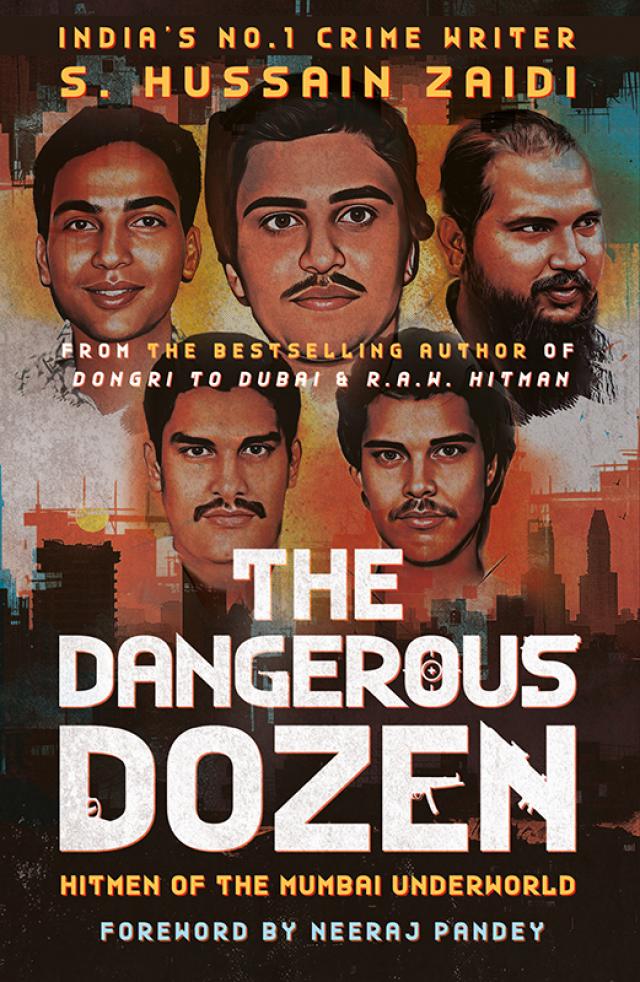


While Rao’s father devoted himself to trying to earn an honest buck by working in the Prakash Cotton Mills in Lower Parel, a young Ravi, who had a job as a watchman at a residential building in Dharavi, was least interested in hard work and an honest livelihood. In his free time, Ravi roamed around the Matunga-Wadala area, striking up friendships with other youth with a similar bent of mind: the desire to make a fast buck with as little effort as possible. He was but a teenager when he got involved in a street fight outside Khalsa College, thus earning his first FIR and a history with the Mumbai police records. But Ravi was destined for bigger things than roadside brawls.
It was in 1996 that a twenty-year-old Ravi, along with the rag-tag group of young men he had brought together, committed his first organized crime. The targets of choice for robberies in those days were vans leaving from banks after loading up the cash from their vaults, to be taken to lockers for safe storage. Rao’s fledgling gang struck one such van after days of reconnaissance and planning, making away with nothing less than Rs 2.5 million in cash, a fortune most could only dream of back in the 1990s.
The success of their first job gave Ravi’s gang a boost of confidence, and the young man went on to execute a string of robberies along with various friends, one of them being Ramnarayan Gupta, alias Lakhan Bhaiya, another name as well known as D. K. Rao in the annals of the underworld.
Lakhan Bhaiya was shot dead in an encounter in Andheri in 2006 by a team led by encounter specialist Pradeep Sharma and his hit squad. Lakhan and his friend Anil Bheda were picked up from Vashi by Sharma, and while Bheda was later released, Lakhan was found dead near the Nana Nani Park in Versova. Lakhan’s brother, Ramprasad Gupta, went to court and accused Sharma’s team of having staged the encounter.
A special investigation team, headed by then deputy commissioner of police K. M. M. Prasanna, was formed to investigate the case, and after a long court-monitored inquiry, the SIT arrested Sharma in 2010. He was then sent to judicial custody while the trial began. The trial was as dramatic as the encounter, with Anil Bheda, the star witness in the case, going missing in the middle of the trial. Bheda’s partially-burned dead body was later found in Yeoor Hills in Thane district, and in 2013, Sharma was acquitted by the court.
The same Lakhan Bhiaya who is credited with driving the last nail in the coffin of Sharma’s career as a policeman is also believed to have been instrumental in giving D. K. Rao to the Chhota Rajan gang.
By the second half of 1996, Ravi had a string of cases to his name in police stations all over the city. It was as if no cash van was safe from him and his gang of robbers—they struck hard, struck fast and fled faster. It did not take long for the Mumbai police to start taking in interest in this young man who seemed to be the talk of the town, and soon informants were being leaned on for any and every scrap of information that could be gleaned about his movements and whereabouts. With that kind of pressure, something has to give. Something or the other did, and in late 1996, Ravi found himself under arrest.
He was then sent to the Thane central jail where his association with Lakhan Bhaiya, along with his reputation as a master robber, choron ka raja, earned him an entry into the Rajan camp.
At the time, the Rajan coterie in the Thane jail was led by Sunil Madgaonkar, alias Matya bhai, an enforcer and recruiter for Rajan, who had by this time parted ways with Dawood. Matya was arrested in 1997 while he was trying to cross over to Nepal. The then police commissioner Subhash Malhotra described him as the CEO of the Chhota Rajan gang. Matya was so powerful and influential that, during lunch hour at a court hearing in Esplanade Court in Azaad Maidan, he had spread out a massive seven-course feast for all his men present in the court.
Hussain Zaidi and I had met Matya and interviewed him while he was devouring his meal hungrily. He answered Hussain’s questions between wolfing down huge morsels of tandoori chicken and biryani. Hussain later reproduced that interview in the Indian Express under the headline ‘Chhota Rajan, Badi Baat’. What surprised me at the time was Matya’s indifference towards the police escort team, his mega feast for his men and his willingness to share intricate details of the gang with us.
The Chief of Thieves
Ostensibly outraged over Dawood’s participation in the 1993 bomb blasts, Rajan had by this time started trying hard to project himself as a ‘Hindu don’ and vowed to exact revenge for Dawood’s ‘deshdroh’, treason. To be able to match the strength of the D-Company, Rajan was going to need lot of men, and was hence forever on the lookout for newer talent. The young Ravi, who Matya bhai inducted into his gang, proved to be an asset beyond Matya bhai’s or even Rajan’s wildest expectations.
Once out of prison, Ravi resumed his spree of robberies and dacoities, but this time for the Rajan gang. It was also around this time that he assumed the name that would become his identity for the rest of his life. It is surmised that, one day, he found an ID card among his things in the name of a bank employee—D. K. Rao. Perhaps it was something he had brought home along with the loot from one of the many cash vans he swooped down on. He decided to carry the card with him so that he could use it in a common trick employed by history-sheeters to hide their identity in case they were caught committing a crime. Ravi Mallesh Bora already had a long record to his name by now, and if he was stopped in a random check in any part of the city, he would automatically be taken aside for questioning. D. K. Rao, on the other hand, was a nobody and would not elicit much suspicion in such a situation, unless someone remembered and recognized his face. Hence, Ravi started carrying the card with him.
The trick, however, not only failed to work but led to the legend of D. K. Rao. In 1997, Sub-Inspector Mridula Lad, who was with the Juhu police station, received a tip-off that Ravi, along with an accomplice, was going to commit a dacoity in her jurisdiction, and reached the spot specified by her informant. When Ravi and his friend reached the area, they found the police team waiting for them. Lad accosted the duo and asked them to surrender, but they shot at her, missing her by inches. Lad shot back and hit Rao in the leg. He fell to the ground while his accomplice managed to escape in the ensuing confusion.
Following the skirmish, both of them, criminal and cop, were catapulted to fame for different reasons.
Lad became the first lady encounter cop and inspired many young women to shoot if necessary and kill if you must. Many gutsy women followed in her footsteps, killing several criminals in encounters, at times stealing the limelight from their male counterparts.
While Ravi was rushed to the hospital for treatment, the police, based on the ID card found in his pocket, registered a case against him identifying him as D. K. Rao. It was only much later that the cops learned that D. K. Rao and Ravi Mallesh Bora were the same person. The name, however, stuck, and when Rao hobbled out of jail, now with a permanent limp thanks to the bullet he had taken in his leg, he was addressed as either ‘DK’ or ‘Rao’ by his fellow gang members.
The next time that the police came face-to-face with D. K. Rao would be an occasion that no one would ever forget. The day was 11 November 1998. The climate in Mumbai was best described as blood-soaked, with the war between Dawood and Rajan at its peak. Rajan, as part of his ‘patriotic’ vendetta against Dawood, had taken to killing D-gang members who were part of the 1993 bomb blasts, and Rao, who had already gained Rajan’s trust by this time, was tasked with these missions. After adding several scalps to his belt, Rao was on that day on his way to kill two more men. One of them was Shaikh Mohammed Ehtesham, charged with being part of the team that received the arms and ammunition in Raigad, while the other, Baba Moosa Chauhan, was charged with delivering AK-56 automatic rifles to the residence of actor Sanjay Dutt. Both had been convicted and were sentenced to ten years of rigourous imprisonment, and, having challenged the conviction in a higher court, were on their way to attend a hearing, which was when Rao planned to strike.
Unknown to Rao and his team, another man as feared as himself was on his way to intercept him: senior inspector with the Mumbai police Crime Branch, Ambadas Pote, known for his fiercely loyal approach to his job and daring encounters. Now retired, Pote remains one of the go-to persons for all things underworld and can recall any story about the Dawood or Rajan gangs at the mere mention of a keyword.
Dramatic Dance of Death at Dadar
Having learned about Rao’s plan, Pote was on that day speeding to stop the gangster before he shed any more blood in the city. The face-off occurred on Sayani Road near Khed Gully: the Maruti Gypsy carrying Pote and his team came face-to-face with the Maruti Esteem bearing Rao and his hit squad. A deadly exchange of fire ensued that sent everyone running helter skelter, ducking for cover and screaming for their lives. The Esteem was pierced by scores of bullets and, in a matter of minutes, its insides were stained with blood.
Guns trained, Pote and his team advanced on the Esteem even as it sunk down on its punctured tyres. The police team pulled open its doors and began dragging out the occupants. The first ones were Raja Gore and Vipin Khanderao, who were dead. Next came Ramesh Pujari, Jairam Shetty and Rao himself, who, unknown to the cops, were semi-conscious but alive. All the five men were dumped into the back of a police van that had reached the spot.
As the van started, Shetty cried out in pain, ‘Amma!’ Without a word, the policemen turned around and fired several more rounds at the mass of bodies slumped in the back. Shetty and Pujari jerked with the impact of the rounds hitting their bodies and died on the spot, but Rao, who was hidden under both of them, escaped the second volley of bullets.
The van reached KEM Hospital in Parel and drove around to the back where the morgue was. As per procedure, the policemen were taking what they believed to be five dead bodies for postmortem so that the reports could be attached to the inevitable paperwork that followed such encounters. To their utter shock—some of the policemen actually thought they were seeing a ghost—Rao crawled out from under his friends’ bodies, bleeding from several bullet wounds and screaming that he was alive. ’Mee jivant aahe, Doctor mala vachwa, help help.’
The police squad was too stunned to react for the first few seconds. Then all hell broke loose. Other civilians at the morgue started running away in fear, the medical attendants who had come forward to take charge of the bodies stood in confused silence and the policemen went for their guns.
Shouting abuses and threats at the top of their voices, they made Rao come out of the van with his hands raised, after which they turned him over to the doctors. Any thought of shooting him down inside the van itself was quickly discarded for a simple reason: there were too many eyewitnesses.
The desperate pleas of a bleeding, supposedly dying man moved the team of medical professionals present in the ward. They galvanized into action to save the man. The doctors and paramedics presumed that the police team that had carted him there considered his life as precious.
Doctors who operated on Rao would later tell the police that he had been hit by no less than nineteen bullets and had still lived to tell the tale. The next few months led to the spawning of a lot of speculation as to how Rao had survived the assault. Some said that he was able to hold his breath and play dead as he knew yoga. Others said that he used the dead bodies of his friends to shield himself. Yet others said he was just plain lucky. But from that day onwards, his miraculous escape from the jaws of death became the only thing that people would talk about every time his name was mentioned for a long time.
Over the next ten years, Rao had limited contact with the outside world. He first spent around six months in the hospital recovering from his wounds, and then the rest of the ten years in central jails across the state. However, even though he was largely inactive, factors beyond his control conspired to further push him towards his destiny.
The first was Matya bhai’s death. Matya was among Rajan’s top aides at the time, and one of the most sought-after men towards the late 1990s. While Rajan was holed up in Malaysia, Matya bhai—as he was known in the gang—ran the show in Mumbai. Any gangster who is not based out of India but still wants to have a grip in the country needs a man he can trust on the ground. Someone to recruit and manage footsoldiers, take care of money matters, sanction jobs and provide weaponry and any other equipment needed. Matya bhai was that person for Rajan in India. He was recruited by Rajan back when the latter was still with the D-gang, and was among those who moved out of the gang when Rajan severed ties with Dawood. Matya bhai’s kills included the head of East West airlines Thakiyuddin Wahid, businessman Mahesh Dholakia and Arun Gawli’s shooter Ashok Joshi.
While these kills earned him a place of fear in the minds of the people and respect in the eyes of the underworld, it also earned him the ire of the police who, by this time, had started either gunning down Rajan’s men in encounters or locking them up for long spells under the Maharashtra Control of Organised Crime Act. So stringent is the act that it denies even the chance of bail for around a year after an accused is arrested. Policemen still fall over themselves trying to meet all the criteria to apply MCOCA against particularly irksome history-sheeters so that they can be put away for a couple of years.
Ringleader Rao
As part of this cleanup operation, Matya bhai was killed in a police encounter in 2000. Suddenly Rajan found himself without a trustworthy aide in India. Still, D. K. Rao was the last name on his mind in terms of a replacement. Sure, Rao was good, but not good enough for Rajan to hand over Matya bhai’s throne to him. Rao was just one of the many aides that Rajan had in his syndicate. His loyalists included O. P. Singh, Bharat Nepali, Ejaz Lakdawala, Rohit Verma, Balu Dokre, Fareed Tanasha, Santosh Shetty and Vicky Malhotra, and they ran the gang’s affairs.
Then came the second twist of fate. In the same year, Rajan was attacked by a group of assassins sent by Dawood’s right-hand man Shakeel Babumiyan Sheikh, alias Chhota Shakeel. It was Shakeel’s lifelong dream to please his boss by killing the traitor who not only turned his back on the gang but had gone on to project himself as a patriot, thereby taking all the sympathy and painting Dawood as the villain. This dream almost came to fruition on 15 September 2000, when Munna Jhingada led a hit squad that barged into an apartment in Bangkok where Rajan was partying. The killers first pumped Rajan’s trusted aide Rohit Verma full of bullets and then proceeded to shoot at Rajan, who managed to escape.
The attack lead to the near decimation of the Rajan gang, with some of the key members breaking away and others being killed over the next few years. One of them, O. P. Singh, was killed in Nashik jail by none other than Rao himself in 2002.
Singh had joined Rajan’s gang after his brother, Arun Singh, was killed by the Ashwin Naik gang. Unlike most members of the gang, who were barely educated and had turned to crime to earn money and respect the easy way, Singh was a chemistry postgraduate employed as a Quality Control Officer at the Mazgaon docks. After his brother was murdered, he named the Naik gang in his police complaint, causing the gang to target him. Singh knew some Rajan gang members after coming into contact with them in a bar in Chembur; he sought their help, and was thus inducted into the gang.
Like many other foot soldiers, he started off committing robberies and dacoities, and soon moved on to kidnappings and murders. What set him apart was his analytical mind, thanks to his education, and he soon started advising Rajan in several matters. He also built contacts for Rajan in police and political circles in India, particularly in Mumbai, which earned him a place in Rajan’s inner circle in Kuala Lumpur, where he added several more feathers to his cap, including the murder of Mirza Dilshad Beg, a Nepali minister and a high-ranking Dawood Ibrahim aide, in Kathmandu in 1998. He even assumed charge of the gang after the attempt on Rajan’s life and coordinated with lawyers and the Thai media while his boss recuperated in hospital. In November 2000, when Rajan escaped from the Smitivej Hospital in Bangkok, Singh was the one who got the credit for orchestrating it.
There are still multiple theories about why Singh was killed. One theory is that some members of Rajan’s gang were jealous of his growing popularity and poisoned their boss’ ears against him. Ironically, this is exactly what had happened to Rajan. Shakeel and a few others, irked by Rajan’s closeness to Dawood, started feeding stories against Rajan to Dawood. These stories reached Rajan’s ears and he fled from a party in Dubai where he suspected he was going to be killed, and ran straight into the arms of Indian intelligence agencies.
When Rajan became suspicious of Singh, having heard Balu Dokre’s stories about him wanting to break away and form his own gang, Rajan tipped off Indian law enforcement agencies about his movements. When Singh landed at New Delhi airport in 2002, a team of policemen was waiting for him. He was handed over to the Mumbai police, who brought him to the city and placed him under arrest. He was then sent to Nashik jail while investigations against him progressed. Knowing that Rajan hated him, he thought he was safe inside a central jail. What he didn’t count on was D. K. Rao.
Pulling heaven knows what strings, Rao, who was in Arthur Road central jail after his return from the dead, got himself transferred to the Nashik jail. The murder, which went down in police files as one of the most brutal ones ever recorded, took place on a Sunday afternoon. Singh was playing cricket with some other inmates, and in the middle of the match, he felt a tap on his shoulder. He turned to see a fellow inmate standing behind him.
‘OP, zara side mein aa na,’ the man said, asking Singh to come aside. He led Singh to a corner of the prison yard, where Rao, along with thirteen others, was waiting for him. Before Singh could realize what was happening, the group pounced on him, raining blows and kicks on him from all sides till he could barely move.