The dangerous dozen, p.6
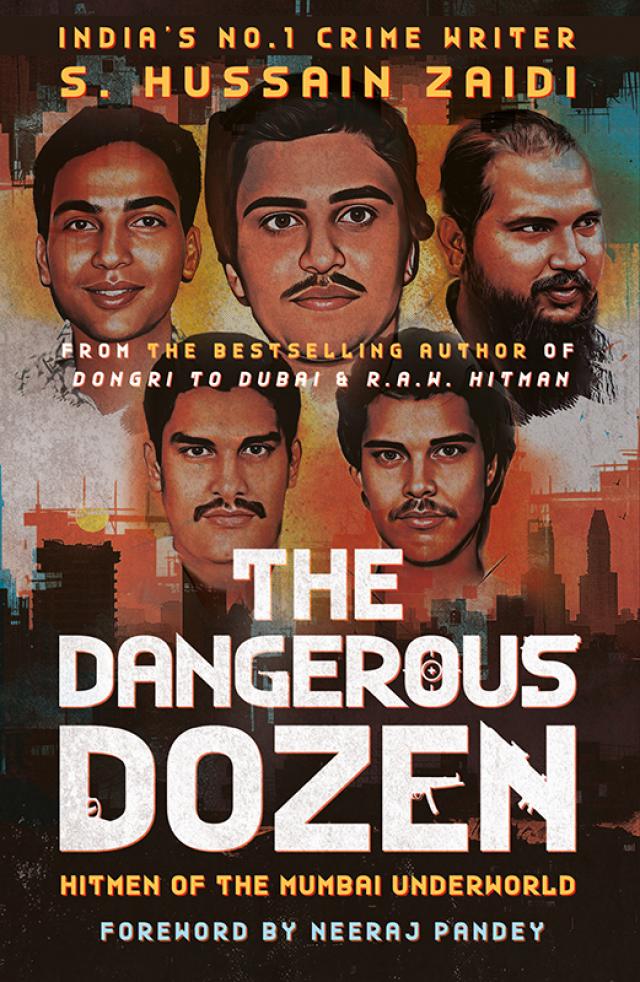
The Dangerous Dozen,
p.6


Simultaneously, he also worked as a bodyguard of Gurunath Koth, a Shiv Sena trade union leader. He later moved on to become the bodyguard of Dhananjaya Shetty, owner of the famous Chandni Bar.
In the process, Bagga was exposed to several gangsters, including Sanjay Ghati and Viju Shetty of the Chhota Rajan gang. They were impressed by this man who could single-handedly beat up a dozen men like him. Soon they introduced Bagga to their boss and got him enrolled in the Rajan gang. Rajan was impressed with Bagga’s record of communal killings during the riots and put him on special assignment to kill Dawood Ibrahim’s men involved in the serial blasts in Mumbai.
Soon Bagga became the highest-paid contract killer, commanding the most coveted perks in gangland. He was paid thirty thousand to fifty thousand rupees per job. He also made extra money through extortions.
Despite being a killing machine, Bagga was a regular at temples and shrines in the city. One such visit to the Sitladevi temple in Mahim turned Bagga’s life around. He saw a woman and instantly took a liking for her. It was love at first sight. Bagga talked about it later in quite a filmy manner. Apparently the woman was sitting on a platform, deep in her thoughts. Bagga, without realizing it, stood staring at her, without blinking his eyes even once. When the woman noticed him, she stood up and began walking away briskly. Bagga followed her and saw her entering the lane near the Makhdoom Shah Baba dargah.
Poison of Love
Being as prejudiced as he was, Bagga did not want to enter a Muslim area. He found himself in a quandary. His feet did not want to move, but his heart was forcing him forward. Bagga was so attracted to the woman that he could not stop himself. He began investigating everything there was to know about the girl: who she was, what she did. He began visiting the area every day and followed the girl while she offered flowers to the shrine.
Bagga learnt that the woman’s name was Shehnaz. She was a Muslim, which shattered Bagga. But, as they say, love is the biggest leveller and breaks all barriers. Bagga decided to propose marriage to her. He casually struck up a friendship with her and began wooing the woman. Shehnaz also felt attracted towards Bagga. But before saying yes to the marriage proposal, she placed one condition. Bagga would have to convert to Islam.
Unimaginable before he met her. But now, a fanatic Muslim-hater like Bagga was so besotted with Shehnaz that he agreed to the conversion. Venkatesh Bagga Reddy became a Muslim and renamed himself as Aziz Reddy.
With marriage, Bagga’s brutalilty began diminishing. Before, according to his own confessions, Bagga had killed thirteen Muslims, but after he met Shehnaz, he decided to turn a new leaf. This also made him lower his guard as a killer and his levels of alertness slackened. And, as a maxim goes in the underworld: ‘Jiski nazar game se hati, woh game se hata’ (The one who loses focus in the game, loses the game).
On 26 July 1998, the Special Operations Squad (SOS) of the Mumbai Crime Branch received a tip-off about Bagga. The Mumbai police were hot on his trail and had not been able to lay their hands on him for a long time. When one of Bagga’s close aides squealed on him, his whereabouts and criminal history, the cops decided to get him come what may.
For the six men armed with AK-47 assault rifles, it was a do or die situation. Either they could bring down the notorious Venkatesh Bagga Reddy, or succumb to certain death at his hands. After all, Bagga was nowhere close to the other criminals they had dealt with. The dossiers of the Mumbai police had never had such a bloodthirsty criminal, literally.
The squad circled a decrepit building where they suspected Bagga had taken shelter with five others. One after the other, they marched upstairs and barged into a tiny room, catching the suspects unaware. Knowing well that they were in no position to counterattack, the five men in the room surrendered in no time.
But Bagga was not one to budge. Confidence in his own physical strength had intoxicated him. He pounced on the squad without any fear of being shot. The cops, however, had luck on their side. They overpowered him and handcuffed him to limit his movements. They had been clearly instructed to arrest and not to kill. They also seized arms and ammunition from him.
Bagga’s arrest was big feather in the cap of ACP Pradeep Sawant. Bagga was lodged in Arthur Road jail for a year. Bagga could not believe that he had been arrested so easily. But he kept making plans while he was in custody. He decided that once he was out of the jail he would not fall into the hands of the police again.
Bagga Begins the B-Gang
After his release on bail, Bagga made a fake passport and escaped to Malaysia, where he met Chota Rajan. Here, with the help of Rajan, he got a fake passport in the name of Michael Fernando and visited Indonesia. Rajan had decided to use him in his drug business. He was given charge of the working of a mandrax-manufacturing unit in Bathan.
As Bagga realized how lucrative the drug trade business was, he began to take an interest in the deals and made friends with Rajan’s left-hand man, Santosh Shetty. Both Shetty and Bagga connected instantly and became good friends. The other gang members envied them and started complaining to Rajan about them. Allegations of the misappropriation of funds reached Rajan, who soon began to doubt Bagga. This led to a clash of interest between Bagga and Rajan, and soon differences began to grow. Later, Bagga and his friend Santosh Shetty set up a hotel, Indian Mantra, in Jakarta, in which they invested about twenty crore rupees.
Bagga flew back to India in December 2002. He was aware that the number of his enemies was increasing. He knew Dawood’s men were looking for him in Mumbai, so he decided to change base and to Kashi in Uttar Pradesh. During his time in Kashi, he got in touch with Kishore Garikapatti, a close aide of former Dawood man Subash Thakur. Kishore offered him shelter and money if he worked for them. Bagga did not have much of an option—he needed the support.
Bagga was given the job of killing people who were against Thakur. Bagga and Thakur had enemies from the Rajan group in common.
In a daring incident, Bagga shot down Narendra and Bavendra, two gunmen who had killed actress Manisha Koirala’s secretary, Ajit Dewani. This became his biggest hit. Happy with his successful series of killings in Uttar Pradesh, Thakur asked him to move back to Mumbai as he had some scores to settle with Rajan’s men. Bagga did not want to return to the city, so he decided to go back to Hyderabad and set up base there. After reaching Hyderabad, he set up the B-Company, as he had also earned the name Baba Reddy. In fact, he operated under six different names.
By now, Bagga was involved in twenty-one cases in Hyderabad, Mumbai and UP. In Hyderabad, his career chart progressed rapidly. He became a weapon supplier, importing weapons from a dealer in Indonesia and supplying them to other gangs. He imported twenty weapons for his own personal use as well. He also extorted money from businessmen in Hyderabad. He allegedly extorted five to ten lakh rupees from Suresh Agarwal and one Raju, both well-known cricket bookies. He also extorted seven lakh rupees from the proprietor of the Golconda Cigarette Factory. Meanwhile, he continued to pay attention to his drug factory in Jakarta.
When he formed his new gang his old friends came to help him out and became an integral part of the mafia in Hyderabad. Rajesh Madrasi, Anand Prem, Bala, Mental Sanjay, Prem alias Pandit and Nilesh alias Shailesh became his trusted advisors and gang members, while his old friends Asif and Chapala Srinu were entrusted with the task of settling financial and land disputes. The police said that Bagga used to settle land disputes and extort money from realtors, businessmen and film personalities. He was involved in several kidnappings for ransom.
Bagga was known to spend lavishly. He owned forty acres of land in his native Nalgonda district. He also had investments in Bangkok, Malaysia and Singapore. He is said to have thirty-eight bank accounts across the world.
Though a gangster, Bagga was different from others. While other gangsters demanded extortion money in cash, Bagga always insisted on cheque payments. Bagga had a full-time chartered accountant who managed all his transactions. He also had connections in the police force and the political system in Hyderabad.
In 2005, the police seized five foreign-made sophisticated firearms, including an Israel-made Uzi sub-machine gun, three 9-mm pistols and a huge quantity of ammunition from Bagga’s men in the city’s posh Banjara Hills. When the police asked his men to surrender, they opened fired on them. The police finally managed to arrest five men. The police invoked the Andhra Pradesh Control of Organised Crime Act against Bagga and his associates, who were charged with carrying out illegal activities in Hyderabad. However, Reddy and his men were acquitted of the charges as all the witnesses turned hostile and there was not enough evidence.
Within a year, Reddy was free. He returned to Hyderabadfrom Thailand in December 2007 and resumed his extortion and land settlement activities.
On 30 April 2008, film producer Nikhil Reddy received a phone call on his office landline. The call was from Aziz Reddy asking him to cough up protection money or face consequences. Nikhil immediately informed the Banjara Hill police asking for protection. This extortion bid turned out to be the last one for Bagga.
Bodybag
In May the same year, the police received a tip off that Bagga and his associates were to visit Banjara Hills. This time the cops decided to eliminate him permanently as he had made a mockery of the system many times. Encounters had become a rage in Mumbai, and the Hyderabad police were not far behind. In the afternoon, a group of ten Task Force commandos split themselves in two groups and took their position in the area where Bagga was supposed to arrive. He had an appointment with a landlord to settle a property dispute and also to extort money from him. Though the commandos had started a search in the area, they did not know the exact location of the gangster’s meeting place as he was known to change venues at the last moment.
The roads were cleared and no other vehicle was allowed to come that side. The search continued for over two hours till, finally, a vehicle which they suspected was carrying their quarry approached and was let through. The Task Force personnel saw three men alighting from a vehicle. The cops waited till all the three men were out of the car. One of the three was identified as Bagga.
As the policemen closed in on the gang, Reddy and his associates sensed that they had been surrounded and tried to flee. The police asked them to surrender, but Bagga started firing at the police. The gangsters chose three corners and hid themselves. The exchange of fire continued for an hour. It is said that Bagga’s two associates managed to flee from the spot but Bagga was killed. It took ten men to gun down one man. Despite being hit by a bullet in his right arm, he continued to fire. In the end, the commandos were able to surround him and fired at him indiscriminately. He died on the spot.
It later turned out that it was one of Bagga’s close associates who tipped off the police. The associate wanted to topple him and take over the gang. But the cops ensured that the gang disintegrated after Bagga’s death.
Shahnaz, too, could never be traced.
HITMAN 4
The Maya of Mobsters
Mahindra Makes a Mark in the Mob World
Remember Vivek Oberoi from Shootout at Lokhandwala? The spunky, crazy, unpredictable, volatile gangster he portrayed on the screen was quite close to an actual hitman, Maya Dolas.
Everyone who knew Maya Dolas agrees that, before August 1991, there was hardly anyone who had heard his name. The same people also agree that, after August 1991, there was hardly anyone in the city who hadn’t.
Born Mahendra Dolas in 1966 in Sion, Dolas was among the scores of young, unemployed youth who joined the underworld for the sake of money as well as respect. Maya began his career in crime by working as a henchman for the Arun Gawli gang in 1988 but was soon recruited by Chhota Rajan, who was at the time still with Dawood Ibrahim Kaskar and his chief recruiter and enforcer.
An old-time member of the gang recalls Dolas as one of the many young toughs employed by the gang back then, who were managed by Appa Jadhav, a mid-level D-Company enforcer. ‘A lot of builders close to the D-gang were provided henchmen as security against attacks by other gangs. Maya used to be among the young boys who would hang around the offices or construction sites of builders close to the gang when he started, and reported directly to Jadhav. The job was more about looking tough than doing anything else. Later, he started going out on firing jobs, but was still one among many. He hardly had any standing of his own,’ he recalls.
Maya’s first brush with fame came when he participated in the murder of Ashok Joshi in December 1988, along with Sunil Sawant, one of the D-gang’s main shooters, and several others.
Joshi was the undisputed lord of Kanjurmarg at the time. Dawood was on a mission to eliminate all local gangs so he could claim the city for himself, and Joshi was among the local ganglords who were standing in the way of Dawood’s dream.
Joshi was also exceedingly cautious. He kept changing his location every couple of days, travelled in a convoy of two to three cars, and always decided the route to his destination at the last minute. Dawood’s men knew that they would have to put in some special effort to crack this one. Finally, they hit upon an age-old solution.
‘It has been a favourite tactic of war, right from the times of kings, to rely on the betrayal of people to topple their superiors. All that one needs to do is to find the right person and the right motivation. In this case, the right person was Joshi’s driver, and the motivation was to work for “Dawood bhai” once the job was done. Falling for the promises, Joshi’s driver agreed to relay his employer’s plans so that an ambush could be set up,’ retired assistant commissioner of police (ACP), Jaywant Hargude, recalls.
As soon as Joshi decided to shift to Pune from Kanjurmarg, his driver informed Sawant, who mobilized a large team of men armed to the teeth. The team of six men lay in wait in a Maruti car near Khopoli, which falls on the way for anyone heading from Mumbai to Pune.
Joshi’s driver, who was at the wheel, was extra tense. He had described to Rajan the car he would be driving in. Rajan had in return told him that he would at some point overtake his car and block his path, which would be his signal to get out.
Joshi’s driver kept his eyes peeled and peered intently at every vehicle that passed by to see if it was going to overtake them. His ‘signal’ did come, but it was followed by his death. Sawant’s van, which had been following Joshi’s car ever since it entered Khopoli, did overtake the car, but Sawant and his men started firing before the van came to a halt. Joshi’s driver took bullets in his entire body, and car swerved out of control. Sawant’s team then stepped out of the van and riddled the car with more than one hundred and eighty rounds from automatic rifles. It is said that the shooters did not even stop to peer inside the car to check whether all the four occupants, including Joshi, were dead; they just got back into the van and sped away.
The plan had never included recruiting the driver; he was always slated to die. A man who could betray one employer could just as easily betray his next one.
As audacious as the murder was, it did little to increase Maya’s standing in the gang. Even at that time, he was just one of the many shooters working for Dawood who had participated in a big crime.
That changed in August 1991, when Dolas was arrested in connection with one of the scores of firing cases registered against the D-Company in the early ’90s. A few days later, while he was being taken to the Mazagaon court to be produced before the magistrate, Maya did what few had the guts to do at the time.
As he was being walked into the court premises, Maya slipped a hand in his pocket and removed powdered chilli that he had been hiding. Turning to one of his police escorts, he threw the powder in his eyes. As the stunned and disoriented policeman dropped to the ground screaming, trying to tear his burning eyes out of their sockets, Maya turned towards the other constable, who was trying to decide whether to attack Maya or go to his colleague’s aid.
The split-second hesitation proved to be unfortunate for the second constable, as Maya had already fished out a blade from somewhere in his clothes. He slashed at the constable several times, drawing blood, and ran out of the court premises, leaving both policemen lying on the ground in agony.
His actions in the court compound on that day were among the many that would cement his reputation as a fearsome gangster. The khaki uniform carried a lot of respect in those days, and people were hesitant to resist arrest or even argue with a uniformed policeman. For an arrested accused to attack policemen, inside a court premises no less, and escape, was unheard of. People did escape from custody in those days, but by giving policemen the slip, taking advantage of their laxity or by using a diversion. Actually attacking a cop was something that few would have dared to do.
Old-timers in the police force still wonder how Maya managed to procure a blade and powdered chilli and smuggle them to the court on his person. Some say he did it with the help of his lawyer, others suspect he greased some palms while inside the lock-up, while some also theorize that his friends slipped him the chilli and the blade during an earlier court appearance. As Dolas did not walk away alive the next time he came face-to-face with policemen, this is a question the police still try to guess an answer for.
However he managed to do it, Dolas established an image in the eyes of the people that he was not only daring but also resourceful enough to be able to get what he wanted in spite of being behind bars.
Mahindra’s Transformation into Maya
The next turning point in Dolas’ career came less than a week after his escape, when he was tasked with eliminating three of the surviving members of the Ashok Joshi gang.
Dolas and his friends lay in wait for their targets on a busy street in Kanjurmarg. Dolas has chosen the venue and setting of the hit job, and this, too, worked towards building his fearsome image.
Armed with AK-47s, Dolas and his friends stood patiently by the side of the road till their targets approached. The three unfortunate gang members, however, were not by themselves. They were part of a Ganpati immersion procession organized by the Ashok Joshi gang. Other hitmen might have been deterred by the fact that there were too many people present and cancelled the job at that moment. Not Maya Dolas.