The dangerous dozen, p.3
The Dangerous Dozen,
p.3
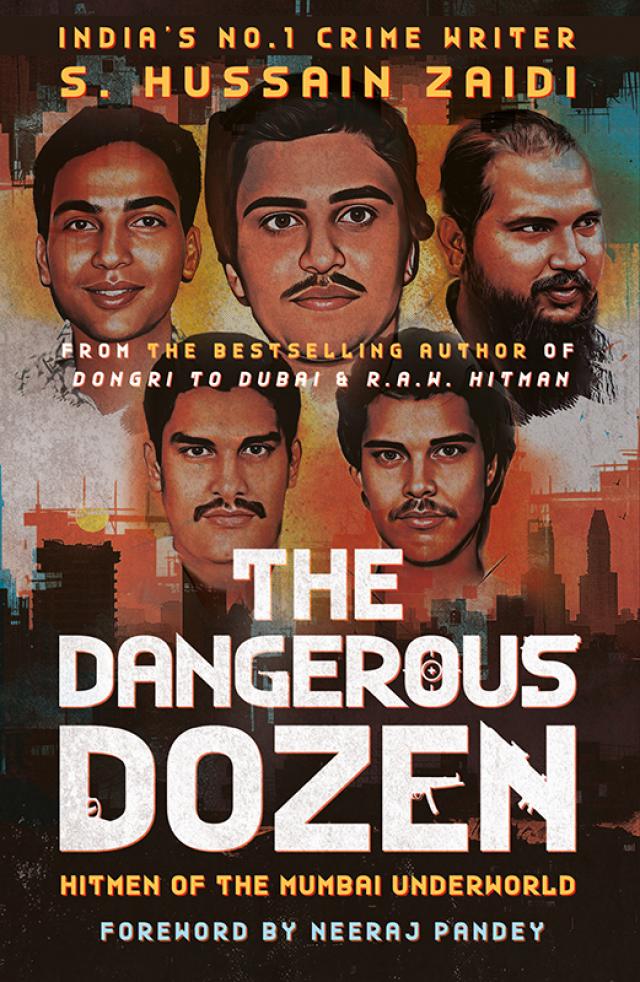


Like any other teen of his age in the 1990s, Jhingada strutted through the bylanes of his locality with three to four of his friends, pretending to be bhais of their own little domains. Fear was for losers and walking away from fights was suicide for their street cred. Fights, and the scars they left you with, were badges of honour to be flaunted, and even the occasional thrashing delivered by his father, a humble plumber by trade, did not deter Munna from his bhaigiri.
The endless stories of the D-gang’s exploits, fuelled by flamboyant portrayals of gangsters in Bollywood movies, further stoked Jhingada’s ambition and he would always be on the lookout for another fight, another proverbial scalp to add to his belt. What neither Jhingada nor his hapless parents ever imagined in their wildest dreams was where he would end up one day.
Jhingada’s journey down the bloody path began one afternoon in 1991, when he was a second year Bachelor of Arts student in Ismail Yusuf College in Jogeshwari. He was entering the college campus with two of his classmates when another student named Wazir called out to him. Wazir was among the several bullies in the college who liked to sit near the college gate with his cronies and pretend that he was running a fiefdom. In Jhingada’s mind, Wazir was little more than a brawny idiot. He had never had any respect for Wazir, and was not about to start giving him any.
When Wazir ordered him to come over to where he was standing, Munna coolly stood where he was and told Wazir to come over himself. Munna’s friends went cold at this open challenge to the college bully’s supremacy, but Munna did not display as much as a twitch on his face.
‘Chutiye, bola na, idhar aa!’ Wazir roared at him.
‘Behra hai kya? Suna nahi maine tujkho bola idhar aa?’ Munna responded.
A furious Wazir stormed over to Munna, his shirt tails flapping up and down, the chopper he had stuck in the waistband of his jeans clearly visible. Munna’s two friends started backing away at the sight of the blade, but Munna did not move an inch.
Wazir reached the spot where Munna was standing with his hands on his hips and shoved the latter in the chest. Munna responded by pushing back. A stunned Wazir could only say, ‘Do you realize who you are messing with? Do you see the bloody chopper I have? I’ll carve you up!’
In response, Munna reached out, whipped the dagger out of Wazir’s waistband, and drove it into his chest. Wazir stumbled backwards, blood spouting from his chest as if from a fountain, while the crowd of students who had gathered around the two boys in anticipation of witnessing a good fight, backed away in mute horror.
When the onlookers finally wrapped their heads around the fact that the nineteen-year-old Arts student had stabbed someone in broad daylight, the girls started screaming. A young boy went to the pavement and puked his guts out. Within seconds, only Munna and his two friends were standing at the spot, while Wazir lay on the ground, blood and life ebbing out of his twitching body, his eyes mirroring his shock at being attacked in his own domain with his own weapon.
Jhingada calmly turned around to his friends and told them, ‘Sab ko bolna, Jhingada ne maara Wazir ko. Abbu ko bolna mai surrender hone jaa raha hoon. (Tell everyone that it was Jhingada who killed Wazir. And tell my father I’m going to surrender to the police.)’
Jhingada went straight to the Jogeshwari police station, where word of the murderous attack on a college student had just reached, someone having called the police control room and the control room having relayed the information to them. A team was leaving for the spot when Jhingada walked in and told them that he had stabbed a boy in his college. The cops could only stare at the chit of a teen in front of them for a full minute before one of them regained control of his motor impulses and led him to the lock-up.
Still stunned, the duty officer called up his immediate boss, the zonal Deputy Commissioner of Police (DCP), to inform him that the accused in a sensational assault case had just walked into the police station to surrender. The DCP jumped into his vehicle and rushed to the police station to personally interrogate the young man.
Two hours later, the DCP walked out of the detection room of the police station wearing a look of amazement on his face. ‘Not a trace of regret!’ he told the Senior Police Inspector of the police station. ‘Not a trace! He says he wants to be let out so that he can finish the job. Keep a close eye on the bastard.’
Meanwhile, Wazir was rushed to a nearby hospital where he succumbed to his injuries a couple of hours later. The case of attempt-to-murder against him was upgraded to murder just hours after it was registered. Munna Jhingada had tasted blood for the first time.
A month later, Jhingada was released on bail, his lawyer finally succeeding in convincing the magistrate that he had no past record and was not a flight risk. His father took him home, sat him down, and made it clear to him that he was not going to let his eldest son throw his life away. Jhingada, whether out of love for his father or due to having seen the ugly side of bhaigiri in the lock-up, agreed. Since continuing in the college with a murder case to his name was next to impossible, Jhingada started assisting his father in his plumbing work. He would spend his days accompanying the ageing man on his plumbing jobs and, in the evening, listening to lectures on how to deal with customers of various kinds.
Fate, however, had other plans for Munna Jhingada.
His namaaz over, Munna took off his cap, rolled up the mat, and placed both items in a corner of the room. Walking over to the window, he stood for a long moment, looking at the teeming mass of humanity below him. Once upon a time, he was just one of the thousands of people staying in the city. Today, if he walked down to the street and told someone his name, they would either bow their heads or run away. He was almost tempted to try. Instead, he moved away from the window. Lying low was important, Shakeel bhai had told him. He was on the cusp of something that would propel him to instant fame not only in India but all over the world. He could not risk being caught by the police at this stage.
Killer’s Kindergarten
For the next three years, Jhingada led a quiet, uneventful life as a plumber’s apprentice. As the months passed, people started putting the past behind them, and Jhingada and his family, who had become pariahs due to the murder case, slowly began to be accepted at social functions once again. It was then that Wazir’s murder came back to bite Munna.
Wazir’s bullying in college stemmed from the fact that his brother, Nasir, was a small-time thug in his locality. Nasir had been thirsting for revenge ever since Wazir’s brutal killing at Jhingada’s hands. One evening in March 1994, as Munna was on his way home after visiting a client, Nasir and some of his friends lay in wait for him. Over the last few weeks, Nasir had been discreetly seeking information on Munna’s activities and schedule. After several weeks of reconnaissance and gathering information, Nasir finally laid a trap for Munna at a junction near his house which he was sure to pass no matter where he was coming from.
As Munna walked home, tallying up the day’s accounts in his mind, Nasir blocked his path and told him that he was Wazir’s brother. The mention of the name seemed to instantly wake up a sleeping demon inside Munna, who automatically went into attack mode.
Before Nasir and his group could make a move, Munna lunged at Nasir. However, this time, his enemies were well prepared. They had come armed with hockey sticks while Nasir had a chopper. They were all aware of Munna’s fearless aggression, and started raining blows on him with their hockey sticks. Munna, however, fought back ferociously. In the ensuing melee, he managed to trip one of his assailants, snatched his hockey stick, and struck Nasir on the head repeatedly. The sight of their leader falling down bleeding unnerved the rest of the attackers. What little resolve they had left quickly melted away when a crowd started to gather.
Munna was arrested by the Meghwadi police, and he readily confessed to having attacked Nasir in self-defence. Nasir, who had survived the attack, healed from his wounds by the time Munna came out on bail. Nasir’s thirst for revenge had only intensified after his first scuffle with Munna, and he started looking for a second chance with renewed vigour.
The chance came around six months later, when he managed to corner Jhingada while he was having dinner with his friends in Vile Parle. He was, however, outnumbered, and had to run away after taking a severe beating from Munna and his friends. After three to four days of furious discussion, Jhingada and his friends surrendered to the Vile Parle police, and Munna was back in jail.
Around a year later, Nasir was found murdered in Jogeshwari and Munna, due to his past run-ins with him, became suspect number one. While it is still not clear whether it was Munna who killed Nasir, Munna was made a ‘wanted accused’ in the case. Munna made it clear to his father that he had no intention of going back to jail. His father then sent him to their native Uttar Pradesh, pleading with relatives to take care of him for a few months. In hindsight, it was a mistake.
Known as the Wild West of India, Uttar Pradesh is famous, or infamous, depending on how you look at it, for its country-made guns. People roam around freely with a tamanchha, local slang for a handgun, tucked in their waistbands, which are either crudely assembled in the scores of small manufacturing units in the state. A wedding is considered to be mild if dunaalis, or double-barrel rifles, are not fired in the air to celebrate the occasion.
It was only a matter of time before a couple of macho cousins brandished their tamanchhas and offered to teach Munna how to use one. Within a month of his coming to UP, target practice out in the fields with country-made revolvers became his favourite pastime. In the six months that he stayed in UP, Munna became skilled in the use of handguns and rifles.
In March 1997, Munna spoke to his father on the phone and they decided it was safe for him to return. Munna came back home quietly in the dead of night, and kept his head low for the next few days. However, a local informant—some suspect a henchman of Nasir’s—saw him and tipped off an officer that he knew in the Oshiwara police station. The officer led a team to Munna’s house, picked him up and handed him over to the Meghwadi police for interrogation in connection with Nasir’s murder.
As Munna turned around, the door opened and a man walked in. Munna smiled.
‘Aao, Rashid bhai,’ he said. ‘Is everything ready?’
‘Yes,’ the other man said. ‘We leave for Pakistan tomorrow, inshallah.’
Bossman Beckons Belligerent Boy
Munna’s arrest for Nasir’s murder proved to be a major turning point for him. When around a month of interrogation by the toughest of cops did not elicit a confession from the hardened Jhingada, who was now a veteran with three stints in lock-up behind him, the police ran out of custody time and the court remanded him to judicial custody. He was sent to Arthur Road Central Jail, where he met Ismail Malabari. Ismail and his brother Rashid were high-ranking lieutenants in the D-gang hierarchy, and Ismail was in direct touch with Chhota Shakeel.
If there is one thing that a gang needs, and always gets, in abundant supply, it is foot soldiers. Fresh talent is always welcome for a criminal gang, as the more men it gets, the more crimes it can commit. The more crimes it commits, the more eyeballs it grabs, and the more feared it becomes.
One surefire recruiting ground for young talent is a central prison, where convicts and undertrials from all over the city are sent for crimes ranging from pickpocketing to murder. Gangland convicts, who quickly set up a system of communicating with their bosses from inside the jail by greasing the right palms, are spoilt for choice when it comes to recruiting in central jails. There is no dearth of people who turned to petty crime due to poverty and are willing to graduate to serious crimes if the money is good. Further, back in the ’90s, just the chance of working for ‘Dawood Bhai’ was enough motivation for young criminals.
Ismail, one of Shakeel’s top lieutenants, was impressed by Jhingada, who had refused to crack under intense police interrogation, and sought him out. In his first conversation with Ismail, an interview of sorts, Jhingada boasted of his hours of target practice. This, along with Jhingada’s attitude, sealed the deal for him. Within a month, with Shakeel’s help, Ismail arranged for bail for Jhingada.
On his last day in jail, Ismail gave Jhingada a bundle of cash and a phone number. ‘Yeh number pe phone kar aur mera naam bol,’ Ismail told him. Jhingada sent half of the money to his parents, kept the rest for himself, and called the number he was given. He was directed to an address in Musafirkhana, where another D-gang enforcer was waiting for him. That same day, Jhingada spoke to Shakeel.
Shakeel told him that there was no dearth of money if he did the job right. Jhingada asked Shakeel to try him out, and that his actions would speak louder than his words. An amused Shakeel told him that he would be in touch.
A week later, Jhingada was taken to another small, nondescript room in Dongri, where Ismail’s brother Rashid pulled a tarpaulin sheet off from over a table, revealing a large arsenal of imported arms and ammunition sent by Dawood from Pakistan, courtesy his friends in the Inter Services Intelligence (ISI), Pakistan’s intelligence agency.
‘Take your pick,’ Rashid told him. ‘Take enough for a team.’
Jhingada, overawed by the sight of the sophisticated weaponry, took his time before picking out two AK-56 assault rifles, two pistols and plenty of ammunition. He then asked Rashid who the target was. Rashid chuckled. ‘Arun Gawli,’ he said.
After establishing his base in Karachi with the ISI’s help, Dawood had made it his mission to wipe out all other gangs in Mumbai so that he could rule the city all by himself. The two main obstacles in his path were Chhota Rajan and Arun Gawli. While Gawli had his own gang of diehard loyalists, a lot of Dawood henchmen recruited by Rajan shifted their loyalties when Rajan split with Dawood in 1993.
Jhingada and three other shooters set out the next day for Byculla, where Gawli was holding a rally to promote his political party, the Akhil Bharatiya Sena (ABS). During the entire rally, Jhingada and his team kept trying to get close enough to Gawli to shoot him. However, there was too large a crowd, too many guards around Gawli to deal with any threat, and too many policemen deployed at the rally, taking into account Gawli’s criminal record.
Jhingada returned dejected, but Shakeel told him not to worry. It had been a test of guts, and Jhingada had passed. Shakeel then gave him his first real mission. He told Jhingada to gather as much information as he could about Gawli’s aide Prakash Naik. Jhingada started hanging around the Dagdi Chawl and soon gave Shakeel a full report of Naik’s movements.
A pleased Shakeel gave the go-ahead, and in August 1997, while Naik was exiting the Laxmi Industrial Estate after meeting a friend, Jhingada accosted him and emptied a pistol into his body.
It took the police around twenty-four hours to find out that the daring murder had been committed by the same young thin, diminutive-looking young man who had walked into the Jogeshwari police station six years earlier and calmly confessed to having stabbed his collegemate. Suddenly, Munna Jhingada was a person of interest. The Crime Branch asked for all information on Jhingada on a priority basis, and started building a dossier on him. Policemen who had interrogated him for the first time in 1991 were contacted, his house raided, and all his known friends picked up for questioning.
Jhingada’s locality, too, was abuzz. Teenagers who were kids when he used to strut the lanes calling himself a bhai now idolized him. His association with the D-gang made him an instant hero in their eyes, while their parents prayed fervently to their god to save their own children from the path that their neighbour’s son was walking.
In the midst of all this, Jhingada, hiding in a D-gang safe house, was smiling to himself and basking in the glory of the generous praise Shakeel had heaped on him. A lavish feast was held in his honour, and other D-gang members in Mumbai were now looking at him with respect rather than amusement.
Over the next three to four months, Munna Jhingada was like a weapon unleashed by the D-gang against its enemies. From August to October, he shot down no less than four aides of Gawli and Rajan in broad daylight, either with an AK-56 or with a Star pistol, to which he is said to have taken a liking to. His victims included financiers and enforcers for Rajan, and Jitendra Dabholkar, a close Gawli aide who was also senior member of the ABS. Jhingada teamed up with another small-time criminal, Sadiq Kalia, in killing a well-protected politician and founder of ABS, Dabholkar. The killing shook the city, demolished Gawli’s political gameplan, and established the supremacy of Shakeel in the Mumbai gangland.
People who had once made fun of Jhingada learned to fear the mere mention of his name. The same neighbours who had once ostracized his family following his first arrest started cowering in terror when they saw Jhingada walking into the colony.
Guns became his sweetheart and his permanent companion. He was rarely without a pistol tucked under his shirt, and often carried an AK-56 in his car, adding all the more to his intimidating appearance.
The fear of police action was not a concern for him anymore. Nasir’s murder had taught him that the police would come after him whether or not he was guilty, and he had lost his fear of third-degree torture long back. Besides, his employers, realizing his value, always kept him well hidden and constantly on the move.
Jhingada kept asking for more, and bigger jobs, and Shakeel kept telling him to be patient. However, his luck took a turn for the worse when the Santacruz police finally got a good tip and raided a house where he was staying in November 1997, cutting short his killing spree. The police found a large arsenal of assault rifles, pistols and live rounds in his house, and Jhingada ended up spending two months in custody of various police stations, and then close to two years in judicial custody. Central jail, again, was a cakewalk, as he was welcomed with open arms by the D-gang camp and hailed as a hero.
Meanwhile, in Dubai, Shakeel spared no effort in trying to get his latest favourite shooter back in action again. However, the amount of weaponry found in his house and the number of cases he was suspected to be involved in made this tough. Finally, in 1999, Jhingada managed to secure bail.