

Out of earth, p.5
Out of Earth,
p.5


And now the dogs have stopped barking: it was she who came, she. Her daughter now twenty years older.
Daughter: love that eats you from inside.
Periphery: far from the city, within it.
Twenty-one fingers not counting the wart
At the end of the houses, in Vilaboinha at night, how good it feels to smoke a rollie watching the smoke the starry sky to think about life, goddamn, to think about life. Funny not getting Fátima out of his head, just now the starry sky, the warm breeze laying the hair on his chest a little more to one side, funny how Fátima was stuck in his head and him not the kind of man to like anyone that much, he wasn’t the kind of man to like anything. But now the breeze the smoke the starry sky and Tonho knows. He knows. Goddamn, how he loves that woman.
He picked Fátima to marry when she was still young, almost a child. He hadn’t even liked her, goddamn, he didn’t even like that girl. But she always had that thing, that thing he can’t say, that way of not wanting things she always had. He picked Maria de Fátima to marry, there was nothing else to do after what happened, goddamn, does no good to keep going on about it. He picked Fátima and since then he hasn’t been without her for a second without sheets on the straw mattress, without the way she serves his gourd, her serene demeanour, not a dog in sight; he will not be without Fátima’s silence.
He likes Fátima’s breasts, one smaller than the other. He likes Fátima’s hair, a curly tropical forest between damp thighs. He likes Fátima’s dry feet her chapped feet. He likes how her dark circles sandbags bear every sorrow they bear all the sorrow of this world and her cheeks like weary donkey bollocks, unappreciated. He likes how Fátima smiles a little shamefaced almost non-smile. But the silence… Fátima stays silent and the starry sky, Tonho exhales deeply before the last drag: goddamn, he loves that woman.
No one holds their knife with a weak grip, girl, a clean cut has no mercy, Fátima says. You cut the cassava with the knife point deep in the cassava, holding it with both hands, both steady, like this, look, don’t get upset now. Now girl, did you think the knife would overpower your arm? This is how Fátima has to leave her sister, with her arms braced to overpower if only because she was made to; this is how she has to leave the girl, her sister, before she herself leaves Vilaboinha, goddamn, she can’t go to São Paulo and leave Grandma Penha all alone.
That’s why she’s teaching her sister every day. Fátima tells her grandma she’s going to need help with the child. Grandma, the girl’s getting the hang of it, Fátima takes her chance to say. Her grandma doesn’t believe her, she smells a rat, a dozen rats, even so drop it, go on Maria de Fátima, just don’t overdo it. Out of her grandma’s sight, Fátima takes the girl and trains her to use the knife. Scarlett is sleeping, so quiet, the darling. Hidden away in this damn heat and Fátima keeps the windows closed, she lives with Tonho who’s never at home, hidden away she yells at the girl, come on, come on, come on, she-devil, do it properly, come on, wretch, put your back into it.
Penha can’t do without Fátima, her bad arm won’t do her bidding, the devil. True, she can kill a chicken, but she can’t handle the tough cassava. If she goes in hard she can do it, but there are times when old Penha makes a mess of it. When the girl, her sister, stands in for her grandma’s arm, Fátima can leave in peace without fear or guilt, peaceful, my God, like her sleeping daughter. When the girl, her sister, learns to be better than her grandma’s bad arm, Maria de Fátima will take her daughter, a bag of clothes and a flask, she’ll take it all whatever there is and get the hell out of there.
While the girl is playing her grandma’s bad arm, Fátima will buy a ticket to São Paulo, she’s already gone round selling everything she’d kept, she managed to scrape together a few more centavos. Fátima will buy a ticket and tell her grandma look her straight in the eye not making anything up, she’ll go to her grandma no apology whatsoever not getting ahead of herself, she’ll go to her grandma with the ticket bought and the bundle with her daughter’s things, she’ll go to her grandma and say: she and Scarlett are going to São Paulo to start a new life. There’s no way they can stay in Vilaboinha.
But don’t worry, Fátima’s trying: as soon as the girl learns to hold the knife, her grandma won’t be left on her own. As soon as the girl, her sister, learns to not drop the knife, to grip the knife, hard, to put both arms into it, cassava at the ready, as soon as the girl learns to stop being silly, Fátima will go without having to leave her grandma alone. Her grandma won’t worry Maria de Fátima any more, nor will the girl. I’d just like to see old Penha’s face when she finds out. Picture that.
In Vila Marta, back in our own times, the excavation struck a wooden beam. That was all they needed! Nobody knows what those men, goddamnit, what those excavators want with the earth, but we all know that the earth no longer wants any more cups, wooden beams or pan handles. All of us and Fátima manage to watch through the cracks, straining our eyes, those living far away come to peer round corners, the men with baskets of clothes, the women carrying cooking pots, and they’re not looking at everything, no. They’re only looking at what the dogs notice.
The dogs are impatient paws restless, they want it now, sniffing, circling, wanting circling now sniffing at the unearthed wooden beam. It rises from the ground like a perfectly straight tree, like a tree God never made it rises from the ground, belonging to the ground, carrying on from the ground, growing against it, poor thing. Maria de Fátima supposes it can only be the stubborn work of time. Goddamn. Only the dogs were barking and the rest of us stood staring, Fátima in an all-consuming fear, trying to forget Vilaboinha.
Oh rabble with stinking breath! The men around us cordon everything off with tape and put photos of the beams in their pockets, along with the photos they’ve found. They photograph everything, heavens’ sake, take photos of everything and put it all away. Divide up finds and put them in bags, they keep everything, they tear it all from the earth and bury it in plastic bags. Everyone knows nobody knows, but we all imagine what they came to look for gold diamonds bones. We all imagine the treasures and the mines and the family remains, goddamn, where did that icon of the saint Grandma Penha used to have end up?
The men never stop digging, mushrooming splinters of bamboo, lengths of liana, a doll’s head with blue veins drawn on with pen, scribbled all over, another beam, a broken one. They never stop searching: tearing the earth from the unearthed, declawing the earth like someone scrubbing the dust off leaden days, you run a finger over and it’s enough to scratch the shell. They take photos. They arrange the objects in families and take family portraits. They try and wrest the earth from the shards, but the mud won’t let go. They take photos and shake the photos, blowing off the flakes, but it’s no use, no use. The excavators carry on regardless.
Goddamnit, when will they stop?
‘Damnit, every day this goddamn noise, every day.’
‘No one can stand it.’
‘They want to test our patience to the limit.’
‘Mine ran out long ago.’
‘How could it not? In this misery.’
‘That poor woman, what’s her name again?’
‘Maria do Rosário? De Fátima? Da Penha?’
‘Poor thing, look, they came this close to digging up her house.’
‘Who told them to build on the hill?’
‘There are always a few who get off on that.’
‘She must be deaf, poor thing, she hardly leaves the house.’
‘At least these days she’s got a visitor.’
‘No way, tell me about it?’
‘What is there to tell? I don’t know anything.’
‘Lie then, lie so I believe it.’
‘And what’s this now, what the hell is all this yellow tape?’
‘You’re the one with all the answers, honey.’
To put it bluntly, Vilaboinha is a good place for leaving, with its blasts of wind its horrendous blasting winds, this is a place where there’s a fresh body buried every day. The wind comes, the slightest wind raises the earth and everything that’s coming raises earth, withered branches, flour, coffee, raises bodies from the earth every blessed day, it brings the dead to the doorsteps just stopping by. Land that’s good to leave is like that: not even the dead stay here. Picture these people: either a wind blows and they leave, or a wind blows and flattens them. Goddamn wind… That’s why it’s good to have a carving knife ready.
Fátima’s sure that São Paulo is a good land to arrive in. Fátima and the child will arrive in the rain, they’ll bathe in the rain nothing stays stuck in a rainbath, only us. The earth washes away altogether and the memories of Vilaboinha along with it. Nobody refuses her feijão or cornmeal or farofa, making her way in life like this, small child in her arms, such a tiny little thing. Nobody refuses her a plate of food a favour a place to stay, look how tiny the child is, look at the poor little mite.
She’ll say she went to São Paulo because the memory was too painful, one terrible sadness, she’ll say, her husband a good man died just as the little one was born. On his deathbed he said go, go to São Paulo, Fátima, go on, don’t worry, she’ll say, not every heart’s made for happiness, she’ll say, she’ll say, if only that had happened and she didn’t even have to say it. Fátima goes to São Paulo to tell her story, but in Vilaboinha the knife won’t cut. She wants to go tell her story, but the knife, goddamnit, it won’t cut: Fátima comes back.
The girl can’t even handle this, the knife is blunt, even this the girl can’t fix: goddamn, she can hardly see it. Maria de Fátima gets up, her heart far away, criss-crossed highways in her thin ribs, Maria de Fátima gets up, her legs with splinters from the stool, she gets up, no complaining, and she goes to sharpen the knife again. In São Paulo she’ll be somebody else, out from under her grandma’s skirts hell, you can’t even imagine. Fátima shakes off the dust: the dream shell weakens. She shakes off the dust so hard that she rubs away the dream, overcomes the taste of her family: come on, Maria de Fátima, come on, woman of God, what’s yours is yours no one can take that away.
‘Hold it straight…’
‘But Fátima…’
‘Come on, girl…’
‘But…’
‘Hold it like this…’
‘But…’
‘Push hard, go on…’
‘But Fátima…’
‘Support it like this…’
‘But Fátima…’
‘From both sides…’
‘But…’
‘Put your back into it…’
‘But Fátima…’
‘What’s the matter, damnit?’
‘The knife has a mind of its own…’
‘Shut up and cut.’
Fátima’s shack is a bedroom and a kitchen, right in the centre of Vila Marta, and she lives alone. The few things Fátima has are kept in cardboard Costone cookie boxes, in haphazard piles at the end of her mattress bed. The few things she has don’t quite fill two, three maximum four boxes, one of them lies open, the flaps arms outstretched pleading for what’s missing. When she stirs in her sleep, Fátima keeps her feet together between the boxes, all of her stretched out, all stretched out her feet between the boxes, all of her right between the boxes, so delicious, as delicious as putting a warm tongue into the bony hole in a tooth.
Every time Fátima lies down she feels the beaten, ridged, hard ground, she breathes in the squalid smell, the smell of damp, and if she lies a bit further over, she’s in the embrace of the splintering clapboard walls. She, rising and falling with the earth, her calves tooth-picked by splinters, she stares at the faded happiness of the little girl smiling the biggest smile in the world, all teeth, the little Costone girl smiling at her Costone cookie, happy, and that’s the only way she can get to sleep. But now with all these people upturning the earth with hoes shovels wooden spoons, all these people waking the secret earth of Vila Marta, all these people and it can only be a miracle, goddamnit, it can only be a miracle the little Costone girl is still smiling.
‘Scarlett?’
Remember the last time Fátima saw her daughter? She was just a morsel of a person, shrivelled, poor little creature, a baby who barely fit in the family clothes, her grandma had to tie them up around her. Even crying she didn’t know how. But now here was Scarlett before her, grown up, her daughter twenty years away, but daughter, goddamnit, if only she wasn’t. Lord have mercy, she’d wanted to see her daughter, poor thing, wanted to, of course she’d wanted to, who wouldn’t? Only now all Fátima wants is to lie down stretched out, put her feet close together nice and close and see the little Costone girl’s vacant smile. Anything wrong with that?
Goddamnit. Scarlett here before her is also Scarlett twenty years further away, twenty years she doesn’t know growing bringing up her daughter bringing the woman from far away my God twenty years my God look, look how she is. Twenty years and her daughter decides to come and meet Fátima twenty years what can she want with those twenty years separating their flesh, my God, what can she want?
In Vilaboinha everybody knows, there are hardly any dogs except for Skin-and-Bones. Skinny beats death despite her daily beating from Dona Penha, mischievous thing, and look no further than Penha for a heavy-handed woman. Once Tonho tried to kill Skinny poor little Skinny, Tonho aimed the plank at her back, right in the middle, one hell of a racket, Tonho struck her with relish one flank then the other and you know what Skinny did? Nothing, poor thing. She did nothing. Rearranged her paws and went back to sleep, like when you roll over to get comfy again.
The girl, Penha’s granddaughter, was left thinking, goddamn, maybe this was Skinny’s way of dying, but no: the dog woke up a while later, when the wind blew in new smells. The strangest way to die, it’s true, but who would have thought Skinny was like that, so dogged in that body tail bare ribs on show? Except for Dona Penha, who would have thought? Tonho doesn’t even talk about it, he kills every dog he finds quiet yelping barking, he kills the dogs bark til they die they bark and even when they’re dead they don’t ever stop barking, good job.
When Tonho hears a dog struggling to breathe he thinks that killing dogs outside will also kill the dogs inside him. He doesn’t know why they bark, he just can’t bear it any more hearing them the whole time the barks the whole world barking he can’t bear it any more, so everything doglike he goes and kills with a shovel. Except for Skinny, as you’ll soon see; Skinny always finds a way of rearranging her sorrows and going back to sleep.
‘Scarlett, like a polvilho biscuit?’
Her daughter takes it, pecking at it with her fingers. She doesn’t smile like the little girl on the box with her Costone cookie — if only. Scarlett doesn’t know how to smile, she pecks, pecks, swallows. She isn’t pretty like the little Costone girl, she doesn’t have that little girl’s joy in never eating her cookie. She picks at the polvilho biscuit with her fingers. She isn’t pretty like a daughter should be. A strange little creature, wary, she pecks at the polvilho with her fingers. She isn’t faded, she’s filled with earth, with hunger, hunger. She isn’t how a daughter should be: smiling, and holding a Costone cookie.
But this is what daughters are like, Fátima knows, my God, Fátima doesn’t know Fátima only imagines what it’s like to be a mother. But, goddamnit, who does know? Scarlett in front of her and she’s trying, her daughter doesn’t say, she’s hardly there, her daughter in front of her and Fátima keeps saying I didn’t know you were coming; Fátima keeps on saying I thought you would never come, the letters I sent the letters often go missing. She keeps on saying I thought you didn’t know about the buses to Vilaboinha, the bus is just a journey begun, she keeps on saying, she keeps on saying, goddamn, she doesn’t stop saying, but her daughter doesn’t answer, Fátima keeps on saying but her daughter—
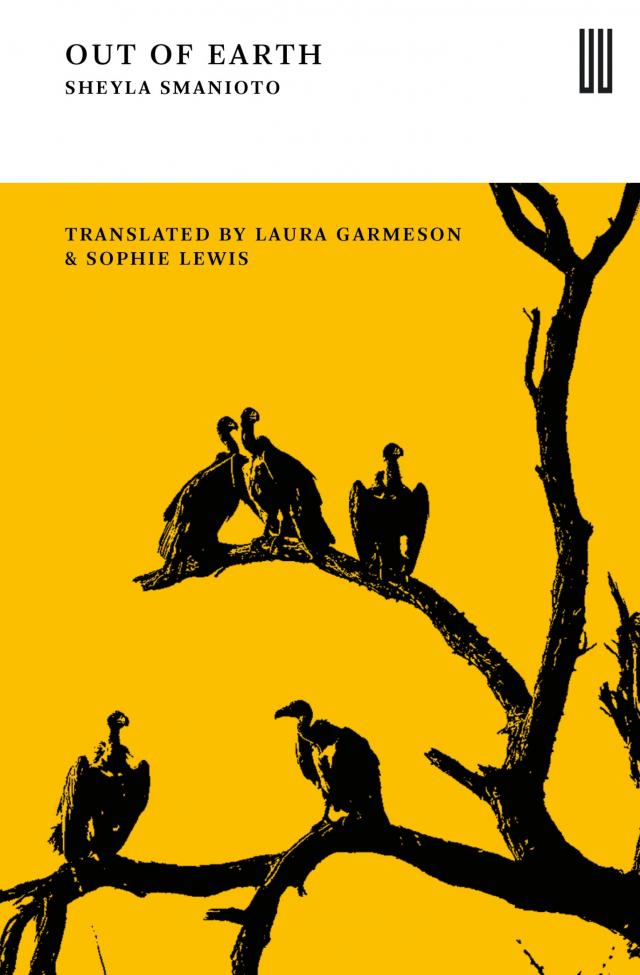
There’s no nice way to say it, but if you look straight at Scarlett she looks more like a vulture. She pecks at her food with the serenity of one who relies on the famished rage of death to prompt her eating. She’s learned to wait, that must be it.
Fátima keeps on saying do you remember this person I know, I don’t know who, goddamnit, this person, it’s on the tip of my tongue. I didn’t know I just thought since you were staying, she keeps saying, you were far away I was far away but. She keeps saying, but her daughter, you know those mottled vultures, the ones who hide amongst the chickens? Her daughter her jutting vulture head held high, her dark-eyed daughter staring at death. Fátima keeps on talking, but her daughter—
Goddamnit. All this time and Scarlett is her daughter, time can’t take that away, nor can the waiting, the letters not arriving, nor the buses not taking her. Fátima keeps talking it’s on the tip of my tongue, calm down, calm, we’ll get there soon, memory is a limping thing, she keeps saying she doesn’t stop saying it. I don’t remember grandma much, grandma doesn’t let me remember, I try closing my eyes looking for her far off, I try, but the memories are heavy, darn it, memories of grandma—
She keeps saying grandma’s face I don’t remember grandma I never forget. She keeps saying, Fátima keeps on saying. But her motionless daughter her daughter impassive like a vulture. Her demanding daughter her daughter a believer that no cadaver can be kept at bay forever. A vulture waiting for people to die. Fátima sees it, she tries to say, it’s me you look like, Scarlett, it’s me, she tries to say, but her daughter doesn’t answer. Her daughter waits. Scarlett just waits. Fátima should look sharp, try to get hold of a faith healer.


