The shirley maclaine col.., p.34
The Shirley MacLaine Collection,
p.34


As soon as I crossed the Texas border into New Mexico, I knew the license plates were right. “The Land of Enchantment” was enchanting. I made friends with some people and asked why there was so much white salt on the mountains above the desert. They explained diplomatically that the white was snow. I was in heaven in high desert country. I knew then I would spend the last part of my life here. I had some things to do first, but until then I knew where I belonged. So here I sit, all these years later, above the Land of Enchantment, sageing over my life and our country and wondering if I really have the courage to go into who I really am. What will that journey involve?
In my home, I have what my friends call the “wall of life.” It is a wall of pictures ranging from my childhood until now. I take these pictures with me if I move into a new place, and it’s always fun to hang them—like pieces of a jigsaw puzzle, they fit together to cover an entire wall.
When I have people over, it’s always a kick for me when they stop and stand in front of my wall of life and take it in. They see pictures of me as a young dancer, on the sets of my films, me chatting with Gorbachev, Jimmy Carter, Indira Gandhi, the Dalai Lama, George McGovern, and a prime minister or two with whom I had affairs during my “slumming in power” days. When I see photographs from my childhood, I remember that somehow I knew at the age of three in a dancing class that my life would take me around the world and back so many, many times. Dancing and show business became a springboard to everything else I wanted to accomplish in my life.
chapter
2
I’M SURROUNDED BY BOXES, PICTURES, SCRIPTS, VIDEOTAPES, and all the artifacts of my wall of life. My mind-memory flicks back and forth, up and down, in and out of events. Now I can see more clearly how the people and events in my life were inexorably connected. It takes years to come to that understanding. My show business movie years were cemented to my political and traveling years. The people I chose to love and have as friends were educators in each of those adventures. I couldn’t know the world inside of myself unless I knew more of the world outside, and the more I understood the world outside, the more I felt I had been there before. A kind of comforting familiarity enveloped me even when I was in trouble in a foreign land. What an entertainment it is to relive my past from a present-day perspective. It’s the same as approaching a scene in a movie. There are so many ways to play the same words, the same actions, the same characters. Perspective is everything. I can see now that my perspective is what I choose it to be, regardless of what occurred in the past.
My mind flashes to examples: the day—I must have been sixteen—that I returned from dance class to tell my parents I had lost the role of Cinderella because I was too tall and gawky. I tried to dash up the stairs to avoid their reaction, but my father stopped me with a tirade. “What makes you think you could really dance anyway? You shouldn’t expect so much of yourself. And yet you say you want to be in musical comedy—well, you know you can’t sing or act, why don’t you look at reality? Then you won’t be so devastated if you already know the truth.” I tripped and fell from his words. I became so hysterical I vomited. He didn’t stop. “Don’t dare,” he admonished. “Don’t dare. You will be hurt if you do.” I climbed the rest of the stairs, leaving my vomit for him to clean up. Mother remained silent.
Now I realize Dad was talking about himself. He had been taught by his parents not to dare. So he didn’t. In effect, though, he was teaching me to do just that—I would not only dare in my life, I would fulfill the dreams he never allowed himself to fulfill. I would do it all for him—not only for him—for both of them. They had both felt subdued and smothered by the trials and tribulations of child raising when in truth what they really wanted was to be free. That’s my perspective, perhaps theirs would be different. Of course they enjoyed raising a family and everything that entailed, but I believe that their thwarting their own personal expressive desires caused my brother and me to use them as a negative example and taught us to choose otherwise. At the same time that I did indeed receive love and caring, I received cues to avoid the same stifling life for myself. I saw what it could do to the soul. Therefore, I became a freewheeling wanderer who was never particularly interested in settling down to a “normal” married, child-raising life, even if I could work and express myself at the same time.
I am everlastingly grateful to my mom and dad for being part of the contract that I believe we had with each other. I chose them and they chose me. The scene on the stairs is a part of my movie that I will never forget.
Another scene comes to mind. I was running a relay in a track meet in high school. Dad had come to see it. When the relayer handed me the stick, I dropped it. I dropped the stick. Never have I been so ashamed, humiliated, or full of self-loathing—before or since. No ill-received film or bad, humiliating opinion of me has had the effect of my dropping that stick. I was the reason we lost the race, and it happened in front of my “Don’t Dare” father. Who was he to me? Who had he been before? Was he the male authority figure I always wanted to please, which would serve me well with male authority figure directors on a movie set in Hollywood years later? It has often been said that actors, and particularly actresses, fall in love with their directors because, of course, they are our father figures.
I’ve noticed in my advancing years that I have become a “crone” in Hollywood, which exacts a kind of impatient respect from most people. They either respect me for what I’ve done or would prefer to see me as “invisible” so that they don’t have to contend with what I’m about. I’m very aware these days of how deeply debilitating being “invisible” can be.
In fact, I’m going to do a picture called Poor Things, which was inspired by the story of two older women who, frustrated with being invisible, endeavor, according to police, to exact their revenge with the following plot: They visit homeless shelters, take out insurance policies on certain individuals, make themselves the beneficiaries, then run over the Poor Things with their van and kill them. Since they were so “invisible” no one noticed for a long time. (They are now awaiting trial in Los Angeles.) I think it’s hilarious, and I admit I’d probably benefit from some therapy in determining just why I find such dark-sided humor so funny. When I tell people the characters and plot, they all say I’m perfect for the part. What do they mean?
It’s also very funny to me that people sometimes get tongue-tied when meeting and talking to me. First of all, they sometimes think I can see right through them (which is happening more and more). But they also often think I talk to spiritual entities who inform me of their futures, and they don’t want to be seen. So rather than making me invisible, they’d prefer to be invisible around me…fascinating.
However, with values crumbling in our world, and religious conflict over God causing most of the world wars, most of my Hollywood friends are beginning to see more metaphysical spiritual connections in their lives and work. It doesn’t seem to prevent them, however, from making money on the screen with horror, violence, perverted sex, and so on, but at least now most of them sigh in self-deprecating defense that that’s what the public wants. The grosses seem to bear them out. But at least many of them now have the good grace to be ashamed around the watercooler that they had to resort to such material.
As a Scotch-Irish person where money is concerned (I have deep pockets and short arms), I personally find it appalling that people of extraordinary means need to look for ways to spend more money. They purposely desire more expensive homes and cars that they don’t need and can’t use. These same people call themselves spiritual.
I made a decision sometime ago that I wouldn’t do a violent special effects movie just because it would be a big grosser. I believe that the values we play in will return to us in kind. The laws of karma are at work even in Hollywood. What we put out to the public will come back to us.
I’m sad that character-driven movies, which are, after all, about us, have been regulated to a category called “women’s films” or “specialty films.” It’s difficult to raise money for such films, yet they are usually the ones that win the awards if they are good.
To raise money for a metaphysically spiritual film is almost impossible, because the studio heads say they need to put fear-inducing material on the screen because there is so much real fear in our culture that audiences prefer to go into denial about. They’d rather feel “fantasy-fear” with their entertainment so they don’t have to face real fear in their lives.
To do a horror film for the sake of horror is anathema to me. To promulgate fear regarding extraterrestrials is also a crime to me, yet that’s what makes money and gets ratings. It is dispiriting and a denial of what could possibly be help from other than Earth people for our survival. More on that later.
As I put up my “wall of life” pictures, I’m reminded once again how privileged I have been to work with the finest talents Hollywood ever called its own. I witnessed their personal and working habits. It was always an entertainment to observe closely those whose entire lives were dedicated to entertaining. When I worked with Wilder, Lemmon, and other stars and directors in my life, we never talked about spiritual or metaphysical subjects. Sometimes I would try to initiate a conversation, but they shied away in embarrassment and sometimes fear. Billy Wilder spoke freely of his time in Germany and his trek to America, where he became more conversant with our sports and trends than we were. Jack Lemmon was a haunted man who battled his demons with alcohol all his adult life, but recognizing any sort of spirituality never seemed to occur to him. Jack Nicholson was a wonder of free association. He required complete focus to understand the point of his associations—sounding maddeningly brilliant, by the way, even though it was hard to discern what he was talking about. And when he exhibited his own violence, you knew it was coming from a truly dangerous place. He seemed to want to use the violence in his colorful characters rather than assuage it in his own life. I remember a conversation I had with Norman Mailer once, who claimed neurosis was necessary to a real artist. He might be right, I don’t know. I’ve tried to make my neuroses work for me…such as absolute discipline, no small talk, telling the truth as I see it regardless, really neurotic anger at injustice, and deep fury at presidents who abuse the public trust…
The early Dean and Jerry were a study in competition. Dean was the funny one—Jerry was funny but mathematical. I worked with them when they were breaking up—it wasn’t pretty. Dean was not happy with Jerry’s obsessive control over him and the production. Jerry needed to be the center of stardom. I experienced it one day when I did a song and dance number with him on a stairway in the movie Artists and Models. The number was constructed so that the girl (me) was the funny one. Jerry couldn’t bear it. He went to his trailer and sulked until Hal Wallis, the producer, came to the set and threatened him with lawsuits. I, of course, being a dancer, thought I had done something wrong, and no one was telling me. We resolved all our problems, but I remember feeling so sorry for Jerry’s insecurities when he was so brilliant.
Dean was not so forgiving and in the film immediately after Artists and Models, he just walked out of a script meeting and was gone from Jerry’s life for twenty years until they did a benefit together. There was no contact between him and Jerry. Dean simply never looked back and went on to team up with Frank Sinatra frequently.
It was interesting for me to watch the two Italians who had “mob” beginnings originally fashion “dangerous” public personas for themselves, which worked so well in Vegas that you couldn’t get a table either to gamble or to see a show. Dean, by the way, was a blackjack dealer the night Bugsy Segal opened the Flamingo. He was the real deal, while I always had the impression that Frank was a pretender to the mafia throne. I used to hear Giancana and Fraschetti talk about Frank as “The Singer.” Dean was the one who told them to fuck themselves whenever he was summoned.
When I did the original Ocean’s Eleven, of course, we didn’t know it would go to Ocean’s Thirteen. Those days are dreamily blurry to me, and I perceive them in an entirely different way now. Of one thing I am sure: The public loves to fantasize about good-looking, dangerous teams of men.
Dean and Frank were my buddies. I was referred to as their mascot. That’s true, I suppose, but from the vantage point of being a senior citizen, I realize what an adolescent caper it all was. The Rat Pack will never come this way again. We threw caution to the winds, sprinkled with an underlying acceptance that higher forces ran the world (mafia and government). Certainly I met and even socialized with the prevailing leaders of the underworld, but what struck me was how impressed they were with my absence of fear. I can’t say I didn’t know who they were, but that knowledge meant nothing to me. Nothing they did or said really frightened me. I don’t know why.
That was laughable to Dean and Frank. They even teased me about it when I’d pull a water pistol out and point it at Sam Giancana, who immediately went for the .45 in his vest holster. They’d laugh. I don’t know why I did these things. Some kind of small-town bravado, I suppose, but they seemed to listen to me when I complained about their intimidation of another person at the dinner table. I remember telling Sam to go fuck himself when he tried to get me to eat his spaghetti, and I was trying to lose weight. When he grabbed my arm, I kneed him in the balls. Sammy Davis stopped that skirmish and shoved me out of the room, but not before I told Sam to go fuck himself one more time.
Later, when I did my club act, I noticed that many guys with their pinkie rings gave me the high sign from front-row tables in Vegas. What was fear anyway? Wasn’t it a game? Isn’t that what the world revolves around? It’s all perception and what we choose to be afraid of.
I’ve since become close friends with Sam Giancana’s former girlfriend Phyllis McGuire and some serious members of the mob. I’ve learned what they really thought of Frank (a singer) and Dean (the real McCoy). Where I’m concerned, they say I knew how to keep my mouth shut, and I’m “fun.” Wow. They are the only humans on the planet who think I keep my mouth shut.
I hung out for many years with Dean and Frank and did many movies with them. They knew nothing of my metaphysical musings, but later on in Frank’s life he told me he believed he had lived before and would live again. He was a deep-thinking man who longed to control secrets. Dean was ashamed of his lack of education. In fact, during parties at his own home he would retire to his den and watch reruns of Kojak rather than risk a serious conversation. His best friend and agent was my agent, Mort Viner. Mort and Dean lived together on and off, keeping each other company for many years. When Dean died, a light went out in Mort’s life. He took care of the estate, Dean’s children, Dean’s music, and many of Dean’s women, but he no longer had his buddy.
I never had a physical relationship with any one of the group. People (including Kitty Kelley) don’t believe that, but it’s true. I had a small crush on Dean, but it never went anywhere. I was too young, and Jeannie (his wife) was always around. That didn’t stop me from being with other married men, usually my leading men, who, in our business, usually make it a point to know their attractive leading ladies intimately for the duration of the film, whether there was a wife and kids at home or not. It was understood that we were working and expressing ourselves in a fantasy world where it would be over when the location was complete. The women did the same thing. It was accepted, however painfully, that doing love scenes during the day didn’t cease at wrap.
One of the more fascinating metaphysical nonrelationships I ever had was with Peter Sellers. Peter was a well-known believer in esoteric traditions. He believed he had lived before, which was the basis for his genius in playing various characters. He also had visited a numerologist, who told him his numbers did not fit with his wife’s. He proceeded to divorce her. When we did Being There together, Peter would never have lunch or dinner with me. One Valentine’s Day on the set I received five dozen roses. I knew they were from Peter, so I couldn’t understand why he denied my thank-yous. Soon after the film wrapped, I was asked by several people how I enjoyed my affair with Peter. I was thrown. They went on to tell me they had heard him on the phone with me doing love-sex talk. I couldn’t process what I was being told because he wouldn’t socialize with me at all. Then I realized he was having a fantasy during Being There that we were the two characters in the script. If he had had dinner with me, it would have broken the fantasy. What a complicated spell we weave, when the characters we do believe.
Lord Richard Attenborough and I worked together on The Bliss of Mrs. Blossom in 1968. We played husband and wife. His daughter played with my daughter during the shoot. It was a delightful experience. Between takes he would tell me of his plans to direct a picture based on the life of Gandhi, the Indian prime minister. He wanted me to play the reporter, Margaret Bourke-White, because I had spent a lot of time in India. I said yes and waited…and waited. The years passed. And as has been the case several times in my life, I got too old. I was supposed to play Roxie in Chicago, too, but because of script problems there was a delay…then another script when I was ready to play Velma. More script problems. Finally, with the latest script, I was right for the lesbian warden. I said no and thought the movie was one of the best ever made. Fosse would have been so proud that the musical he devised as a gift to Gwen so she wouldn’t divorce him won an Oscar and kept his talent and name alive.
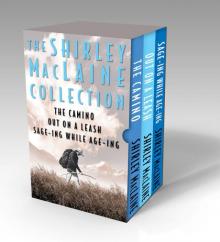
Anyway, back to Lord Richard. A couple of years ago, Dickie (that’s what we call him) had another script he wanted to do. It was based on a true story called Closing the Ring, about a woman who was loved by three men who hung out together with her during adolescence. It spans some fifty years and due to circumstances involving the deaths of two of them, she ends up marrying all three. He planned to make the picture partly in Ireland and my preoccupation was how I would get my beloved dog Terry into the United Kingdom. Each time he thought he had the financing in place, my obsession reared its head again. I even wrote a book called Out on a Leash, which revolved around my fear that I would have to be away from Terry if the picture did happen. In fact, something worse happened. Dickie lost his daughter and granddaughter in the tsunami in Indonesia, which made my problem less than insignificant. He plowed forward, though, and finally raised the money from the Film Commissions of Canada, Ireland, and the United Kingdom, which meant we would have to shoot in Canada and Ireland.