Memories of the future, p.10
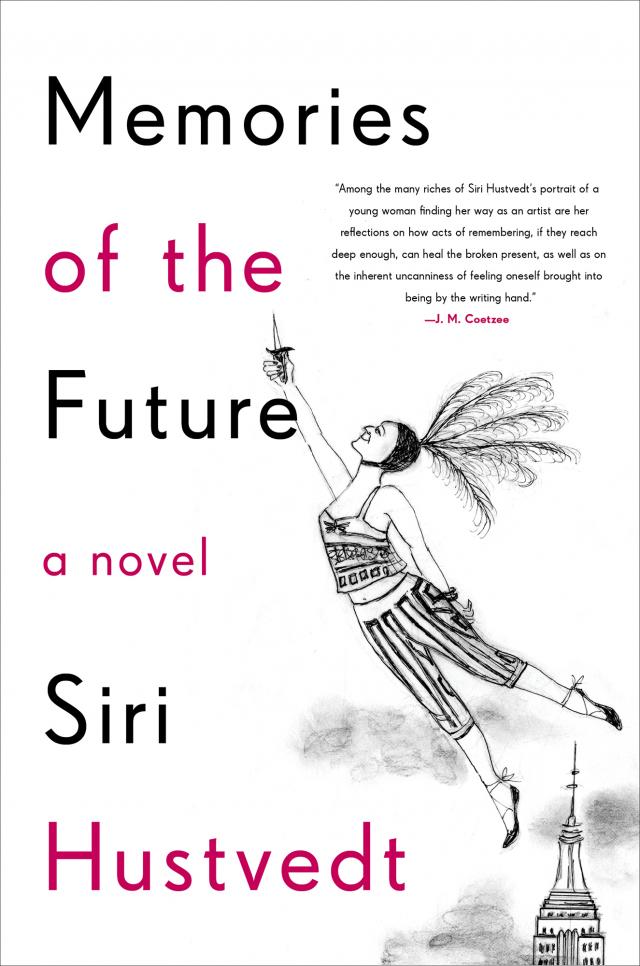
Memories of the Future,
p.10


Reprieve.
January 15
Beggar-woman.
The story is old and can easily be turned into a silent movie, albeit an X-rated one: Girl meets Boy. Bliss. Sweat. Saliva. Tongues in motion, up and down. Push in and out, also motion up and down. Oh, the happy bounce as orgasms blast out: one, two, three, four (four for Her, one for Him). But Boy is frightened by Girl’s blasting love. He pulls away. He walks out the door. Girl chases wondrous feeling, which means she chases Boy up and down through the streets of the city. Boy begins to run. Girl runs. Boy disappears over hill. Girl stops running at bottom of hill, turns around, and walks home as she weeps copiously into her large white handkerchief. But now that Girl is no longer on his heels, Boy stops, turns around, surveys the scenery from hilltop, and places his hand on his heart, a wistful expression in his large eyes. He discovers he misses Girl. He runs downhill and keeps running all the way to her apartment. Reunion. Bliss. Sweat. Saliva. Happy bounce. More chasing, running, turning, walking, weeping, and happy bouncing. Then again, and again: chase, run, turn, walk, weep, bounce, weep, bounce, weep. It is too much. The film breaks and the running, weeping wheel stops turning.
But what do I actually remember? When I evoke the two and a half months we were together, I find bits and pieces of recollections in various modes that have no particular order—I see the sunlight through his bedroom window, and I smell the radiator beneath it, that winter odor of steam warmth in New York City rooms I like so much. And from that memory of radiant glass and the smell of the warmth that chugs and sometimes whistles in the pipes, I am able to recover something of my inebriated state, the twists in the sheets and the gasps and the moisture of being lost in two bodies, the amazement of touch, and this I can’t regret. He made espresso in a kind of coffee maker I had never seen before. He poured water into the bottom of the machine, checked to see that the level was right, spooned coffee into the small round container that fit neatly into the gadget, patted the grains with the spoon’s back side, screwed the two large pieces together, and placed it on the stovetop. I can see him in his bathrobe, knees bent, his fingers on the knob as he adjusts the flame. Once he said to me, “You hurry through your food so you can get to coffee and a cigarette.” I hadn’t known this about myself, and I wondered if it was really true. He had his white shirts laundered and pressed, and when he wore them, he left two buttons open at the top. His body was not hairy, but it was not hairless either, and his skin wasn’t white pink but white olive. He wore brief-style underpants, had a narrow waist, and visible ribs. He never spoke quickly, and he didn’t laugh often, but when he did, I laughed with him because it gave me a breathy pleasure. I recall he had a pair of tan bucks and wore pants with pleats. He danced badly and stiffly, and I didn’t like to watch him dance because I felt him watching himself.
In the very beginning, there was a girlfriend who may have been Dutch and may have lived in Amsterdam and whose name I am certain started with a B. He had a framed snapshot of her standing on a French beach in a bikini, and I took comfort in the fact that her bleached hair and crispy milk chocolate tan didn’t look pretty to me at all, but he talked about her with reverence. On the other hand, she was across the ocean, and I was in New York and he was in my bed or I was in his, so I worried little about B. I am not sure which week of the affair the already absent B. disappeared from our conversation, but he wrote her a letter and after that he didn’t speak of her.
He gave me one of his papers to read, and I found the prose in terrible knots and wanted to snatch up a red pencil and get to work to untie them immediately, but I was afraid Malcolm would be insulted, and I was cowed by the serene confidence he appeared to have in his powers of ratiocination. I mumbled something about the opacity of the style and suggested clarification for the sake of the reader, which made him smile and, although that condescending smile hurt me deeply, I said nothing. The paper’s professor didn’t give a hoot about knots either because the invisible, learned New School man, whose name I have forgotten, extolled Malcolm’s paper as “brilliant.” A lesson learned.
Ian and Isadora and their case amused my temporary hero, who pronounced me talented and witty, but upon reflection I have understood that he had no access to my jokes and ironies because he knew little about the art of the novel or how it grew. He wasn’t fascinated by the fat and thin of the thing over time, had no passion for my beloved chameleon and its bag of tricks, no feeling at all for its rhythmic glories, for the way it sauntered and skipped, or slowed to a crawl, and then, without warning, turned flips in the air.
I, S.H., the insatiable student of all libraries, read every volume he recommended, his precious Schizo-Culture and all the books in English translation by his Svengali, Foucault, but also Bataille’s The Story of the Eye, Sacher-Masoch’s Venus in Furs, Sade’s Justine, Genet’s A Thief’s Journal, and Artaud’s late, crazy poems. He read none of the books I loved, a truth that has a clarion sound in my ears only when I listen to it now. He found the Baroness wild and pleasing, for example, but I don’t think he took her seriously, nor did he sympathize with my adulation of George Eliot or Simone Weil or Djuna Barnes.
I remember standing inside his apartment, coat on, listening to him talk in his deliberate, unruffled way, my eyes on the photograph of a woman mummified in bandages that hung on his wall. Only her eyes were visible. I remember my adamant unease, the distinct pressure in my chest when he said the taboo against sex between adults and children was a “bourgeois construct.” And I said loudly, “No, it’s not, because big people have all the power, and they always will!” A retort he mocked with curled lip. I left him and walked down Third Avenue and felt bad and confused and walked and walked and thought and thought and after some hours of walking and thinking found myself back at his door.
I puzzled over Malcolm because, you see, he was mostly gentle and always clean. A Jewish boy from a middle-class family outside Cleveland whose father ran a mundane business of some kind, he struck me as an unlikely champion of grown-ups having their way with five-year-olds. And he was an attentive lover who, as far as I could tell, didn’t long for ropes or whips or props of any kind while he was in the throes of the heavenly bounce.
More than a decade after M.S. walked out my door and left me a tear-drowned inconsolable human heap on my orange-crate bed, I read three sentences in a book called I Love Dick by Chris Kraus, who was once married to Sylvère Lotringer, the Columbia professor who founded Semiotext(e). I remember him because he wore a full suit of leather regalia rather than mere patches of leather on the elbows only, as did most of his colleagues. The author of I Love Dick and other works of note arrived on the scene (well after I had left it) to edit a series of books, most of them by women, but time, it seems, had not altered the look or the tastes of the professor’s disciples. “Sylvère’s fans,” she wrote, “were mostly young white men drawn to the more transgressive elements of modernism, heroic sciences of human sacrifice and torture as legitimized by Georges Bataille. They scotch-taped Xeroxes of the famous ‘Torture of a Hundred Pieces’ photo from Bataille’s Tears of Eros to their notebooks—a regicide captured on gelatin-plate film by French anthropologists in China in 1902. The Bataille Boys saw beatitude in the victim’s agonized expression as the executioner sawed off his last remaining limb.”
I remember Tears of Eros, and I remember the photograph because I found it appalling and Malcolm insisted on discussing its transcendent meanings at length. Of course at the time I had no idea my boyfriend came in multiples. But I did realize that books were mixed up in our amour. Without books there wouldn’t have been a love affair at all. I have never, ever shed tears of eros over a stupid, illiterate boy. Moreover, the love affair crashed in part because each of us had been authored differently and, like the dear deluded knight and the poor misguided Emma Bovary, each of us was drunk on ideas, and therein lay the battle of the books. (Do not think for one instant that I consider myself more Bovarian than Quixotic, quite the opposite.) Malcolm, you understand, wasn’t about to saw off anybody’s limbs. He liked to imagine he was a dangerous fellow without actually being a dangerous fellow because he regarded himself mostly from the outside, and from that distanced perspective, he had decided that a fillip of purely intellectual insurrection was an attractive addition to his persona. I strove to be a high-minded, saintly, and exceedingly good person because I lived my life mostly from the inside, and from that internal point of view I found myself terrified by the rage, hostility, and violent impulses I sometimes felt stirring within me.
And so, as I near the end of the story of my long-lost passion for Malcolm Silver, I offer a dream report, not my dream, but Malcolm’s. I heard it sometime near the end of our affair. After waking together in his bed and eating breakfast at his small table, he told me he had had a dream that night, in which I had murdered someone and dismembered that person in the apartment. He explained that in the dream he had been desperate to protect me and hide the chopped-up body fragments from the police. He gave me this dream report long ago, and I may have forgotten further details, but I distinctly remember that he said he had found the head of my victim in his wastebasket.
It is true that Malcolm’s apartment was somewhat nicer than mine, and he owned more furniture than I did, but while the tryst lasted I slept downtown far more than he slept uptown because he did not like the sound of Lucy. The first time he heard her we were naked and entwined on my bed in the evening hours. He pushed me from him, sat up, looked around, and gasped, “What the hell is that?”
Lucy alarmed Malcolm. Most of all he hated her two voices—the high one and the deep one. “Why don’t you pound on the wall and tell her to shut up? Why don’t you complain?” It was difficult for me to answer those questions. I had once mentioned to Mr. Rosales that Lucy whistled and talked, but it had never occurred to me take action against my neighbor. I had made room for her voice because I had grown used to it. My accommodation involved a necessary elasticity of soul, a feeling that Lucy’s chatter, her audible internal dialogues belonged to me as her listener: Are you listening? It was as if I had already answered: I am listening, Lucy. Perhaps I should have known that as much as I craved Malcolm’s mouth and hands and limbs and dick and as much as I liked our long conversations on various topics, he did not qualify as a true confidant, that he was far more squeamish than I was in the so-called real world, which made it impossible to tell Malcolm the pieces of Lucy’s story I had shared with Whitney the first night she and I met, much less to relate to him that with amplified ear to the wall I had recorded Lucy’s words in the notebook or that the ghost of Lindy’s fallen body remained with me, hovering at that ineffable border between the unconscious and the conscious, a wraith that frightened me but one I needed, too. Ghosts are not easily articulated. No bones.
* * *
Conundrums. Paradoxes. Baffling plots. Doors open and close and sometimes slam as the wind shakes the house. Footfalls. A woman whistles as another woman sings. A man whistles as he drives. Night comes early in winter. After she reads and sings the lullabies, my mother kisses me, and I inhale her smell. The smell of divinity, of rapture, of grace is a combination of soap and loose powder and warm mother skin, and then she walks across the room to kiss Kari, and she leaves the lamp on in the hallway and adjusts the door so the crack is just right—a little more, just a little more. Now is that good? Yes, yes, that’s good.
The wall beside my bed is splitting open in a long jagged line and now the gaping hole. I am screaming. This terror is a knife. The house is falling. I am trying to hold up the wall. I have thrown myself against it. I press my body into it. Mother comes running and pulls me away from the wall. Kari is screaming now. Mother enfolds me and rocks me vigorously, and she strokes my face hard, and she speaks to me in the sweet voice she uses for the darlings. We are the darlings. And then she runs to Kari and rocks Kari, and then in minutes no one is screaming anymore.
I remember that dream or night terror or hallucination with remarkable clarity. I was five. Almost twenty years later, the child desperate to hold the wall together is fully grown. She has left her parents to fend for herself in the city, and she is convinced that the year she has given to herself, the academic year 1978–79, is crucial to her fate. She imagines she is writing her future. She loves the scenes in old movies when a wind rises out of nowhere and blows each month off a calendar that hangs on the wall—September, October, November, December. Usually the flying pages have musical accompaniment. Time passes. As she approaches her twenty-fourth birthday in the story I am writing, I, her author, have moved beyond my sixty-second. It is frightening here in the present, in February 2017. The house is falling apart. The secret of the great man does not lie in what he says. It couldn’t happen here, they say, it can’t happen here.
By the middle of January 1979, I was sleeping at home again with only the missing Malcolm Silver and the blue chair with the unusual odor that we had found together on the street as company. As everyone knows who has ever grieved over love or death, an absent person is often larger than a present one, and the ache of the departed-from-my-life Malcolm Silver was complicated by feelings of shame about me, the weeping Girl, the one who had left and then returned and apologized for nothing, apologized because she had wanted the Boy so much, even though she despised the wretched Girl who had actually sobbed out the words, “But I love you! I love you!” and in general behaved badly. How badly had she behaved? Did she call him after he had said he did not want to speak to her? I can’t remember, and I did not write it down. When I concentrate and cast my second pair of eyes inward, not the eyes that see the world beyond my skin but those that are meant to conjure the past in floating pictures, I cannot call up a single image, just a feeling. What I remember without any specificity is that she, the once-I, felt herself egged on by the imp of the perverse, a tiny being that scrambled up and down her chest and made it itch, and when the itch came, she had to scratch it until her skin turned raw.
On January 18, I wrote in the notebook: “Broadway on West Broadway last night.” And unlike the Malcolm Silver memory-chain, those words about the Broadways bloom with images. I see Whitney hug me and stroke me mockingly under the chin with her index finger to tease me out of my stubborn, morose mood. She jeers, “You like to be sad! You like it! You like it! Poor Minnesota. Oh, oh! Leave her to her misery, and let her enjoy it!” And I see her before me as she adopts a preposterous nasal voice and booms out an improvised song called “There Are Many Fish in the Sea” (a tribute to Aunt Irma, Grand Duchess of Cliché), and I see her palms and splayed fingers wave rhythmically back and forth no more than a foot from my face as she taps her feet in an absurd rendition of that already absurd genre, the Broadway musical, and it is impossible not to laugh. I told myself to remember her, to remember dear “Tilty” singing and dancing, and that may be the reason I have remembered. Whit had parted company with a well-spoken medical student from Nigeria she had been seeing for three months. The alliance wilted for reasons she said were “cultural.” If that man had bruised her at all, she didn’t show it. Her serenity embarrassed me, and I remember I jumped up from the edge of her bed and sang “There Are Many Fish in the Sea” with my friend, and sometime later that same night, we stood side by side at the window together in the loft on West Broadway, looked out, and Whitney said, “It’s ours to eat.”
* * *
Since the day I had first moved to 309 West 109th Street, my neighbor Lucy Brite had circled her pain as if she were a dog turning in the grass before settling in for a nap. She had gone over and over the same ground: The kitchen. The window. The courtyard. Lindy’s body on the pavement. The hospital. The doctors she hated. She had shouted at Ted and then had shouted back as Ted, who, as performed by Lucy, had become, if anything, more vicious. The Ted persona had called her a “worm” and a “sow” and “a pathetic bitch,” but as the vituperation had risen between “them,” the “amsahs” had diminished, and by late January a noticeable change had taken place in the woman next door. She left the apartment more and more often and sometimes returned late at night. She talked on the telephone with Patty and a couple of other people, whose names, if I had heard correctly, struck me as preposterous: Moth and Gorse. For a couple of months she continually mentioned a man named Sam Haynes. “It’s me,” she would say in a low conspiratorial voice. “It’s me, Lucy.”
In early February, a blizzard blew in strong and white and cleared the streets of motor traffic. I remember standing outside the Citibank to watch my fellow New Yorkers glide down Broadway on their cross-country skis or advance duck-like in their snowshoes. When I left the bank that day, I had understood that my money situation was dire. While under the effects of the swoon, I had spent rashly—taking twenties from the cash machine without paying close attention to the bank balance. Severe measures were required. This meant no more coffees and croissants at the Hungarian Pastry Shop and no more meeting friends for dinner. It meant eating my way through the cans of beans and soup and packages of pasta until my cupboard was bare. It meant selling back books to Salter’s. It meant trolling Happy Hours up and down Broadway where they served little wieners and cheese on sticks. It meant cold fear about the March rent. It meant inquiring about waitressing jobs. (Not hiring.) It meant regular visits to the help-wanted bulletin board in Dodge Hall at Columbia and calling numbers only to discover the positions had been filled. The day arrived when I had the money to pay the March rent in the bank, but no money to eat with in the meantime. As I look back on it now, I know I was stupid not to call my parents or explain my predicament to Whitney. I also know that both options seemed impossible to me then. I would have had to admit that I had failed.
February 15, 1979
Dear Page,
Today I took a walk in Riverside Park because I was in a flutter—so nervous I couldn’t write. My poor book! How can I write a comedy in this condition? I can’t even afford noodles. Last night Happy Hour again, but the woman at the bar is getting suspicious. I didn’t dare eat more than two tiny pieces of orange cheese as I sipped my Coke very slowly. There was nothing for breakfast, as you know, nothing for lunch. I cannot touch the rent money. It was cold outside, but I let the wind from the river blow over me and the walk had a beneficial effect. My thoughts landed on Hamsun for obvious reasons (Hunger) and then on Dostoyevsky, the Norwegian’s great influence, and then I thought about home, not the apartment, but home, home, and the view of the field from the front window of our house and the mailboxes along Old Dutch Road with their red flags up, and the cheerful letters I’ve been sending off to Rural Route #1, and I ached to give it up, Page, just give it all up and lie down and weep for a month. I haven’t cried at all, you know. Since my two-day wail after M.S., I have dried up completely. I’ve been flinty as hell, a goddamned stoic. Whitney is on winter vacation with her family, a good thing, because no explanations needed. She is on an island in the Caribbean. I imagine her gorgeous in a sarong. Anyway, last night I kept walking, and then I saw it—a ham-and-cheese sandwich with a piece of pale green lettuce and a whole slice of tomato and mayonnaise oozing from the roll in a garbage can. The can was full, and the sandwich lay neatly on a bed of wax paper. I examined it. There were bites in it, yes, but a good portion of it remained. I looked around. A couple passed me, and I pretended to search for an object in my purse. A woman was sitting on a bench not far away, but she looked absorbed.