Memories of the future, p.29
Memories of the Future,
p.29
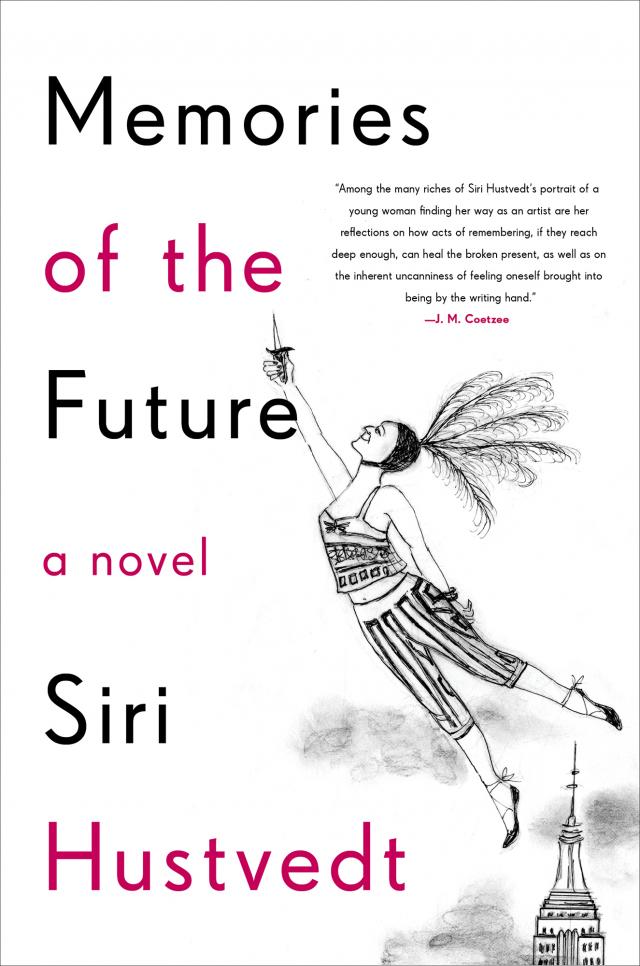


I didn’t see the witches often, but I stayed in touch with them during my years at Columbia. Every three months or so I would find an invitation to tea in my mailbox marked with a subject. “The Crisis of Western Epistemology,” “Healing Womanhood,” and “The Animal Self” are three I remember. I accepted from time to time and would find myself among the books and herbs, with other guests of different ages, mostly women but not exclusively, who had come to listen to Patty’s disquisitions, which were at once erudite and peculiar. We drank unusual teas and bit into little white sandwiches with thin fillings that Gorse and Alistair had made. I often left the apartment with a book Patty had loaned me. She also sent me a gift in the mail: The Book of the City of Ladies by Christine de Pizan, a defense of women against misogyny published in 1405. When the book opens, Christine is in her library reading. She has become increasingly miserable by the attacks on women she discovers in the volumes that line her shelves written by supposedly learned men. She falls into despair, and then with help from three beautiful ladies, Reason, Rectitude, and Justice, Christine builds a fortress city to house virtuous women of the past, present, and future. It is a real city that is also an imaginary city. I still have the edition she gave me on my shelf. Patty inscribed it with the following words: “The magic happens between and among us.”
At the time, I thought of Patty as a person whose brain had simmered so long over unanswerable questions that it had boiled over into witchcraft. Whitney and Fanny accompanied me to tea only once. The subject was “The Problem of Leakage.” Patty lectured us on menstruation, birth taboos, the fear and hatred of the female body and its fluids, and generative powers, which she insisted have shaped the Western tradition, and she pounded away (metaphorically) on her favorite organ, the placenta, and held up illustrations in medical texts to demonstrate how it had gone missing, and she told us the whole philosophical tradition turned on a denial of origin, a fantasy of fetal independence from the mother, a homunculus lie propagated through the ages, and before we left, she offered us herbs in little packages—valerian and Saint-John’s-wort and myrtle and bay leaf and dragon blood and elderflower and hazel mandrake. (I saved the neatly labeled bags.) After we had left the apartment and had stepped out onto Riverside Drive, I remember we stood looking at one another in amazed silence, three friends holding our herbal gifts. Whitney looked at me and then she looked at Fanny, and I looked at Whitney and at Fanny, and Fanny looked at me and at Whitney and then, as I looked at Whitney again, I saw the corner of my friend’s mouth move upward, and she smiled and her eyes lit up with mischief. She began to dance and hoot on the sidewalk, and Fanny buckled over in laughter. I laughed, too, but not as hard as the two others. In that mental image, there are dried leaves on the ground, but I can’t tell you exactly what year it was.
I had and still have little use for props and herbs and spells, but Patty had access to secrets I didn’t know about then, secrets I have reconfigured and rethought, but she is right: we forget. Patty looked in places most of us don’t. She looked between the lines.
CHAPTER SIXTEEN
The sad and sorry wand Lucy had rejected, and which Minnesota firmly believed had belonged to Lindy (and no one could or can prove otherwise), stood in a corner of the front room in 2B for three days. The idea of tossing it out with the trash seemed cruel, and so the young writer decided to rehabilitate it.
She covered the blue end with strips of gold paper. Working with white glue, she fastened one piece after another over the plastic tube. Little by little her technique got better. She learned to use exactly the right amount of glue. She learned how to flatten the paper quickly and evenly. She peeled off the duct tape, a laborious enterprise because the tape was so old it had welded itself to the handle, but she used turpentine and then sandpaper to clean the remnants, and she carved a new wooden neck for the wand that slipped neatly over the tube and grasped the star with two thin wire clamps to make it stand upright. She bought thin silver paper at a craft store and glued it over the star’s pointed surfaces. After days of working every afternoon on the project, she looked at it closely but wasn’t entirely satisfied. With a tiny brush, she began to paint signs on the handle with her acrylic paints. She discovered that shades of purple and green were felicitous. She then added touches of yellow and red. She painted circles and pentagrams and swirling foliage that connected one sign to the other.
The handle, she told herself, is a world in miniature, and then after examining an untouched swath of the wand, she decided it needed an inscription. She stole bits and pieces of poems and made a whole poem from them, and she gave the Baroness the last word. It took her many hours to inscribe the text, which turned around and around the handle. She worked with a magnifying glass, and she smiled to herself as she painstakingly, slowly, obsessively formed each letter. She called it the witch hymn.
Where wert thou, Mighty Mother, when he lay in darkness,
Drowned, perjured, murderous, full of blame?
Thou, our general mother of dews and rains,
Lately made of flesh and blood?
She weeps out her division when she sings.
If it was only the dark voice of the sea,
Logic and lust together,
All is in an enormous dark. Drowned.
The king is dead. Brown eyes and toothed gold,
Out of the cradle endlessly rocking,
A firstborn, set at the mercy of the wind.
I grow old, I grow old.
I am sick. I must die.
Look in my face; my name is Might-have-been.
I am also called No-more, Too-late, Farewell.
Cut, cut in white, cut in white so lately.
The dread voice:
You forget, madame—
that we are the masters—
Go by our rules.
And when the poem had been written onto the wand and she had recorded its stanzas in Mead, she shellacked the wand’s surface and let it dry and shellacked it again and dried it again. She shellacked for seven days and she dried for seven nights, and while she labored over the wand, she thought often about Kari, about lying on the floor beside her sister drawing, and she could almost hear their mother’s steps somewhere near them in the house and she could almost smell the house itself.
And the day after she had finished restoring the wand and had hung it by two nails from the bookshelf in the front room near the kitchenette and decided that it was beautiful and mysterious and that she loved it, her teenagers woke up. She wrote them back to life. Minnesota had wondered repeatedly why she hadn’t murdered Frieda Frail to begin with and thereby given herself a nice, clean murder plot for Ian and Isadora to solve. But, no, she was too ambitious for that. She had read too many books for that. She was after something she didn’t really understand. She was after a story that sang inside her. She wanted to break the rules, and she knew for certain she didn’t want her old self back. It was way too late for that.
On the night in question, it was snowing, and there had been talk on the radio of the coming storm all day. The blizzard began to blow around seven in the evening. Professor Simon (Mrs.) and the four Doras did not know that Professor Simon (Mr.) had disappeared until Just Plain Dora, who was sneezing and coughing and running at the nose and aching in her bones from acute rhinopharyngitis, also known as the common cold, wandered out of her sickroom draped in a red blanket carrying a wand in her hand that she had fashioned from cardboard and vast globs of glue earlier that day in her bed to look for the patriarch at around eight o’clock and discovered that his room was empty. Because the Chaucer specialist was known to flee from himself, or rather to flee the part of himself that knew himself to be himself, the five remaining members of the Simon family mobilized for action. Each Dora was assigned a part of the house to search. They searched but no father was found.
Isadora had not spoken to Ian about the nefarious adventure with Kurt Linder in the park. She had not informed him either that her role as Watson, like her paisley shirt from last year, didn’t fit her anymore. She should have told him, but instead she avoided him, which made her guilty, and the guiltier she was, the more she remained aloof. She made excuses when he called and returned to Charles Darwin, her only love interest at the moment, and that is why an interval of several months had passed since the friends had talked seriously, months that had pinched and pained the heart of the pseudo-Sherlock almost beyond endurance. But after her father went missing, Isadora picked up the phone and dialed her old friend’s number. When Mrs. Feathers answered the call and started in on her false and simpering platitudes, Isadora shouted, “It’s an emergency!” words that quickly brought Ian to the line. Isadora told him that he must come immediately because her father was gone, and they needed all hands on the Simon deck.
The telephone call effected a marvelous change in the young detective, who in order to relieve his depression had been in his room paging idly through college catalogues, in which verdant lawns, astrophysics, and coeds mingled seductively with the promise of escape from the here and now of the Verbum winter. He sprang to attention, leapt down the stairs, grabbed his hat and coat and scarf and mittens and boots from the downstairs closet that smelled so heavily of cedar he had to stop breathing, flew into his winter gear with great haste, tripped over the settee in the hallway but didn’t fall, and, despite the icy sidewalks, ran the three blocks to the Simon residence, during which he displayed a speed and form that would have pleased both his father and his mother had they witnessed their son’s heretofore hidden gift for track and field.
While Ian ran, Professor Simon (Mrs.) called the police station. The officers of the law in Verbum, a town of six thousand residents, spent untold hours investigating the disappearances of lawn dwarfs. They dutifully checked on the suspicious persons Mr. Babic called in, persons who lurked or skulked or sneaked in and out of driveways or appeared suddenly from around corners or crouched beneath windows to peep inside. They checked on these shadowy characters even though not a single one of them had turned into an actual suspect, not to mention a bona fide criminal. They answered countless complaints about loud music from various record players and radios, Verdi included, beloved by the Dahl family, but hated by Don Esterhauser, who claimed to be driven out of his head by vibrato. Almost every night they tested the equilibrium of youthful Verbumites, who climbed out of pickups and station wagons and sedans and obediently staggered along the line in the middle of the road and failed to locate the noses on their own faces with their own index fingers. In short, a missing person in Verbum had an allure that would have been lost on flatfoots in Los Angeles, Chicago, and New York. The dispatcher promised that Officer Knuckler would drive around town to see what he could see. The call ended ominously: “Hope the professor comes home soon, Mrs. Simon.” (The lawmen never referred to the womanly half of the academic pair as “Professor.”) Then the dispatcher added the obvious: “The snow, you know.”
The Milton expert ordered Ian and Isadora to “hold the fort” and to look after Just Plain Dora and to call the police department the moment Percy wandered in. She directed Theodora and Andora “to bundle up,” and she swaddled herself in her old beaver fur, the lining of which was ripped, but it was the warmest thing she owned. She topped off her outfit with a massive rabbit trapper hat that had belonged to her late father and, with two of her daughters in tow, she started up the old Citroën—the only vehicle of that make in all of Verbum—and as she backed out of the garage, she shouted to them that she would check the college library first and move on from there.
After the dramatic departure of the mistress of the house and two of the Doras, Ian turned to Isadora with a stern, important face and inquired whether anyone had heard Monk bark that evening. No, Monk hadn’t barked. “Not a kidnapping, then,” said Ian, squinting as wheels turned in his brain.
Isadora did not say aloud what she was thinking, Who on earth would kidnap my father? Have you ever heard of a kidnapping in Verbum? She knew that Ian was eliminating possibilities, just as Holmes did. She indulged him.
Ian then asked if the man’s coat had gone with him, and they checked the downstairs closet and the hooks in the hallway and the kitchen where he sometimes dropped it, but the overcoat wasn’t in any of those places, a bad sign to be sure, and Isadora imagined her father in one of his fugue states frozen stiff on Highway 3 or Highway 19 as a drift slowly covered him over, which meant that no one would find him until the snow melted, perhaps not until March, even April. Her heart beat faster. Just Plain Dora, who was looking up at her oldest sister, had tears in her eyes that appeared not to be viral tears, although when she blew her nose hard an instant later, the tears and snot and phlegm from her cold and the dribbling caused by her emotion mingled indiscriminately.
Ian, still maintaining a strict military posture, took it upon himself to search the paternal study as Isadora and Just Plain Dora looked on. He stood before the desk and surveyed its surface with eyes full of meaning. He then dipped his finger into the cup of coffee that stood half drunk on the green blotter. “Not yet room temperature,” he pronounced. “How does your father like his coffee?”
“What does that have to do with anything?” Isadora said.
“We could approximate how long ago he left the house. The rate at which the coffee cools is proportional to how much warmer it is than the room temperature. Newton’s law of cooling.”
“It’s a good clue, Ian, but I think it’s enough that the coffee’s still warm, don’t you?” Isadora said. “He can’t be that far away.”
Ian blushed. Isadora patted his arm.
Ian, with an “aha” glint in his eyes, plucked a red thread from the floor and twirled it between his thumb and forefinger. He then laid it on the blotter for future reference. He crouched to examine the position of the desk chair—did it appear to have been moved in haste? Were there any marks on the floor? Yes! Were any of them new? No. Dirt had seeped into each and every scrape. He stood up, bent over the desk with his hands folded behind his back, and sniffed the volume of Webster’s dictionary that lay open on the blotter to a page among the Fs and was startled to see the word frail right under his nose. Of course, it was only one of many F words the professor might have been looking up. Coincidences were not clues. Ian said aloud, “I never guess. It is a shocking habit—destructive to the logical faculty.”
As Isadora watched her friend scrutinizing her father’s study for clues, she sighed without making a sound. She realized that she hated Ian’s posing as Holmes. Along with countless other gullible readers, Ian seemed to have missed the fact that the great detective is always guessing. He does not solve every crime because his logical reasoning is impeccable—it most certainly is not. She had pointed this out to Ian, and she knew he was far too bright not to recognize that her skepticism was warranted. Take a single example from The Sign of the Four, she thought. Watson returns to Baker Street, and Holmes yet again overwhelms his befuddled doctor friend with the powers of his superior logical mind. Because Holmes notices soil of a reddish tint on Watson’s shoes and Holmes has noticed red soil outside the post office on Wigmore Street and nowhere else, he “deduces” that Watson has been to the post office. But Mr. Holmes, Isadora thinks, Dr. Watson could have walked past the post office. Even if the only soil in all of London with a reddish tint was outside the post office on Wigmore Street, another person could have tracked the reddish soil from Wigmore Street to some other street, which then might have found its way onto Watson’s shoes. Dirt travels, Mr. Holmes. This “deduction” in The Sign of the Four is a guess, an educated guess, but no more than that. No, Isadora thought, Sherlock Holmes is always right because Conan Doyle, his maker, has arranged a fictional universe in which red soil and red threads and markings on the floor and opened dictionaries inevitably lead to a solution. In the real world they most definitely do not. Ian’s identification with the so-called genius had made him obtuse. Ian was in thrall to a hero who is always right, but that rightness is the result of a wish, a flawed and frankly silly wish.
After Isadora had silently condemned her friend’s fanaticism and Ian had not deduced her father’s location from any of the myriad “clues” in the study or anywhere else, there was nothing to do but wait. Eight had become nine, and nine had become ten, and ten had become eleven. Just Plain Dora had fallen asleep in her bed with her wand as she steadily dripped snot onto her pillow and coughed intermittently, and Ian sat beside Isadora on the sofa in the living-room-cum-menagerie in a posture of defeat, a posture made more pathetic by his great height and striking thinness. Monk dreamed on the rug at their feet, and Roger in his covered cage slept, too. The phone had rung three times, and each time it had rung, Isadora had answered it and told her mother there was no sign of the man yet, after which she had returned to the sofa and imagined her father’s dead body encased in ice. The wind whistled and whined and rattled the house, and beyond the porch light there was little to be seen but white and more white in hectic motion. The clock ticked loudly as it always did, but they usually didn’t hear it, blocked as it was by ordinary domestic hubbub.
Isadora told Ian in a quiet voice that she didn’t really know her father and that he rarely listened to anything she said, although he was usually kind and occasionally patted her arm. She said that her mother hoped time would cure what ailed him, although what ailed him was probably the war, about which he had never said a word, and possibly other events that may have occurred in his childhood. Her mother had hinted at happenings way back when, but she knew nothing about them either. And Ian confessed that his father was a cipher, too, even though he knew the man took his paternal duties seriously and sometimes slapped his son on the back, a gesture that was meant to convey a jovial masculine attitude but most of the time just hurt Ian’s shoulder blades. The boy detective then offered a further wistful comment. He told Isadora that he had long hoped his mother would say what she thought instead of what she didn’t think. And they sat for a minute or two in silence, after which Isadora began to cry. Ian put his arm around her and was tempted to kiss her but decided against it, which was a sound decision because if he had moved his lips anywhere near hers, she might have punched him.