Under the whispering doo.., p.6
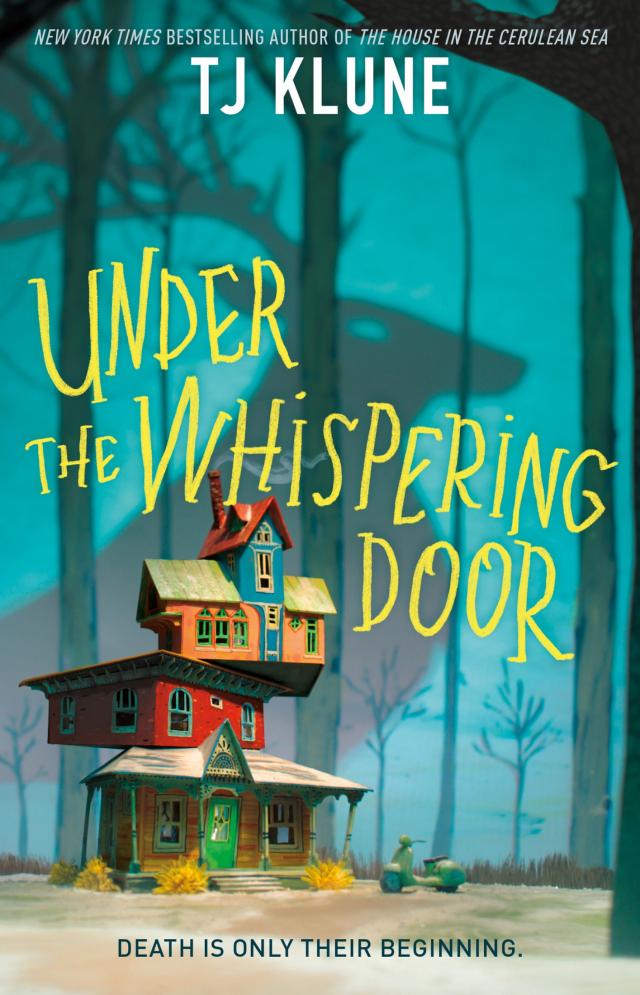
Under the Whispering Door,
p.6


“Of course I know who you are,” Hugo said dryly. “You’re Wallace.”
Relief like he’d never before experienced washed over him. He’d come to the right person. Mei, whoever—or whatever—she was, seemed to be an underling. A drone. Hugo was in the position of power. Always, always speak to the manager to get results. “Good. Then you understand that this won’t do at all. So if you could do whatever you need to in order to fix this, I would be greatly appreciative.” And then, just because he couldn’t be absolutely sure this man wasn’t God, he added, “Please. Thank you. Sir.”
“Huh,” Hugo said. “That was a bit of a word salad.”
“He tends to do that,” Mei whispered loudly. “Probably because he was a lawyer.”
The old man eyed Wallace up and down. “Called me Hugo. You hear that?”
“I did,” Mei said. “Maybe we should—”
“Hugo Freeman, at your service.” He bowed as low as he could.
Mei sighed. “Or we could do it this way.”
Hugo snorted. “Learn to have a little fun. It doesn’t always have to be doom and gloom. Now, where were we? Ah, yes. I’m Hugo, and you’re upset you’re dead, but not because of friends or family or some other such drivel, but because you have work to do, and this is an inconvenience.” He paused, considering. “An awful inconvenience.”
Wallace was relieved. He expected more of a fight. He was pleased he didn’t need to resort to threats of legal action. “Exactly. That’s exactly it.”
Hugo shrugged. “All right.”
“Really?” He could be back into the office by tomorrow afternoon at the latest, maybe the day after depending on how long it took him to get home. He’d have to demand that Mei bring him back as he didn’t have his wallet. If push came to shove, he’d phone the firm and have his assistant buy him a plane ticket. Sure, he didn’t have his driver’s license, but something so trivial wouldn’t stop Wallace Price. As a last resort, he could take the bus, but he wanted to avoid it if he could. He had almost a week’s worth of work to catch up on, but it was a small price to pay. He’d have to find a way to explain the whole funeral/open casket thing, but he’d figure it out. Naomi would be disappointed she wasn’t getting anything from his estate, but screw her. She’d been mean at the funeral.
“Okay,” he said. “I’m ready. How do we do this? Do you … chant or something? Sacrifice a goat?” He grimaced. “I really hope you don’t have to sacrifice a goat. I get squeamish around blood.”
“You’re in luck,” Hugo said. “We’re fresh out of goats.”
Wallace sagged. “Great. I’m ready to be alive again. I learned my lesson. I promise to be nicer to people and blah, blah, blah.”
“The joy I feel knows no bounds,” Hugo said. “Raise your arms above your head.”
Wallace did just that.
“Now jump up and down.”
Wallace did, the cable rising and falling from the floor.
“Repeat after me: ‘I want to be alive.’”
“I want to be alive.”
Hugo sighed. “You gotta mean it. Really let me hear it. Make me believe.”
“I want to be alive!” Wallace shouted as he jumped up and down, arms above his head. “I want to be alive! I want to be alive!”
“There it is!” Hugo cried. “I can feel something happening. It’s really coming. Keep going! Jump in circles!”
“I want to be alive!” Wallace bellowed as he jumped in a circle. “I want to be alive! I want to be alive!”
“And stop. Whatever you do, don’t move.”
Wallace froze, arms above his head, one leg raised, his flip-flop dangling off his foot. He could feel it working. He didn’t know how, but he did. Soon, this would all be over and he’d go back to living.
Hugo’s eyes widened. “Stay like that until I say so. Don’t even blink.”
Wallace didn’t. He stayed exactly as he was. He’d do anything to make this right again.
Hugo nodded. “Good. Now, I want you to repeat after me again: ‘I am an idiot.’”
“I am an idiot.”
“‘And I’m dead.’”
“And I’m dead.”
“‘And there’s no way for me to come back to life because that’s not how it works.’”
“And there’s … what?”
Hugo doubled over, wheezing out grating laughter. “Oh. Oh my. You should see the look on your face. It’s priceless!”
The skin under Wallace’s right eye twitched as he lowered his arms slowly, putting his foot back onto the floor. “What?”
“You’re dead,” Hugo exclaimed. “You can’t be brought back to life. That’s not how anything works. Honestly.” He elbowed Mei in the side. “You see this? What a goof. I like him. It’ll be a shame to see him go. He’s fun.”
Mei glanced toward the double doors. “You’re going to get us in trouble, Nelson.”
“Bah. Death doesn’t need to always be sad. We need to learn to laugh at ourselves before we—”
“Nelson,” Wallace said slowly.
The man looked at him. “Yes?”
“She called you Nelson.”
“That’s because it’s my name.”
“Not Hugo.”
Nelson waved his hand. “Hugo is my grandson.” He narrowed his eyes. “And you won’t tell him what we did if you know what’s good for you.”
Wallace gaped at him. “Are you … are you serious?”
“As a heart attack,” Nelson said as Mei choked. “Oops. Too soon?”
Wallace took a stuttering step toward the man—to do what, he didn’t know. He couldn’t think, couldn’t form a single word. He tripped over his own feet, falling forward toward Nelson, eyes wide, a sound like a door creaking escaping his throat.
But he didn’t crash into Nelson, because Nelson disappeared, causing Wallace to land roughly on the floor, facedown.
He raised his head in time to see Nelson blink back into existence a few feet away, near the fireplace. He wiggled his fingers at Wallace.
Wallace rolled over onto his back, staring up at the ceiling. His chest heaved (pesky thing, that, seeing as how his lungs weren’t exactly necessary at this point), and his skin thrummed. “You’re dead.”
“As a doornail,” Nelson said. “It was a relief, really. This old body had worn down, and try as I might, I couldn’t make it work like I wanted it to anymore. Sometimes, death is a blessing, even if we don’t realize it right away.”
Another voice came then, deep and warm, the words sounding as if they had weight, and there was a mighty tug at that hook in Wallace’s chest. It should have hurt. It didn’t.
It almost felt like relief.
“Grandad, are you making trouble again?”
Wallace turned his head toward the voice.
A man appeared through the double doors.
Wallace blinked slowly.
The man smiled quietly, his teeth shockingly bright. The front two were a bit crooked and strangely charming. He was, perhaps, an inch or two shorter than Wallace, with thin arms and legs. He wore jeans and an open-collared shirt under an apron with the words CHARON’S CROSSING stitched across the front. The front of the apron bulged slightly against the gentle swell of his stomach. His skin was deep brown, his eyes almost hazel with shots of green through them. His hair was similar to the old man’s, tight coils in a short Afro, though his was black. He seemed young; not quite as young as Mei, but surely younger than Wallace. The floorboards creaked with every step he took.
He set down the tray he was carrying onto the counter, a teapot clanking against the oversized teacups. It smelled like peppermint. He walked around the counter. Wallace saw the dog—Apollo—weaving around and then through the man’s legs. The man laughed at the dog. “I can see that. Curious, right?”
The dog barked in agreement.
Wallace stared as the man approached. He didn’t know why he focused on the man’s hands, fingers oddly delicate, palms paler than the backs, nails like crescent moons. He rubbed his hands together before he crouched down near Wallace, keeping some distance from him as if he thought Wallace was skittish. It was only then Wallace noticed the cable attached to his chest extended to the man, though there didn’t appear to be a hook. The cable disappeared into his ribcage, right where his heart should be.
“Hello,” the man said. “Wallace, right? Wallace Price?”
Wallace nodded, unable to find his voice.
The man’s smile widened, and the hook in Wallace’s chest felt like it was burning. “My name is Hugo Freeman. I am a ferryman. I’m sure you have questions. I’ll do my best to answer them all. But first things first. Would you like a cup of tea?”
CHAPTER
5
Wallace had never been a fan of tea. If pressed, he would say he never really saw what the fuss was about. It was dry leaves in hot water.
And it probably didn’t help that he was still staring at the man known as Hugo Freeman. He moved with grace, every action deliberate, almost as if he were dancing. He didn’t reach out to help Wallace to his feet, but instead motioned for him to pick himself up off the floor. Wallace did, though he kept his distance. If there ever were a god, it would be this man, no matter what Mei had told him. For all he knew, it was another trick, a test to see how he would act. He needed to be careful here, especially if he was going to insist this man give him back his life. It didn’t help that the cable seemed to connect the two of them, stretching and shrinking depending upon how close they were to each other.
Apollo sat at Hugo’s feet near the counter, staring up adoringly at him, tail thumping silently against the floor. Mei helped Nelson toward the counter, though he was grumbling that he could do it himself.
Wallace watched as Hugo picked up the steaming pewter teapot from the tray. He raised the pot toward his face, inhaling deeply. He nodded and said, “It’s had time to steep. Should be ready now.” He looked up at Wallace almost apologetically. “It’s organic loose leaf, which didn’t seem to fit what I know of you, but I have a pretty good track record for such things. For all I know, everything you like is organic. And peppermint.”
“I don’t like organic anything,” Wallace muttered.
“That’s okay,” Hugo said as he began to pour the tea. “I think you’ll like this.” There were four cups, each with a different floral design. He motioned for Wallace to take the cup with the flowers that rose along the sides and into the interior of the cup.
“I’m dead,” Wallace said.
Hugo beamed at him. “Yes. Yes, you are.”
Wallace ground his teeth together. “That’s not what—forget it. How the hell can I pick up the cup?”
Hugo laughed. It was a low and rumbly thing that started in his chest and poured out from his mouth. “Ah. I see. And anywhere else, you might have a point. But not here. Not with these. Try it. I promise you won’t be disappointed.”
No one could promise that with any certainty. The only thing he’d been able to touch was Mei and the ground beneath his feet. And Apollo, but the less said about that the better. This felt like a test, and he didn’t trust this man as far as he could throw him. Wallace had never thrown a man before, and he didn’t want to start now.
He sighed and reached for the cup, expecting his hand to pass through it, ready to glare at Hugo as if to say See?
But then he felt the warmth of the tea, and he gasped when his fingers touched the surface of the cup. It was solid.
It was solid.
He hissed when he jerked his hand up, sloshing tea over the side of the cup and onto his fingers. There was a brief flare of heat, but then it was gone. He looked at his fingers. They were pale as always, the skin unblemished.
“These teacups are special,” Hugo said. “For people like you.”
“People like me,” Wallace echoed dully, still staring at his fingers.
“Yes,” Hugo said. He finished pouring the tea into the remaining cups and set the teapot back onto the tray. “Those who have left one life in preparation for another. They were a gift when I became what I am now.”
“A ferryman,” Wallace said.
Hugo nodded. “Yes.” He tapped the stitched lettering on his chest. He didn’t seem to notice the cable, his fingers disappearing through it. “Do you know Charon?”
“No.”
“He was the Greek ferryman who carried souls to Hades over the rivers Styx and Acheron that divided the world between the living and the dead.” Hugo chuckled. “It lacks subtlety, I know, but I was younger when I named this place.”
“Younger,” Wallace repeated. “You’re already young.” Then, unsure if he was insulting a sort of deity who was apparently in charge of … something, he quickly added, “At least you look like you are. I mean, I don’t know how this works, and—”
“Thank you,” Hugo said, lips quirking as if he found Wallace’s discomfort amusing.
“Oh boy,” Nelson grumbled, picking up his teacup and slurping along the edges. “He’s an old man now. Maybe not as old as me, but he’s getting there.”
“I’m thirty,” Hugo said dryly. He gestured toward the cup on the table in front of Wallace. “Drink up. It’s best when it’s hot.”
Wallace eyed the tea. There were bits of something floating at the top. He wasn’t sure he wanted to drink it, but Hugo was watching him closely. It didn’t seem to be hurting Mei or Nelson, so Wallace gingerly picked up the cup, bringing it close to his face. The scent of peppermint was strong, and Wallace’s eyes fluttered shut of their own accord. He could hear Apollo yawning in the way dogs do, and the bones of the house as it settled, but the floor and walls fell away, the roof rocketing up toward the sky, and he was, he was, he was—
He opened his eyes.
He was home.
Not his current home, the high-rise apartment with the imported furniture and the red accent wall he thought about painting over and the picture windows that opened up to a city of metal and glass.
No, it was his childhood home, the one with the stairs that creaked and the water heater that never had enough hot water. He stood in the doorway to the kitchen, Bing Crosby singing on the old radio, telling everyone who could hear to have yourself a merry little Christmas.
“Until then,” his mother sang as she spun through the kitchen, “we’ll have to muddle through somehow.”
It was snowing outside, and garlands stretched along the top of the cabinets and on the windowsills. His mother laughed to herself as the oven dinged. She grabbed an oven mitt with a snowman printed on it from the counter. She opened the oven door, the hinges squealing, and pulled out a sheet of homemade candy canes. Her holiday specialty, a recipe she’d learned from her mother, a heavyset Polish woman who called Wallace pociecha. The scent of peppermint filled the room.
His mother looked up at him standing in the doorway, and he was ten and forty all at the same time, in his sweats and flip-flops, but also in flannel pajamas, his hair a mess, his toes bare on the cold floor. “Look,” she said, showing him the candy canes. “I think it’s the best batch yet. Mamusia would be proud, I think.”
Wallace doubted that. His grandmother had been a frightening woman with a sharp tongue and blunt insults. She died in a home for the elderly. Wallace had been sad and relieved all at once, though he’d kept that thought to himself.
He took a step toward his mother, and at the same time felt the warm bloom of the tea as it slid down his throat and settled in his belly. It tasted like the candy canes smelled, and it was too much, too jarring, because it couldn’t be real. Yet he could taste her candy canes as if she were really there, and he said, “Mom?” but she didn’t respond, instead humming along as Bing Crosby gave way to Ol’ Blue Eyes.
He blinked slowly.
He was in a tea shop.
He blinked again.
He was in the kitchen of his childhood home.
He said, “Mom, I—” and there was a sting in his heart, a sharp jab that caused him to grunt. His mother had died. One minute she was there, and the next she was gone, his father speaking gruffly into the phone, telling him it’d been quick, that by the time they’d caught it, it’d already been too late. Metastasized, one of his cousins had told him later, in her lungs. She hadn’t wanted Wallace to know, especially since they hadn’t spoken in close to a year. He’d been so angry at her for this. For everything.
This is what the tea tasted like. Memory. Home. Youth. Betrayal. Bittersweet and warm.
Wallace blinked and found himself still in the tea shop, the cup shaking in his hands. He set it back down on the counter before it spilled more.
Hugo said, “You have questions.”
In a shaky voice, Wallace replied, “That is quite possibly the biggest understatement ever spoken by the human tongue.”
“He tends to be hyperbolic,” Mei said to Hugo, as if that explained everything.
Hugo lifted his own teacup, taking a sip. His brow furrowed for a moment before smoothing out. “I’ll answer them as best I can, but I don’t know everything.”
“You don’t?”
Hugo shook his head. “Of course not. How could I?”
Frustrated, Wallace snapped, “Then I’ll make this as simple as possible. Why am I here? What’s the point of all of this?”
Mei laughed. “That’s what you call simple? Rock on, man. I’m impressed.”
“You’re here because you died,” Hugo said. “As for your other question, I don’t know if I can answer it for you, at least not on the scale you mean. I don’t think anyone can, not fully.”
“Then what’s the point of you?” he demanded.
Hugo nodded. “That I can answer. I’m a ferryman.”
“I told him that,” Mei whispered to Nelson.
“It’s hard to retain information right after,” Nelson whispered back. “We’ll give him a little longer.”
“And what does a ferryman do?” Wallace asked. “Are you the only one?”
Hugo shook his head. “There are many of us. People who … well. People who have been given a job. To help others like yourself. To make sense of what you’re feeling at the moment.”