The secrets she keeps, p.13
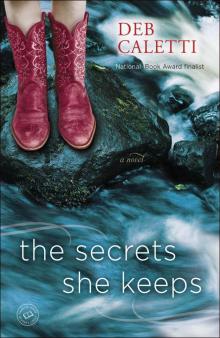
The Secrets She Keeps,
p.13


“This is Jasper,” Kit said. He set his hand on the horse’s neck. The horse gave me an appraising look and then turned away. Who could blame him. He found out all he needed with one glance.
“He’s very large,” I said. I hoped it sounded like a compliment.
“You don’t ride? With a ranch in the family?”
“I’ve lived in Seattle all my life.” All I could think about, aside from Marlboro Men minus the cigarettes, were those stories of horses kicking people in the head. Even Jasper’s breathing was powerful. I tried again to get on his good side. “He has very pretty feet,” I said. “I like his stockings.”
“Jas is my pilot horse.” Kit patted Jasper’s huge side. “Right, buddy?”
Pilot horse. I didn’t have time to ask what that meant. We’d arrived at a trailer next to a truck with a huge barrel tank. “You might call this our lunchroom,” Kit said. Several coolers were set outside on a folding table, and he reached inside one, tossed me a cold, wet water bottle. It didn’t have a label and was made from thick plastic; filled, I suspected, from the truck, one of many water-hauling vehicles I could see around the site, some with spigots on the side. I was grateful for it. The woman in the jeans stood nearby, eating a slice of watermelon. She wore a purple sweatshirt and had long hair pulled into a barrette, and she was clearly a better woman than I, as neither the long hair nor the sweatshirt seemed remotely doable in this weather.
“Lorraine!” Kit called. “This is Callie. From Tamarosa. I told her I’d show her around.”
I didn’t miss the way she briefly raised an eyebrow in surprise.
“Visiting niece of the crazy old lady,” I confirmed.
“Well, it’s nice you came out,” Lorraine said. “See for yourself what we’re up to. It’s good to get the facts. We care about these horses as much as anyone, as I’m sure he told you. They’ll get the treatment they need. They’ll get adopted out. All the stuff you hear…a lot of misinformation.”
I nodded. It was the same nod I gave at my friend Anne’s poetry readings, just after she finished the last line and slowly shut the book. It was the false gesture of thoughtful understanding, one that we’d all perfected in Seattle. With the numerous art openings and literary readings, it came in handy when facing unsettling childbirth metaphors and confusing canvases. You could throw in a variation by adding a quiet hmm. What a surprise to find this useful here.
“Let me show you around,” Kit said.
I followed Kit and Jasper to a corral near the trailer, which had temporary stalls and a covered area for shade. There were troughs of water inside, and Kit led Jasper in for a drink and a rest. “This is where we keep our guys on their off-time. That’s Cactus, Lorraine’s horse.” I could only see the back of him; he was brown with a twitchy tail. “You know, I’m glad you’re here. I didn’t think you’d come.”
“I wanted to see what the new neighbors were up to,” I said. “Maybe you were really building a strip mall.”
“We’re building something, all right. Come on.”
We walked to the line of semis, where more supplies were being unloaded and stacked. He kicked a pile of plastic netting with the toe of his boot. “Step one.”
“That’s a lot of plastic.”
“And a lot of fencing.” Another kick, at a pile of indefinable metal. “When we finally get the delivery that ended up in Cheyenne this morning, we’ll have us some large chutes. They’ll start way out there.” He pointed to an area of land that was still only dirt and scrub. “Picture a well-organized maze leading to a corral. It’s a pretty simple setup. The horses are guided through the chutes, and then we mouth them, sort them. Studs, dry mares, mares with colts. The young, the old, any needing medical care.”
“Mouth them?” I wasn’t even sure I’d heard that right. I had a hundred questions suddenly. It was a whole slice of life I knew nothing about, which makes you realize just how many such slices there are.
“Check their teeth. The size, the shape. It tells us their age.”
“Then what?”
“We let them rest for a while. Then we take them to holding facilities—our own BLM stables, not far from here—where they get their freeze brand, vaccinations, blood tests, checkups by a vet. All that good stuff before they go up for adoption.”
“And how do you get them to come here?”
“Helicopter. Helicopter and Jasper, mostly. I know what you’ve probably heard, but it’s the most humane way we know. Well, sometimes we do the water traps, which are easier on the horses, sure. But helicopters take much less time, and sometimes time is something you don’t have. The chopper starts the horses moving in the right direction, and then the pilot’ll back off.” He demonstrated with his hand. “We let them move at their own pace until they need to be turned. Jasper and I, a couple of other guys, help down on the ground, lead in the strays. But that won’t be for a bit. All this takes a while to set up.”
“I can imagine.” One of the semitrucks rumbled to a start. The driver yelled something out his open window and then pulled forward, out and away, kicking up dirt and spitting rocks.
We kept walking. “Fuel trucks, water-hauling trailers.” Kit hooked his thumb toward them.
“A lot of water-hauling trailers.”
“You bet, out here. Some regions hire all this out. An independent contractor comes in and handles everything. Imagine a wedding planner, where all that’s required of you is to step in and say, I do. We’re a little more hands-on. Okay, that and we’re cheap. You can’t imagine how much this whole damn thing costs.”
An old guy whistled to get Kit’s attention. He had a big belly that pressed against his shirt and a belt buckle the size of a dinner plate, and he and Kit communicated something with arms and hand gestures. I recognized Steve Miller, too, from the other night, riding a brown horse out by what looked like a very large RV.
Then I realized. “You’re the boss.”
“Well,” Kit said. He rubbed his chin, where there was a new patch of stubble. In spite of his command on a horse, Kit could be shy. I’d noticed this at the bar, too. I was also a person who often had to fake my confidence before it actually arrived, and I could spot one of my kind.
I followed Kit’s lead, keeping pace next to him, as we headed away from the site. “You said this takes awhile,” I asked. “How long? Harris at the ranch said weeks.”
“That’s about right.”
“You stay at the Nugget all that time? Don’t you miss home and family, being gone that long?”
“Nevada is home, unless I get transferred again. I have a place in Henderson. It’s closer to my daughter in Riverside, California. She’s the only family I miss. She lives with her mom there.” He shrugged his shoulders.
“That must be tough.”
“Tough and still new. I’m trying to adjust to it, being on my own again. But, yeah, this kind of work is hard on people. You get moved a lot—Wyoming, Montana, Nevada. Marriage is hard enough without that.”
“No kidding.”
“How long you been married?”
“Twenty-two years.”
He let out a low whistle. “Wow, that’s something. It’s too rare anymore.”
“He’s a good man,” I said. “You know, we have our things. But, still.”
“That’s great,” Kit said. “That’s good to hear. You deserve a good man. I know we just met, but that’s clear.”
“I guess good people can have their problems, too.”
“Isn’t that the truth.” We’d arrived at a spot where we could see the whole enterprise stretched out in front of us, and we stopped. “Well, one of our problems, Kate and me, was all this.” He swept his arm out to indicate all that land. “My former wife grew up with cities and shopping and good restaurants.”
“No sign of a Nordstrom out there.”
He grinned. “Nope.”
“How’d you meet?”
“Wedding. In Montana. One of her college friends met a BLM guy. It sounds like a romantic life until you’re stuck in a small town where a night out is KFC and a blanket under the moon.”
“Don’t you go knocking KFC.” I shook my finger at him.
“Blankets under the moon?”
“Love them,” I said.
Now I felt shy. Kit scratched the back of his neck. I looked off in the distance as if studying the big picture. I lived in the city, with good restaurants on every corner, and I shouldn’t pretend otherwise. We ate Indian food; we ordered Moroccan. Thomas was a city planner who worked in a high-rise. Still, since the very night I arrived, something had been happening to me in the desert. In spite of the crisis at home, I slept well. I slept hard, as if my tired, wandering spirit recognized home. The heat and the hard work, the no-nonsense approach to a problem, whether that problem was a band of wild horses or a forest-service man—I understood it. I may never have lived there, but that ranch had been in my blood for generations.
“So where are they now? The horses.”
“Between you and the old Flying W. They move around. You said you saw them once?”
“Practically in Nash’s front yard, if you could call it a yard. She said, They’re back. I thought it meant they migrated or something.”
Kit laughed. “No. They don’t migrate. They just travel around very large stretches of land, and that’s why you may not see them. For years, even. They’re always here, though. Doing what every living thing does—mating, finding food, fighting for what they got. Still, when they happen to make an appearance right near you like that…”
“I don’t even have words for it.”
“None of this means”—he shook his head—“that I don’t get it. We all do. We have a regard for them, better believe it. We understand why folks get worked up. The mustangs are damn romantic in some respects. I see that. How can you not see that? But you’ve got your romantic and you’ve got the truth of the matter. And, to be clear, this isn’t about ranchers and cattle. We’re not here to help ranchers make money. We’re here to protect the land. That’s our job. The land and every species on it, including the horses themselves, including the vegetation that gets depleted or even endangered by too much grazing. Those plants are our job, too. We look after the best interests of everything by finding the right balance. You should see what happens to those horses when some of these places wait too long to do a gather, though. The disease—they’re dehydrated. They die of thirst or starvation. There just gets to be too damn many of them.”
“I understand,” I said. “I do.” I didn’t, not really. I knew nothing about this. “Even Nash…I don’t think she’s acting out of some great love for them.”
“I get it. Human interference in the nonhuman world? The natural order, et cetera…”
“She’s not exactly been clear what the boot-throwing has been about.”
“Most of these guys? Like Jerry, there? And Neal?” He nodded his head toward the old guy, far away now. “It’s the family business. Dad was a rancher or they had a few hundred acres in a town with a rodeo. But you’ve also got guys like Steve and me, who read Emerson in college, and then that was it. Done. We have the same ideals that the people suing us have, I’ll tell you that.”
“I can see it,” I said. “In you, right now.” It was true. His eyes were passionate and locked with mine as he spoke.
He shook his head, laughed at himself. “I guess we spend a lot of time defending ourselves, and you’re not even disagreeing. You know what? I don’t want to talk about this shit. I don’t really care about a tour, to be honest. I was hoping to see you again, is all.”
His confession surprised me. I was pleased, more than I should have been. I wasn’t sure until then that he wasn’t just doing his job.
“I’m glad,” I said.
“You asked where they were. I’ll show you, if you’d like. I can drive you back, right past them, and then you don’t have to walk all that way, either.”
“I’d like that.”
I rode beside Kit with the windows down. The seat of the truck was hot, so hot it burned the back of my legs. We jostled over the rough ground, and I did some anthropological work, studying his truck for information about him and the life he led. There was a handheld radio in a holster and a compass in a rolling ball on his dashboard; a green knapsack was tossed on the floor, with the cord of a phone charger sticking out. On the seat between us were an open bag of pretzels and the hat he’d just taken off. Not much to go on until he flipped his visor to shield his eyes from the sun. There was a picture clipped to a garage-door opener—a little girl with a big smile and Kit Covey’s blond hair, standing at the side of a pool and holding a blow-up shark in the air like a barbell.
“The goddamn AC broke yesterday. Sorry for the heat,” Kit said. He put on his sunglasses.
“I don’t mind.” I was sweating from the temperature and from watching that jawline of his as he drove. I tried to imagine him as a father and what he was like as a husband with a wife. We jounced and jolted around Washoe Lake, past its farthest side, out beyond where I’d ever gone before. I knew the area was spotted with many old divorce ranches; I recalled hearing about the Flying W and Washoe Pines. Harris had worked at Washoe Pines when he was young, if I remembered right, and even for a few years after that, when it, like the rest of those places, became a cattle ranch again after divorce laws began to change.
It looked so dry and desolate out there, you’d think the land was dead or dying. But the desert crackled with life, thriving on that very deception; the animals blended in, the plants looked long gone but were only waiting for the renewal of a rainstorm. I saw a burro, and tumbleweeds, and cacti. This was a place that had lasted, in good part because only certain plants, animals, and people could take the heat.
“Here,” Kit Covey said. He yanked the parking brake.
“Here?” I asked. There was only dry brown hills and a single saguaro.
He fished around under his seat, retrieved a leather case that held a pair of binoculars. “Come on.”
We got out. I stood beside him, aware of his shoulder next to mine. He looked into the binoculars and then handed them to me. They were unfocused or I was being stupid, because I could only see my own eyelashes.
“Nothing?” Kit asked. He stood behind me. I could feel his chest against my back, and then his arms reached around. He turned the ridged dial and pointed me in the right direction.
“Wait!” I said. “There they are!”
Brown, white, black—a grouping. They were huddled near a small creek bed that looked dry. Some had their heads down, as if for a drink, and some stood nearby, tails flicking.
“Is there even any water in there?” I asked.
“Not much, and that’s the problem. We’ve been monitoring drought conditions since summer started, and it’s bad. No water, and decreased vegetation because of it. We’ve been supplementing the natural seeps and filling tubs and troughs and even giving hay to the horses. Unfortunately, these animals are skittish. They won’t drink from the man-made containers. Even with the extra water, the seeps don’t provide enough to sustain them.”
“You bring them water.” It seemed impossible.
“We do. Still, you can bring a horse water, but you can’t make him drink. Do you see that black one?”
I did. He stood on a small dirt-and-rock hill, grazing, though there wasn’t much to graze. “Yeah. He looks like Jasper.”
“He’s the stud. That’s his harem.”
“Every guy’s dream, huh?” I said.
“Not mine.”
I watched for a while. It felt astonishing to find myself where I was right then. I watched those horses with Kit beside me, and I felt a soaring inside my chest. Life seemed so beautifully large. I spotted a foal, and then another. I thought of the chutes and mazes and what they would mean to these animals.
“They’re families.” I could see that now. There’s where the problem deepened. “You said you try to keep the mares and foals together, though, right?”
“We do our best,” he said.
I handed Kit his binoculars. He took the two lens caps from his pocket and replaced them. His head was bent down, and after the extraordinary thing I’d just seen, it was such a familiar, ordinary gesture that I felt like I’d known him for years. I was struck by it. I might have lived this life if my mother had made different choices, or if I myself had. I still could. There were so many possible lives to lead. Every day, you chose your life, even if you could forget that.
“Ready?” he asked.
—
“Maybe you should let me off here,” I said, when we reached the tall arch of Tamarosa.
Kit yanked the brake but left the engine running. “Your aunt knows the sound of my truck, probably.”
“She’d send me home packing, sitting here with the likes of you.”
“How many boots does the woman have?”
“She has a whole room just for the ones with steel toes.”
“I believe it,” he said. “Hey, Callie…”
I waited. We sat there a minute. Had he shut off that engine, it would have been silent.
“Thanks for not jumping to conclusions. For being interested.”
“I think it’s fascinating,” I said.
“And thanks for the fine company. It’s good to remember what that’s like.”
“For sure,” I said.
The wrinkles by his eyes, and the way he smiled, and this quality he possessed, a combination of gentleness and strength—I didn’t know what to say for myself. He did a small thing then: He took my wrist. He circled it with his thumb and index finger and gave it a little shake. That was all, and then he let it go.