The secrets she keeps, p.30
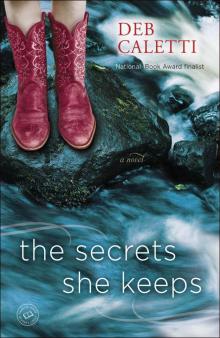
The Secrets She Keeps,
p.30
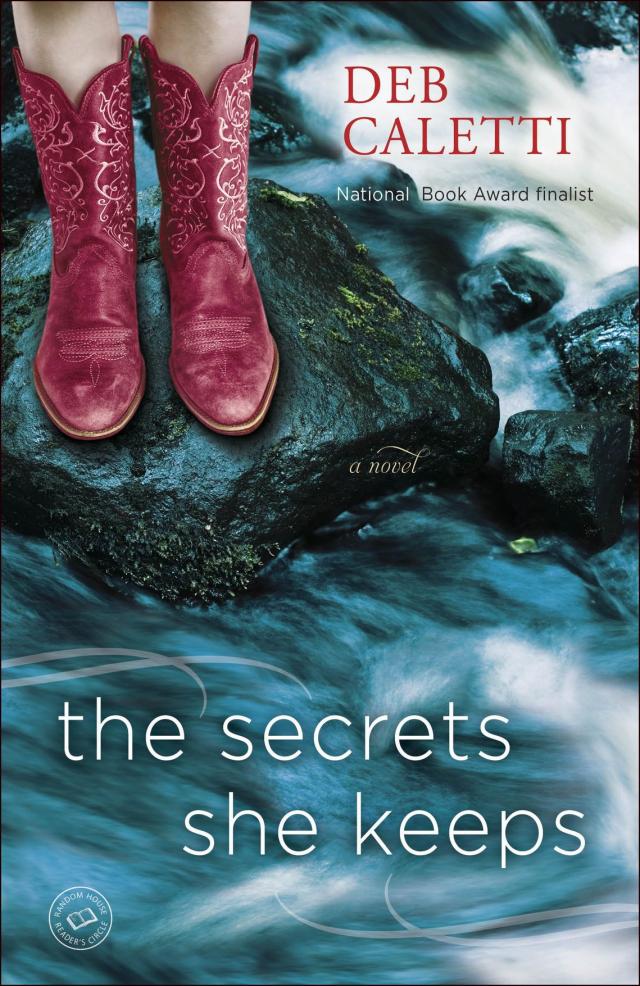


What also surprised me—and what became extraordinarily important thematically to the book—was how timeless our struggles are in terms of love. I could see the story lines repeating over the generations. We battle the same old things they did—bad choices, infidelity, abuse, career-versus-marriage conflicts, intruding parents. We move on too fast after a breakup; they’d go from the courthouse to the marriage chapel. We’re intrigued and tempted by a life not like ours; they’d buy ranch wear and try to bring home a cowboy. We’ve been taken (or we take); we’re endlessly hopeful (or fed up and jaded); we fall for the wrong person (or, finally, the right one). And so it was then. It was this baseline that led me, in part, to using the mirror images that begin and end each chapter. Hopefully, those brief repetitions underscore the idea that here we are, all over again.
RHRC: The Secrets She Keeps stars a true ensemble cast of women, each startlingly unique but all equally real. Was it difficult to create so many different, dynamic personalities and have them all sharing space, or did they come to you and interact with one another naturally?
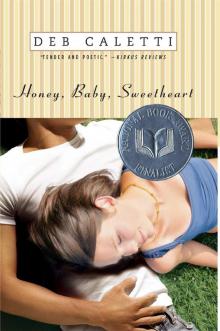
D.C.: Ensemble casts are something I like to do as a writer. It’s a challenge, and I think the varying perspectives bring layers to a story. I had an ensemble cast in two of my young-adult novels, Honey, Baby, Sweetheart (in which a young girl and her mother go on a road trip with a group of old people to reunite a pair of geriatric lovers) and The Secret Life of Prince Charming (in which a young woman and her sisters return objects their father has stolen to every woman he’s ever been in love with). So I’ve had experience managing those numbers before. Essentially, a character must sound like him- or herself, and this is true whether you’re writing one or twenty. I don’t find this to be particularly difficult. If you think about your extended family all sitting around a dinner table, you realize how different each individual sounds. In addition to what they say and how they say it, Mom and Aunt So-and-so dress like opposites, and while the uncles are both hardheaded, one still wears his class ring, and the other has that weird beard and bad habit of interrupting.
RHRC: Can you speak to the experience of writing a dual narrative that has one foot in the past and one in the present? What were the most challenging and rewarding aspects of that process? Was it ever hard to switch gears from one story line to the next?
D.C.: The switching itself was rewarding—going back and forth brings a freshness and energy to the work. It’s similar to the experience of reading alternating chapters, where you’re disappointed to leave the first set of characters but are eager to see what’s happened with the others since you last left off. I write chronologically, so sometimes that means waiting to write a big scene I’m looking forward to, or, in this case, waiting to get back to that exciting event in the past or present. Switching can provide tension and momentum for a reader, but it can do the same for a writer. And natural momentum makes a book a joy to write.
In terms of challenge, the past/present switching made for a ton of research. It was akin to writing a research-heavy contemporary novel and a historical one. When you go back into the past, every little thing must be considered and checked—each item of clothing, every phrase, every piece of furniture and automobile. Kitchen supplies! Hair products! Restaurants in a city! Music! What kind of gun would they have had at the ranch then? When did cars first get radios? Was a certain slang expression used yet? Which hat did a man wear for work and which for dress? This brings us back to the rewards, though, because I learned about divorce laws through time, and obstetric practices, and the fact that ambulances were still not commonplace in rural areas then. I played virtual dress-up with the many beautiful outfits I discovered and drooled (or cringed) over the food of the time period. I am still seriously curious about those greengage plums packed in sugar-sweetened brandy.
RHRC: The mustangs play a huge role in the book, not only in terms of their sheer majesty but also their plight and the need to preserve and protect the land they inhabit. Are these larger issues something you already had a vested interest in exploring when you set out to write this book, or did that interest develop as you dug deeper into your research? Have you ever seen the mustangs running, yourself?
D.C.: This may sound hugely disappointing and unromantic, but like Callie, I have no experience with horses. I’ve never really ridden one and, prior to this book, knew little about them. I’ve never been to a ranch and have only been to Nevada once, in the backseat of the car with my parents when I was seven. As a writer, I often think about Lilly Tuck’s speech at the National Book Awards the year she won (and the year I was a finalist for Honey, Baby, Sweetheart). Her book was The News from Paraguay, and she began her speech by saying that she had never been to Paraguay, didn’t know much about Paraguay, and didn’t even really care to visit Paraguay. While I’d love to spend time on a ranch and was fascinated by all I learned, I understand what she meant. The adage urges writers to “Write what you know,” but if we did, there’d be many novels about us sitting home alone, pecking at the keyboard. Or else reading online reviews and becoming crippled with self-doubt.
That said, when searching for the story line, themes, and symbols that would bridge the two narratives, the mustangs were a natural choice. Campaigns to save the mustang began just before the book does, in 1950, when Velma Bronn Johnston (Wild Horse Annie) of Washoe County became involved in the campaign to save the wild horses after following a truck loaded with horses and dripping blood on its way to a slaughterhouse. (Yes, a certain scene in the book is a nod to her.) In 1951, photographer Gus Bundy also began shooting images that became instrumental in changing gathers by airplane. But in addition to lending historic accuracy, the horses are a physical representation of love itself: passionate, messy, unpredictable, and stunning. The complicated questions that surround them, the lack of clear answers, were also symbolically on the mark.
I may not have known anything about the mustangs before I began, but I developed a great respect for them and for the individuals on both sides of the question, particularly the land managers who must consider every corner of the issue. I was astounded at the care they take to balance the interests of the land (and the other living things on it) with the some fifty thousand wild horses and burros currently living in the western states.
RHRC: Callie is awed and humbled by her interactions with nature while exploring the Washoe Lake area, which lends such perspective to her life in Seattle. Living in Seattle yourself, do you find this reflects your own experience in any way? Do you prefer a city existence or the “of-the-land” lifestyle that Kit leads, or do you strive for more of a balance?
D.C.: Callie’s observations are mostly part of her personal process, where she eventually learns that you sometimes need to get out of your daily existence to appreciate the beauty of your daily existence. Still, I think there’s some truth to the differences she notices, in terms of the biking techies and hipster baristas and self-aware food versus “life like that—the one going on right here right now, with men in cowboy hats, men with silver belt buckles, men with horses and guns.” We are very connected to nature and the outdoors here, too, but sometimes there’s an affected quality to it, a persona that’s worn along with all the right clothing from REI. Ranch life seems more straightforward, and the relationship to the land more pragmatic. That said, it’s also true that you’ll find some of the most stunning, breathtaking parts of this country in the Northwest, and we who live here do our best to appreciate that fact.
The city-or-not dilemma has always been large for me. The idea of sprawling acres of land and a small town has huge appeal. I used to live in a house on a salmon-running creek at the foot of a mountain before moving to the city when I remarried. I loved being near water, trees, and creatures. (Though I could’ve passed on the bear and the cougars.) I adored bumping my Jeep along the rugged dirt road, reveled in the awareness of seasons and the perspective nature brings. I still long for miles of windswept dunes, or a herd of cattle with room to roam, or a dock on a remote lake. But there is also the matter of little-black-dress literary parties, great restaurants, and the need for the nearness of a library. The perfect life would be a pair of old work boots next to the heels.
RHRC: Hadley keeps a saucer of foil-wrapped confections by her typewriter to “tempt the muse.” As a writer, do you have any habits, processes, or, like Hadley, treats that get your creative juices flowing?
D.C.: Hmm. Wonder where I got that? I confess that I’ve gone beyond the saucer to an actual drawer. Occasionally, a little self-bribery is useful. I usually start the writing morning with strong coffee and a shortbread cookie, the kind in the red plaid box that are all butter, glorious butter. Other treats in the drawer—Red Vines, Hot Tamales, chewy butterscotch, a bit of good chocolate. Full disclosure: I considered lying when answering this question.
RHRC: Nash and Lilly bond through the trading of beloved books. In that moment, Lilly asks, “Don’t you wish you could live inside a book sometimes?” What book(s) would you live inside if you could?
D.C.: A Moveable Feast would work nicely. Paris in the 1920s, with Ernest Hemingway and pals like James Joyce, Ford Madox Ford, Gertrude Stein…F. Scott Fitzgerald reading Hemingway the first draft of The Great Gatsby at their neighborhood café, La Closerie des Lilas…Ahh. I’m also drawn to books like Under the Tuscan Sun, where a woman goes to a foreign country, remodels some crumbling villa, makes friends with villagers while walking her charming dog, all the while eating fabulous food.
RHRC: Of all the women you’ve brought to life in this novel, which would you say most resembles yourself? Or who would you most like to resemble? Who would be your partner in crime if you were to spend time at the Tamarosa Ranch?
D.C.: Almost every character has a bit (or more) of the author in them, I think. Callie and Shaye reflect my own yin/yang: settled and restless, steady and unsteady, cautious and occasionally heedless. I have the aspirations of Hadley, and I’ve had (past tense) the naïveté of Ellen’s and Lilly’s unfortunate taste in men. I have Nash’s leanings toward solitude and open air, her book love, and her appetite. I’d most like to take on her realistic, calm worldview, though, and the strength she’s developed over her years. Veronica is least like me and, therefore, probably the one I’d want as a partner in crime. During a six-week cure, you’d need a Veronica to encourage a little mischief. And to push you toward the life that’s truly yours.
Questions and Topics for Discussion
1. Imagine you were doing a six-week stint at one of the divorce ranches of yesteryear. If you could choose which women (past or present) you stayed on with, who would they be and why? Who’s your favorite of the characters at Tamarosa Ranch under Nash’s watch?
2. Of course, the divorce ranches weren’t all fun and games for women seeking quickie divorces, but as in The Secrets She Keeps, there’s a definite spirit of liberation, indulgence, spunk, and camaraderie underlying it all. What part of checking into a divorce ranch could you get used to, if you had to? What would be the hardest thing about it? How are these pros and cons addressed in the novel?
3. The notion of home plays a major role throughout the book. Callie loved her house so much that she’d “put up with almost anything if it meant not losing that brick pathway [she’d] planted with perennials.” Veronica, on the other hand, doesn’t know where she’ll call home once she’s officially divorced Gus. What does home mean or come to mean for each of the characters? Discuss the larger statement the novel might be making about home when human nature seeks both permanence and change.
4. At one point, Callie wonders, “What heedless actions would you change if you could read the future,” going on to say, “I don’t have the answer to that even now.” By the end of the novel, do you think Callie should want to change any of her “heedless actions”? Would you wish for the opportunity to edit your own life in such a way, or like Callie and Nash, do you believe in fate instead?
5. Callie and Shaye find it hard to believe that Nash never got married. Why do you think Nash never joined the ranks of married women? Would it have changed your impression of her if she ever had?
6. Jack tells Nash that seeing the wild horses changes a person; that it’s a message from nature that leaves you transformed. How does seeing the horses change Nash and Callie in fundamental ways? Can you describe a similar event in your own life that had the same effect on you?
7. Shaye’s love life, with its many conquests and questionable “dark storm clouds,” is completely at odds with Callie’s enduring marriage and domesticity. But they’ve both ended up at a crossroad in their lives and relationships, where they seem to be searching for the same thing. What is that thing and have they each managed to find it by the end of the novel? What lessons did they learn from each other’s disparate experiences and approaches to love that they might not have realized on their own?
8. How did it affect your read to have Callie’s marital issues set against the interwoven stories of the divorcees at Tamarosa Ranch? Did you see her problems as more trivial in comparison to those experiences or tantamount? How might you have seen her and the book in general differently if this were Callie’s story alone?
9. “Every person must come full circle to his or her rightful life, Nash knows. Sometimes, you have to make that same trip more than once.” Discuss how this sentiment applies to the journeys undertaken by the central characters.
10. One of the major things Callie grapples with is the expansiveness of life and its endless possibilities. At one point, she remarks that being in the desert “was a whole slice of life I knew nothing about, which makes you realize just how many such slices there are.” Later, she says, “There were so many possible lives to lead. Every day, you chose your life, even if you could forget that.” Do you think Callie finds this position liberating or maddening? Does the limitlessness she sees before her actually stunt her in some ways? On the flip side, why did she have to step outside of her little slice in order to be satisfied with it, and what made her choose that life in the end?
11. Did you realize all along that Callie was undergoing a legitimate midlife crisis or did this come as much as a surprise to you as it did to her? Why do you think she was able to hide it from herself for so long? Was it easier to see Thomas’s actions as more indicative of a midlife crisis for some reason?
12. Nash offers such comic relief to the story, even though she’s the one facing her own mortality. Do you think her clear-eyed, straight-shooting nature is a result of her nearing the end of her life, or do you see glimmers of that personality from her earlier years? What was your favorite life lesson learned from Nash? Does she remind you of anyone you know?
13. What did you make of Jack as a character? Nash says she fancied the idea of him rather than the man himself. Did you get the sense while reading that he functions more as an idea for her than a man? Or as a means to some end?
14. “When it comes to sisters, it seems that one stays and one goes, one remains bound and the other is set free. [Nash] is who she is in good part because of who Gloria isn’t. In order to be herself, in order to be different from her sister, she had to take what was left over, the opposite, unchosen road.” Compare the sister relationships in the book. Does this statement hold true in all cases? Does it apply to your relationship with your own siblings?
15. Discuss how the past and present are contrasted in the book, both in terms of character foils and times, mind-sets, customs, etc., either changing or staying the same. Do you wish any of the old, forgotten ways as portrayed in this story were still preserved? Like Nash, do you think we’ve come light-years from the bygone era of divorce ranches, or like Shaye, do you think those days might not be as far in the past as we’d like to believe?
16. Nash and Lilly exchange books in an act that bonds them as friends. Have you spoken the love language of books with your friends, and which are the stories you’ve gifted? Which book would you have given Lilly if you were in Nash’s place? Which would you have given Nash?
17. The opening chapter told from Nash’s point of view establishes the expectation of “a doomed mission of the heart.” Did you have any preconceived ideas about what Nash’s mission entailed, and if so, were you surprised by the revelation of her actual secret in the end?
18. Nash says she doesn’t know if she believes in happy endings but that the story goes on. Do you think this particular story has a happy ending, or that things are left open-ended? What do you hope for these characters if that’s the case?
Deb Caletti, The Secrets She Keeps