The secrets she keeps, p.17
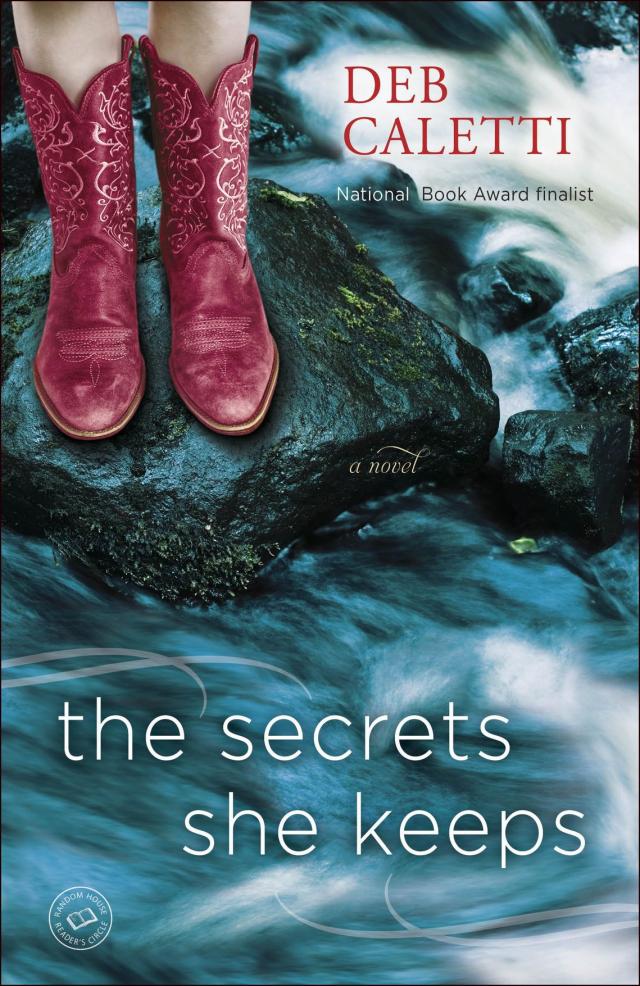
The Secrets She Keeps,
p.17


The Cadillac rolls to a stop. It is so black and shiny and expensive that it has no business being in the desert. It’s the same as the minks Veronica wore when she first arrived, and the same as the patent-leather valise of Mr. Jonathan Jakes, one of the few men they’d had at the ranch. Clearly, those things are not from here. Here, the only things that are black and shiny and fast and sleek are the horses, especially the mustangs.
The driver steps out while the second man stays in the car. Of course he stays in the car, and his arm even rests on the window ledge, as if he is enjoying a summer afternoon. The driver walks toward them. He removes his hat and holds it to his chest in some gallant gesture that feels demeaning and hostile. Why this innocent gesture is plainly not innocent is hard to say. Maybe it is the smirk playing about the man’s mouth and the self-satisfied gleam of his shoes. His hair is black and greased back. He has a blunt chin and small rodent eyes, but he has large, ring-less hands, with stubby, cigar-like fingers.
“How can we help you?” Veronica asks. She’s next to Nash, with her arms folded against her checked shirt, which is tucked tidily into her slacks. This should be Nash’s line, but it appears that Veronica has come from her own lineage of women with backbones of iron.
“Looking for a cowboy,” the man says. “You got cowboys out here, I take it.”
“We’ve got plenty of cowboys,” Nash says. Even her voice sounds like Alice’s.
“I only need this one,” the man says. He reaches into the breast pocket of his suit jacket and hands over a folded newspaper page. It’s Jack riding Little Britches, who died not long after, a terrible death, thrashing and biting at her stomach after she got colic. Little Britches is nearly off the ground in the photo, leaping into the air, and Jack looks cocky on her. It was taken at the Washoe County Roundup last year.
“Never seen him,” Nash says.
Veronica lets out a low whistle. “Handsome fella. I’d have remembered that one.”
Nash’s heart is beating hard in her chest. It feels the way thundering hooves sound.
“It says he works here. Tamarosa Ranch. This is Tamarosa Ranch.”
“Of course,” Nash says. “But we don’t have that horse, either.”
“Small-town hacks,” Veronica says. “With small-town newspapers.”
“Right,” the man says. He folds the newspaper page again and puts it back into his jacket.
“Let’s get out of here,” the man in the passenger seat says. “I don’t have time for this.”
It’s over, Nash thinks, a thought that always tempts fate, and this is when she hears the slap-slap of shoes behind her, the sound of someone running. It’s Lilly, who has wandered up the road to watch Ellen’s progress and is now racing toward them—if racing is the right word—with her hand under Beanie, her lopsided self lurching forward.
“Stop,” she yells. “Stuart, stop!”
Lilly is not close enough to hear or understand what is actually happening, that Stuart and the fat-fingered man are turning back. Her own history interprets what she sees: The man stands too close to Veronica; Nash’s hands are on her hips; Stuart removes his arm from the window ledge of the car, disgusted, fed up. What she thinks will happen next is what usually happens next. Only she knows what he’s capable of.
Lilly stops, out of breath. She meets Stuart’s eyes. There’s the click-clatch sound of the car door opening, the slam of it shutting. This is all so fast, Nash can only take in image flashes: the flap of Stuart’s shirtsleeves, a scream, a hand grabbing the fabric of Lilly’s dress, the muscles in Stuart Marcel’s arm as he shoves, the sound of Lilly’s bottom and the heels of her shoes and her palms skidding backward over gravel.
“Whore,” he spits.
Veronica’s face has changed. Her eyes are fierce, and her teeth are clenched. She resembles a cat in a fight. “Get out of here!” she snarls.
Stuart Marcel turns to face her. He’s so close to Veronica that their noses nearly touch. Nash can hear them both breathing hard. It happens in seconds, too fast for Nash even to act. She will regret this later, the way she just stands and watches in shock. There is no response or plan or move to action on her part. There is only Veronica, holding his eyes, the muscle in her cheek twitching.
“If you lay a fucking hand on me, you will fucking live to regret it,” she says.
He laughs.
It’s the sort of derisive heh-heh that says she’s not worth his trouble. With that chuckle and the brief flash of his teeth, Nash’s mind finally begins to work, still only offering up wrong, useless ideas, ideas that flail and panic—the Savage Model 720 under the bed; a yell to the boys, who are too far away to hear; a visual plea to Ellen and Hadley, urging them to hit the accelerator and run the bastard down.
But Stuart is backing away from Veronica. Look at that. He’s retreating. Likely he prefers less of an audience when he uses his muscle against someone half his size. He says, “Come on,” to the fat-fingered man, who now watches from the sidelines as if it’s just another tiresome playground scuffle. They both get in the Cadillac. Every move drips disdain. The fat- fingered man examines his watch. Stuart Marcel flicks a bit of dust from his shirtfront.
Lilly stays on the ground. No one moves. They watch the car reverse and then turn around. It kicks up all the mean dirt as it leaves. Rocks ping against the hubcaps. Those white-walled tires will be a mess by the time they make it back to Reno.
Nash’s hands shake; her legs are shaking, too, as she helps Lilly up. The women look Lilly over. She has scrapes and scratches on the backs of her legs and her palms; there’s blood and dirt where the skin has broken.
“Get in! For God’s sake, get in!” Hadley shouts from the open window of the car. Ellen’s eyes are large. She’s still gripping the wheel. Nash can see Ellen’s gold ring with the diamond chips on her left hand.
They do get in, Veronica in the front seat next to Ellen, Nash and Lilly in the back with Hadley. “Are you all right?” Hadley asks. “The baby?”
“Yes,” Lilly says. “I think so.”
“He’s your garden-variety bully, that’s all,” Veronica says. But it’s a lie, and they all know it. The first Mrs. Stuart Marcel, the whisper of her sad and furious ghost, is telling them so right now.
“I thought he was directing a film in Africa. Didn’t you say he was in the Congo somewhere?” Ellen asks.
“He’s supposed to be,” Lilly says. Her voice is small. “I am so sorry.”
“You’re sorry? You’re not the one who’s supposed to be sorry,” Hadley says.
“I am, though. I am.”
“Isn’t there a cigarette in here somewhere?” Veronica is rooting through her purse. “I need a cigarette.” She slams the bag shut, lets out a low whistle of disbelief. It’s an all-purpose disbelief, covering missing Chesterfields, as well as vicious men.
Nash’s head hurts. She could almost cry. She wants to go into her room and bolt the door. She wants her mother. They sit in stunned silence for a while, watching a cloud of gnats just beyond the windshield. They spin like the neutrons and atoms in Nash’s old science book.
“Get us home, Ellen,” Veronica says. “Hell with the cigarette, I need a drink.”
—
Ellen sets her glass down on a coaster decorated with a photo of the Cal Neva Resort. Hadley and Lilly have gone back to their cabins together, but Veronica and Ellen are nursing their mules.
“It’s all in who you choose, isn’t it?” Ellen says.
She’s right. It’s the bare fact of it. The people who come and go and come and go, all of the many, many people who walk up and back down the steps of the Washoe County Courthouse—they are mostly here because of a wrong move. They’ve picked darkness over light, fiery demons over a calm heart. That’s the trick: a good choice. It’s the most basic thing that draws the line between plain old struggle and utter disaster. Yet there’s just something in the way he tips his hat or stares her right in the eyes, something about her weakness or his coldness, that lures, that tugs at some deep, deep place. Some old place, some small piece of a person that makes the danger and darkness feel like a memory.
She keeps seeing that hand on Lilly’s chest, shoving. It feels as if Stuart Marcel is still around, hovering. Likely for Lilly, he will always be hovering, her whole life long, even when he’s gone for good. She let the monster in, and now only the monster will decide when he leaves.
Can Nash even judge bad choices and wrong love, though? She looks at Jack and none of it matters, the way he drinks too much, the way he held and kissed Lilly Marcel in the pool, even. She disregards the impossibility of it all, the certainty of catastrophe. Something about him compels her. When she sees Jack’s hand gripping Zorro’s reins, or when he drives too fast in bad weather—it is the ugly unease of danger that lures her, unfamiliar familiarity. This is what her mother would call against one’s better judgment.
These things are always against one’s better judgment. Somewhere, the women and the men always know better, but they make their choices anyway. They will tell you this later. They are under a deep, powerful spell that logic cannot begin to conquer. Fate pushes the story forward, and what is a story, anyway, without villains and miscreants, horrible wrong turns, and new days dawning.
The whole thing makes her furious. The women, the men, the court steps. That hand on Lilly’s dress, shoving; the lurch, the landing that Beanie surely felt; naked figures in moonlight. The needless risks. Her own stupid heart most of all.
“Excuse me,” Nash says.
She leaves Ellen and Veronica to their drinks. She heads outside, passes the Styleline Deluxe, which is now calmly parked in the driveway. She sees Cliff heading into the barn with Jemima, hears the dusky croon of his voice as he leads her. The pool ripples in the tender light of summer and early evening. None of this soothes the red rage she feels, though. She strides down the path, heads straight for Jack’s log cabin.
She stomps up the steps, scaring a ground squirrel, which darts into the nearby bitterbrush. Jack’s boots are set almost primly outside the door, as if this small, hot place is a temple in the Orient. Nash pounds on the door with her fist. “Open up! Open up this minute!”
“Jesus, Peanut.” She hears this through the open window. “Don’t flip your wig! Something better be on fire, is all I can say.”
He opens the door. Only one button of his shirt is fastened, and he is zipping up his pants. Nash stands on her toes and looks over his shoulder to see if he’s alone.
“No one is here, Peanut.” His voice is stern. “What is it? I’m not expected at the house for another twenty minutes.”
Nash pushes him aside. She’s hardly ever even been in his cabin before; she brought him some food when he was sick once, and another time she came in to get a glass of water after helping him carry some firewood. There’s a woodstove and a cabinet with a porcelain sink curved into it. His bed is narrow and unmade. Nash’s imagination is adding details from another night—a mossy smell, a mix of sweetness and straining muscles—and she thinks she sees the shine of a rhinestone hair clip under the bed. She remembers that clip in Lilly’s dark hair. She thinks of the round globe of her, rising from the water.
“What are you looking at with that face?” he asks. He follows her gaze to the spot under the bed, leans over to pick up a small silver money clip with a horseshoe on it, a gift from Alice a few years ago. “I was wondering where that went,” he says.
“Stuart Marcel was here, and he was looking for you. What do you think you’re doing, Jack?”
“He was here?”
“He drove up in his car. They had that article you were in, from the rodeo! Lilly saw him, and she came running. He shoved her down on the ground! Her and that baby, don’t you forget! Right down, and you’re lucky that’s all he did! He’s been checking up on you, obviously. Probably knows every bit about you now, Jack. A little picture of a midnight swim might make a man crazy, don’t you think?”
Jack runs his hand through his hair.
“Don’t you?”
He takes that money clip and tosses it to the bed, like he’s skipping a stone. But when he looks at Nash again, she sees that he’s distraught.
“Dear God,” he says.
“Yeah, you better start getting on His good side, and fast.”
“Stuart Marcel was here.”
“Looking for you.”
“It makes me think—”
“It’s about time, is all I have to say.”
“No, it makes me think of the mustangs. Walt over at Bob Watson’s? He said there was this stud. Horse walked right up to Bob, gentle as can be, head down with his nose ready for a rub. And the minute Bob reached out, the stud rose on his back legs and lunged for his throat.”
“Jesus, Jack.”
“He’s fine, you know. But, point is, there are all kinds of ’em, I’ll tell you that.”
This is the most infuriating story Nash has ever heard. She is so mad at him for telling it right now, she could spit. “Why would you get involved with her, Jack? Why? You’re pouring gasoline on a fire!”
“Peanut, quit.” Jack takes her arms. She hadn’t even realized she’s been pacing that room until he stops her. She feels like she might cry again. She’s been feeling that a lot lately. He looks her deep in the eyes, and for a moment she thinks he might kiss her. “Lilly needs us,” he says. “You said he shoved her? That’s nothing. He loses his temper and goes crazy. Do you know why she was never in another film after The Changelings? He broke her arm. It was in a cast. No one would dare hire her. She can’t walk down a street without him accusing her of looking at another man.”
“Exactly! That is exactly what I am saying! Do you hear yourself? It makes no sense, Jack, that she’d tell him that baby was anyone’s but his. She’s just asking for trouble! That makes no sense at all. None.”
“You’re being naïve, Nash. I’m sorry, but you are. This is why I always beat you at backgammon. You don’t think far enough ahead. How can she be free of him for good? If he knows that baby is his, he’ll be in their lives forever. It’s fury now for freedom later. It’s a good plan. Better than no plan.”
Nash yanks away from him. “And you and her. Is that a good plan?”
“Nash, come on. That’s my private business.”
“As long as no one ends up killed in the process, it’s your private business.”
“She’s one of ours. She came to us,” Jack says.
“You’re one of ours. You came to us.”
“I’m a grown man. I can take care of myself.” He averts his gaze from hers, turns suddenly at a strange noise—but it’s only that squirrel, which has now climbed out to the end of a far branch, causing it to dip and scrape against the roof.
Nothing seems clear after all, not good choices or bad ones, not men or horses or even the reasons for her own rage. The only obvious thing is that Jack Waters is in the deep dark heart of his own struggle, pulled toward fragile wrists and delicate cheekbones, drawn to a woman, maybe, but even more to an idea of himself.
She should call Alice. Right this minute. Nash should let her know what is going on, beg her to come back. But she can’t and won’t call. Nash can feel her own reluctance as strong as an actual hand yanking her back. She is in the deep dark heart of her own struggle.
These are the matters of the heart that have been battling for eons, Nash thinks with spitting fury, as she watches Jack bend his head to finish buttoning his shirt. Ever since the first fierce crash of the atom against atom that created us. Protection and vulnerability. Capability and the luscious descent into another’s strength. Yours versus mine. Hunger and reason. Violence and love. This is what Nash understands right now, as Jack Waters loops his belt through his pants and fastens it: All living beings are conceived with some degree of passion and intensity and confused desires, and then are left to figure it all out from there, using their own sorry devices.
“Your stupid boots are outside,” she says to him, as he hunts under the bed.
Clearly, my car was not meant for the kinds of roads out there. It hit a rut in the ground, and I could see the hood bounce. That car was a pampered urban vehicle, familiar only with the occasional city pothole and my own inept reversing up the curb of the Victrola Café. I couldn’t explain my presence out in that dry, vast wilderness right then, even to myself. But I felt my own keenness as strong as an actual hand pushing me forward.
Out there were gopher holes and grouse. I bumped past several Joshua trees, and barrel cactuses dotted the ground like sharp, unpleasant little ottomans. At home, there were tall, sulky evergreens and clouds fat with rain, roofs still slick and green from winter, and crows on telephone lines.
The air conditioner blasted. My camera rode in the passenger seat. I wasn’t sure exactly how I’d gotten so far from home or why I’d done what I just did—left my own message to Thomas, an answer to his now tense and worried ones. I was the one who needed time to think.
My reasons for staying at the ranch were becoming both more steadfast and further away. Nearly two weeks ago now, I’d tossed my clothes in a bag and filled Hugo’s water bowl. The leftovers that had been in the fridge had certainly gone bad, if Thomas hadn’t already thrown them away. The mail would be stacking up. My pots of flowers would need watering. I had bought a new pair of sandals that I hadn’t even worn yet, and they were likely still where I’d left them on the floor of the closet.
Maybe Thomas and his crisis had just made me weary, but I wasn’t sure I cared about any of it. It all made me tired. The sloping floor did, and the laundry Amy left behind before she went on her trip, and the yard, and our neighbors (especially the spying Mrs. Radish), and the garbage collection on Wednesdays. Christmas—right there: It seemed more than I could bear. How weighty was a tree with its wet needles dragged across the carpet, and a search for a parking space in the crowded mall lot, and a stout, frozen turkey in the shopping cart.
The same holiday recipes, the same high-thread-count sheets I’d bought years ago, the same arguments with the same words, the same creak in the same spot in the hall, which I heard every day—well, I was never one to read a book twice or watch a movie more than once, but somewhere along the line, my personal-life button had gotten stuck on rewind. I was the one-woman version of the poor old Rolling Stones, who had to sing “Gimme Shelter” over and over again.