The case of the substitu.., p.10
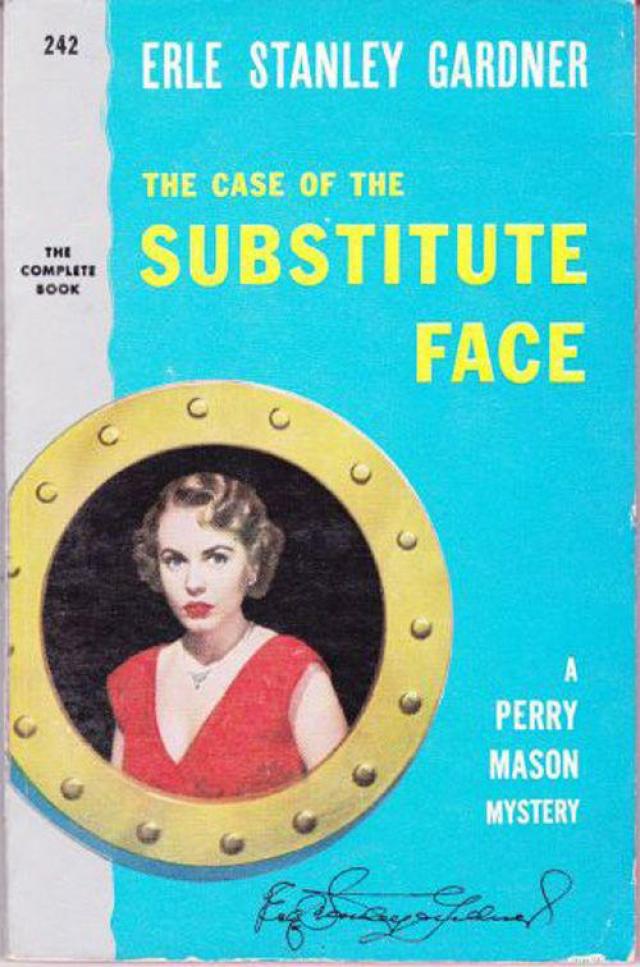
The Case of the Substitute Face,
p.10


Marjory Trenton said uneasily, “I knew he was putting on some sort of an act. He tried to be tough and hard-boiled, but it was an act, you could tell it. What I can’t figure is what they thought they were going to gain. You certainly don’t think they were dumb enough to suppose I’d turn over a thirteen-hundred-dollar wrist watch to them on their say-so, do you?”
“You can’t tell,” Cutter said. “Some people are very credulous and some are easily intimidated, particularly under … under certain circumstances.”
“Say, wait a minute,” Rooney said apprehensively. “There isn’t going to be any publicity …”
“You may leave that entirely in my hands,” Cutter assured him. “The police department cooperates with us, and we cooperate with it. The only thing that will be in the paper will be a paragraph to the effect that two men were picked up by the bunco detail, trying to victimize a prominent jewelry company. You people will be kept out of it. This man claimed the watch had been stolen from his wife?”
“That’s right,” Marjory Trenton said.
“That’s all I want to know,” Cutter snapped, “and that’s all the police will want to know.”
He looked out through the glass window in his private office, which commanded a view of the store below, and said, “Here come officers from a radio car now.”
Heavy feet climbed the stairs, and pounded down the corridor. The door pushed open, and two uniformed officers, holstered weapons prominently displayed, crossed over to Cutter’s desk and asked, “What is it?”
Cutter motioned toward Mason and Drake. “These two.”
The officers whirled. One of them, taking a step toward Mason, suddenly stopped. “Wait a minute, this is Perry Mason.”
Mason nodded and said, “Good afternoon, gentlemen.”
The officer turned to Cutter, puzzled. “You’ve heard of Perry Mason, the lawyer?” he asked.
Cutter’s face was cold. “I don’t give a damn who he is, he tried to run a flim-flam on a client of mine.”
The officer appeared dubious. “Are you,” he asked, “going to prefer charges?”
“I don’t see why not,” Cutter said. “He claimed that a watch purchased here by Mr. Rooney had been stolen.”
The officer said, “I don’t suppose it would make the chief bust out crying if you actually had something on him, but I’d go pretty easy, Mr. Cutter. He’s the lawyer who defended that woman in the lame canary case, and tried that case where there was a murder about a howling dog.”
Cutter looked at Mason and frowned. “Perhaps, Mr. Mason,” he said, “you’ll be good enough to explain.”
Mason said, “As I understand the situation, it hinges entirely on the identification of a watch. Now, suppose we go at this thing in a businesslike manner and definitely identify that watch.”
“It’s been identified,” Cutter said.
“Only by your recollection of the appearance of the watch. Suppose you identify it by numbers. You may save yourself a lawsuit.”
Cutter hesitated a moment, then pressed a button. A young woman opened the door from an adjoining office. The clack of typewriters and the clatter of adding machines poured sound into the room. “Get me the account of Custer D. Rooney,” Cutter said.
The girl nodded, vanished, came back in a few moments with a card. Cutter laid the card on the desk, pried back the cover on the wrist watch, adjusted a magnifying glass to his eye, and nodded his head. “This,” he said, “is the same watch.”
Mason said, “I think there’s been a mistake somewhere,” and leaned across the desk, but didn’t pick up the wrist watch. Instead, he picked up the card. He studied it a moment, then turned to Marjory Trenton and said, “Did you know he was married, Margie?”
Rooney jumped to his feet and said, “Look here, I don’t see what the hell …”
“And,” Mason said, fixing him with a cold eye, “you’ve purchased four thousand, six hundred and fifty-two dollars and twenty-five cents’ worth of jewelry within the last two months at this place alone. Now, then, Mr. C. Denton Rooney, would you mind telling us where you secured the money with which to pay for these purchases?”
Cutter sent his chair crashing backward. He lunged forward and grabbed at the card which Mason held. Mason jerked the card back from Cutter’s grasp, and Cutter shouted to the officers, “Arrest that man! I don’t give a damn who he is!”
One of the officers moved forward. Mason stepped backward, his outstretched left arm holding the officer back, his right hand keeping the card behind his back. “Don’t be a fool,” he said to the officer. “Look at Rooney.”
Rooney collapsed into a chair, as though his knees had suddenly become unhinged. His face was gray and pasty.
Mason said, “You’re head auditor at the Products Refining Company, Rooney. You draw a salary of four hundred and sixty dollars a month. Between two and three months ago, Carl Moar, who worked under you as a bookkeeper, mysteriously disappeared. You immediately called the attention of the directors to the fact that there was a shortage in the books. You knew that shortage would be discovered anyway, because they’d insist on a complete audit, with a bookkeeper vanishing as Moar did. Now then, perhaps you’ll be kind enough to explain to these gentlemen how you managed to save enough money to buy almost five thousand dollars’ worth of jewelry out of a salary of four hundred and sixty a month.”
Rooney made a deprecatory gesture with his hands, and said, “All right, you’ve got me.”
“How long,” Mason asked, “has this embezzlement been going on?”
Arthur Cutter slowly seated himself in his big swivel chair.
“By God,” he said, “I don’t like this.”
“No one asked you to,” Mason told him. Then, turning to Rooney, “How long has this been going on, Rooney?”
Rooney said, “Look here. We can fix this thing up. No one needs to know anything about it except us. I’m related to Charles Whitmore Dail, the president of the company. He’ll give me hell, but he’ll put up the money rather than have the scandal.”
One of the officers moved forward. Mason motioned him back and said, “But there has to be someone for a fall-guy, Rooney.”
Rooney’s eyes, sullen and defiant, met Mason’s. “Moar could be the fall-guy.”
“And what do you suppose Moar would have to say to that?” Mason inquired.
“He won’t say anything,” Rooney said, “he’s dead. He was killed last night coming on the steamship to San Francisco from Honolulu.”
“Are you sure?” Mason asked.
Rooney said, “Of course I’m sure. Mr. Dail and his daughter were on the same ship. Celinda became suspicious of Carl Moar’s stepdaughter. She sent me a wireless asking me to find out all about a Belle Newberry who had graduated from the University of Southern California. I found out her mother was Ann Newberry, who had married Carl Moar.”
“And notified Celinda?” Mason asked.
“Yes,” Rooney said. “And then this morning Celinda telephoned me to tell me what had happened. Mrs. Moar murdered her husband last night. Now, we can fix this thing all up so there won’t be any publicity.”
Mason grinned. “No, we can’t, Rooney. And when you see Mr. Charles Whitmore Dail, you might tell him that Perry Mason asked you to remind him that chickens have a habit of coming home to roost. Come on, Paul, we have work to do.”
Chapter 9
Standing on the curb in front of Coontz & Cutter’s office, Drake mopped his forehead with a handkerchief, looked reproachfully at the lawyer and said, “Perry, you told me you were only going to carry on the act until she flushed Rooney from cover.”
Mason said, “Well, I changed my mind.”
“I don’t suppose it makes any difference to you that you damn near scared me to death,” Drake said. “How did you know he’d done embezzling?”
“I didn’t,” Mason confessed. “It was just a hunch. When he latchkeyed the door of that apartment I figured it would be a good time to see it through.”
A cruising cab saw Mason’s signal, swung into the curb.
“What would have happened if we hadn’t been able to make it stick?” Drake asked.
Mason grinned. “You’d probably have had your supper in jail, Paul.”
“Good Lord, Perry, you take awful chances,” Drake said, as he climbed into the cab.
“I like to gamble,” Mason told him.
“I’ll say you do!”
It lacked twenty minutes to five when Mason opened the door of his private office and ushered Paul Drake into the room.
Della Street, seated at a private switchboard, with an ear phone clamped over her head, and covering her right ear, looked up as they entered, snapped a plug and said, “What’s new, Chief?”
“The embezzlement business is out,” Mason said.
“You threw a scare into Rooney?” she asked.
“Did more than that,” he told her. “Rooney confessed. He’s the embezzler. What’s new at this end?”
Della Street consulted a notebook. “They’re holding Belle Newberry in San Francisco without charges. They’re holding the mother on suspicion of murder. They found a thirty-eight caliber revolver on the boat deck. Two chambers had been fired. They’ve identified Mrs. Newberry as Mrs. Moar and one of the San Francisco papers has run a story about the embezzlement. Roy Hungerford’s waiting in the reception room.”
“I thought we’d head off that embezzlement,” Mason said, dropping into the big swivel chair back of his desk and looking at his wrist watch. “Seconds were precious. I guess we missed it by a matter of minutes. What does Hungerford want?”
“I don’t know. I’ve been too busy to see him. I’ve engaged a suite of rooms in San Francisco and have a plane chartered and waiting.”
Mason said, “Get me the district attorney’s office in San Francisco. Find out who’s in charge of this case and get him on the line.”
“Donaldson P. Scudder is in charge,” she said. “Just a minute, I’ll get him on the line.”
She moved a mouthpiece up to her lips, snapped a switch and put through a call.
Mason said, “Wait here, Paul. I’m going to see Hungerford.”
“Want me to get out,” Drake asked, “and let you have the office?”
Mason said, “No. I’ll see him in the law library.” He walked through the law library to the reception room, opened the door and said, “Come in, Hungerford.”
Hungerford jumped to his feet and shook hands with Mason as the lawyer closed the door of the library and motioned toward a seat. “Well?” Mason asked.
Hungerford dropped into a chair, as Mason seated himself on the other side of a long, mahogany table.
“I wanted to talk with you about Belle,” Hungerford said.
“What about her?” Mason asked.
“I came down on a plane,” Hungerford said. “I was talking with San Francisco a half hour ago on long distance. I understand the newspapers are carrying a story that Carl Newberry, posing as a well-to-do tourist, was C. Waker Moar, an absconding employee of the Products Refining Company. He’d been working on a salary of a hundred and eighty-five dollars a month.”
“So what?” Mason asked.
“And the San Francisco newspapers carry an interview by Charles Whitmore Dail in which he says that Moar absconded with twenty-five thousand dollars of the company’s funds; that had he lived, detectives would have met him at the gangplank and jailed him on a charge of embezzlement; that he has every reason to believe the money which Moar had in the money belt was part of the funds embezzled from the Products Refining Company.”
Mason lit a cigarette and said, “Go on.”
“I want to know what you know about it,” Hungerford said.
“Have you talked with Belle?”
“No. I can’t. They’re holding her in San Francisco.”
Mason met Hungerford’s anxious eyes. “All right,” he said. “Newberry was Moar. He was employed by the Products Refining Company.”
“Where did he get the money on which he was traveling?” Hungerford asked. “Do you know that?”
“He says he won it in a lottery,” Mason said.
“And was there a twenty-five thousand dollar shortage in the Products Refining Company?”
“Yes,” Mason said. “I believe that’s correct.”
For several seconds Hungerford was silent. His eyes focused on the shelves of leather-backed law books. Then he once more met Mason’s eyes. “She told me,” he said, “that she’d see me at the Santa Anita Race Track. Apparently she intended to keep right on—well, traveling in my set.”
Mason watched him thoughtfully. “Let’s see if I get you straight, Hungerford. You come to me with all this dirt, hoping I’ll be able to contradict it, hoping I can tell you something good about her, is that right?”
“No,” Hungerford said.
“The hell it isn’t!” Mason told him. “You’re interested in Belle, but you don’t know how much. You’re so wrapped up in conventions that you can’t separate her from her parental environment. When you come right down to it, it’s not Belle you’re uncertain of, but yourself.”
Hungerford flushed, started to make an angry retort, then, under the steady stare of the lawyer’s eyes, lost his anger. After a moment, he said, “I guess you’re right, Mr. Mason. I hadn’t stopped to analyze my own feelings … but I can tell you now that this little talk has helped me understand myself. I know how I feel now.”
Mason watched him with sympathetic eyes.
“Now then,” he said, “I’ll tell you something. Belle didn’t intend to keep right on traveling in your set, as you’ve expressed it, because she never intended to see you again.”
Hungerford’s face showed surprise.
“Get this,” Mason said, “and get it straight. If there was anything illegal about the manner in which Carl Moar acquired that money, Belle didn’t know it. He told his family he’d won it playing a lottery. That’s what Belle thought. Moar had been working and saving on a small salary. He’d been a bachelor much of his life. He wasn’t Belle’s father. Belle’s father abandoned her and her mother when she was three years old. They’ve never seen or heard from him since. Mrs. Newberry had a little money, enough to get by on. She put Belle through college. Then she married Carl Moar. Naturally, Belle had but little sympathy for her natural father. She became very much attached to Carl Moar. He was the only real father she’d ever known. Then the family had this windfall. She had a chance to travel. She met you. You were inclined to accept her as one of your crowd. You found her interesting, and because her father and mother seemed to be well-to-do tourists, you acted on the assumption they were.
“That’s the only ground on which Belle could have met you and enjoyed your companionship. Otherwise you’d have patronized her, or ignored her, or pitied her. She was smart enough to know she could never be received on that basis after you returned to your friends on the Mainland. Therefore, she intended to walk off the ship and never see you again. The memory of a few days of pleasant companionship would be something which she’d always cherish. It never entered her head that her stepfather was an embezzler. If she had thought there had been anything illegal in the manner in which he acquired his money, she’d never have touched a cent of it.”
Hungerford said simply, “I care for her—a lot.”
Mason said, “I don’t know where Moar got the money. I do know that he wasn’t Belle’s father, and I do know that Belle believed he won it in a lottery.”
“Who’s taking care of your fees?” Hungerford asked abruptly.
“Mrs. Moar will,” Mason said. “I haven’t discussed fees with her as yet.”
Hungerford said, “Look here, Mr. Mason. I want to help.”
“Why?”
“Because I care for Belle—a lot more than I ever realized.”
“You’re not hypnotizing yourself into believing you care for her because she’s in a jam, are you?” Mason asked.
Hungerford said, “Mason, I don’t know as I’d ever have known exactly how I felt toward Belle if it hadn’t been for what has happened. I’ve known lots of girls. I suppose I’m considered a good matrimonial catch. The girls themselves have been pretty decent. But mothers have dangled their daughters in front of my eyes until I feel that I’ve seen them all. Belle is different. I’ve met lots of girls who were flippant and full of wisecracks. It’s the attitude they cultivate, for the purpose of appearing modern. Belle’s different. She’s naturally buoyant. She’s eager to live. She wants to wade right out and meet life halfway.”
“Go ahead,” Mason told him, “you’re doing fine.”
Hungerford stared steadily at Mason. “I want to marry her.”
“A Hungerford,” Mason asked, “marrying the daughter of a criminal?”
“Stepdaughter,” Hungerford corrected.
“What will your father say?” Mason asked.
“I hope he’ll say the right thing,” Hungerford said, “because if he doesn’t, it’s going to mean we’ll be estranged from each other. I’m telling you this, Mr. Mason, because I want you to understand why I’m asking to be allowed to contribute toward your fees. Naturally, I’ll ask you to consider what I’ve told you as a sacred confidence. I … well, I naturally want to …”
“Naturally you want to ask Belle yourself?” the lawyer asked with a smile.
“Something like that,” Hungerford said. “I hope she cares for me. I think she does.”
Mason said, “All right, after you’ve asked her, and heard what she has to say, we’ll talk about letting you contribute something toward my fees. In the meantime, we’ll carry on the way we are. One thing, however, may be of interest to you. Carl Moar didn’t embezzle any money from the Products Refining Company.”
“He didn’t?”
Mason shook his head.
“You can prove that?” Hungerford asked eagerly.
“I wouldn’t make the statement unless I could prove it,” Mason said, “and”—with a dry smile—“for your own personal information, I think that some of the funds for Mrs. Moar’s defense will be contributed by your friend, Charles Whitmore Dail—that is if he has released an interview to the newspapers in which he accuses Moar of embezzlement.”