The case of the long leg.., p.10
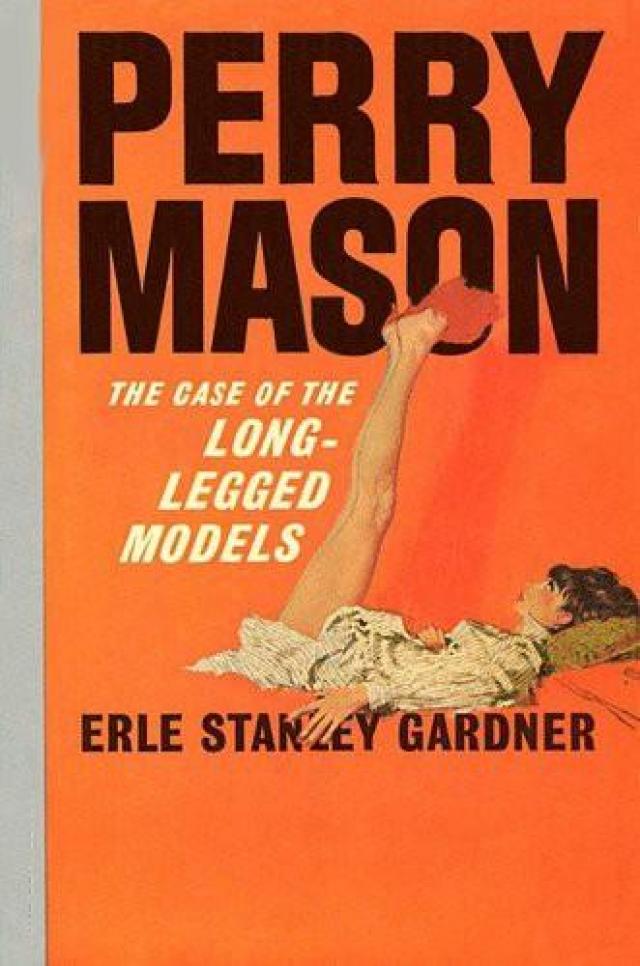
The Case of the Long-Legged Models,
p.10


“Well, it is something of a strain,” she admitted, “but it’s never bothered me before. It was just last night, I … I just couldn’t sleep. I guess it was the romantic angle. Imagine how Stephanie must have felt when she picked up the paper and found Garvin, Jr. had married without telling her. And Garvin, Sr. was so anxious to have her in the family.
“I went to sleep and then woke up crying. I … I couldn’t get back to sleep.”
Mason said, “Della, get out of here. Jump in your car. Go on out to your apartment and forget about this whole business. You take a sleeping pill and get to bed. I’ll call you if any emergency comes up. Tomorrow may be a hectic day but nothing much is going to happen today because police won’t dare to make any definite move with things all mixed up the way they are now. Police will try to unscramble the mess before they do anything.”
“And when they make a move, they’ll make it against you?” she asked.
“They will if they have a chance,” Mason said. “Hamilton Burger, the district attorney, will see to that and Sergeant Holcomb would back him up in it.
“Hang it!” he said irritably, “it shows how circumstances can betray you and how coincidences can make a mess. You go on home, Della.”
“You’ll promise to call me if anything urgent develops?”
“Cross my heart,” Mason said.
“Well,” she surrendered, “I think I will. I feel like a wet dishrag.”
“You may be coming down with something,” Mason said. “You’d better see a doctor before—”
“No,” she said, “I just feel that if I could get some sleep it would be all I needed. I should have taken a sleeping pill last night, but I waited so long that I knew if I took one I wouldn’t be much good today.”
“You go take a sedative right now, and go to bed,” Mason said. “What’s more, watch yourself. If you develop any fever, call a doctor. I’m inclined to agree with you. I think all you need is a good rest, but make sure.”
“All right,” she told him, “and you remember, you’re to call me if anything urgent develops.”
Mason nodded and resumed pacing the floor.
Chapter 12
Homer Garvin, Sr. called just before noon.
“Good work, Perry!” he said.
“What are you talking about?” Mason asked.
“You should know,” Garvin said.
“Where are you?”
“Las Vegas, Nevada.”
“I’m afraid,” Mason said, “there have been some developments that you don’t know about, Homer, some complications that …”
“I know all about them,” Garvin said. “That’s why I’m calling. I’m over here in Nevada, but I’m keeping in touch with developments. I have my own sources of information.”
Mason said, “Did you know about the police picking up your son and his wife for questioning? Did you know about the gun I accidentally discharged and which turned out … ?”
“I know all about it,” Garvin said. “You’re doing all right, Mason. Now remember this: it’s your duty to protect Stephanie Falkner at all costs.”
“What about your son and his wife?”
“Do what you can,” Garvin said, “but don’t bother about them. Police can’t make any case against either one of them, and they’ll drop them like hot potatoes when they finish their investigative work.”
“Do you want me to represent them?” Mason asked.
“Go ahead. Represent everybody,” Garvin said, “but primarily you’re representing Stephanie Falkner.”
“And what about you?”
“I’ll take care of myself. But I want to know something about my rights.”
“What about them?”
Garvin said, “I’m over here at the Double-O Motel. I’m registered under my own name. I haven’t resorted to flight. I can prove that I have business here. I expect police to locate me at any moment.
“Here’s what I’d like to do, Mason. I’d like to simply sit tight and refuse to answer any question on the grounds that I have no information that would be of value and that I do not intend to volunteer any statement until my attorney can be with me.”
Mason said, “That might put you in an embarrassing position as far as the public is concerned. It wouldn’t endear you to the police, and they’d pin something on you if they had a chance.”
“Let them pin,” Garvin said.
“You know,” Mason told him, “there’s some evidence in this case that points toward you.”
“There’ll be more before I get done,” Garvin told him. “You represent Stephanie. She’s the one who is going to need the representation. Do you understand?”
“I think so.”
Garvin said, “Do anything you can to keep police from building up a case against her. I’ll take care of myself. Now here’s what I want to do. I want to refuse to make any statement to the police. I don’t have to talk, do I?”
“Not if you tell them you won’t make any statement except in the presence of your attorney.”
“And you’re my attorney,” Garvin said. “Also I take it it’s very inconvenient if not impossible for you to come to Las Vegas, Nevada.”
“I have very urgent matters in my office here at the moment,” Mason said.
“That’s what I thought,” Garvin said. “I’m willing to make a statement, but only in the event that you are present at the time. Now then, I want to know what will happen if they try to get tough with me.”
“You’re out of the state,” Mason said. “They can charge you with murder, and try to extradite you.”
“I take it,” Garvin said, “that, since I’m out of the state, they won’t be in such a hurry to try to arrest me on a definite charge.”
“They’ll want to feel they have a pretty good case before they do anything,” Mason said.
“That’s what I thought.”
“But they may feel they have a pretty good case,” Mason warned.
“In which event, we’ll sit tight and make them prove it beyond all reasonable doubt.”
“Don’t waive extradition,” Mason warned.
“I won’t waive anything except my hands.”
“I’m afraid police are interrogating Stephanie Falkner right now.”
“Sure, they are. They’re also interrogating my son and his bride. You know, Mason, the more trails they have to follow, the more confused they’ll get. I don’t know just how you did what you did, but you did a wonderful job. Now if you want to get in touch with me, just ring the Double-O Motel and leave any message you want with Lucille.”
“Okay,” Mason told him, “and if you should call me and I’m not in, or if you want to call me at night, get in touch with the Drake Detective Agency. You’re going to have a bill to pay on this, Homer.”
“I don’t expect something for nothing,” Garvin said.
“I’m keeping some private detectives on the job. I just want to be sure that …”
“You do anything you see fit,” Garvin interrupted. “Spend as much money as you want. I’ve never kicked about your charges yet, and I’m not going to begin now. But whatever you do, be sure to protect Stephanie Falkner. Good-bye.”
Mason was just dropping the receiver into its cradle when he heard the sound of a key at the lock of the door to his private office.
Mason whirled just as the door opened, and Della Street stood in the doorway.
“Now what?” Mason said. “I told you to go home and rest, Della, to take a sleeping pill and …”
“I didn’t need one, Chief,” she said. “I got some headache medicine downstairs. I went home and relaxed and felt a lot better.… I got to thinking about what Mr. Garvin had said to us about buying cars.”
“Go on,” Mason said, suddenly straightening in the chair.
“Well,” Della Street said, “after all, there is a terrific depreciation in buying new cars, and if you know someone who is in the used-car business and who will give you a good deal …”
“Della,” Mason interrupted, “do you mean to say that instead of sleeping you went out to Junior Garvin’s used-car lot and …”
“But I wasn’t sick, Chief. I simply had a headache and I hadn’t slept well last night, but the headache medicine quieted my nerves and made me feel all right.”
“Go on,” Mason said, “what did you do?”
“Well, I just kept thinking about what Garvin had told us. You see, my car didn’t seem to be running right. I stopped by the used-car lot. After all, it’s right on my way to the office. Well, only a few blocks out of the way.”
“All right,” Mason said, “what did you do?”
“Junior Garvin wasn’t there,” she said, “but I met one of the nicest salesmen, and he knew that Junior Garvin was your friend. I told him that Junior had offered to make either or both of us a good deal. He had a car there that was just a dream of a car.”
“You bought it?” Mason asked.
“Well,” she said, “I’m giving it serious consideration. I tried to telephone you to ask you what you thought about it, but there was something wrong with the line. I couldn’t seem to get a connection.”
Before Mason could say anything, Paul Drake’s code knock sounded on the door of the office.
“Let Paul in, Della,” Mason said.
Della Street opened the door.
“Hi, Della,” Drake said. “Well, Perry, you’d better get ready to receive official visitors.”
“Why?” Mason asked.
“Police are biting their fingernails, tearing their hair, and raising hell generally,” Drake said, “but I have one tip that may help you. That’s why I dashed in, to tip you off to something that may help.”
“What?”
“Police overlooked a bet. It didn’t occur to them to go down and dig the bullet out of the desk at young Garvin’s place until just a few minutes ago. Sergeant Holcomb went down there with the ballistic experts, and what do you think they found?”
“What?” Mason asked.
“Some souvenir hunter had made off with the bullet. It had struck the desk at an angle, glanced into the wall, and hit a steel girder. Somebody had made just a little hole in the plaster and lifted the bullet out as neatly as could be.”
Mason frowned for a moment, then whirled to face Della Street.
“Can you imagine that!” Della exclaimed. “Now who in the world could have done that, Paul?”
“Some souvenir hunter,” Drake said. And then added, “It may louse up the whole case.”
“I don’t see just how,” Della Street said, her manner demure, her eyes innocent.
“It makes one link in a chain of proof turn up missing,” Drake explained. “Police don’t like that. Also they’re mad because it will now appear they were caught napping.”
“How did you get the information, Paul?” Mason asked.
“It came in a roundabout way,” Drake said evasively.
“All right,” Mason said. “Give.”
“Well, this columnist Crowe ran that paragraph in his column, and naturally it attracted a lot of interest. So it was only natural that he’d want to keep in touch with things and get a follow-up if possible.”
Mason nodded.
“Well,” Drake went on, “he’s quite friendly with the head salesman at Junior Garvin’s place. So when the police came out there searching for the bullet and found that someone had beat them to it, this salesman learned about it and of course relayed the information on to Crowe. Crowe is running quite a paragraph on it tomorrow morning, although of course the police don’t know that. I have a confidential source of information in Crowe’s office. I’d advised this source of information that I was interested in any follow-up material and I received this tip on the phone just a few minutes ago.”
“All right,” Mason said, “thanks a lot, Paul. Keep on the job and let me know. Put out as many men as you need to give this case a thorough coverage.”
“Within reasonable limits?” Drake asked.
“Within no limits at all,” Mason said. “I want the facts.”
“Okay,” Drake said, “I’ll keep digging.”
“And thanks for that tip, Paul. It may be very, very important.”
“That’s okay,” Drake said, obviously pleased. “I’ll keep you posted, Perry.”
He left the office.
As the door clicked shut behind him, Mason turned to Della Street.
“All right, Della,” he said, “now let’s have the real story. You …”
The door from the outer office was pushed open and Sergeant Holcomb came in unannounced.
“Well,” he said, “a little conference, eh?”
“A little private conference,” Mason said.
“That’s all right,” Sergeant Holcomb grinned. “Go right on talking. I instructed Gertie out there not to announce me. I told her I’d just come right on in.”
“Nothing like making yourself at home,” Mason said.
“That’s right,” Holcomb agreed, standing by the door leaning his back against the wall. “I represent the majesty of the law. The law doesn’t sit outside and wait in anybody’s outer office. When we have to see somebody, we see them.”
“Don’t you even announce the fact that you are coming?” Mason asked.
“Some of the officers do,” Holcomb said. “I don’t. I don’t believe in tipping a man off. I like to watch his face during the first second or two after he sees me walk in.”
“And did you learn anything from my face?” Mason asked.
“I think I did. I know damn well you didn’t want to see me. That’s one thing.”
“Well, since you’re here, you may as well sit down. Take your hat off, and let’s see what we can do for you.”
“I’m comfortable the way I am,” Holcomb said.
“All right, what do you want?”
“You know what I want.”
“I’m not a mind reader, Sergeant, so I don’t intend to waste my time speculating on what it is you want. Previous experience has shown me you are quite able to express your ideas, your wants, your likes and your dislikes. Now start talking.”
“You’re the one to start talking,” Sergeant Holcomb said. “You went down to Homer Garvin’s used-car lot and fired a gun into Garvin’s desk.”
“An accidental discharge of a firearm, my dear Sergeant,” Mason said. “I intend to reimburse Mr. Garvin for the desk. No one was hurt, and I fail to see why it should arouse any interest on the part of the police.”
“The interest on the part of the police,” Sergeant Holcomb said with elaborate sarcasm, “comes from what you doubtless consider purely a minor matter: the fact that this gun was the murder weapon which was used to kill George Casselman in the Ambrose Apartments the night before.”
“Are you certain?” Mason asked.
“Of course, I’m certain! Now then I want to know where you got that gun.”
“The gun,” Mason said, “was given to me by Homer Garvin, Jr. I asked him if he had a gun, and he said he did. He said that he had one that he used to protect himself against holdups. In the used-car business they sometimes take in quite a bit of money in the form of cash. Garvin, I believe, has a permit to carry the weapon. He said that he did. That, however, is something which you are in a position to look up much more easily than I am.”
“So Garvin gave you that gun?” Holcomb asked.
“He handed me the gun, or rather he showed it to me. I reached out, picked it up, and tried the balance of it. I threw it down, the way a man will in trying out the balance of a gun, and I guess in doing so I must have inadvertently pulled the trigger. In any event, Garvin didn’t tell me that it was loaded.”
“You thought he’d be protecting himself with an empty gun?” Sergeant Holcomb asked.
“I don’t know that I gave the matter any thought at all. I wouldn’t tell you that I actually did intend to snap the trigger, nor on the other hand would I go so far as to say that I didn’t intend to snap the trigger. I was testing the balance of the gun, and it went off.”
“And what happened after that?” Holcomb asked.
“Stephanie Falkner is a client of mine. She was, I felt, in some danger. Her father had been murdered, and the murderer is still at large as far as we know. I suggested to young Garvin it might be a good idea for him to take the gun and leave it with her for a short time. You see, he and Stephanie Falkner had been quite good friends before his marriage.”
“So I understand,” Holcomb said drily. “Now then, Mason, you know damn well that the gun you got from Garvin wasn’t the murder weapon that killed George Casselman.”
“I’m glad to hear you say so, Sergeant. I didn’t think it was, either. But since the police have so dogmatically asserted that it was the weapon, I didn’t feel in a position to contradict them.”
“You know what I mean,” Sergeant Holcomb said. “You substituted weapons. You had the murder weapon in your possession. You had received it from a client. You had that gun concealed on you when you went down to call on Garvin. You asked Garvin if he had a gun. He told you he did. He put the gun out on the desk. You fired Garvin’s gun so as to divert attention from yourself and in the resulting confusion switched guns.”
“Then,” Mason said, “it is now your contention that Garvin’s gun was not the murder weapon.”
“That’s what I think.”
“And you think that I had the murder weapon with me and that I substituted it for Garvin’s gun?”
“That’s right.”
“Well,” Mason said, “you can quite soon test the accuracy of your conclusions by taking the number of the murder weapon and tracing it on the firearms registration.”
“We’ve done that,” Sergeant Holcomb said. “The gun was purchased by Homer Garvin, Sr., the old man.”
“Then how did Garvin, Jr. get it?”
“His father has a sporting-goods store among his other investments. He took three identical guns, snub-nosed two-inch barrel, detective guns, kept two for himself and gave one to his son.”
“Kept two for himself?” Mason asked.
“That’s what the boy tells us.”