The case of the long leg.., p.5
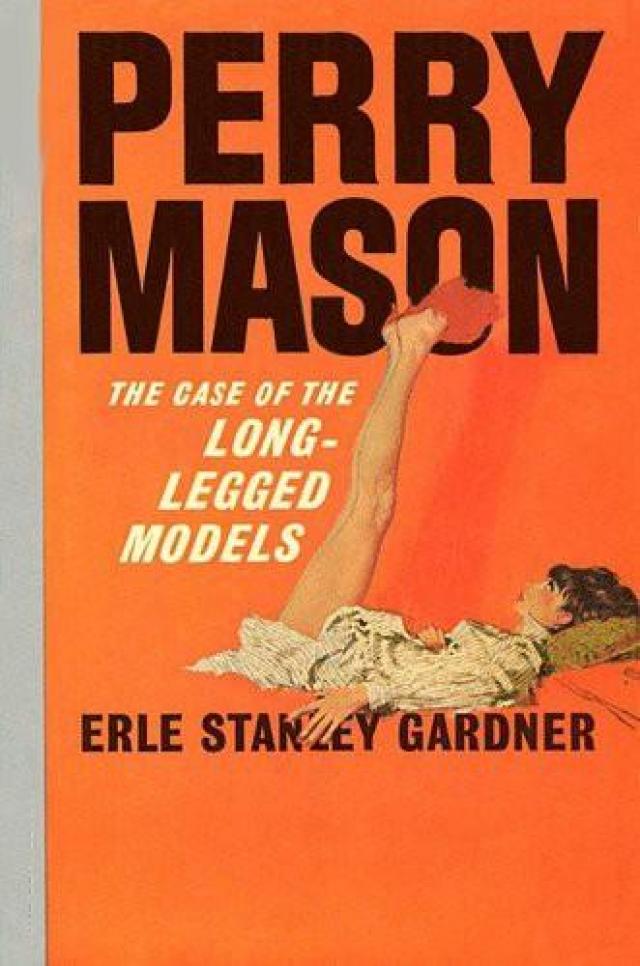
The Case of the Long-Legged Models,
p.5


They took the elevator to the third floor, walked down to Stephanie Falkner’s apartment.
Mason tapped gently on the door.
Stephanie Falkner called through the closed door. “Who is it?”
“Mr. Mason.”
“Are you alone?”
“Miss Street’s with me.”
The bolt clicked on the door. Stephanie Falkner, dressed in a housecoat and slippers, said, “Everything’s in a mess. I’m a slow starter in the mornings. I’ve just had breakfast and haven’t cleaned up. Can I fix you some coffee?”
“No, thanks,” Mason said. “We just wanted to get a little information.”
“I presume it’s rather important to bring you out at this time in the morning.”
“It could be,” Mason said.
“All right, what’s the information?”
“When we left here last night, Homer Garvin was here?”
She nodded.
“How long did he stay here?”
For a moment her face broke into an expression of anger. “None of your damn business!” she flared.
Mason said, “I’m sorry. We’re making it our business. For your information, George Casselman turned up very, very dead in his apartment this morning.”
Her gray eyes surveyed Mason’s face, then shifted to Della Street’s face. “Sit down,” she said.
The folding bed had not as yet been made, and she seated herself on the edge of the bed.
Mason looked at the rumpled pillows on the bed, suddenly jumped to his feet, walked to the bed, jerked one of the pillows aside, and disclosed a snub-nosed revolver.
“What’s this?”
“What do you think it is? A toothbrush?”
Mason stood looking down at the revolver.
“Unless I’m greatly mistaken,” he said, “this is very similar to the revolver which Homer Garvin had in his shoulder holster last night.”
She said nothing.
Mason leaned over and picked up the revolver.
“In case you want to know,” she said after a moment, “Homer was concerned about my personal safety. He was going to try to do something with the syndicate and—well, you know what the syndicate did once before.”
“So he left his gun here with you for your protection?”
“That’s right.”
Mason looked the weapon over, smelled the barrel, frowned, swung open the cylinder, and said, “You seem to have one empty cartridge in the gun, Miss Falkner.”
“I don’t have any empty cartridges in any gun,” she said. “It is not my gun. I tell you Mr. Garvin left it here last night for my protection. I didn’t want it and I don’t want it.”
“But you did put it under your pillow?”
“Where would you put it?” she asked sarcastically.
Mason abruptly arose from his chair, put the gun back under the pillow where he had found it.
“Now what?” she asked.
Mason said, “I am not representing you. I am not your attorney. I am not a police officer, and I have no right to question you, but I want to know if you went out last night after we left you.”
She said, “I haven’t been out of this apartment since the last time you saw me.”
Mason nodded to Della Street.
“All right,” Stephanie said, “George Casselman has been murdered. He’s the man who killed my father. What do you expect me to do? Break down and have hysterics?
“Look,” she went on, “you’re a lawyer. You’re clever. You know the ropes. You’re representing Homer Garvin. You aren’t representing me. You’d do anything in your power to save your client. You’d throw me to the wolves so Homer Garvin could get away.”
“That’s rather an inaccurate description of my attitude,” Mason said, “but we’ll let it go at that. Come on, Della.”
Mason walked out.
“Now where?” Della Street asked as the door of the apartment closed behind them.
“Now,” Mason said, “we go hunt up Homer Garvin and we hunt him up fast. We hope we get there before the police do.”
“Do they have any line on him?” Della Street asked.
“They will if Stephanie Falkner tells them about the gun.”
“And will she tell them about the gun?”
“That,” Mason said, “is something on which I don’t care to speculate.”
“Do you think she will?”
“She will if she’s smart. Think what it would mean if that should turn out to be the murder weapon.”
“Shouldn’t you have taken it?”
Mason held the elevator door open for Della Street. “Not on your life,” he said. “It’s too hot for me to handle.”
They went down in the elevator, crossed the lobby, entered the cab, and Mason gave the address of Homer Garvin’s office.
“Think he’ll be there?” Della Street asked.
“He’ll either be there or we’ll find out where we can locate him,” Mason said. “This time we won’t take any back talk from a blonde secretary who’s trying to make a production out of everything she does.”
The cab deposited them at the building where Garvin had his office. “Keep on holding it,” Mason said. “We shouldn’t be long.”
He and Della Street were whisked up in an express elevator.
Mason walked down the corridor to the door which said: “HOMER H. GARVIN, INVESTMENTS. ENTER.”
The lawyer twisted the knob, pushed the door, and recoiled in surprise.
The door was locked.
Mason looked at his watch. “Hang it! Garvin should be here or one of his secretaries should be in. She …”
“Remember,” Della Street said, “he told us that he’d fired her last night. Perhaps there was a scene, and she has decided he’s not entitled to two weeks’ notice, or he’s decided he doesn’t want her hanging around.”
“Well, there should be someone here,” Mason said. He knocked on the door of the office, then walked around the corridor to the door marked, “HOMER H. GARVIN, PRIVATE,” and knocked on that door.
“Guess there’s no one home,” Mason said. “Let’s go down to the lobby and get busy on the telephone, Della.”
“I don’t know the phone number of his apartment, and it’s an unlisted telephone, Chief.”
“That’s all right. We’ll get it from Gertie.”
Mason and Della Street went down to the lobby of the building where there was a row of telephone booths. Della Street got Gertie on the phone, got the number of Garvin’s apartment, dialed, waited, and said, “No answer.”
“All right,” Mason said to Della Street, “try Homer Garvin, Jr.”
“He’s on a honeymoon,” Della Street said.
“Not in the used-car business,” Mason told her. “He’s had his honeymoon in Chicago. Say you want to talk with him personally. Don’t tell anyone who it is unless you have to. Say it’s about a car you want to buy, and you want to talk with him personally.”
Della Street nodded, put through the call, spent a few moments arguing with a salesman, then opened the door of the booth to say, “He’s coming on the line.”
“Okay,” Mason said, “let me take it.”
Della Street glided out of the booth. Mason slipped in to take her place.
A brisk voice came over the receiver. “Yes, hello. This is Garvin talking.”
“Perry Mason, Homer.”
“Oh yes. How are you, Counselor?”
“Fine! Congratulations!”
“Well, thanks. Thanks a million!” he said. “It was … it was rather sudden—but after all, that’s the way I do things.”
“Going to be out there for a few minutes?” Mason asked.
“Sure, I’m on the job all morning. What can I do for you?”
“We’re coming out,” Mason said. “I want to talk with you.”
“Got a car to trade?” Garvin asked.
“It’s a little more personal than that.”
“Okay, I’ll be here.”
Mason hung up the phone, nodded to Della Street and they returned to the taxi. Mason gave the address of the block where Garvin had his used-car market.
The cab driver slowed down as he came to the address. “Someplace here you wanted?” he asked. “This is a used-car lot.”
“That’s the place,” Mason said. “Right in there.”
“Okay.” The driver turned in through an archway over which crimson letters some six feet high spelled out: “GIVEAWAY GARVIN.”
The car purred into the lot. Cars were parked in a row under a shed on the edge of which were various messages: “IF THEY DON’T MOVE WITHIN THIRTY DAYS, I MOVE THEM!—GARVIN.” “YOU CAN’T GO WRONG, BECAUSE I WON’T LET YOU!—GARVIN.” “IF I BUY IT, IT’S GOOD! IF I SELL IT, I MAKE IT GOOD.—GARVIN.”
“Any place in particular?” the driver asked.
“To the office,” Mason said.
The office building was a one-story rambling affair. Several salesmen were on duty, talking with customers or looking for prospects.
Mason told the cab to wait, smiled at the salesmen, said, “I’m looking for the skipper,” and entered the office.
Homer Garvin, Jr. was twenty-seven years of age, unusually tall, with dark hair, dark restless eyes, and quick, nervous gestures. He was wearing an expensively tailored suit, and was talking over the telephone as Mason entered the office.
“All right. All right,” Garvin said into the telephone, looking up at Mason as he did so. “My lawyer’s here. I’ve got to talk over this thing with him. I’ll have to call you back.… No, I can’t say when.… I may be busy.… Good-bye.”
Garvin slammed down the receiver, pushed back the swivel chair, jumped to his feet, and came toward Mason with outstretched hand.
“Well, well, well! How are you, Counselor? I haven’t seen you for quite a while!”
“It has been a long time,” Mason said. “Congratulations!”
Young Garvin bowed modestly. “She’s a wonderful girl, Counselor. I don’t know how I managed to hypnotize her. I guess it’s just good old salesmanship paying off. How are you, Miss Street? You’re certainly looking fine.”
“Thank you.”
Mason said, “We wanted to get in touch with your dad, Junior, and his office is closed.”
“The office closed!” Junior exclaimed. “Why the office should be open. Eva Elliott should be there.”
“I have an idea she’s no longer with your dad. Do you know where he is?”
“Why no! I haven’t—The truth of the matter is I haven’t seen Dad since we got back.… To tell you the truth, Mr. Mason, there’s just a trace of a misunderstanding, a little friction. Dad will come around all right, but he thought I was playing fast and loose, and—well, you know how it is. It’s hard for the older generation to understand us younger people. I venture to say my Dad had the same trouble with his father.
“We’re living at a much more rapid pace than we ever did before, and—well, things are different, that’s all. Now you take the way I run my business. I have to operate at high speed. I have to keep moving. I’m like a man skating on thin ice, and it affects the way I live, the way I feel, the way I think. But times are different from what they were a few years ago.”
“You’re talking about friction with your father over business matters?” Mason asked.
“No, a difference over personal affairs,” Garvin said. “I’m sorry I can’t help you, Mr. Mason. How about looking at a car while you’re down here? I’ve got just exactly the sort of a car for you. Good, big, powerful, air-conditioned automobile that is in virtually new condition. You can make enough of a saving on it so you could count on economical transportation.”
“I’m afraid not,” Mason said. “How about Eva Elliott, your father’s secretary? If she isn’t at the office, where would she be?”
“You’d have to catch her at her apartment, I guess.”
“Do you know where she lives?”
“Sure. Wait a minute. I have it here.”
Young Garvin opened a drawer in the desk, took out a little, black notebook, thumbed through the pages, said, “She lives in the Monadnock Apartments, Apartment 317, and her telephone number is Pacific 7-2481. But she’ll be at the office. She may have stepped out for a little while, but she’s there. She’s always there. She’s very dependable, that girl. I recommended her to Dad, and she’s making a wonderful secretary. Thoroughly efficient, up on her toes all the time. And she’s sure a pretty girl. Walk in that office and see her sitting there with the back lighting on her blonde hair, and it’s a pretty picture.”
“Well, I’ll go take a look at the picture,” Mason said. “If your father gets in touch with you, tell him that I want to see him on a matter of some urgency.”
“I’ll do that,” Garvin promised. “How about a car for you, Miss Street? We’ve got some dandies here, and I’d be in a position to give you folks the real low-down. I’d not only give you a bedrock price, but I’d give you all the history of the automobile. You see, I’m making a specialty these days of one-owner cars. Every car you see on this lot has only had one owner.”
“Some other time,” Della Street smiled. “Right now I’m a working girl.”
“Well, remember the address. Here, take one of my cards. You have to use transportation, and that’s quite a big item in a working girl’s overhead. I can cut your transportation costs right down to the bone.”
“Thank you,” Della said. “I’ll be in sometime.”
“Well, do that.”
Junior escorted them out to the taxicab, looked at the cab with some disfavor, said, “Just the mileage that you’re paying on this cab would—Oh well, never mind. I’ll tell Dad if he gets in touch with me, Counselor.”
The cab driver slammed the door and drove out of the used-car lot.
Della Street looked at Perry Mason and suddenly burst out laughing. Mason shook his head. “Well, he’s always trying.”
“Where to now?” the cab driver asked.
“Monadnock Apartments,” Mason said. “You know where that is?”
The driver nodded, eased the cab out into traffic. “About a ten-minute run,” he said.
“Okay,” Mason told him.
Della Street said, “Now the trouble Junior had with his father must have started when he telephoned him from Chicago and told him that he was married, or that he was just about to get married.”
Mason nodded.
“Do you suppose it was because his dad had suspected he was doing wrong by Stephanie Falkner?”
“It’s hard to tell what caused the trouble,” Mason said, “but evidently there’s a bit of feeling. It will be interesting to see what Eva Elliott has to say about the marriage.”
“There’s just a possibility,” Della Street said, “that Eva Elliott doesn’t feel very cordial toward you.”
“I would say that was a masterly understatement,” Mason said.
“And,” Della Street went on, “it’s only etiquette to call and ask if it’s all right to come up. A young woman quite frequently doesn’t look her best in the morning.”
“And if she says she doesn’t want to see us, then what do we do?”
Della Street thought that over. “Well,” she said, “that could prove embarrassing.”
“Exactly,” Mason told her. “So we’ll get up to the apartment as best we can, and then see what happens.”
The Monadnock Apartments proved to be one which had an outer door and a push-button system, with communication from the apartments.
Mason found a key on his ring which fitted the outer door, and he and Della Street went to Apartment 317.
Mason knocked on the door of the apartment, one sharp knock, a pause, four short knocks, a pause, then two short knocks.
Almost instantly the door was thrown open. Eva Elliott, dressed for the street, said, “Well, you have a crust to—” She stopped short as she saw Mason and Della Street on the threshold.
“Oh,” she said. “I thought it was someone else.”
“I want to talk with you a minute,” Mason said. “May we come in? This is Miss Street, my secretary.”
“I don’t have much time this morning. I’m going out. I have an appointment and …”
“It will only take a few minutes.”
She yielded the point with poor grace. “Well, come on in.”
Mason and Della Street entered the apartment.
“You’re not with Mr. Garvin any more?” Mason asked.
“Thanks to you,” she said, but without bitterness, “I am not.”
Mason raised his eyebrows. “Thanks to me?”
“Mr. Garvin said that I should have told you where he was.”
“You knew?” Mason asked.
“I knew, but he told me not to tell anyone. In my vocabulary, Mr. Mason, anyone means anyone.”
“I see.”
“What would it mean to you?”
“Well,” Mason said smiling, “almost anyone. Do I gather that there are some hard feelings?”
She said, “If you ask me, I think the whole Garvin family stinks. I did think that only the son was a rotter, but I guess it’s a question of ‘like father like son,’ and vice versa.”
Mason said, “I dislike to see you lose your job on account of some misunderstanding, particularly one that had something to do with my calling on you.”
“Don’t give it a thought,” she said. “I’m a lot better off than I would be sitting in that stuffy, old office wasting my time. I’ve got places to go and things to do, and it’s about time I started.”
“Would you mind telling me about it?” Mason asked.
She said, “Mr. Garvin got back from Las Vegas. He had a chip on his shoulder and I knew it the minute he walked into the office. He had telephoned and asked me to wait until he arrived. He said I could have dinner and put it on the expense account. Not a word about overtime. Just a dinner on the expense account. And I have to watch my figure. I ate pineapple and cottage cheese salad when I’d like to have had a big steak and everything that goes with it, but you can’t have poise and avoirdupois at the same time. The plan I’ve laid out for my life calls for grace, a certain amount of poise and not too much avoirdupois.”