The case of the lucky le.., p.12
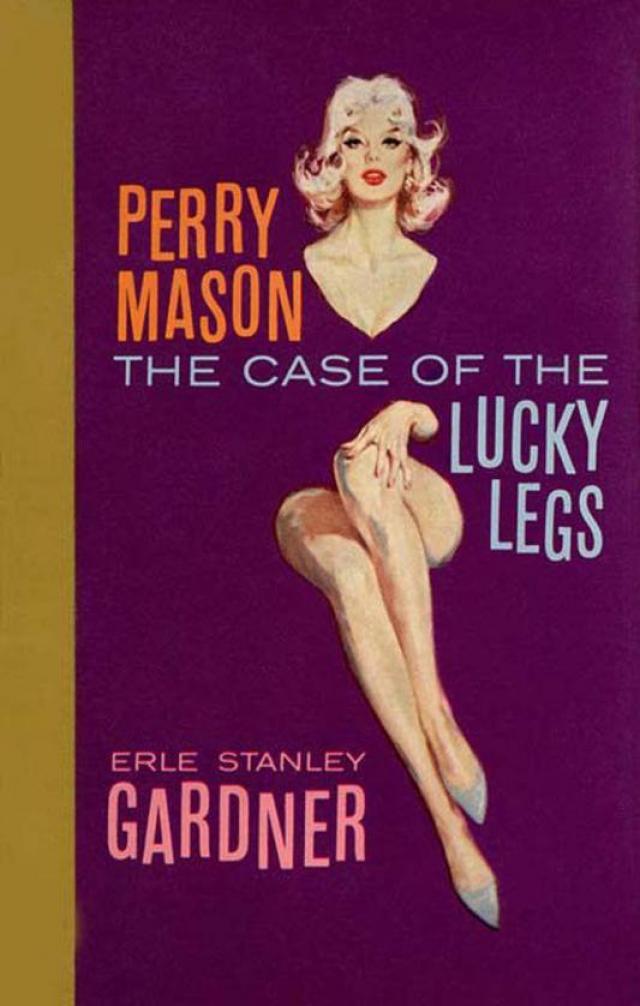
The Case of the Lucky Legs,
p.12


“Yes, I understand it was. It’s a light roadster, but it has all kinds of attachments on it—a lot of trick horns and headlights. Dr. Doray thought it was good advertisement to drive a distinctive car. Cloverdale, you know, is a small city, and—”
Perry Mason tapped on the glass to catch the driver’s attention.
“I’ll get out here,” he said.
He turned to Paul Drake.
“You’re going back to your office, Paul?”
“Yes.”
“And,” said Perry Mason, “this woman is there in your office now?”
“Yes, she was with me when you called. I had to wait a few minutes to get away. She was going to wait until I came back.”
The cab driver swung the cab into the curb and opened the door. Perry Mason stepped to the sidewalk.
“Listen, Perry,” Paul Drake said, “I’m frightfully sorry about this thing. If it’s going to make any difference, I’ll give her back the two hundred bucks and put her out of the office. I need the money, but—”
Perry Mason grinned at him.
“Paul,” he said, “if you really feel remorseful you can pay off the taxicab when it gets back to the office.”
He slammed the door and watched the cab turn the corner to the left. Then he sprinted for the all-night restaurant he had spotted, where there was a small enameled sign indicating the presence of a public telephone. He rushed to the telephone and dialed a number.
A woman’s voice answered, “Coöperative Investigating Bureau.”
“Who’s in charge of the office tonight?” asked Perry Mason.
“Mr. Samuels.”
“Put him on,” said Perry Mason. “This is Mason, the lawyer, speaking—Perry Mason—he’ll know me.”
A moment later there was the click of connection, and Samuels’ oily voice said, “Good evening, Counselor, is there something we can do for you tonight? We have been anxious to get some of your business for—”
“All right,” Perry Mason snapped, “you’ve got some of it. The best way you can show that you can get more is by giving me fast service on this. There’s a woman in the Drake Detective Bureau. She’s talking with Paul Drake right now. She’s about twenty-four or twenty-five, a slender type of beauty, with a figure that’s easy to look at. She’s brunette, with jet-black eyes and black hair. She’s going to leave the office, probably some time soon. I want to know where she goes and what she does; I don’t want her out of your sight night or day. Put as many men on the job as you need. Never mind the expense. Don’t mail any reports. I’ll call you up when I want to know anything. Keep it confidential and get started.”
The voice at the other end of the line became crisply efficient.
“Twenty-four or twenty-five, slender, brunette, with black eyes. At the office of the Drake Detective Bureau.”
“Check,” said Perry Mason. “Make it snappy.”
He hung up and dashed out to the curb, looked up and down the street and caught the lights of a cruising taxi. He waved his hand and brought the taxi to the curb.
“Get me to the Gilroy Hotel,” he said, “and make it snappy.”
The streets were open, the traffic signals, for the most part, discontinued, and the cab made fast time to the Gilroy Hotel.
“Stick around,” Mason told him. “I’m going to want you, and I may not be able to pick up another cab in a hurry. If I’m not back in ten minutes, keep your motor warm.”
He barged into the lobby, nodded to a sleepy clerk and strode to the elevators.
“Ninth floor,” he told the elevator operator.
When the elevator stopped at the ninth floor Perry Mason said, “Which direction is 927?”
The operator pointed down the corridor.
“Just this side of the fire escape light,” he said.
Perry Mason strode down the corridor, his feet pounding the carpet. He found 927 at the place the elevator operator had indicated. He swung around to find 925 on the opposite side of the corridor. He banged on the door of 925.
The transom was open. The door was of thin wood. Perry Mason could hear the creaking of bed springs. He knocked again. After a moment there was the sound of bare feet thudding to the floor, then motion from behind the door, and a man’s voice said, “Who is it?”
“Open up,” said Perry Mason gruffly.
“What do you want?”
“I want to talk with you.”
“What about?”
“Open up, I tell you,” Mason said.
The bolt clicked, and the door opened. A man, attired in pajamas, with his eyes swollen from sleep, his face wearing a startled expression, switched on the lights and blinked dazedly at the lawyer.
Perry Mason crossed to the window, through which a wind was blowing, billowing the lace curtains. He pulled the window down, gave a swift look about the room, then indicated the bed.
“Get back into bed,” he said. “You can talk as well from there.”
“Who are you?” asked the man
“I’m Perry Mason, the lawyer,” Mason said. “Does that mean anything to you?”
“Yes, I’ve read about you.”
“Were you expecting me?”
“No, why?”
“I was just wondering. Where were you tonight from seven o’clock on?”
“Is it any of your business?”
“Yes.”
“Just what makes it your business?” asked the man.
Perry Mason stared at him steadily.
“I suppose you knew,” he said, “that Thelma Bell was arrested and charged with murder?”
The man’s face twisted with expression.
“Arrested?” he said.
“Yes.”
“When?”
“Not very long ago.”
“No,” the man said, “I didn’t know it.”
“Your name’s George Sanborne?”
“Yes.”
“Were you with Thelma Bell this evening?”
“Yes.”
“When?”
“From around seven fifteen or seven thirty to around nine o’clock.”
“Where did you leave her?”
“At her apartment house—the St. James—out at 962 East Faulkner Street.”
“Why did you leave her at that time?”
“We’d had a fight.”
“What about?”
“About a man named Patton.”
“That’s the man she’s accused of murdering,” Mason said.
“What time was the murder committed?” Sanborne said.
“Around eight forty.”
“She couldn’t have done it,” Sanborne said.
“You’re positive?”
“Yes.”
“Can you prove she was with you?”
“I think so, yes.”
“Where did you go? What did you do?”
“We started out around seven twenty, I guess, and thought some of going to a picture show. We decided we’d wait until the second show. We went to a speakeasy, sat around and talked for a while, and then we got in a fight. We’d had a couple of drinks, I guess I lost my temper. I was sore about Patton. She was letting him drag her down. He thought of nothing except her body. She had won a leg contest, and Patton continually harped on that. To hear him talk, you’d think her legs were her only asset. She couldn’t get anywhere working in choruses, posing as an artist model and having her legs photographed for calendar advertisements.”
“That was what the fight was about?” asked Perry Mason.
“Yes.”
“And then you went home?”
“Yes.”
“Do you know anybody at the speakeasy?”
“No.”
“Where is the speakeasy?”
Sanborne’s eyes shifted.
“I wouldn’t want to get a speakeasy into trouble,” he said.
Perry Mason’s laugh was mirthless.
“Don’t worry about that,” he said. “That’s their lookout. They all pay protection. This is a murder case. Where was the speakeasy?”
“On Forty-seventh Street, right around the corner from Elm Street.”
“Do you know the door man?” asked Perry Mason.
“Yes.”
“Will he remember you?”
“I think so.”
“Do you know the waiter?”
“I don’t particularly remember the waiter.”
“Had you been drinking before you went there?”
“No.”
“When you first sat down what did you order?”
“We had a cocktail.”
“What kind?”
“I don’t know, just a cocktail.”
“What kind of a cocktail? Martini? Manhattan? Hawaiian …?”
“A Martini.”
“Both had a Martini?”
“Yes.”
“Then what?”
“Then we had another one.”
“Then what?”
“Then we had something to eat—a sandwich of some sort.”
“What sort of a sandwich?”
“A ham sandwich.”
“Both of you had a ham sandwich?”
“Yes.”
“Then what?”
“I think we switched to highballs.”
“Don’t you know?”
“Yes, I know.”
“Rye or scotch or bourbon?”
“Rye.”
“Both had rye?”
“Yes.”
“Ginger ale?”
“Yes.”
“Both had ginger ale?”
“Yes.”
Perry Mason gave a sigh of disgust. He pulled himself up from the chair and made a wry face.
“I should have known better,” he said.
“What do you mean?” Sanborne wanted to know.
“Evidently Thelma Bell had you primed before I telephoned this evening,” Mason said. “When I said that I was at the Emergency Hospital you answered that test all right. Now you talk like a school kid.”
“What do you mean?”
“Oh, this business of both having the same thing. Both had Martinis. Both had ham sandwiches. Both had rye highballs with ginger ale. What a sweet witness you’d make to fix up an alibi in a murder case!”
“But I’m telling you the truth,” Sanborne said.
Mason’s laugh was mirthless.
“Do you know what Thelma Bell told the officers?” he asked.
Sanborne shook his head.
“They asked her all about the drinks,” he said. “She said that you went to a speakeasy; that you had a Manhattan and she had an old-fashioned cocktail; that you’d had dinner before you went there—both of you; that you didn’t eat a thing while you were there; that you got a bottle of wine, with two glasses, and had some of that, and that then you had your fight and went home.”
Sanborne ran his fingers through his matted hair.
“I didn’t know,” he said, “they were going to ask us all about those drinks.”
Perry Mason walked toward the door.
“Don’t use your telephone,” he said, “until morning. Do you understand?”
“Yes, I understand, but shouldn’t I call—”
“You heard what I said,” Mason told him. “Don’t use your telephone until morning.”
He jerked open the door, slammed it shut behind him and walked down the narrow corridor toward the elevator. His shoulders were slightly slumped forward in an attitude of dejection. His face, however, remained virtually without expression. His eyes were weary.
The cage rattled upward, came to a stop. Perry Mason climbed in.
“Find your party?” asked the elevator boy.
“Yes.”
“If there’s anything you want,” began the boy, “I can—”
“No, you can’t,” Perry Mason said almost savagely, and then added, after a moment, with grim humor, “I wish to God you could.”
The elevator operator brought the cage to the lobby and stood staring curiously at Perry Mason as Mason barged purposefully across the lobby.
“St. James Apartments—962 East Faulkner Street,” said Perry Mason with a touch of weariness in his voice as he jerked open the door of the taxicab.
Chapter 11
Perry Mason pushed through the swinging door of the St. James Apartment house lobby. A colored boy was seated back of the desk, his feet up, his chair tilted back, his mouth open. He was making snoring noises.
The lawyer walked quietly past the desk, past the elevator, to the stairs. He climbed the stairs with slow, heavy tread, taking the three flights at a uniform pace, and without pausing to rest. He tapped with his knuckles on the door of Thelma Bell’s apartment. At the third knock he heard the sound of bed springs.
“Open up, Thelma,” he said.
He heard her move to the door, then the bolt came back and she was staring at him with wide, startled eyes.
“What is it?” she asked. “What’s gone wrong?”
“Nothing,” he told her. “I’m just checking up. What happened with the cops?”
“They didn’t notice the coat and hat at all,” she said. “They came out here to ask me about an appointment I had with Frank Patton. They didn’t let on that he was dead and I didn’t let on that I knew it. I told them that I had an appointment with him for nine o’clock in the morning tomorrow morning, and that my friend, Marjorie Clune, had an appointment at the same time; that I hadn’t seen Marjorie for some little time; that I didn’t know where she was staying and didn’t know how to get in touch with her.”
“Than what?” he asked.
“I kept moving around so they could see the white coat and hat,” she said, “but no one seemed to pay any attention to it.”
Perry Mason squinted his eyes thoughtfully.
“I’ll tell you what happened,” he said. “They came out here because they saw that message on the table in Patton’s apartment. They wanted to check up on you. They hadn’t talked things over very much with the officer on the beat. They’ll do that later, and then some one will remember about that white coat and hat and they’ll be back.”
“You think so?” she asked.
He nodded moodily and stood staring at her steadily.
“You’re not worried about your alibi?” he said.
“Oh, no,” she told him, “that alibi is all right. I tell you I wasn’t there. I wouldn’t lie about it.”
“How well did you know Margy?” he asked.
“Not particularly well. That is, I’ve only known her a couple of weeks. I’ve sympathized with her a lot, and tried to do what I could for her.”
“You wouldn’t try to save her from a murder rap by putting yourself in danger?”
Thelma Bell shook her head.
“Not murder,” she said, “not me.”
“There was a message at Patton’s apartment to call Margy at Harcourt 63891,” he said. “That’s this number. I’m wondering how the detectives—”
“Oh, I explained that,” she said. “I told them that I was out around six o’clock, but that Marjorie evidently had dropped in for a visit; that I found a note from her under the door.”
“Did they want to see the note?”
“Oh, yes.”
“What did you tell them?”
“I told them that I’d slipped it into my purse; that I didn’t intend to save it; that I’d torn it up and couldn’t remember just where I was when I’d torn it up, but I was in a speakeasy some place with my boy friend.”
“They accepted that explanation all right?”
“Yes, they didn’t seem interested in me at all; they were interested in Margy and they were interested in finding out about Margy’s legs. They wanted to know if I’d ever heard her called ‘The Girl with the Lucky Legs.’ ”
“What did you tell them?”
“I told them yes, of course.”
“They didn’t know that you’d won a contest at Parker City?”
“No, they didn’t know very much about me. They wanted to know how well I knew Frank Patton and I said not at all well; that I’d met him through Margy and that I was to go there for an appointment with Margy; that Patton had some work for us. I told them I wouldn’t go if there was any reason why I shouldn’t. They stalled along for a while and then finally told me that the reason I shouldn’t go there was because Patton was dead. They looked at me to see how I took it.”
“How did you take it?” he asked.
“I told them that it wasn’t any surprise to me; that I’d heard he had a weak heart and he lived a pretty fast pace. They told me that he’d been murdered, and I stared at them and said, ‘My God!’ and sat down on the bed. I let my eyes get big and said, ‘To think that I had an appointment with him tomorrow morning! My God! What would have happened if I hadn’t known about it and had gone on up to his apartment!’ ”
“Did they say anything then?”
“No, they looked around and went out.”
“And you were wearing the coat and the hat?”
“Yes.”
Perry Mason hooked his thumbs in the armholes of his vest and started pacing up and down the carpeted floor of the apartment. Thelma Bell was attired in a nightgown and kimono. She looked down at her bare toes and wiggled them.
“My feet are getting cold,” she said. “I’m going to cover up.”
He shook his head at her.
“You’re going to dress,” he said.
“Why?” she inquired.
“I think,” he said, “that you’d better go places.”
“Why?”
“On account of the police.”
“I don’t want to,” she told him.
“I think you’d better.”
“But that would make it look bad for me.”
“You’ve got an alibi, haven’t you?”
“Yes,” she said slowly and with some hesitation.
“Well,” he said, “that’s going to be okay then.”
“But if I’ve got an alibi why should I go away?”
“I think it would be better, everything considered.”
“Do you mean that it’s going to be better for Marjorie?”
“Perhaps.”
“If it’s going to be better for Marjorie,” she said with quick determination, “I’ll do it. I’ll do anything for her.”
She switched on a reading light by the head of the bed, grabbed her kimono more tightly around her waist, stared at Perry Mason and then said, “When am I going?”