The case of the lucky le.., p.15
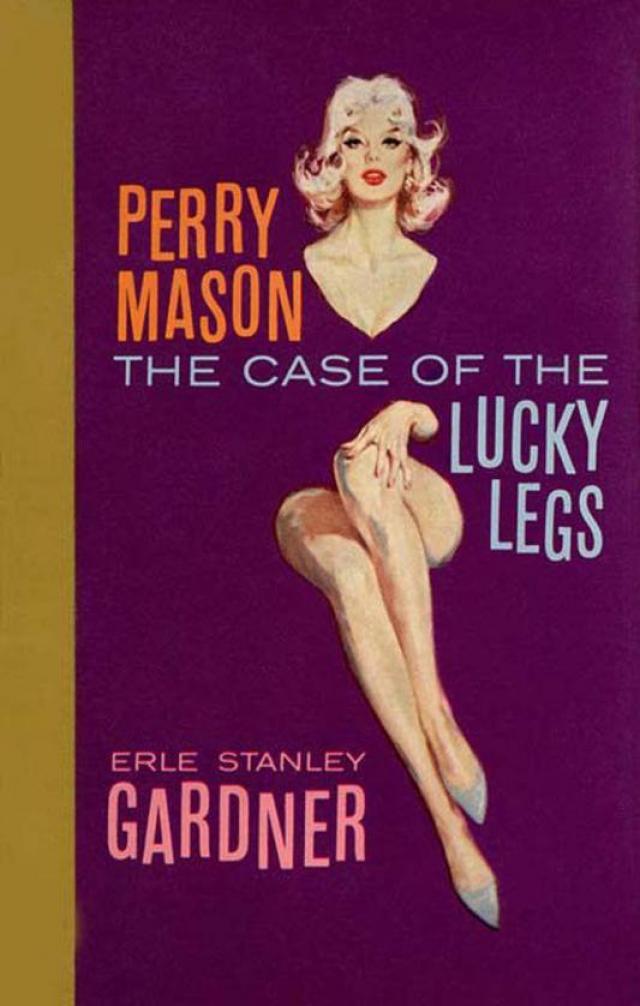
The Case of the Lucky Legs,
p.15


“You have simply got to get Doray acquitted.”
“Suppose it should become necessary to have separate attorneys representing the defendants?” Perry Mason said, his eyes puckered and staring at Bradbury with such keen concentration that their depths seemed to hold a steely glitter. “Which one do you want me to take?”
“It’s not going to be necessary,” Bradbury said, “and I don’t want to discuss the point. I am going to insist that you represent both, Counselor, and that as a part of your representation, you clear up the question of the door.”
Perry Mason’s eyes narrowed until the lids were level.
“What question about what door?” he asked.
“The question about the locked door into Patton’s apartment,” Bradbury said. “There are some things I don’t need to go over, Mr. Mason. I am not particularly a fool. I appreciate what you have done. I recognize that what you have done was done for the best interests of all concerned, as you understood those interests at the time. However, I think the police are going to be able to prove that Marjorie Clune was at the apartment about the time of the murder. If the door of the apartment was unlocked, Marjorie Clune could have walked in, could have discovered the body, and could have walked away in a panic. And guilty of no crime other than failing to notify the officers of what she had found. If the door of the apartment was locked, it would mean that Marjorie Clune must have a key. It would mean that she must have been in sufficient control of her mental faculties to pause and lock the door behind her when she left the apartment. That won’t look good for Marjorie. It won’t look good for her case, and it won’t look good for her character.”
“But,” said Perry Mason slowly, “suppose Marjorie Clune had been in the bathroom; suppose she had been having hysterics. Suppose some one had heard her cries, and had rushed in and killed Frank Patton?”
“Then,” said Bradbury, without hesitation and in a tone of voice which showed that he had carefully thought over that phase of the situation, “Marjorie Clune would still have been the last one to have left the apartment, unless she had emerged while the murderer was there. To have found a body, and given no alarm, is perhaps a violation of some technical law. To have found a murderer engaged redhanded in the commission of his crime, and to have aided in his escape, would be to make herself an accessory. I don’t want her to be an accessory. All in all, Counselor, the question of that locked door becomes more and more important.”
Della Street fidgeted uneasily.
The cab turned down a side street, sped along for two or three blocks; then pulled close to the curb.
“How’s this?” asked the cab driver.
“That,” Perry Mason said, “is fine.” His voice was an even monotone, as though he had been talking in his sleep. His eyes were staring with hypnotic steadiness at Bradbury.
Slowly he said, still in that same expressionless monotone, “Let’s understand each other, Bradbury. You want me to represent Marjorie Clune and Dr. Doray.”
“Yes.”
“I’m to be paid for that representation.”
“Yes.”
“And, furthermore, you insist upon an acquittal.”
“Furthermore,” said Bradbury, “I insist upon an acquittal. Under the circumstances, Counselor, I think I am entitled to it. If there is not an acquittal, it will be necessary for me to make a complete disclosure of certain facts, which I need not mention at the present time, but which indicate very strongly, to my mind, that the door was locked sometime after both Marjorie Clune and the murderer had left the apartment where the murder was committed.”
“And that,” said Perry Mason, “is an ultimatum.”
“If you want to put it that way,” Bradbury said, “it’s an ultimatum. I don’t want to be harsh, Counselor. I don’t want to have you feel that I’m putting you on a spot, but, by God! I intend to get a square deal for Marjorie Clune. We’ve been over all that before.”
“And for Bob Doray?” asked Perry Mason.
“I expect an acquittal for Dr. Robert Doray.”
“Don’t you realize,” Mason said slowly, “that virtually every fact in the case points unerringly to the guilt of Dr. Doray?”
“Of course I realize it,” Bradbury said. “What do you think I am, a fool?”
“Not by a long ways,” said Mason, with a degree of respect in his tone. “I was simply remarking that you’d handed me a big order.”
Bradbury pulled a wallet from his pocket.
“Now that we have discussed that phase of the situation,” he said, “I am perfectly willing to admit that it is a big order, and I am perfectly willing to admit that I expect to pay for it. I have given you a retainer of one thousand dollars. I now hand to your secretary an additional four thousand dollars. I expect to give you further compensation when a verdict of not guilty is returned by the jury.”
With the crisp efficiency of a banker, Bradbury counted out bills to the amount of four thousand dollars, and handed them to Della Street.
She looked questioningly at Perry Mason.
Perry Mason nodded.
“Well,” Perry Mason said, “we understand each other, anyway. That’s one satisfaction. But I want you to understand this, Bradbury. I will endeavor to represent both Dr. Doray and Marjorie Clune. I will endeavor to secure a favorable verdict. I will call your attention, however, to the same thing that you have told me about yourself. That is, that you are a fighter. I, too, am a fighter. You fight for yourself. I fight for my clients. When I start in fighting for Marjorie Clune and Dr. Doray, I’m going to fight. There are not going to be any halfway measures.”
Bradbury’s face did not so much as change expression by the slightest flicker of a muscle.
“I don’t give a damn what you do,” he said “—if you will pardon my French, Miss Street—or how you do it. All I know is that I want to be certain those two persons are acquitted.”
Della Street spoke hotly.
“I’m not entirely in the dark about what you have reference to, Mr. Bradbury,” she said. “I think you’re perfectly horrid. Mr. Mason went out of his way to give you protection for the person you had employed him to protect. He did things that—”
“Steady, Della,” warned Perry Mason.
She caught his eye, and was suddenly silent.
“I see,” said Bradbury, “that she knows.”
“You see nothing,” said Mason grimly. “And I want to tell you right now, Bradbury, that’ll you’ll do a lot better for yourself and for your clients if you keep your finger out of the pie. We understand each other, and that’s enough.”
“That’s enough,” said Bradbury.
“Furthermore,” Mason said, “I don’t want any more of your veiled threats made to my secretary. I don’t want you to try and browbeat her into getting any more interviews with me.”
“I am not going to ask for any more interviews with you,” Bradbury said. “I have given you my ultimatum. It stands. I am going to have nothing whatever to say about methods. I am going to hold you strictly accountable for results.”
Della Street opened her mouth to say something, sucked in her breath with a quick intake; then, as she looked at Perry Mason’s grim face, became silent.
Mason looked at Bradbury.
“All right,” he said, “I’ll get out here. You can take Della Street back to the office. You pay for the cab.”
Bradbury nodded.
“See that he gets a receipt for the retainer,” Mason said.
“Needless to say,” Bradbury warned, “time is of the greatest value. The police are building up a dangerous case against Dr. Doray.”
“Did you know they’d identified him as the purchaser of the knife?” asked Perry Mason.
Bradbury’s face showed surprised consternation.
“You mean that they’ve proven he was the one that bought the knife that stabbed Patton?”
“Yes.”
“Good God!” said Bradbury, and slumped back against the cushions of the cab and stared at the lawyer, his mouth sagging slightly open, his eyes wide.
“You knew that they’d located his car as having been parked near the vicinity of the crime?” asked Mason.
“Yes, I knew that. That’s why I thought they had a damaging case against him. But, this other, my God, that’s conclusive, isn’t it?”
Perry Mason made a shrugging gesture with his shoulders.
“May I ask,” he said, “why you are suddenly so anxious to have Dr. Doray acquitted?”
“That,” said Bradbury, “is my business.”
“I had rather gathered,” Mason said, “that Dr. Doray was your rival for the affections of Miss Clune; that you didn’t have any feeling of friendship for him—that is, no particular love.”
“My feelings toward Dr. Doray haven’t the slightest bearing on the case whatever,” Bradbury remarked in a tone of voice which was doubtless intended as a rebuke. “You are an attorney. You make a business of representing people who are accused of crime, and securing acquittals. I have told you that I shall expect an acquittal of Dr. Doray as well as of Margy. If they’re not acquitted on the evidence that the police produce, I propose to take steps, through other counsel, to see that the real facts are called to the attention of the court in order to secure a new trial.”
“The facts, I take it,” Perry Mason said, “relating to the locked door.”
“Correct.”
“Well, you’re plain enough,” Mason told him.
He grinned reassuringly at Della Street.
“Don’t worry, Della,” he said, “I’ve been in worse jams than this before.”
“But,” she said hotly, “how can he—?”
Mason frowned and shook his head.
“Della,” he said, “the weather is delightful.”
“Yes?” she asked.
“And,” said Perry Mason, “whenever you discuss any subject with Mr. Bradbury, I want it to be the subject of the weather. The weather is always a very engrossing subject of conversation. It is virtually inexhaustible. Please see that Bradbury confines himself to it.”
“Don’t worry,” Bradbury said, with a sudden frank smile twisting his lips. “I fight a fighter, Mason. I don’t pick on women. I couldn’t help observing that your secretary was fully familiar with the point I was making as I made it. That would seem to indicate that—”
Perry Mason interrupted with firmly insistent tones.
“The weather, Mr. Bradbury,” he said, “is delightful for this time of year. It is unusually warm.”
Bradbury nodded.
“And, as I was about to remark,” he said, “I shall attempt to take no advantage of you because of anything Miss Street might say or do.”
Perry Mason pulled open the door of the taxicab, climbed to the sidewalk, and cocked an appraising eye at the cloudless sky. Then he raised his hat.
“There is a chance,” he said, “that it may cloud over this afternoon.”
Bradbury started to say something, but the banging of the taxicab door cut off his sentence, and Perry Mason was striding down the side street back toward the avenue.
Chapter 13
Perry Mason took a taxicab to the airport. Within ten minutes, the young woman at the information desk in the office had placed him in touch with an aviator who was willing to charter a fast cabin plane by the hour. The lawyer sized up the aviator with eyes that showed approval. He pulled a wallet from his pocket, took out crisp, new bills, and handed them to the aviator.
“You’re ready to go?”
“It’ll take a very few minutes to get it warmed up,” the aviator told him. “She’s all ready—that is, all filled with gas and inspected.”
“Let’s go,” Perry Mason said.
The aviator smiled.
“You haven’t told me yet where you want to go to,” he said.
“I’ll tell you that while you’re getting the plane warmed up,” Mason told him.
They walked down the wide cement walk. A small, snub-nosed cabin plane glistened in the sun.
“That’s the job,” said the aviator.
Perry Mason looked it over while two mechanics swung it into position, put blocks under the wheels, and started the motor warming up.
“There’s a mail plane leaves here around midnight,” Mason said. “I want to follow that mail plane.”
The pilot stared at him.
“You’ll never catch it. Why it’s as far as—”
“I don’t want to catch it, I want to follow it. Where’s the first stop?”
“Summerville.”
“How long will it take us to get there?”
“About an hour.”
Perry Mason said, “That’s our first stop. We may not go any farther. Again we may.”
The pilot opened the door of the small cabin.
“Get in and sit down,” he said. “You’ve been up before?”
Mason nodded.
“Don’t get worried over air bumps,” the pilot told him. “They don’t amount to anything. The novice gets worried over them.”
He made a circle about the plane, as Mason adjusted himself in the seat, then climbed in at the controls, pulled shut the door of the cabin, locked it into position, waved a hand to the mechanics. They pulled away the blocks of wood. The pilot opened the throttle, and the plane roared into motion.
During the ensuing hour, Perry Mason sat almost without motion, his eyes staring at the scenery with the same abstract speculative interest with which he sometimes regarded the smoke which curled upward from his cigarette.
Once or twice the aviator stole a puzzled glance at his preoccupied passenger, but it was not until the plane was over Summerville that he spoke.
“That’s Summerville below,” he said.
Perry Mason regarded the airport without interest, and only nodded his head slightly.
The pilot nosed the plane forward. It lost altitude rapidly. When the wheels were jolting on the ground, Perry Mason shouted to the pilot:
“Don’t stop too close to the hangar.”
The pilot cut the throttle down, and the plane droned into a stop. Two men came walking down the hard surface of the packed ground which served as a runway.
Perry Mason got out of the plane, strode to meet the men, looked them over with a swift glance, and said abruptly, “Was either of you men on duty when the mail plane got in—the one that arrives around one o’clock in the morning?”
“I was,” said the taller of the two.
Mason motioned him to one side, and lowered his voice.
“I’m looking for a young woman,” Perry Mason said, “who was a passenger on that plane. She’s in the early twenties. Has very blue eyes, a slender, well-formed figure, and—”
“There wasn’t any girl on the plane at all,” the man said positively. “There were just two men. One of them got off, and one of them went straight through.”
Perry Mason stared at the man with a frown creasing his forehead. His eyes contained a hard glitter which caused the mechanic to shift his own eyes momentarily.
“Describe those men, can you?” he asked.
“One of them was a fat fellow with a bald head. He was about fifty, I guess, and he was pretty well crocked. He had fishy eyes, and I don’t remember much about him. He went on through. The fellow that got off was a young chap, wearing a blue serge suit. He had dark hair and black eyes. He asked if there was another plane that was due to arrive before morning. I told him there wasn’t. He seemed a little undecided, and then he asked me how he could get to the Riverview Hotel.”
Perry Mason’s eyes shifted past the mechanic, focused themselves upon distance. He stood for a few seconds absorbed in thought. Then he pulled a five dollar bill from his pocket.
“I wonder,” he said, “if you can get me a taxicab.”
“There’s one right this way,” the man said.
Mason turned to the aviator.
“Check your plane over,” he said; “get ready to go on from here.”
“In which direction?” asked the aviator.
“I don’t know,” Mason told him. “Wait until I get back and I’ll tell you.”
He followed the mechanic to the taxicab.
“Riverview Hotel,” Mason told the driver.
During the ride the lawyer sat back against the cushions, his eyes patient, steady and unseeing, paying no attention whatever to the buildings which flowed past on either side of the cab windows. When the cab drew up in front of the Riverview Hotel, Perry Mason paid the driver, entered the lobby and approached the clerk.
“I’m in rather a peculiar position,” he told the clerk. “I was to meet a man here for a business conference. The man came in from the city on the plane that gets in at one twenty in the morning. I never was very much of a hand at remembering names, and I forgot to bring the correspondence concerning the deal. The sales manager will can me if he finds out about it. I wonder if you could help me out.”
The clerk turned to the register.
“I think so,” he said. “We rented a room about one thirty to a Mr. Charles B. Duncan.”
“What’s the room?” asked Perry Mason.
“The room,” the clerk told him smilingly, “is the bridal suite—601.”
Perry Mason stared steadily and unsmilingly at the clerk for a matter of a second or two, his eyes calm and patient, boring straight into those of the man behind the counter.
“The hell it is,” said Perry Mason, and turned toward the elevator.
He got off at the sixth floor, asked the direction of 601, walked down the corridor, started to pound imperatively upon the panels of the door, then suddenly arrested his hand in mid-motion. He unclenched the fist, and tapped gently upon the door with the tips of his fingers, making the knock sound like the timid knock which would have been given by a woman.
There was the sound of quick steps thudding the floor back of the door. A bolt clicked, the door flung open, and Perry Mason gazed into Dr. Doray’s eager eyes.
The face ran through a gamut of emotions—disappointment, fear, anger.
Perry Mason pushed his way into the room, kicked the door shut.
Doray took two or three backward steps, his eyes fastened upon Perry Mason’s face.